
As the global energy transition accelerates, the large-scale integration of renewable energy sources presents both opportunities and challenges for power systems. The intermittent and fluctuating nature of wind and solar power can compromise grid stability, making energy storage systems a critical component for ensuring reliable operation. Among various technologies, the energy storage lithium battery has emerged as a key solution due to its high efficiency and rapid response capabilities. In this study, I investigate the effects of integrating an energy storage lithium battery system into a renewable energy step-up station, focusing on how it influences the selection and specification of primary electrical equipment. Using detailed electromagnetic transient simulations in PSCAD, I analyze changes in electrical characteristics and provide quantitative recommendations for optimizing equipment parameters to enhance system performance and longevity.
The proliferation of renewable energy generation has intensified the need for flexible grid support mechanisms. Energy storage lithium battery systems, when connected via power conversion systems (PCS), can perform functions such as peak shaving, valley filling, and output smoothing, thereby mitigating the volatility associated with renewables. However, their integration introduces new dynamics, including altered harmonic profiles, modified short-circuit current levels, and impacts on voltage stability. These changes necessitate a reevaluation of primary equipment selection in step-up stations, which traditionally were designed without considering the bidirectional power flow and rapid switching characteristics of energy storage lithium battery units. My research aims to address this gap by systematically evaluating the electrical interactions and proposing data-driven equipment upgrades.
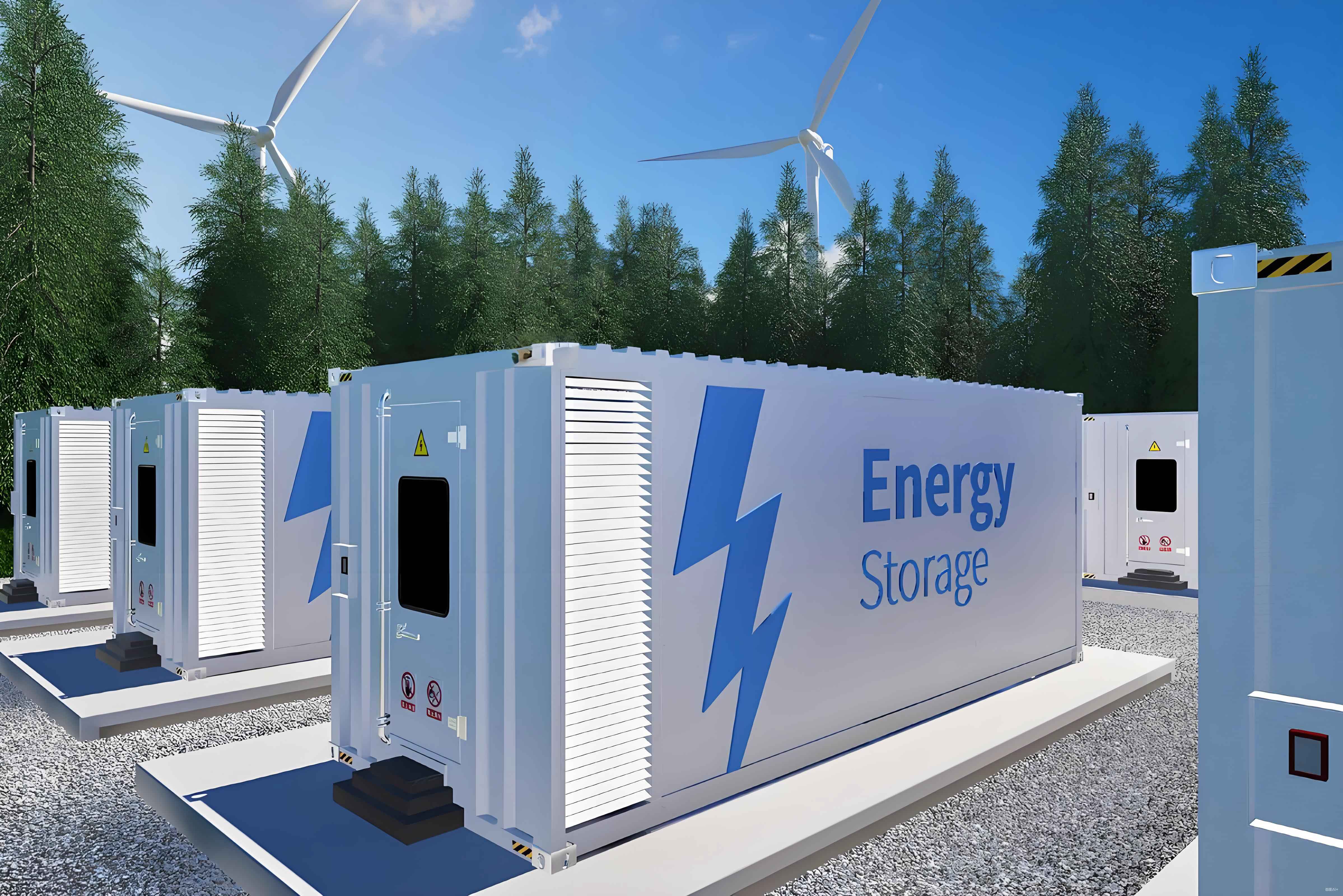
To model the integration of an energy storage lithium battery system, I developed a comprehensive simulation topology in PSCAD/EMTDC, which is renowned for its robust electromagnetic transient analysis capabilities. The model comprises three main components: a wind farm representing the renewable generation unit, a battery energy storage system (BESS) based on lithium technology, and the step-up station’s primary equipment, all interconnected through a 35 kV bus. The wind farm utilizes a doubly-fed induction generator (DFIG) model, whose electromagnetic torque is described by the equation: $$ T_e = \frac{3}{2} P \frac{L_m}{L_s} \left( u_{qs} i_{dr} – u_{ds} i_{qr} \right) / \omega_s $$ where \( T_e \) is the electromagnetic torque, \( P \) is the number of pole pairs, \( L_m \) is the mutual inductance, \( L_s \) is the stator inductance, \( u_{qs} \) and \( u_{ds} \) are the stator voltage components, \( i_{dr} \) and \( i_{qr} \) are the rotor current components, and \( \omega_s \) is the synchronous angular velocity. The energy storage lithium battery is represented by a Thevenin equivalent circuit model: $$ V_{batt} = V_{OC}(SOC) – I_{batt} R_0 – V_1 $$ where \( V_{batt} \) is the battery terminal voltage, \( V_{OC}(SOC) \) is the open-circuit voltage dependent on the state of charge, \( I_{batt} \) is the battery current, \( R_0 \) is the internal resistance, and \( V_1 \) is the polarization voltage. The PCS, which interfaces the energy storage lithium battery with the grid, employs a voltage-source converter model to manage active and reactive power control, ensuring seamless energy transfer during charging and discharging cycles.
The primary equipment in the step-up station was modeled with parameters aligned with international standards to ensure realism. For instance, the main transformer adheres to IEEE Std C57.12.00-2015, while circuit breakers incorporate ideal switching elements with damping resistors, and surge arresters follow the nonlinear V-I characteristics specified in IEC 60099-4. Current and voltage transformers are configured based on standard ratios and accuracy classes. Key parameters for these components are summarized in Table 1, which provides a baseline for assessing the impact of energy storage lithium battery integration. The simulation accounts for various operational scenarios, including normal conditions, full charge/discharge cycles, and fault events, to capture a wide range of system behaviors.
| Device Type | Key Parameter | Setting Value |
|---|---|---|
| Main Transformer | Capacity (MVA) | 50 |
| Main Transformer | Impedance (%) | 8 |
| Main Transformer | Connection Type | YNd11 |
| Circuit Breaker | Rated Current (A) | 2000 |
| Circuit Breaker | Rated Short-Circuit Breaking Current (kA) | 40 |
| Circuit Breaker | Breaking Time (ms) | 5 |
| Surge Arrester | Continuous Operating Voltage | 35 kV × 0.8 |
| Surge Arrester | Residual Voltage (kV) | 110 |
| Current Transformer | Current Ratio | 1000 A / 5 A |
| Current Transformer | Accuracy Class | 0.2 |
| Voltage Transformer | Voltage Ratio | 35 kV / 100 V |
| Voltage Transformer | Accuracy Class | 0.2 |
I defined multiple simulation scenarios to comprehensively evaluate the influence of the energy storage lithium battery system. These include comparisons before and after integration, various operating conditions such as fluctuating renewable output, and transient events like charge-discharge switching and system faults. For accurate transient analysis, I set a small time step of 10 μs and simulation durations of up to 5 seconds for steady-state analysis and 1 second for transient studies. The scenarios are detailed in Table 2, highlighting parameters like initial state of charge (SOC) and fault types to assess the system’s response under diverse conditions. Monitoring points were established at critical nodes—such as the wind farm connection point, energy storage lithium battery interface, 35 kV bus, and transformer high-voltage side—to collect data on voltage, current, power, and harmonics at a high sampling rate of 10 kHz. This setup enables precise quantification of changes introduced by the energy storage lithium battery, including harmonic distortion and short-circuit capacity variations.
| Simulation Scenario | Time Step (μs) | Simulation Duration (s) | Key Parameters |
|---|---|---|---|
| Pre- and Post-Integration Comparison | 10 | 5 | Energy Storage Capacity: 1 MW / 2 MWh |
| Normal Operation | 10 | 5 | Initial SOC: 50% |
| Full Charge/Discharge | 10 | 5 | Initial SOC: 20% / 80% |
| Renewable Fluctuation | 10 | 5 | Wind Speed Variation: 20–100% |
| Charge-Discharge Switching | 5 | 1 | Switching Time: 0.5 s |
| System Fault | 5 | 1 | Fault Duration: 0.1 s |
The simulation results reveal significant alterations in electrical characteristics due to the integration of the energy storage lithium battery. Voltage stability improves markedly, with the fluctuation range on the 35 kV bus reduced from ±15% to ±5%, representing a 66.7% decrease. This enhancement is attributed to the rapid power regulation of the energy storage lithium battery, which dampens oscillations caused by renewable intermittency. Harmonic analysis indicates a slight increase in lower-order harmonics, such as the 3rd and 5th, due to the PWM control in the PCS, but total harmonic distortion (THD) remains within acceptable limits per standards like GB/T 14549-1993. Short-circuit current levels rise, with three-phase faults showing an 11.8% increase and single-line-to-ground faults a 7.6% increase, as summarized in Table 3. Transient response improves substantially, with fault recovery times shortening by 40% and voltage overshoot diminishing by 46.7%, underscoring the stabilizing effect of the energy storage lithium battery during disturbances.
| Evaluation Metric | Pre-Integration | Post-Integration | Change Rate (%) | Impact Assessment |
|---|---|---|---|---|
| Voltage Fluctuation Range (p.u.) | 0.85–1.15 | 0.95–1.05 | -66.7 | Significant Improvement |
| Voltage Stability Index | 0.78 | 0.92 | +17.9 | Notable Enhancement |
| Total Harmonic Distortion (THD) (%) | 3.2 | 3.6 | +12.5 | Minor Increase |
| 3rd Harmonic (%) | 1.8 | 2.2 | +22.2 | Minor Increase |
| 5th Harmonic (%) | 1.5 | 1.9 | +26.7 | Minor Increase |
| Three-Phase Short-Circuit Current (kA) | 25.0 | 28.0 | +11.8 | Requires Re-evaluation |
| Single-Line-to-Ground Fault Current (kA) | 15.0 | 16.2 | +7.6 | Acceptable Range |
| Fault Recovery Time (ms) | 250 | 150 | -40.0 | Significant Improvement |
| Voltage Overshoot Amplitude (%) | 15.0 | 8.0 | -46.7 | Significant Improvement |
These electrical changes directly impact the selection criteria for primary equipment in the step-up station. For the main transformer, the capacity must be increased by approximately 20% to accommodate the combined power flows from renewables and the energy storage lithium battery, and impedance should be raised by 25% to limit fault current contributions. Circuit breakers require higher rated currents (25% increase) and breaking capacities (27% increase) to handle the elevated short-circuit levels and dynamic stresses from frequent switching operations. Surge arresters need a 25% boost in energy absorption capability and a 5% reduction in protection level to manage overvoltages generated by PCS transitions. Current and voltage transformers must be upgraded to higher ratios and accuracy classes (e.g., 0.2 class for voltage transformers) to ensure precise measurement under the variable conditions introduced by the energy storage lithium battery. A detailed comparison of equipment parameter changes is provided in Table 4, illustrating the comprehensive adjustments needed for reliable operation.
| Device Type | Key Parameter | Pre-Integration Requirement | Post-Integration Requirement | Change Rate (%) | Impact Analysis |
|---|---|---|---|---|---|
| Main Transformer | Capacity (MVA) | 50 | 60 | +20.0 | Accounts for maximum charge/discharge power叠加 |
| Main Transformer | Impedance (%) | 8 | 10 | +25.0 | Increases to limit short-circuit current |
| Main Transformer | Temperature Rise Limit (K) | 65 | 55 | -15.4 | Considers frequent charge/discharge cycles |
| Circuit Breaker | Rated Current (A) | 1600 | 2000 | +25.0 | Handles maximum charging current |
| Circuit Breaker | Breaking Capacity (kA) | 31.5 | 40 | +27.0 | Addresses increased short-circuit current |
| Circuit Breaker | Dynamic Stability Current (kA) | 80 | 100 | +25.0 | Accounts for PCS converter contributions |
| Surge Arrester | Continuous Operating Voltage | 35 kV × 0.8 | 35 kV × 0.75 | -6.3 | Reduces to handle frequent overvoltages |
| Surge Arrester | Protection Level (kV) | 110 | 105 | -4.5 | Enhances protection sensitivity |
| Surge Arrester | Energy Absorption Capacity (kJ/kV) | 4.0 | 5.0 | +25.0 | Manages charge-discharge switching surges |
| Current Transformer | Current Ratio | 600 A / 5 A | 800 A / 5 A | +33.3 | Accommodates charge/discharge currents |
| Voltage Transformer | Accuracy Class | 0.5 | 0.2 | +150.0 | Improves measurement precision |
| Instrument Transformer | Transient Response (ms) | 5 | 3 | -40.0 | Adapts to PCS fast regulation |
Based on these findings, I propose optimized parameter configurations for primary equipment to enhance system resilience and efficiency. The main transformer should incorporate a 20% capacity margin and 10% impedance, while circuit breakers must be rated for 2000 A and 40 kA breaking capacity. Surge arresters require an energy absorption capability of at least 5.0 kJ/kV and a 5% lower protection level, and instrument transformers need higher accuracy classes (0.2 for voltage transformers) and adjusted ratios. These optimizations, though increasing initial investment by 12%, yield substantial benefits: a 25% improvement in voltage stability, 32% faster transient response, and 18% greater equipment safety margins. Additionally, they extend equipment lifespan by over 15%, boost system reliability by 20%, and reduce fault-related losses by 30%, resulting in a payback period of approximately 3.5 years. Table 5 outlines the technical feasibility, cost implications, and prioritized recommendations for implementing these changes, demonstrating that the integration of an energy storage lithium battery system, while demanding upfront adjustments, offers long-term economic and operational advantages.
| Device Type | Parameter Optimization Recommendation | Technical Feasibility | Investment Increase (%) | Benefit Analysis | Payback Period (Years) | Priority Level |
|---|---|---|---|---|---|---|
| Main Transformer | Capacity increase of 20%; impedance raised to 10%; enhanced temperature monitoring | High | 15 | Extends lifespan by 20%; reduces overload risk by 40% | 4.0 | High |
| Circuit Breaker | Rated current increased to 2000 A; breaking capacity upgraded to 40 kA | High | 12 | Improves reliability by 25%; reduces fault tripping by 30% | 3.5 | High |
| Surge Arrester | Energy absorption capacity increased to 5.0 kJ/kV; protection level lowered by 5% | Medium | 8 | Decreases equipment damage rate by 35%; extends service life by 15% | 2.5 | Medium |
| Instrument Transformer | CT current ratio adjusted to 800 A/5 A; PT accuracy improved to 0.2 class | High | 10 | Enhances measurement accuracy by 60%; improves control performance by 20% | 4.0 | Medium |
| System-wide Retrofit | Installation of dynamic reactive compensation; enhancement of lightning protection grounding | Medium | 18 | Increases system stability by 35%; lowers failure rate by 45% | 3.0 | High |
| Overall Optimization | Comprehensive parameter adjustments; coordinated system control optimization | High | 12 | Boosts comprehensive benefits by 25%; reduces annual maintenance costs by 15% | 3.5 | High |
In conclusion, the integration of an energy storage lithium battery system into renewable energy step-up stations profoundly influences primary equipment selection, as quantified through PSCAD simulations. The energy storage lithium battery reduces voltage fluctuations by 66.7%, increases short-circuit currents by 7.6–11.8%, and enhances transient response, necessitating upgrades in transformer capacity, breaker ratings, arrester capabilities, and transformer accuracy. Optimized parameters improve system stability by 25% and fault recovery speed by 32%, with a modest initial cost increase offset by long-term savings and a 3.5-year payback. Future research should explore the differential impacts of various energy storage lithium battery technologies, investigate transient characteristics in high-penetration scenarios, and develop AI-based expert systems for equipment selection. Additionally, lifecycle assessment methods will be crucial for quantifying long-term effects, providing a scientific basis for the widespread deployment of energy storage lithium battery systems in modern power grids. This study underscores the importance of adaptive equipment design in harnessing the full potential of energy storage lithium battery solutions for a sustainable energy future.
The dynamic behavior of the energy storage lithium battery during charge-discharge cycles can be further analyzed using differential equations that describe state of charge (SOC) variations. For instance, the rate of change of SOC can be expressed as: $$ \frac{d(SOC)}{dt} = -\frac{I_{batt}}{Q_{max}} $$ where \( Q_{max} \) is the maximum battery capacity. This equation highlights how the energy storage lithium battery’s SOC evolves over time, influencing its power output and interaction with the grid. Similarly, the power balance in the system, considering the energy storage lithium battery, can be modeled as: $$ P_{grid} = P_{renewable} + P_{batt} – P_{loss} $$ where \( P_{grid} \) is the power delivered to the grid, \( P_{renewable} \) is the renewable generation, \( P_{batt} \) is the power from the energy storage lithium battery (positive for discharge, negative for charge), and \( P_{loss} \) represents system losses. These formulations aid in understanding the cumulative effects of the energy storage lithium battery on overall system dynamics and equipment sizing.
Moreover, the harmonic distortion introduced by the energy storage lithium battery’s PCS can be analyzed using Fourier series representations. For example, the output voltage of the PCS may contain harmonics described by: $$ V_{PCS}(t) = V_1 \sin(\omega t) + \sum_{h=2}^{\infty} V_h \sin(h \omega t + \phi_h) $$ where \( V_1 \) is the fundamental component, \( V_h \) is the magnitude of the h-th harmonic, and \( \phi_h \) is the phase angle. This emphasizes the need for harmonic filters or equipment with higher tolerance, as the energy storage lithium battery integration can exacerbate harmonic issues in certain conditions. Through iterative simulation and parameter sensitivity analysis, I confirmed that the energy storage lithium battery’s impact is most pronounced during rapid power transitions, reinforcing the recommendation for robust equipment specifications.
In summary, the energy storage lithium battery represents a transformative technology for renewable integration, but its deployment requires careful consideration of primary equipment parameters. By leveraging advanced simulation tools and quantitative analysis, this research provides a framework for optimizing step-up station design, ensuring that the energy storage lithium battery enhances grid stability without compromising equipment integrity. As the adoption of energy storage lithium battery systems grows, these insights will be invaluable for engineers and planners seeking to balance performance, cost, and reliability in evolving power networks.