
As a researcher delving into energy storage technologies, I find sodium-ion batteries to be a compelling alternative to lithium-ion systems due to sodium’s abundance and cost-effectiveness. The electrolyte, a critical component in sodium-ion batteries, significantly influences battery performance through its solvation structure, which dictates the formation and composition of the solid electrolyte interface (SEI). This SEI layer, formed on the electrode surface during cycling, is pivotal for stabilizing the electrode-electrolyte interface, preventing solvent co-intercalation, and enhancing cycle life. In this article, I will explore how the solvation structure in sodium-ion battery electrolytes affects SEI properties and overall battery performance, drawing from recent advancements in high-concentration electrolytes, aqueous systems, and organic solvents. I aim to provide a comprehensive analysis using tables and formulas to summarize key findings, emphasizing the structure-activity relationships that govern sodium-ion battery behavior.
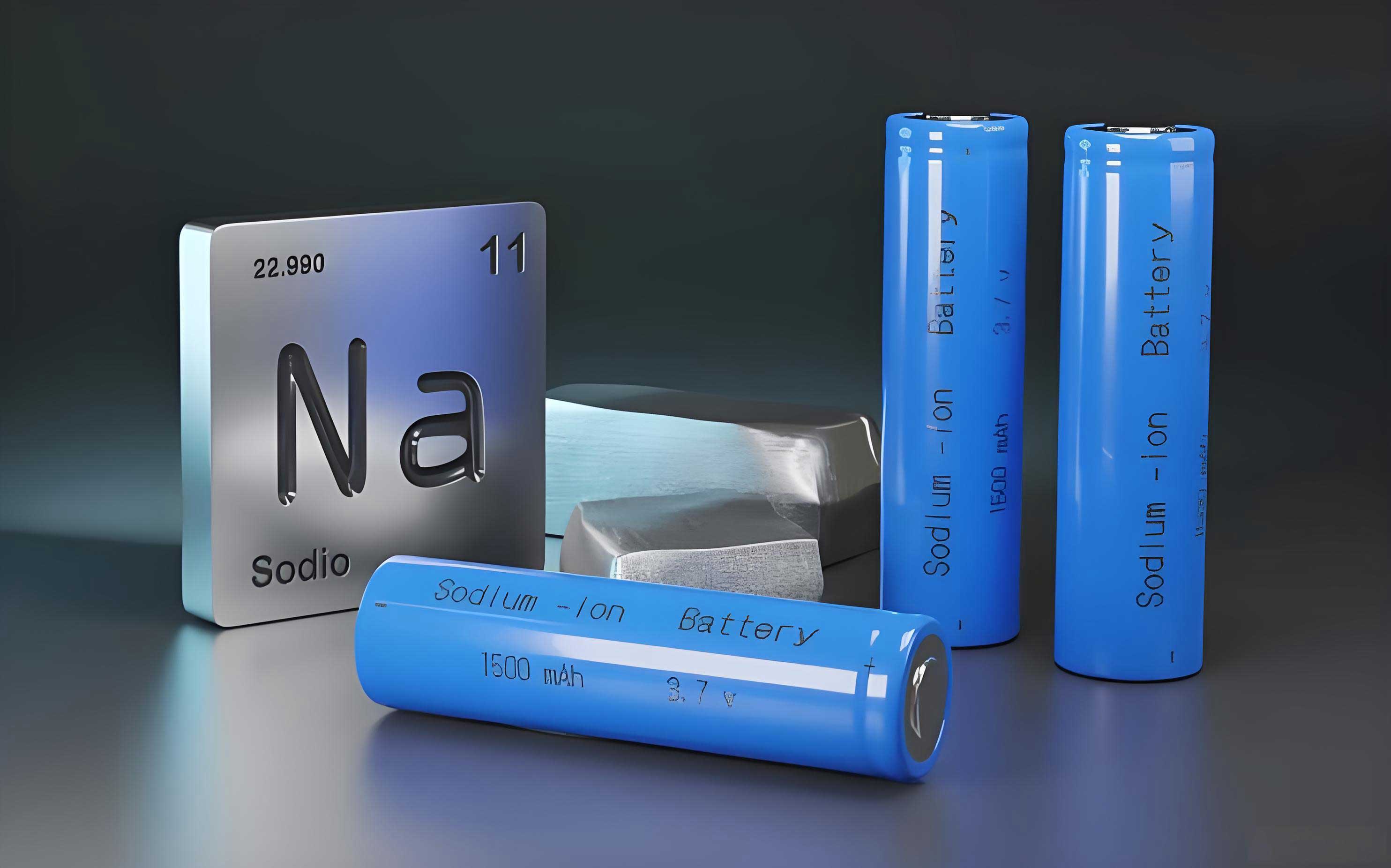
The solvation structure refers to the arrangement of solvent molecules and ions around sodium ions (Na⁺) in the electrolyte. In traditional dilute electrolytes, Na⁺ is typically surrounded by a solvation sheath of polar solvent molecules, such as water or carbonates, leading to solvent-dominated reactions at the electrode interface. However, in high-concentration electrolytes, the scarcity of free solvent molecules shifts the solvation structure toward anion participation, where anions like bis(fluorosulfonyl)imide (FSI⁻) or triflate (OTf⁻) enter the inner solvation shell. This alteration reduces solvent decomposition and promotes anion-derived SEI formation, which is often more stable and ionically conductive. The general solvation equilibrium can be represented as:
$$ \text{Na}^+ + n\text{S} + m\text{A}^- \rightleftharpoons [\text{NaS}_n\text{A}_m]^{(1-m)} $$
where S denotes solvent molecules, A⁻ denotes anions, and n and m are coordination numbers. In dilute solutions, m ≈ 0, but in concentrated electrolytes, m increases, leading to contact ion pairs (CIPs) or aggregates (AGGs). The transition from solvent-separated ion pairs (SSIPs) to CIPs can be described by the free energy change ΔG, which influences SEI composition:
$$ \Delta G = -RT \ln K $$
where K is the equilibrium constant for ion pair formation. This shift is crucial for sodium-ion battery performance, as it affects the electrochemical stability window, ionic conductivity, and SEI morphology.
In aqueous sodium-ion batteries, the solvation structure is dominated by water molecules, which pose challenges due to hydrogen evolution reactions (HER) that narrow the electrochemical window. High-concentration “water-in-salt” (WIS) electrolytes mitigate this by reducing free water activity, as seen in systems like 9 mol/kg NaCF₃SO₃, where the solvation structure transitions to [Na(H₂O)₆]⁺-CF₃SO₃⁻ complexes. The number of water molecules per Na⁺, denoted as N, decreases with concentration, following the relation:
$$ N = \frac{[\text{H}_2\text{O}]}{[\text{Na}^+]} $$
At high salt concentrations, N can drop below 3, leading to a mono-layer solvation sheath that suppresses HER. The electrochemical window (EW) expansion in WIS electrolytes can be estimated by the Nernst equation, considering the shift in reduction potentials:
$$ E_{\text{red}} = E^0_{\text{red}} – \frac{RT}{F} \ln \frac{[\text{Ox}]}{[\text{Red}]} $$
where E⁰_red is the standard reduction potential, and [Ox] and [Red] are concentrations of oxidized and reduced species. For sodium-ion batteries, the EW extension enables higher voltage operation, enhancing energy density. Table 1 summarizes key aqueous sodium-ion battery electrolytes and their performance, highlighting how solvation structure modifications improve SEI stability.
| Year | Electrolyte Composition | Key Performance Metrics | Cathode | Anode |
|---|---|---|---|---|
| 2017 | 9 mol/kg NaCF₃SO₃ in water | Cycle life: 350 cycles at 0.1 C, coulombic efficiency >99.2%, EW: 2.5 V | Na₀.₆₆[Mn₀.₆₆Ti₀.₃₄]O₂ | NaTi₂(PO₄)₃ |
| 2018 | 32 mol/kg CH₃COOK + 8 mol/kg CH₃COONa in water | EW: ~4 V, capacity: 60 mAh/g | Na₂MnFe(CN)₆ | NaTi₂(PO₄)₃ |
| 2019 | 35 mol/kg NaFSI in water | EW: 2.6 V, conductivity >30 mS/cm | N/A | N/A |
| 2020 | NaClO₄-H₂O-urea-DMF mixture | EW: ~2.8 V, cycle stability: 2000 cycles at 2 C with 80% retention | NiHCF | NaTi₂(PO₄)₃ |
| 2020 | 9 mol/kg NaCF₃SO₃ + 22 mol/kg TEAOTf in water | EW: 3.3 V, cycle life: 800 cycles at 1 C with 76% capacity retention | Na₁.₈₈Mn[Fe(CN)₆]₀.₉₇·1.35H₂O | NaTi₂(PO₄)₃ |
| 2021 | 17 mol/kg NaClO₄ + 2 mol/kg NaOTf in water | EW: 2.8 V, cycle life: 100 cycles at 1 C with 87.5% retention | Na₃V₂(PO₄)₃ | Na₃V₂(PO₄)₃ |
The data in Table 1 illustrates that high-concentration aqueous electrolytes in sodium-ion batteries achieve wider EWs and better cycling stability through solvation structure control. For instance, the addition of inert cations like tetraethylammonium (TEA⁺) in “water-in-bisalt” (BSIS) systems further enhances EW by forming unique cation-anion networks, as described by molecular dynamics simulations. The solvation free energy ΔG_solv for Na⁺ in such mixtures can be modeled using Born-Haber cycles:
$$ \Delta G_{\text{solv}} = -\frac{N_A z^2 e^2}{8\pi\epsilon_0 r_{\text{ion}}} \left(1 – \frac{1}{\epsilon_r}\right) $$
where z is the ion charge, e is the electron charge, ε₀ is vacuum permittivity, ε_r is the solvent dielectric constant, and r_ion is the ionic radius. For sodium-ion batteries, the larger r_ion of Na⁺ (102 pm) compared to Li⁺ (76 pm) results in weaker ion-solvent interactions, making anion coordination more favorable in concentrated electrolytes. This influences SEI composition, as anions like FSI⁻ decompose to form inorganic-rich layers (e.g., NaF, Na₂S) that improve Na⁺ transport.
In organic sodium-ion battery electrolytes, solvents such as carbonates, ethers, and phosphates define the solvation structure. High-concentration organic electrolytes, like 3 mol/L NaFSI in propylene carbonate (PC)/ethylene carbonate (EC), exhibit enhanced SEI formation due to anion-dominated reduction. The lowest unoccupied molecular orbital (LUMO) energy levels shift from solvent to anion with increasing concentration, as per density functional theory (DFT) calculations. The LUMO energy E_LUMO can be approximated by:
$$ E_{\text{LUMO}} = -\frac{\hbar^2}{2m_e} \left(\frac{\pi}{L}\right)^2 $$
for a particle-in-a-box model, where ħ is reduced Planck’s constant, m_e is electron mass, and L is the molecular size. In practice, E_LUMO values determine reduction potentials, with lower E_LUMO favoring earlier reduction. For sodium-ion batteries, anions like FSI⁻ have E_LUMO around -1.5 eV vs. standard hydrogen electrode (SHE), leading to preferential reduction over solvents like EC (E_LUMO ~ -0.8 eV). This results in a stable SEI composed of NaF and Na₂SO₄, which mitigates dendrite growth and improves cycle life. Table 2 summarizes organic electrolyte systems and their performance in sodium-ion batteries.
| Year | Electrolyte Composition | Key Performance Metrics | Cathode | Anode |
|---|---|---|---|---|
| 2020 | 0.5 mol/L NaBOB in trimethyl phosphate (TMP) | Energy density >250 Wh/kg, 50 cycles with ~97.5% coulombic efficiency | Prussian white | Hard carbon |
| 2019 | 3 mol/L NaFSI in PC/EC | Conductivity: 6.3 mS/cm, viscosity: 23 mPa·s, 500 cycles with 95% retention | N/A | Hard carbon |
| 2019 | NaPF₆ in fluorinated ether (FRE) | Cycle life: 2000 cycles at 5 C with 94% retention, average coulombic efficiency 99.9%, EW: 5.2 V | Na₃V₂(PO₄)₃ | Sodium metal |
| 2018 | 3.3 mol/L NaFSA in TMP | Operating voltage: 3.7 V, 1200 cycles with 99.4% efficiency, conductivity: 2.2 mS/cm | Na₃V₂(PO₄)₃ | Hard carbon |
| 2017 | 0.025 mol/L NaDFOB + 1 mol/L NaClO₄ in EC/PC | Cycle life: 200 cycles at 0.2 C with 89.5% coulombic efficiency | NaNi₀.₅Mn₀.₅O₂ | N/A |
From Table 2, it is evident that high-concentration organic electrolytes in sodium-ion batteries offer improved safety and cycling performance. For example, localized high-concentration electrolytes (LHCEs) dilute aggressive solvents with inert diluents like bis(2,2,2-trifluoroethyl) ether (BTFE), maintaining anion-rich solvation structures while reducing viscosity. The ionic conductivity σ in such electrolytes follows the Arrhenius equation:
$$ \sigma = \sigma_0 \exp\left(-\frac{E_a}{RT}\right) $$
where σ₀ is pre-exponential factor and E_a is activation energy. In sodium-ion batteries, E_a typically ranges from 0.1 to 0.3 eV, depending on solvation complexity. The Walden rule relates conductivity to fluidity η⁻¹:
$$ \Lambda \eta = \text{constant} $$
where Λ is molar conductivity. Deviations indicate ion association, which is prevalent in concentrated sodium-ion battery electrolytes. To quantify solvation effects, the Stokes-Einstein equation describes Na⁺ diffusion coefficient D:
$$ D = \frac{k_B T}{6\pi\eta r_{\text{hyd}}} $$
where k_B is Boltzmann constant, T is temperature, and r_hyd is hydrated radius. In sodium-ion batteries, r_hyd decreases with anion coordination, enhancing D and rate capability.
The SEI formation process in sodium-ion batteries is governed by the reduction of solvated species at the anode surface. The current density i for SEI growth can be modeled by Butler-Volmer kinetics:
$$ i = i_0 \left[\exp\left(\frac{\alpha nF\eta}{RT}\right) – \exp\left(-\frac{(1-\alpha)nF\eta}{RT}\right)\right] $$
where i₀ is exchange current density, α is transfer coefficient, n is number of electrons, F is Faraday constant, and η is overpotential. For sodium-ion batteries, i₀ is higher for anion reduction in concentrated electrolytes, leading to faster SEI formation. The SEI thickness δ grows with time t according to parabolic law:
$$ \delta = \sqrt{2k_p t} $$
where k_p is parabolic rate constant, dependent on electrolyte composition. In sodium-ion batteries, anion-derived SEI exhibits lower k_p, ensuring long-term stability. The SEI ionic conductivity σ_SEI can be expressed as:
$$ \sigma_{\text{SEI}} = \sum_i c_i \mu_i z_i F $$
where c_i, μ_i, and z_i are concentration, mobility, and charge of ion i. Organic-inorganic hybrid SEI in sodium-ion batteries often has σ_SEI around 10⁻⁶ to 10⁻⁸ S/cm, sufficient for Na⁺ transport but blocking electrons.
To further elucidate solvation structure effects, I consider molecular dynamics (MD) simulations that reveal coordination numbers CN for Na⁺ in various electrolytes. For aqueous systems, CN for water decreases from ~6 in dilute solutions to ~3 in WIS electrolytes, while CN for anions increases. This can be represented as:
$$ \text{CN}_{\text{total}} = \text{CN}_{\text{water}} + \text{CN}_{\text{anion}} $$
In organic electrolytes like ethers, Na⁺ coordinates with oxygen atoms, forming complexes like [Na(glyme)₁]⁺. The binding energy E_b between Na⁺ and solvent is given by:
$$ E_b = -\frac{q_{\text{Na}} q_{\text{S}}}{4\pi\epsilon_0 r} + \text{van der Waals terms} $$
where q are partial charges and r is distance. For sodium-ion batteries, E_b is lower for Na⁺ compared to Li⁺, facilitating easier desolvation at the electrode interface. The desolvation energy ΔE_desolv contributes to overpotential η_desolv:
$$ \eta_{\text{desolv}} = \frac{\Delta E_{\text{desolv}}}{nF} $$
Reducing ΔE_desolv through solvation structure tuning is key for high-power sodium-ion batteries.
In addition to concentration, solvent selection profoundly impacts solvation structure in sodium-ion batteries. For instance, dimethyl sulfoxide (DMSO) as a co-solvent in aqueous electrolytes forms hydrogen bonds with water, reducing its activity and suppressing HER. The hydrogen bonding energy E_HB can be estimated using Lippincott-Schroeder potential:
$$ E_{\text{HB}} = D_e \left[1 – \exp\left(-a(r – r_e)\right)\right]^2 $$
where D_e is dissociation energy, a is constant, r is O-H distance, and r_e is equilibrium distance. In sodium-ion batteries, such interactions expand the EW by up to 3.1 V. Similarly, in organic electrolytes, fluorinated solvents enhance oxidation stability by lowering the highest occupied molecular orbital (HOMO) energy. The HOMO energy E_HOMO relates to oxidation potential E_ox:
$$ E_{\text{ox}} = -E_{\text{HOMO}} + \text{constant} $$
For sodium-ion batteries, this allows higher voltage cathodes, increasing energy density.
Looking ahead, I believe future research on sodium-ion batteries should focus on optimizing solvation structures for tailored SEI properties. This includes developing multi-solvent systems that balance ionicity and viscosity, as well as exploring solid-state electrolytes that eliminate solvent effects entirely. The role of additives, like fluoroethylene carbonate (FEC), in modifying solvation shells also warrants investigation. Moreover, in-situ characterization techniques, such as Raman spectroscopy and X-ray photoelectron spectroscopy (XPS), can provide real-time insights into SEI evolution. For sodium-ion batteries, achieving a uniform, inorganic-rich SEI through anion-driven solvation will be crucial for commercialization.
In summary, the solvation structure in sodium-ion battery electrolytes is a key determinant of SEI formation and battery performance. High-concentration electrolytes, both aqueous and organic, shift solvation toward anion participation, leading to stable SEI layers that enhance cycle life and safety. By understanding and manipulating these structures through formulas and empirical data, as summarized in tables, we can advance sodium-ion batteries toward sustainable energy storage solutions. The continuous innovation in electrolyte design promises to unlock the full potential of sodium-ion batteries in grid-scale and portable applications.