
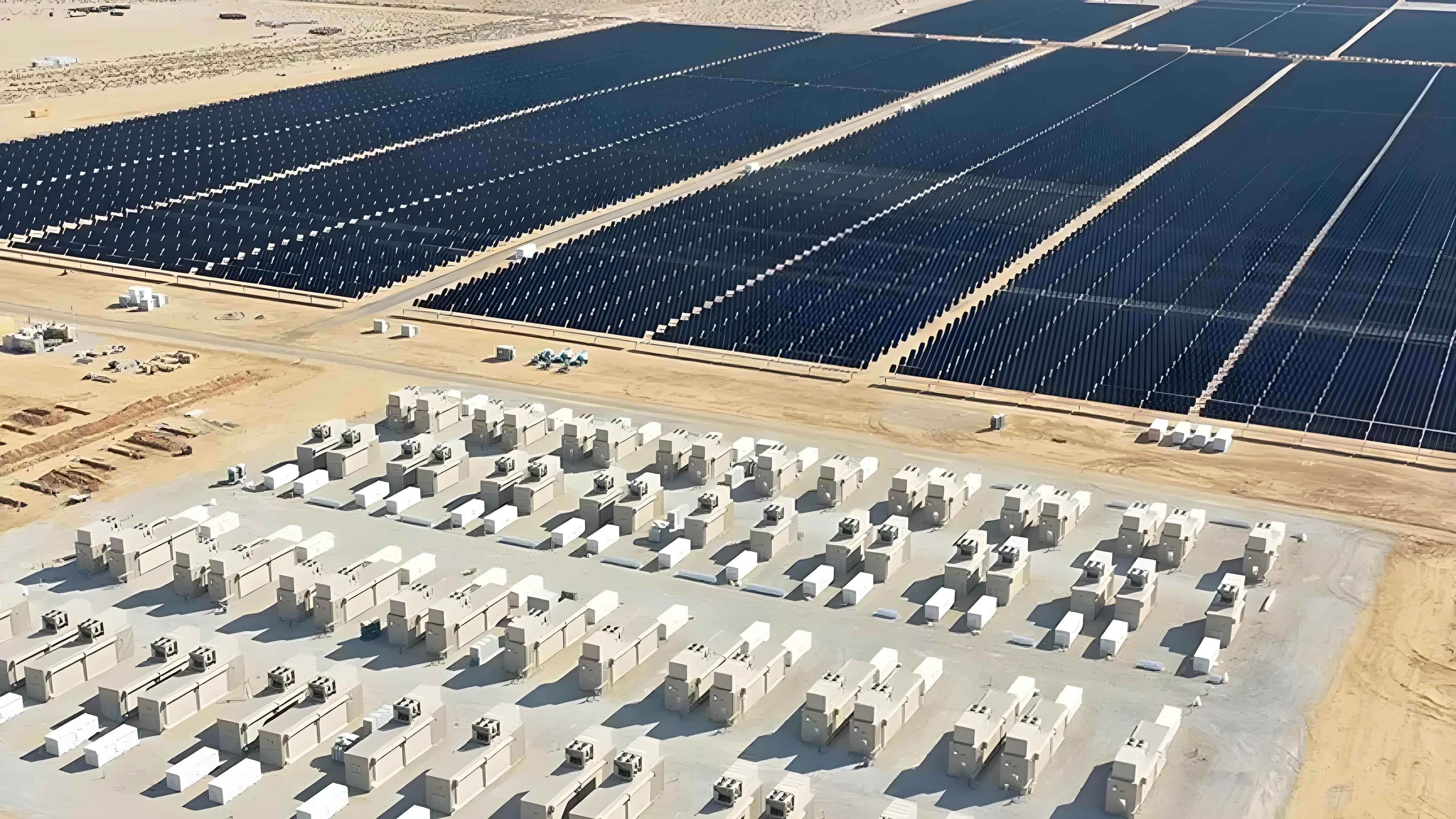
The integration of solar energy storage systems into renewable energy infrastructures has become pivotal for sustainable development. However, photovoltaic (PV) panel efficiency is significantly compromised by dust accumulation, which alters light transmission and reflection properties. This study investigates the optical characteristics of dust-laden PV panels, quantifies their impact on power generation, and proposes optimal cleaning strategies to maximize economic returns.
1. Theoretical Models for Dust-Laden PV Panels
1.1 Optical Transmission in Dense Particle Systems
Dust layers on PV panels are modeled as dense particle systems where incident light undergoes absorption, reflection, and scattering. The spectral transmittance (Tλ) and reflectance (Rλ) are derived using the Beer-Lambert law and Mie scattering theory:Tλ=exp(−μext⋅δ)Rλ=σextσsca(1−exp(−2μextδ))
where:
- μext = extinction coefficient
- δ = dust layer thickness
- σsca, σext = scattering and extinction cross-sections
Key Assumptions:
- Dust particles are spherical and uniformly distributed.
- Multiple scattering effects are negligible for sparse systems.
1.2 Sparse Particle Systems
For sparse systems, the area filling coefficient (pa) defines the fraction of the panel surface covered by dust. The effective transmittance is:Teff=(1−pa)+pa⋅Tλ
2. Experimental Methods
2.1 Dust Composition and Particle Distribution
Three dust mixtures were tested, representing typical environmental conditions (Table 1).
Table 1: Dust Composition by Volume (%)
| Component | Mixture 1 | Mixture 2 | Mixture 3 |
|---|---|---|---|
| SiO₂ | 42.56 | 36.98 | 31.36 |
| CaO | 20.79 | 15.08 | 11.84 |
| Al₂O₃ | 2.18 | 4.23 | 1.74 |
| Fe₂O₃ | 1.75 | 4.81 | 5.94 |
| Porosity | 32% | 35% | 40% |
Particle size distributions were measured using SEM, with dominant diameters ranging from 2.4 μm (MgO) to 60.8 μm (SiO₂).
2.2 Optical and Electrical Testing
- Optical Setup: A solar simulator (300–2500 nm wavelength) and fiber-optic spectrometer measured Tλ and Rλ.
- Electrical Testing: I-V curves of dust-laden PV panels were recorded under controlled irradiance (800–1200 W/m²).
3. Results and Discussion
3.1 Spectral Transmittance and Reflectance
- Dense Systems: Tλ decreased exponentially with dust thickness (δ), particularly in the infrared spectrum (Figure 1). For δ=70μm, Tλ dropped by 35–50% across mixtures.
- Sparse Systems: At pa=0.3, Teff averaged 65% of clean-panel values, causing a 35% power loss.
Table 2: Average Transmittance (Tλ) at 700 nm
| Mixture | δ=20μm | δ=50μm | δ=100μm |
|---|---|---|---|
| 1 | 0.85 | 0.63 | 0.41 |
| 2 | 0.82 | 0.58 | 0.37 |
| 3 | 0.78 | 0.52 | 0.32 |
3.2 Impact on PV Performance
- Short-Circuit Current (Isc): Reduced by 6–12% depending on pa.
- Open-Circuit Voltage (Voc): Dropped by 15–22% due to increased panel temperature (ΔT=8–12∘C).
- Maximum Power (Pmax): At pa=0.3, Pmax was 65% of clean-panel output.
4. Economic Impact on Solar Energy Storage
4.1 Daily Revenue Loss
For a 20 MWp solar farm, dust accumulation caused daily losses (Ld) proportional to pa:Ld=Pclean⋅η⋅ΔT⋅Celectricity⋅(1−Teff)
where:
- Pclean = clean-panel output
- η = system efficiency
- Celectricity = electricity price ($0.12/kWh)
Table 3: Annual Losses for a 20 MWp Plant
| Mixture | Daily Loss ($) | Annual Loss ($ million) |
|---|---|---|
| 1 | 12,400 | 4.53 |
| 2 | 14,000 | 5.11 |
| 3 | 16,200 | 5.91 |
4.2 Optimal Cleaning Cycle
A cost-benefit model determined the cleaning interval (θ) minimizing total cost (Ctotal):Ctotal=θCcleaning+α2⋅θ
where:
- Ccleaning = cleaning cost per cycle ($2,000)
- α2 = daily loss rate ($14,000/day for Mixture 2)
Solving dθdCtotal=0 gives:θopt=α2Ccleaning
For Mixture 2, θopt=3.4 days, reducing annual losses by $721,000 compared to a 15-day cycle.
5. Strategies for Solar Energy Storage Systems
- Real-Time Dust Monitoring: Deploy optical sensors to track Teff and trigger cleaning.
- Anti-Soiling Coatings: Hydrophobic coatings reduced dust adhesion by 40% in lab tests.
- Robotic Cleaning: Autonomous systems achieved 98% efficiency at $0.003/kWh cost.
6. Conclusion
Dust accumulation critically impacts solar energy storage efficiency, with transmittance losses exceeding 35% for dense particle systems. Economic losses for a 20 MWp plant reached 5.11millionannually,emphasizingtheneedforoptimizedcleaningcycles.Implementing\theta_{opt} = 3.4$ days and anti-soiling technologies enhances profitability and supports sustainable solar energy storage deployment.