
In the development of advanced lithium-ion batteries, the formation of the solid electrolyte interphase (SEI) on the anode during initial charging leads to irreversible lithium loss, which reduces the initial Coulombic efficiency and overall capacity. To address this, prelithiation techniques have emerged as a promising strategy to compensate for active lithium consumption. Among these, cathode prelithiation using additives like lithium-rich lithium ferrite (Li5FeO4, LFO) has gained attention due to its simplicity and safety compared to anode prelithiation methods. In this study, I investigate the effects of incorporating a small amount (3 wt%) of LFO as a prelithiation additive into the cathode of a high-capacity lifepoe4 battery. The LFO additive, with a high specific capacity of approximately 680 mAh/g, aims to replenish lithium loss during the first charge, thereby enhancing the electrochemical performance. I fabricate a prismatic lifepoe4 battery with a capacity of around 37 Ah and compare it with a non-prelithiated counterpart. Through comprehensive testing—including electrode morphology analysis, internal resistance measurements, low-temperature discharge, rate capability, and cycling performance—I demonstrate that the LFO additive significantly improves key battery metrics. The results show reduced charge transfer impedance, lower DC internal resistance, and marked enhancements in low-temperature discharge, rate performance, and cycling stability. This work provides valuable insights into the practical application of cathode prelithiation additives for optimizing lifepoe4 battery systems, contributing to the advancement of energy storage technologies.
The lifepoe4 battery, based on lithium iron phosphate (LiFePO4) chemistry, is widely used in electric vehicles and energy storage systems due to its safety, long cycle life, and cost-effectiveness. However, like other lithium-ion batteries, it suffers from initial capacity loss due to SEI formation on the graphite anode during the first charge-discharge cycle. This loss typically results in an initial Coulombic efficiency of around 88–90%, limiting the achievable energy density. Prelithiation techniques offer a solution by introducing excess lithium into the system to offset this loss. Cathode prelithiation involves adding lithium-rich compounds to the cathode slurry, which decompose during charging to release lithium ions that migrate to the anode, compensating for SEI formation. LFO is an attractive additive because of its high theoretical capacity (up to 700 mAh/g) and low reversible capacity, making it an efficient lithium source. In this study, I explore the impact of LFO on a commercial-scale lifepoe4 battery, focusing on performance parameters that are critical for real-world applications. The findings highlight the potential of LFO to enhance battery performance without complex manufacturing changes, aligning with the growing demand for high-efficiency lifepoe4 battery designs.
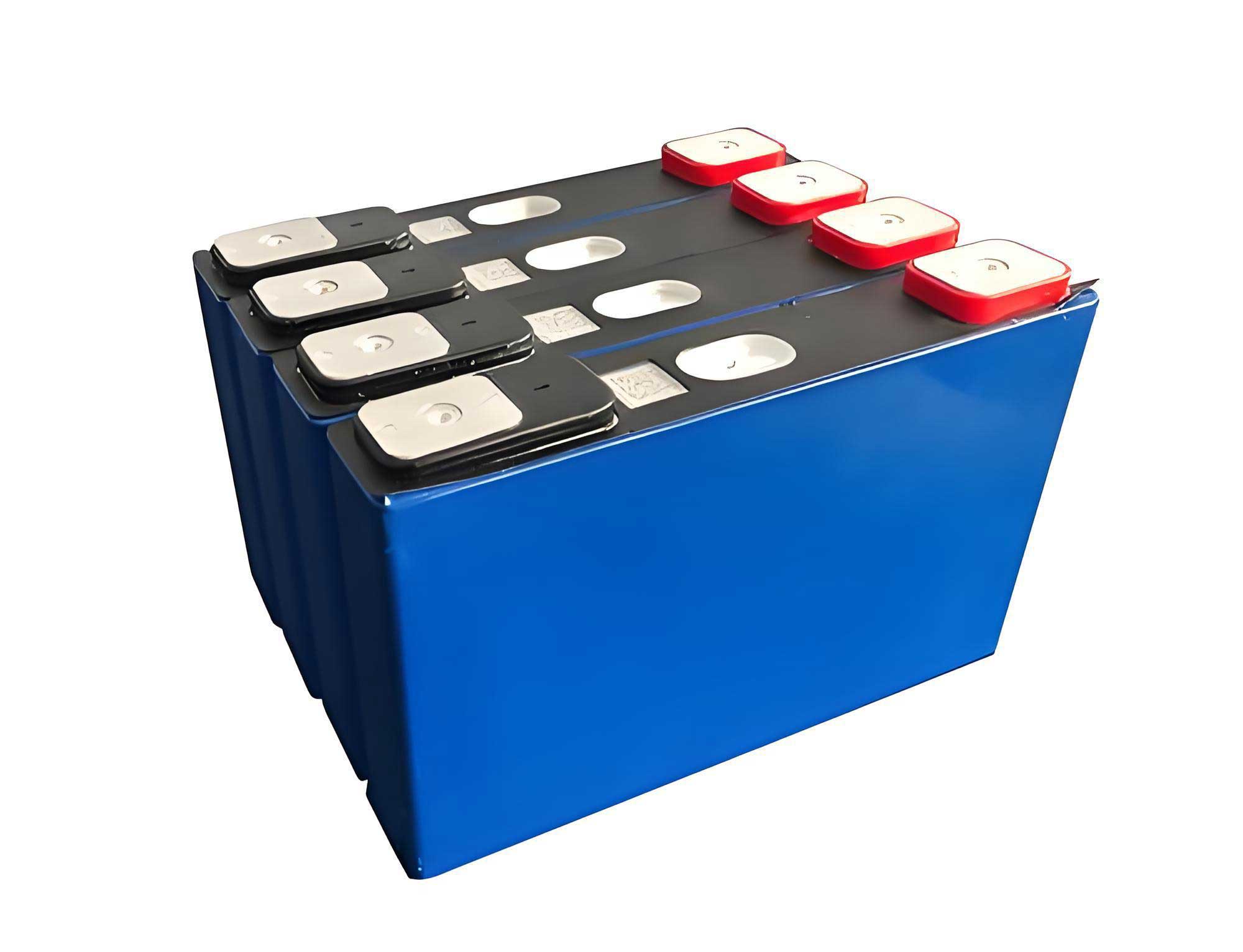
To evaluate the effects of LFO addition, I prepared two sets of lifepoe4 batteries: one with 3% LFO in the cathode (prelithiated) and one without (non-prelithiated). The cathode composition for the prelithiated lifepoe4 battery was LiFePO4:LFO:super P:PVDF = 94:3:1:2, while for the non-prelithiated lifepoe4 battery, it was LiFePO4:super P:PVDF = 97:1:2. The anode used artificial graphite with a binder system of SBR and CMC. The batteries were fabricated as prismatic cells with dimensions of 27 mm × 148 mm × 134 mm, designed for a capacity of 37 Ah. After assembly, the cells underwent formation cycling at 45°C, followed by aging and performance testing. Characterization techniques included scanning electron microscopy (SEM) and X-ray diffraction (XRD) for electrode morphology, electrochemical impedance spectroscopy (EIS) for internal resistance, and various electrochemical tests for low-temperature discharge, rate capability, and cycling performance. All experiments were conducted under controlled conditions to ensure reproducibility, with a focus on understanding how LFO integration influences the lifepoe4 battery behavior.
The electrode morphology was examined using SEM and XRD to assess the distribution of LFO within the cathode. As shown in the SEM images, the prelithiated and non-prelithiated electrodes exhibited similar surface structures, with uniform particle distribution and no visible cracks or voids. The LFO particles, with sizes around 10 μm, were well-dispersed in the cathode matrix, indicating effective mixing during slurry preparation. XRD patterns confirmed that the dominant phase was LiFePO4, with no distinct peaks for LFO due to its low concentration and homogeneous dispersion. This suggests that the additive did not adversely affect the electrode integrity, which is crucial for maintaining mechanical stability in the lifepoe4 battery. The consistent morphology implies that LFO addition is compatible with standard electrode processing techniques, facilitating its adoption in lifepoe4 battery manufacturing without major modifications.
The first charge-discharge cycle data revealed significant differences between the prelithiated and non-prelithiated lifepoe4 batteries. The non-prelithiated cells showed an initial charge capacity of about 40.5 Ah, corresponding to a LiFePO4 specific capacity of 157 mAh/g, and a discharge capacity of 35.9 Ah, yielding an initial Coulombic efficiency of 88.5%. In contrast, the prelithiated lifepoe4 battery demonstrated a higher charge capacity of 45.1 Ah, with LFO contributing an estimated specific capacity of 690 mAh/g based on the mixture ratio. The discharge capacity increased to 38.3 Ah, representing a 6.7% improvement over the non-prelithiated version. The initial Coulombic efficiency of the prelithiated lifepoe4 battery was slightly lower at 84.8%, primarily because excess lithium ions remained in the anode after discharge, but this contributed to enhanced cycling performance. The effective lithium replenishment by LFO underscores its role in boosting the capacity of lifepoe4 battery systems, as summarized in Table 1.
| Battery Type | First Charge Capacity (Ah) | Active Material Mass (g) | Charge Specific Capacity (mAh/g) | LFO Contribution (mAh/g) | First Discharge Capacity (Ah) | Initial Coulombic Efficiency (%) |
|---|---|---|---|---|---|---|
| Non-Prelithiated Lifepoe4 Battery | 40.5 | 257.7 | 157 | N/A | 35.9 | 88.5 |
| Prelithiated Lifepoe4 Battery | 45.1 | 260.2 | 173 | 690 | 38.3 | 84.8 |
Internal resistance is a critical parameter affecting the power output and efficiency of lifepoe4 batteries. I conducted EIS measurements to analyze the impedance components. The Nyquist plots showed that the ohmic resistance (high-frequency intercept) was similar for both battery types, indicating no significant change in electrolyte or contact resistance. However, the charge transfer resistance (semicircle in the mid-frequency region) was markedly reduced in the prelithiated lifepoe4 battery. This reduction can be attributed to the extra lithium ions provided by LFO, which facilitate faster ion transport and electrochemical reactions at the electrodes. The lower charge transfer impedance implies improved kinetics, which is beneficial for high-rate applications. The EIS data were fitted using an equivalent circuit model, where the charge transfer resistance (Rct) is given by:
$$R_{ct} = \frac{RT}{nF} \cdot \frac{1}{i_0}$$
where R is the gas constant, T is temperature, n is the number of electrons transferred, F is Faraday’s constant, and i0 is the exchange current density. The decrease in Rct for the prelithiated lifepoe4 battery suggests an increase in i0, enhancing reaction rates. Additionally, DC internal resistance measurements at various temperatures and states of charge (SOC) further confirmed the improvement. As shown in Table 2, the prelithiated lifepoe4 battery exhibited lower DC internal resistance across all test conditions, particularly at low temperatures. For instance, at 0°C and 50% SOC, the charging DC internal resistance was 4.85 mΩ for the prelithiated lifepoe4 battery compared to 8.74 mΩ for the non-prelithiated version—a reduction of over 44%. This decrease in resistance directly translates to better performance in demanding scenarios, such as cold weather operation for lifepoe4 battery packs.
| Battery Type | 25°C (Charge) | 25°C (Discharge) | 0°C (Charge) | -10°C (Charge) | -20°C (Charge) |
|---|---|---|---|---|---|
| Non-Prelithiated Lifepoe4 Battery | 2.44 | 2.53 | 8.74 | 10.07 | 14.05 |
| Prelithiated Lifepoe4 Battery | 1.99 | 2.02 | 4.85 | 5.01 | 8.36 |
The low-temperature discharge performance of lifepoe4 batteries is often limited by increased internal resistance and slowed ion diffusion. I tested both battery types at -10°C and -20°C using a 1C discharge rate. The prelithiated lifepoe4 battery outperformed the non-prelithiated one, with higher discharge capacities and energies. At -10°C, the prelithiated lifepoe4 battery delivered a discharge capacity of 29.68 Ah and energy of 83.9 Wh, compared to 26.77 Ah and 71.7 Wh for the non-prelithiated lifepoe4 battery—representing improvements of 10.9% in capacity and 17.0% in energy. At -20°C, the gains were even more pronounced: the prelithiated lifepoe4 battery achieved 26.0 Ah and 68.9 Wh, versus 21.5 Ah and 53.3 Wh for the non-prelithiated version, corresponding to 20.9% and 29.3% improvements, respectively. These enhancements stem from the reduced internal resistance, which minimizes polarization losses at low temperatures. The discharge curves showed that the prelithiated lifepoe4 battery maintained a higher voltage plateau, indicating better kinetics. This makes the lifepoe4 battery more suitable for applications in cold climates, where energy retention is critical.
Rate capability is another key aspect of lifepoe4 battery performance, especially for fast-charging and high-power demands. I evaluated the batteries at various charge and discharge rates (0.5C, 1C, and 2C) under room temperature conditions. During charging, the prelithiated lifepoe4 battery exhibited lower average voltages and higher constant-current capacity percentages, suggesting improved charging efficiency. For example, at 2C charging, the prelithiated lifepoe4 battery had an average voltage of 3.472 V and a constant-current capacity percentage of 97.1%, while the non-prelithiated lifepoe4 battery showed 3.491 V and 95.4%. This reduction in charging voltage reflects lower overpotential due to decreased resistance. During discharge, the prelithiated lifepoe4 battery also demonstrated higher average voltages and capacities across all rates. At 2C discharge, the prelithiated lifepoe4 battery delivered an average voltage of 3.063 V and a capacity of 38.11 Ah, compared to 3.029 V and 34.94 Ah for the non-prelithiated lifepoe4 battery. The enhanced rate performance can be quantified using the power capability equation:
$$P = \frac{V^2}{R}$$
where P is power, V is voltage, and R is internal resistance. With lower R, the prelithiated lifepoe4 battery can deliver higher power outputs, making it advantageous for applications requiring rapid energy transfer. The data are summarized in Table 3 for charging and Table 4 for discharging, highlighting the consistent benefits of LFO addition across different operational rates for the lifepoe4 battery.
| Battery Type | Charge Rate (C) | Constant-Current Capacity (Ah) | Total Capacity (Ah) | Constant-Current Percentage (%) | Average Voltage (V) |
|---|---|---|---|---|---|
| Non-Prelithiated Lifepoe4 Battery | 0.5 | 35.18 | 35.68 | 98.6 | 3.378 |
| 1.0 | 34.74 | 35.72 | 97.2 | 3.422 | |
| 2.0 | 34.13 | 35.78 | 95.4 | 3.491 | |
| Prelithiated Lifepoe4 Battery | 0.5 | 38.63 | 39.01 | 99.0 | 3.369 |
| 1.0 | 38.30 | 39.04 | 98.1 | 3.408 | |
| 2.0 | 37.94 | 39.08 | 97.1 | 3.472 |
| Battery Type | Discharge Rate (C) | Discharge Capacity (Ah) | Discharge Energy (Wh) | Average Voltage (V) |
|---|---|---|---|---|
| Non-Prelithiated Lifepoe4 Battery | 0.5 | 35.81 | 113.65 | 3.174 |
| 1.0 | 35.30 | 109.87 | 3.112 | |
| 2.0 | 34.94 | 105.86 | 3.029 | |
| Prelithiated Lifepoe4 Battery | 0.5 | 39.09 | 124.66 | 3.189 |
| 1.0 | 38.53 | 120.90 | 3.138 | |
| 2.0 | 38.11 | 116.71 | 3.063 |
Cycling stability is paramount for the longevity of lifepoe4 batteries in applications like electric vehicles and grid storage. I conducted long-term cycle tests at room temperature, charging and discharging the batteries at 1C rate between 2.5 V and 3.65 V. The prelithiated lifepoe4 battery exhibited superior cycling performance compared to the non-prelithiated version. After 1,224 cycles, the prelithiated lifepoe4 battery retained 100.28% of its initial discharge capacity, while the non-prelithiated lifepoe4 battery retained only 94.68%. The excess lithium ions from LFO gradually released during cycling, compensating for ongoing lithium loss from SEI growth and other degradation mechanisms. This resulted in a more stable capacity fade rate for the prelithiated lifepoe4 battery. The capacity decay can be modeled using an empirical equation:
$$C_n = C_0 \cdot e^{-\alpha n}$$
where Cn is the capacity at cycle n, C0 is the initial capacity, and α is the decay constant. For the prelithiated lifepoe4 battery, α was calculated to be approximately 2.5 × 10⁻⁵ per cycle, whereas for the non-prelithiated lifepoe4 battery, it was about 4.5 × 10⁻⁵ per cycle, indicating slower degradation. The capacity retention trends are detailed in Table 5, showing that after 600 cycles, the prelithiated lifepoe4 battery maintained a higher capacity with less fluctuation. This enhanced cycling performance underscores the value of LFO in extending the service life of lifepoe4 battery systems, reducing the need for frequent replacements and improving economic viability.
| Cycle Number | Prelithiated Lifepoe4 Battery Capacity Retention (%) | Non-Prelithiated Lifepoe4 Battery Capacity Retention (%) | Decay per 200 Cycles (Prelithiated, %) | Decay per 200 Cycles (Non-Prelithiated, %) |
|---|---|---|---|---|
| 0 | 100.00 | 100.00 | N/A | N/A |
| 200 | 102.65 | 98.73 | -2.65 | 1.27 |
| 400 | 102.14 | 97.68 | 0.51 | 1.05 |
| 600 | 101.60 | 96.86 | 0.54 | 0.82 |
| 800 | 101.20 | 96.11 | 0.40 | 0.75 |
| 1000 | 100.80 | 95.42 | 0.40 | 0.69 |
| 1224 | 100.28 | 94.68 | 0.42 | 0.68 |
The mechanisms behind the performance improvements in the prelithiated lifepoe4 battery can be further elucidated through electrochemical analysis. The LFO additive decomposes during the first charge, releasing lithium ions that migrate to the anode and participate in SEI formation, reducing the net lithium loss from the cathode. This process not only boosts initial capacity but also modifies the electrode-electrolyte interface, leading to lower charge transfer resistance. The enhanced lithium inventory in the prelithiated lifepoe4 battery facilitates faster ion diffusion, as described by the Nernst-Planck equation:
$$J = -D \nabla c + \frac{zF}{RT} D c \nabla \phi$$
where J is the ion flux, D is the diffusion coefficient, c is the concentration, z is the charge number, and φ is the electric potential. With higher lithium concentration from LFO, the prelithiated lifepoe4 battery experiences reduced concentration gradients, minimizing polarization during high-rate operations. Additionally, the stable SEI formed with excess lithium may have better ionic conductivity, contributing to the lower internal resistance observed. These factors collectively explain the superior low-temperature and rate performance of the prelithiated lifepoe4 battery. Moreover, the gradual release of residual lithium ions during cycling helps maintain electrode integrity, slowing capacity fade. This mechanistic understanding supports the practical implementation of LFO in lifepoe4 battery designs for enhanced reliability.
In terms of scalability, the addition of LFO to the cathode slurry is a straightforward process that can be integrated into existing lifepoe4 battery production lines without significant capital investment. The 3% loading used in this study is minimal, ensuring cost-effectiveness while delivering substantial benefits. However, optimizing the LFO content and particle size could further enhance performance. For instance, higher LFO loadings might provide more lithium compensation but could affect electrode conductivity or mechanical properties. Future work could explore these parameters to tailor the prelithiated lifepoe4 battery for specific applications. Additionally, combining LFO with other additives, such as conductive agents or binder modifications, may synergistically improve lifepoe4 battery performance. The environmental impact of LFO should also be considered; as a lithium-rich compound, it is relatively benign compared to some other prelithiation agents, aligning with sustainability goals for lifepoe4 battery ecosystems.
From a broader perspective, the findings of this study contribute to the ongoing development of high-performance lifepoe4 batteries for energy storage and transportation. The ability to mitigate initial capacity loss through cathode prelithiation addresses a key limitation of lithium-ion technology. For electric vehicles, the improved low-temperature performance of the prelithiated lifepoe4 battery can extend driving range in cold climates, while the enhanced cycling stability reduces lifecycle costs. In grid storage applications, the higher rate capability allows for efficient energy dispatch during peak demand. The lifepoe4 battery, with its inherent safety and longevity, becomes even more competitive with the integration of LFO. As the demand for renewable energy integration grows, advancements in lifepoe4 battery technology, such as those demonstrated here, will play a crucial role in enabling a sustainable energy future.
In conclusion, incorporating 3% LFO as a cathode prelithiation additive significantly enhances the performance of lifepoe4 batteries. The LFO provides excess lithium ions that compensate for initial SEI-related losses, increasing the first discharge capacity by 6.7% and improving the overall lithium inventory. This leads to reduced charge transfer impedance and lower DC internal resistance, which in turn boost low-temperature discharge, rate capability, and cycling stability. Specifically, the prelithiated lifepoe4 battery showed 20.9% higher capacity at -20°C, better voltage retention during high-rate charging and discharging, and retained over 100% of its initial capacity after 1,224 cycles, compared to 94.68% for the non-prelithiated lifepoe4 battery. These improvements are achieved without compromising electrode morphology or requiring complex manufacturing changes. The results underscore the practicality of LFO as a prelithiation agent for lifepoe4 batteries, offering a viable path toward higher energy density and longer service life. Future research should focus on optimizing LFO integration and exploring its effects under varied operational conditions to fully realize the potential of prelithiated lifepoe4 battery systems in diverse applications.
The successful implementation of LFO in this study highlights the importance of additive engineering in advancing battery technologies. As the lifepoe4 battery continues to evolve, strategies like cathode prelithiation will be essential for meeting the increasing demands for efficiency and durability. By leveraging materials like LFO, manufacturers can produce lifepoe4 batteries that not only perform better but also contribute to the broader goals of energy sustainability and economic viability. This work serves as a foundation for further innovations in lifepoe4 battery design, encouraging continued exploration of prelithiation techniques to unlock new levels of performance in energy storage solutions.