
In recent years, the rapid development of renewable energy and electrification has underscored the critical role of battery energy storage systems in stabilizing power grids, enhancing energy efficiency, and supporting applications like electric vehicles. Lithium-ion batteries, with their high energy density and long cycle life, dominate the landscape of modern energy storage. However, thermal management remains a paramount challenge for ensuring the safety, performance, and longevity of these systems. Effective thermal control is essential because excessive heat accumulation can lead to thermal runaway—a catastrophic chain reaction involving uncontrolled heat and gas generation—posing significant risks, especially in large-scale battery energy storage systems. This review delves into immersion cooling, an emerging thermal management strategy where batteries are directly submerged in dielectric fluids. I will analyze the unique thermal management requirements of battery energy storage systems compared to electric vehicle batteries, explore the principles and advancements in immersion cooling technologies, evaluate key dielectric fluids, and discuss system integration challenges and safety implications. The focus is on providing a detailed technical overview to guide the design and optimization of immersion cooling solutions for battery energy storage systems.
The thermal management of battery energy storage systems differs fundamentally from that of electric vehicle batteries, necessitating tailored design priorities. Firstly, battery energy storage systems typically have larger physical footprints and higher energy capacities, allowing for more flexibility in cooling system design, including the use of hybrid cooling methods and greater volumes of dielectric fluids. Secondly, safety is even more critical in stationary battery energy storage systems, as a single cell thermal runaway event can propagate through entire modules, leading to devastating accidents with economic and human costs. Thus, preventing thermal runaway propagation is a key design driver. Thirdly, operational profiles vary: battery energy storage systems often operate at lower charge-discharge rates (e.g., for grid balancing), resulting in milder heat generation but longer cooling durations, whereas electric vehicle batteries demand high-power cycling. This distinction influences cooling performance requirements and system endurance. For instance, the optimal temperature range for lithium-ion batteries is 25–40°C, with intra-module temperature differences ideally below 5°C to avoid degradation and safety hazards. Immersion cooling, by enabling direct fluid-cell contact, offers superior heat transfer uniformity and efficiency, making it a promising approach for battery energy storage systems. As I explore this technology, I will emphasize how these system-level differences shape cooling strategies.
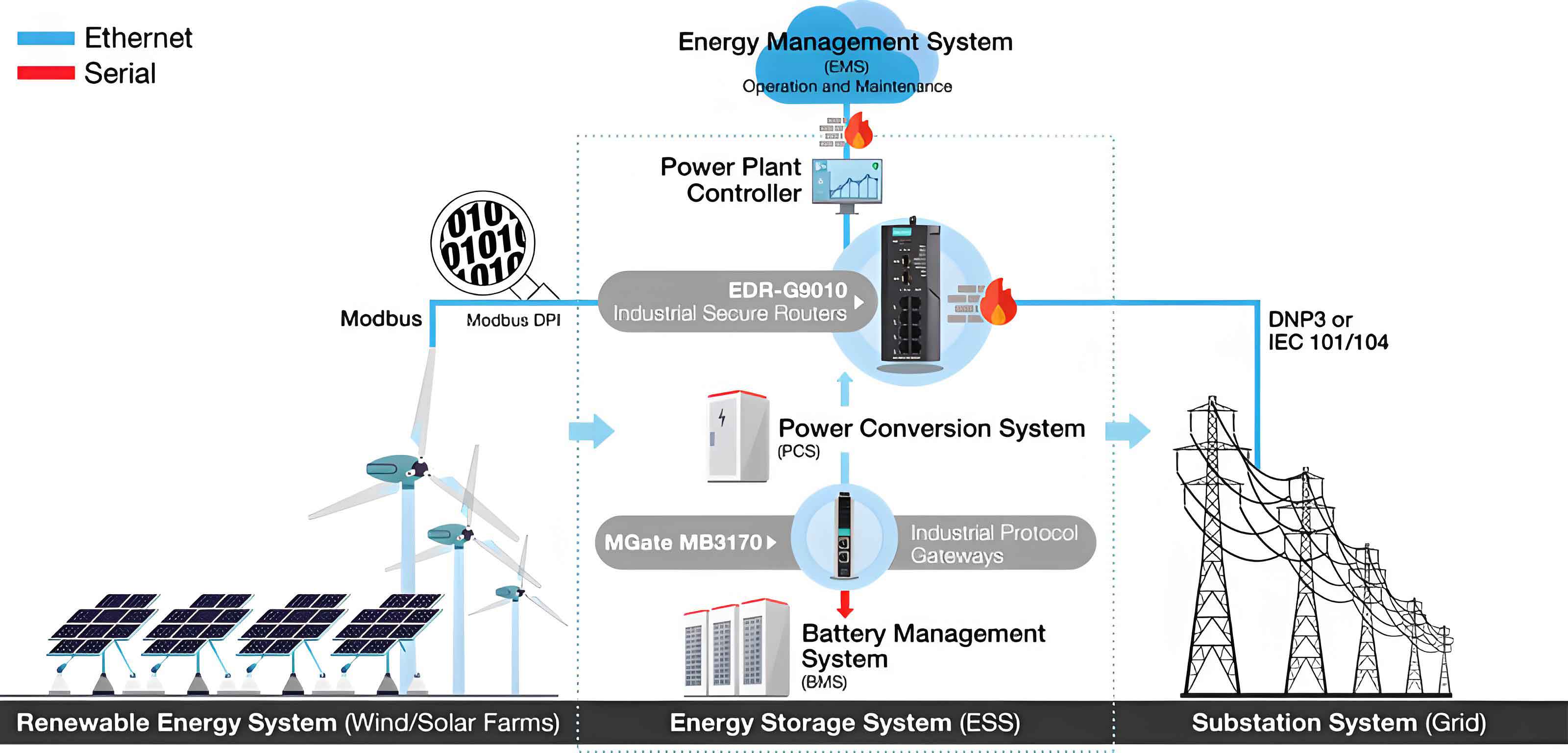
Immersion cooling technology can be categorized into single-phase and phase-change methods, each with distinct mechanisms and applications. In single-phase immersion cooling, batteries are submerged in a dielectric fluid with a high boiling point, and heat is dissipated via sensible heat transfer without phase change. This approach simplifies system design by eliminating complexities associated with boiling control and vapor recovery. Research on single-phase immersion cooling for battery energy storage systems encompasses experimental studies and numerical simulations, often comparing it with air cooling or indirect liquid cooling. For example, experiments with transformer oil or synthetic dielectric fluids have demonstrated temperature reductions of up to 6°C compared to forced air cooling, along with improved temperature uniformity. Numerical models, validated through experiments, enable parametric studies on factors like fluid flow rates, immersion depths, and battery spacing. These models reveal that increasing flow rates enhances cooling performance, but at the cost of higher pumping power. A key advantage for battery energy storage systems is the ability to simulate large-scale modules safely, such as studies showing that immersion cooling can limit temperature rises to below 10°C during 1C discharge in multi-cell arrays. The heat transfer process in single-phase immersion cooling can be described by the convective heat transfer equation:
$$ q = h A (T_{\text{cell}} – T_{\text{fluid}}) $$
where \( q \) is the heat flux, \( h \) is the convective heat transfer coefficient, \( A \) is the surface area, \( T_{\text{cell}} \) is the battery surface temperature, and \( T_{\text{fluid}} \) is the fluid temperature. Optimizing \( h \) through fluid selection and flow design is crucial for battery energy storage systems.
Phase-change immersion cooling, or two-phase cooling, utilizes dielectric fluids with lower boiling points. Heat from the batteries causes the fluid to boil, absorbing latent heat and significantly enhancing cooling capacity. This method is particularly effective for high heat flux scenarios, but it requires more complex systems for vapor condensation and recirculation. In battery energy storage systems, phase-change cooling can maintain temperatures near the fluid’s boiling point even under high discharge rates, as demonstrated with fluids like Novec 7000. However, challenges include managing two-phase flow instability and ensuring complete fluid recovery to prevent safety risks. Studies have shown that intermittent flow boiling can improve temperature uniformity while reducing pumping energy. The heat absorbed during phase change is given by:
$$ Q = m L $$
where \( Q \) is the heat absorbed, \( m \) is the mass of fluid vaporized, and \( L \) is the latent heat of vaporization. For battery energy storage systems operating over extended periods, phase-change cooling offers compact thermal management but necessitates careful pressure control to sustain nucleate boiling and avoid dry-out.
The selection of dielectric fluids is pivotal to the performance of immersion cooling in battery energy storage systems. Four key parameters guide this choice: specific heat capacity, thermal conductivity (or heat transfer coefficient), dielectric strength, and material compatibility. Specific heat capacity determines the fluid’s ability to absorb heat per unit mass, thermal conductivity influences the rate of heat transfer, dielectric strength ensures electrical insulation to prevent short circuits, and material compatibility avoids degradation of battery components or system materials over time. Additional factors like viscosity, flash point, environmental impact (e.g., ozone depletion potential, global warming potential), and cost are also considered. I have identified four categories of dielectric fluids with practical potential for battery energy storage systems: fluorinated electronic liquids, hydrocarbon-based fluids, silicone oils, and nanofluids. Below, I summarize their properties in tables to aid design decisions.
Fluorinated electronic liquids, such as hydrofluoroethers (HFEs) and hydrofluoroolefins (HFOs), are notable for their high dielectric strength, low viscosity, and environmental friendliness (low GWP and zero ODP). However, some traditional fluorinated fluids are being phased out due to PFAS concerns, driving innovation in next-generation options like Opteon™ series fluids. These fluids offer excellent thermal stability and compatibility with plastics and metals, making them suitable for battery energy storage systems. Table 1 lists representative fluorinated fluids and their properties.
| Product Type | Boiling Point (°C) | Density at 25°C (g/cm³) | Thermal Conductivity at 25°C (W/m·K) | Specific Heat at 25°C (kJ/kg·K) | Dielectric Constant | Viscosity at 25°C (mPa·s) | GWP |
|---|---|---|---|---|---|---|---|
| HFE-based Fluid (e.g., Novec 7000) | 34 | 1.4 | 0.07 | 1.1 | ~7 | 0.4 | <10 |
| HFO-based Fluid (e.g., Opteon™ MZ) | 33.4 | 1.360 | 0.077 | 1.20 | 32 | 0.38 | 2 |
| Fluorinated Specialty Fluid | 110 | ~1.3 | 0.077 | 1.24 | ~2.5 | ~0.6 | Low |
Hydrocarbon-based fluids, including mineral oils (e.g., transformer oil) and synthetic hydrocarbons like AmpCool AC series, are cost-effective options with good insulating properties. Transformer oil is widely used but prone to oxidation and sulfur corrosion over time, which can compromise insulation in battery energy storage systems. Synthetic hydrocarbons offer improved biodegradability and stability. Their higher viscosity compared to fluorinated fluids may increase pumping power, but they remain attractive for large-scale battery energy storage systems due to lower costs. Table 2 provides a comparison.
| Fluid Type | Example | Density at 20°C (g/cm³) | Kinematic Viscosity at 40°C (mm²/s) | Thermal Conductivity at 40°C (W/m·K) | Specific Heat at 40°C (kJ/kg·K) | Flash Point (°C) | Dielectric Strength (kV) |
|---|---|---|---|---|---|---|---|
| Mineral Oil | Transformer Oil (10#) | 0.895 | <13 | ~0.12 | ~2.0 | >140 | >35 |
| Synthetic Hydrocarbon | AmpCool AC-110 | 0.82 | 8.11 | 0.1359 | 2.2121 | 193 | High |
| Synthetic Hydrocarbon | AmpCool AC-220 | 0.82 | 17.70 | 0.1459 | 2.2060 | 235 | High |
Silicone oils, particularly polydimethylsiloxane (PDMS), are chemically inert, hydrophobic, and offer a wide range of viscosities. They exhibit good dielectric strength and thermal stability, making them suitable for immersion cooling in battery energy storage systems. Modified silicone oils with phenyl groups can enhance thermal conductivity and oxidation resistance. Their low cost relative to fluorinated fluids is advantageous for scaling up battery energy storage systems. Table 3 outlines key properties of dimethyl silicone oils.
| Product Grade | Kinematic Viscosity (mm²/s) | Density (g/cm³) | Thermal Conductivity (W/m·K) | Specific Heat (kJ/kg·K) | Dielectric Constant | Flash Point (°C) | Pour Point (°C) |
|---|---|---|---|---|---|---|---|
| Low Viscosity (e.g., DMS-T01) | 1 | 0.818 | 0.1005 | ~1.8 | 2.30 | 39 | -85 |
| Medium Viscosity (e.g., DMS-T11) | 10 | 0.935 | 0.1340 | ~1.8 | 2.68 | 163 | -65 |
| High Viscosity (e.g., DMS-T31) | 1000 | 0.971 | 0.1591 | ~1.8 | 2.75 | 315 | -50 |
Nanofluids are engineered by dispersing nanoparticles (e.g., Al₂O₃, graphene, SiO₂) into base fluids like silicone oil or transformer oil to enhance thermal conductivity. For battery energy storage systems, they promise improved heat transfer but face challenges in maintaining electrical insulation and long-term stability. For instance, graphene nanofluids can triple thermal conductivity but may reduce dielectric strength unless coated with insulating layers. Water-based nanofluids are not suitable for direct immersion due to conductivity issues unless batteries are coated. The effective thermal conductivity of nanofluids can be estimated using models like the Maxwell-Garnett equation:
$$ k_{\text{eff}} = k_{\text{base}} \left[ \frac{k_{\text{np}} + 2k_{\text{base}} + 2\phi(k_{\text{np}} – k_{\text{base}})}{k_{\text{np}} + 2k_{\text{base}} – \phi(k_{\text{np}} – k_{\text{base}})} \right] $$
where \( k_{\text{eff}} \) is the effective thermal conductivity, \( k_{\text{base}} \) is the base fluid conductivity, \( k_{\text{np}} \) is the nanoparticle conductivity, and \( \phi \) is the volume fraction of nanoparticles. In battery energy storage systems, nanofluids require careful formulation to balance performance and safety.
System encapsulation and insulating coatings are critical for implementing immersion cooling in battery energy storage systems. Encapsulation designs, such as U-channel structures or jet-impingement modules, minimize dielectric fluid usage and reduce pumping energy while maintaining low thermal resistance between cells and fluid. For example, encapsulated systems can achieve thermal resistances an order of magnitude lower than indirect cooling, enhancing efficiency for battery energy storage systems. Insulating coatings, such as Parylene C or boron nitride-silicone composites, allow the use of non-dielectric fluids like water by providing electrical isolation. Coatings as thin as 1 μm have been shown to offer sufficient protection, enabling direct immersion cooling with high-thermal-conductivity fluids. This approach expands the fluid selection for battery energy storage systems but adds manufacturing complexity. The thermal resistance of a coating can be expressed as:
$$ R_{\text{coat}} = \frac{t}{k_{\text{coat}} A} $$
where \( t \) is the coating thickness, \( k_{\text{coat}} \) is its thermal conductivity, and \( A \) is the area. Optimizing this resistance is vital to avoid impeding heat transfer in battery energy storage systems.
One of the most significant advantages of immersion cooling for battery energy storage systems is its inherent safety, particularly in suppressing thermal runaway. Thermal runaway in lithium-ion batteries is often triggered by internal short circuits, with onset temperatures around 180–250°C, and involves exothermic reactions that release heat and flammable gases. Immersion cooling mitigates this risk through multiple mechanisms. Firstly, the direct contact with dielectric fluids enables rapid heat dissipation during the early stages of heat accumulation, preventing temperature escalation. For battery energy storage systems, this is crucial as thermal runaway propagation can lead to cascading failures. Studies have shown that immersion cooling with fluids like Novec 649 can limit faulty cell temperatures to 183.9°C without explosion or fire, and adjacent cells remain safe. Secondly, some dielectric fluids dissolve flammable gases (e.g., hydrogen) generated during abuse, reducing the risk of explosive mixtures. Thirdly, the fluid environment can physically isolate cells upon casing rupture, minimizing short-circuit risks. The heat balance during thermal runaway can be modeled as:
$$ \rho C_p \frac{dT}{dt} = \dot{q}_{\text{gen}} – \dot{q}_{\text{cool}} $$
where \( \rho \) is density, \( C_p \) is specific heat, \( T \) is temperature, \( t \) is time, \( \dot{q}_{\text{gen}} \) is the heat generation rate from reactions, and \( \dot{q}_{\text{cool}} \) is the cooling rate from immersion. By maximizing \( \dot{q}_{\text{cool}} \), immersion cooling can delay or prevent thermal runaway in battery energy storage systems. Experimental and simulation results indicate that immersion cooling systems can dissipate heat twice as fast as indirect cooling, lowering adjacent cell temperatures by up to 8.9°C during abuse scenarios. This safety enhancement makes immersion cooling a compelling choice for large-scale battery energy storage systems where risk mitigation is paramount.
In conclusion, immersion cooling technology represents a transformative approach for thermal management in battery energy storage systems, addressing both efficiency and safety challenges. The direct contact between dielectric fluids and batteries enables superior heat transfer uniformity and high cooling capacity, whether through single-phase or phase-change mechanisms. Key to implementation is the selection of dielectric fluids based on thermal properties, dielectric strength, and compatibility; fluorinated liquids, hydrocarbons, silicone oils, and nanofluids each offer distinct trade-offs in performance, cost, and environmental impact. System encapsulation and insulating coatings further enhance feasibility by optimizing fluid usage and enabling broader fluid choices. Importantly, immersion cooling provides inherent safety benefits by suppressing thermal runaway propagation—a critical consideration for battery energy storage systems deployed in grid-scale or industrial settings. As research advances, future directions should focus on multi-physics modeling that integrates electrothermal and chemical aspects, development of sustainable dielectric fluids, and optimization of system designs for scalability. I believe that immersion cooling will play a pivotal role in advancing the reliability and safety of battery energy storage systems, supporting the global transition to sustainable energy infrastructure.