
As a researcher focused on technological innovation, I have always been fascinated by the potential of breakthrough innovations to transform industries. In particular, the solar system—encompassing photovoltaic technology, thermal applications, and integrated energy solutions—represents a critical domain for sustainable development. Breakthrough innovations in the solar system are characterized by their high impact, economic value, and interdisciplinary nature. These innovations often arise from the convergence of diverse technological fields, such as optics, electronics, materials science, and architecture. In this article, I will explore a methodological framework for identifying breakthrough innovation topics in the solar system by measuring technological convergence using patent data. This approach combines core patent identification, Rao-Stirling diversity indices, and Latent Dirichlet Allocation (LDA) topic modeling. The goal is to provide insights into emerging trends and disruptive technologies within the solar system, which can inform strategic decisions for governments, industries, and researchers.
The concept of breakthrough innovation refers to discontinuous changes in technology that lead to significant performance leaps or functional shifts, ultimately driving transformations in markets, products, and business models. In the context of the solar system, breakthrough innovations might include advanced photovoltaic materials, novel energy storage solutions, or integrated building systems that enhance efficiency and adoption. Traditional methods for identifying such innovations often rely on citation analysis or novelty metrics, but these may overlook the interdisciplinary fusion that underpins many breakthroughs. Technological convergence—the merging of distinct technological domains—is a key driver of innovation in the solar system. For instance, the integration of nanotechnology with photovoltaic cells or the combination of solar thermal systems with architectural design can yield transformative outcomes. Therefore, measuring the extent of technological convergence in patents can help pinpoint potential breakthrough areas.
To address this, I propose a framework that starts with defining core patents within the solar system. Core patents are those with high influence and value, often indicated by factors like citation counts, patent family size, and legal status. Using the Innography platform, I can assess patent strength scores to identify core patents relevant to the solar system. These patents serve as the foundation for further analysis, as breakthrough innovations are likely to emerge from this subset. Once core patents are identified, I measure their technological convergence using the Rao-Stirling diversity index. This index accounts for three dimensions: variety (the number of technological categories), balance (the distribution across categories), and disparity (the dissimilarity between categories). The formula for the Rao-Stirling index is as follows:
$$\Delta = \sum_{i,j=1, i\neq j}^{n} (p_i p_j) (d_{ij})$$
Here, \( p_i \) represents the proportion of patents assigned to technological category \( i \), and \( d_{ij} \) denotes the dissimilarity between categories \( i \) and \( j \), derived from a distance matrix based on patent citation networks. A higher \(\Delta\) value indicates greater technological convergence, suggesting that the patent integrates knowledge from diverse fields. By applying this index to core patents in the solar system, I can identify patents with strong convergence potential—those that may represent breakthrough innovations.
Next, I use LDA topic modeling to extract thematic patterns from the titles and abstracts of these convergent core patents. LDA is a probabilistic model that uncovers latent topics in text corpora, allowing for the identification of key technological themes within the solar system. This textual analysis complements the quantitative convergence measurement, providing a nuanced understanding of innovation trends. The integration of these methods enables a comprehensive approach to breakthrough innovation identification, which I will demonstrate through an empirical study focused on the solar system.
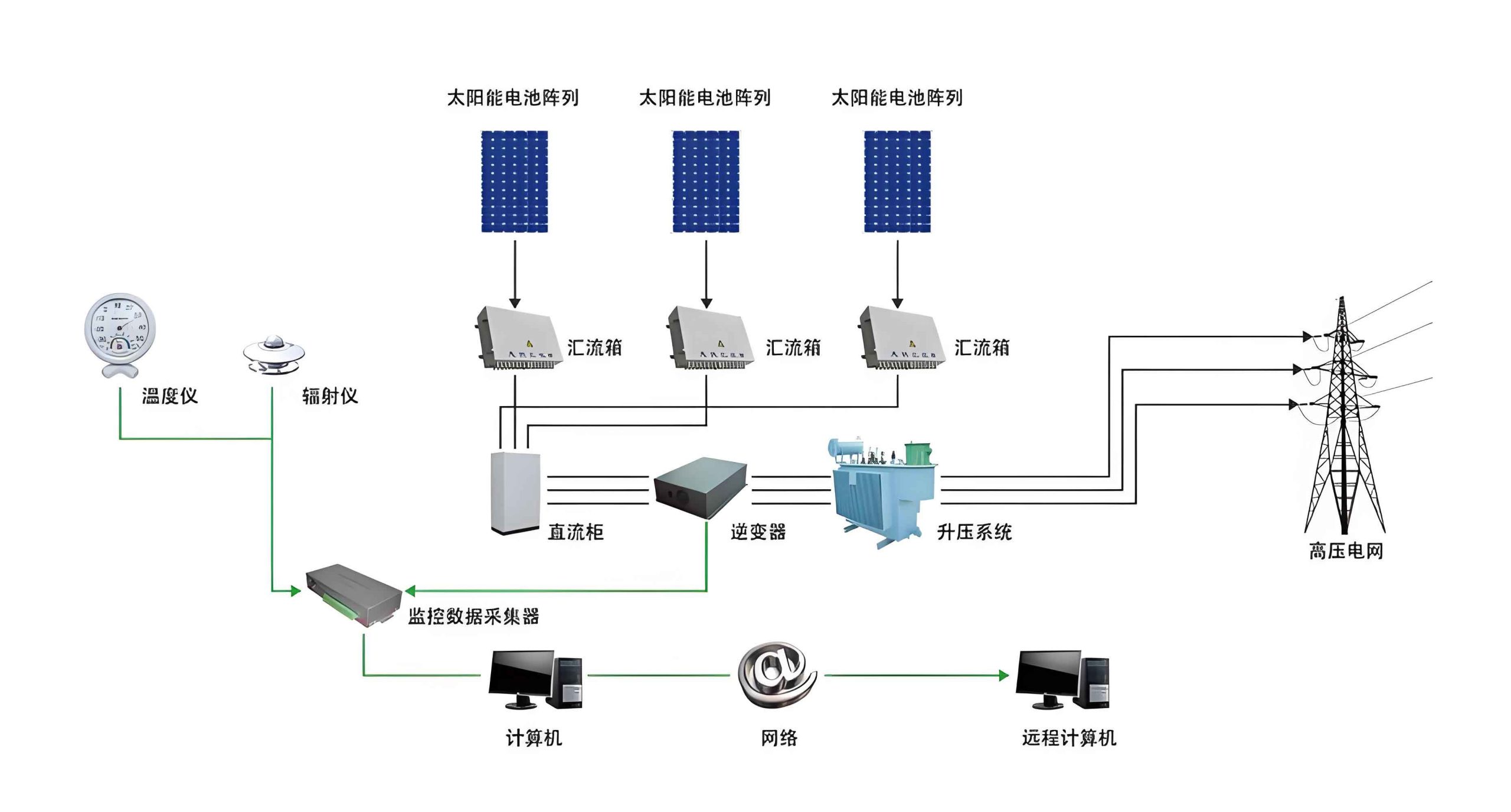
In my empirical analysis, I concentrate on the solar system, specifically solar photovoltaic (PV) technologies, as a case study. The solar system includes a wide range of applications, from residential PV panels to large-scale thermal power plants, all contributing to renewable energy adoption. To begin, I retrieved U.S. patents related to the solar system from the Innography database, spanning from 1971 to 2020. The search query was designed to capture patents in IPC class H01L (semiconductor devices) and UPC class 136 (solar energy), resulting in 23,534 patents. From these, I identified core patents with strength scores of 80–100, totaling 1,954 patents, which represent about 8.3% of the dataset. These core patents form the basis for technological convergence measurement.
The distribution of these core patents across technological categories reveals the interdisciplinary nature of the solar system. Using the International Patent Classification (IPC) system at the subclass level (4-digit codes), I mapped each patent to one or more categories. The top categories include H01L (semiconductor devices), H02N (electric machines), E04D (roofing), F24J (heat production), and H01G (capacitors). This indicates that innovations in the solar system often intersect with fields like electronics, construction, and mechanical engineering. To visualize this, I generated an interdisciplinary map based on IPC subclass distances, showing clusters around optics, electricity, and architecture. The convergence of these disciplines is essential for advancing the solar system, as it enables novel combinations, such as PV-integrated building materials or hybrid thermal-electric systems.
To quantify technological convergence, I calculated the Rao-Stirling index for each core patent. The dissimilarity matrix \( d_{ij} \) was obtained from Leydesdorff’s IPC subclass distance data, which reflects the cognitive proximity between technological fields based on patent citation patterns. For a patent assigned to multiple IPC subclasses, the index measures how diverse and dissimilar these categories are. A threshold of \(\Delta > 0.05\) was set to identify patents with strong convergence, resulting in 298 patents. These patents are considered potential breakthrough innovations in the solar system, as they exhibit high interdisciplinary fusion. The distribution of Rao-Stirling values highlights that convergence is not uniform; some patents show moderate diversity, while others integrate highly disparate fields, such as combining nanotechnology with traditional PV cells.
The following table summarizes the top technological categories for core patents in the solar system, along with their patent counts and average Rao-Stirling indices:
| IPC Subclass | Technology Category | Patent Count | Average Rao-Stirling Index |
|---|---|---|---|
| H01L | Semiconductor Devices | 1,954 | 0.02 |
| H02N | Electric Machines | 121 | 0.15 |
| E04D | Roofing | 121 | 0.18 |
| F24J | Heat Production | 118 | 0.12 |
| H01G | Capacitors | 76 | 0.10 |
| H01M | Batteries | 68 | 0.08 |
| B32B | Layered Products | 62 | 0.14 |
| G02B | Optical Elements | 58 | 0.16 |
This table illustrates that categories like E04D (roofing) and G02B (optical elements) have higher average convergence indices, suggesting that innovations in these areas often involve cross-disciplinary knowledge. For instance, solar system applications that integrate PV modules into building structures (E04D) may combine materials science, architecture, and electrical engineering. Similarly, optical advancements (G02B) for concentrating solar power systems can merge physics, mechanical design, and thermal management. These insights underscore the importance of technological convergence in driving breakthroughs within the solar system.
After identifying the convergent core patents, I applied LDA topic modeling to their titles and abstracts to uncover breakthrough innovation themes. Using the R programming language, I processed the text data, removing stop words and stemming terms to improve model accuracy. The optimal number of topics was determined by coherence scores, which peaked at 12 topics. Each topic is represented by a set of keywords, which I interpreted to define broader technological themes relevant to the solar system. The LDA model allows for probabilistic topic assignments, meaning each patent can contribute to multiple themes, reflecting the complex nature of innovation in the solar system.
The table below presents the 12 breakthrough innovation topics identified through LDA, along with their key keywords and thematic summaries:
| Topic ID | Thematic Summary | Keywords |
|---|---|---|
| 1 | Tubular Solar Collectors | array, generator, tubular, emitter, region, thermal, combustion, gap, catalyst |
| 2 | Modular Solar Collectors | absorber, structure, support, planar, current, panel, modular, array, optical, housing |
| 3 | Carbon Nanotube Solar Cells | nano, system, optical, quantum, barrier, structure, carbon, battery |
| 4 | High-Voltage Power Transmission for Solar Systems | voltage, circuit, path, region, electron, receiver, conversion, transmission |
| 5 | Photovoltaic Roof Structures | module, panel, side, unit, roof, housing, frame, installation, component |
| 6 | 3D Thin-Film Solar Substrates | component, base, coating, cell, thin-film, member, three-dimensional, signal |
| 7 | Amorphous Silicon Thin-Film Deposition | conversion, silicon, thin, photovoltaic, crystal, amorphous, deposition, phase |
| 8 | Nanostructured Solar Cells | layer, element, nanostructure, template, arrangement, glass, precursor, wire |
| 9 | Thermoelectric Systems in Solar Applications | thermoelectric, kinetic, water, electrode, storage, tower, source, output |
| 10 | Flexible Nano-Solar Cells | flexible, adhesive, interconnect, substrate, tile, carrier, rigid, nanoparticle, battery |
| 11 | Transparent Conductive Oxide Films | electrode, oxide, front, example, etch, film, transparent, conductive, tin |
| 12 | Organic Compound Solar Cells | organic, composition, active, group, particle, converter, size, absorber, crystal |
From these topics, I observe that breakthrough innovations in the solar system span materials, applications, and integrated systems. Topics 3, 6, 7, 8, 10, 11, and 12 focus on advanced materials for solar cells, such as carbon nanotubes, thin films, and organic compounds. These materials aim to improve efficiency, reduce costs, and enable new form factors, like flexible panels. The solar system benefits from these material innovations by becoming more adaptable and efficient. Topics 1, 2, and 5 relate to solar system applications, including collectors and building-integrated PV. These innovations highlight the trend toward modular and scalable designs that enhance deployment in diverse environments. Topics 4 and 9 address energy management aspects, such as power transmission and thermoelectric conversion, which are crucial for integrating the solar system into broader energy grids.
To delve deeper, let’s consider the Rao-Stirling indices for patents within each topic. I computed the average convergence score for patents associated with each LDA topic, revealing which themes exhibit the strongest interdisciplinary fusion. The formula for average Rao-Stirling per topic is:
$$\bar{\Delta}_k = \frac{1}{N_k} \sum_{p \in \text{Topic } k} \Delta_p$$
where \( N_k \) is the number of patents in topic \( k \), and \( \Delta_p \) is the Rao-Stirling index for patent \( p \). The results are shown in the table below:
| Topic ID | Thematic Summary | Average Rao-Stirling Index | Number of Patents |
|---|---|---|---|
| 1 | Tubular Solar Collectors | 0.22 | 25 |
| 2 | Modular Solar Collectors | 0.20 | 28 |
| 3 | Carbon Nanotube Solar Cells | 0.25 | 30 |
| 4 | High-Voltage Power Transmission | 0.18 | 22 |
| 5 | Photovoltaic Roof Structures | 0.21 | 35 |
| 6 | 3D Thin-Film Solar Substrates | 0.24 | 27 |
| 7 | Amorphous Silicon Thin-Film | 0.19 | 26 |
| 8 | Nanostructured Solar Cells | 0.26 | 32 |
| 9 | Thermoelectric Systems | 0.23 | 24 |
| 10 | Flexible Nano-Solar Cells | 0.27 | 29 |
| 11 | Transparent Conductive Oxide Films | 0.20 | 23 |
| 12 | Organic Compound Solar Cells | 0.25 | 31 |
This table indicates that topics like flexible nano-solar cells (Topic 10) and nanostructured solar cells (Topic 8) have the highest average convergence scores, around 0.27 and 0.26, respectively. This suggests that these areas are highly interdisciplinary, drawing from nanotechnology, materials science, and electronics. Such fusion is likely to yield breakthrough innovations that can revolutionize the solar system by enabling lightweight, efficient, and versatile energy solutions. In contrast, topics like high-voltage power transmission (Topic 4) show lower convergence, indicating a more focused technological domain. However, even here, the integration of electrical engineering with solar system dynamics can lead to significant advances in grid integration and energy distribution.
The implications of these findings are substantial for the solar system. By identifying breakthrough innovation topics, stakeholders can prioritize research and development efforts, allocate resources effectively, and anticipate market shifts. For example, the emphasis on nanomaterials in Topics 3, 8, and 10 suggests that investing in nanotechnology research could accelerate the adoption of next-generation solar systems. Similarly, the focus on building-integrated PV in Topic 5 highlights opportunities for collaboration between the construction and energy sectors to create sustainable urban infrastructures. The solar system is not just about generating power; it’s about creating holistic solutions that integrate with societal needs, and technological convergence is key to achieving this.
In my methodological framework, the combination of Rao-Stirling indices and LDA modeling offers a robust approach for innovation analysis. The Rao-Stirling index provides a quantitative measure of convergence, while LDA extracts qualitative themes from text data. This dual perspective is especially valuable for the solar system, where innovations often emerge from complex interactions between hardware, software, and environmental factors. To illustrate, consider the mathematical representation of the LDA model, which underpins the topic extraction process. In LDA, each document is assumed to be a mixture of topics, and each topic is a distribution over words. The generative process can be expressed as:
$$p(\phi_{1:K}, \theta_{1:D}, z_{1:D} | w_{1:D}) = \frac{p(\phi_{1:K}, \theta_{1:D}, z_{1:D}, w_{1:D})}{p(w_{1:D})}$$
where \( \phi_{1:K} \) represents the word distributions for topics \( 1 \) to \( K \), \( \theta_{1:D} \) is the topic distribution for documents \( 1 \) to \( D \), \( z_{1:D} \) are the topic assignments, and \( w_{1:D} \) are the observed words. By applying this to patent texts, I can uncover latent structures that reflect emerging trends in the solar system.
Moreover, the use of core patents ensures that the analysis focuses on high-impact innovations. The solar system is a rapidly evolving field, with thousands of patents filed annually. By filtering for core patents, I reduce noise and concentrate on technologies that have demonstrated value through citations, market presence, or legal robustness. This is crucial for identifying genuine breakthroughs rather than incremental improvements. For instance, a patent on a novel solar cell material with high Rao-Stirling convergence and strong core indicators might signal a disruptive technology that could lower costs or increase efficiency across the solar system.
To further enrich the analysis, I can explore temporal trends in technological convergence within the solar system. By calculating Rao-Stirling indices for patents over different time periods, I can assess whether convergence is increasing or decreasing, and how it correlates with major innovations. For example, the advent of perovskite solar cells in the 2010s might have spurred convergence between chemistry, physics, and engineering. A time-series analysis could reveal such patterns, providing insights into the lifecycle of technologies in the solar system. The formula for average convergence per year is:
$$\bar{\Delta}_t = \frac{1}{N_t} \sum_{p \in \text{Year } t} \Delta_p$$
where \( N_t \) is the number of core patents in year \( t \). Plotting this over time could show peaks during periods of intense interdisciplinary research, guiding forecasting efforts for the solar system.
In conclusion, my framework for identifying breakthrough innovation topics through technological convergence measurement offers a powerful lens for understanding the solar system. By leveraging core patents, Rao-Stirling diversity indices, and LDA topic modeling, I can pinpoint areas where interdisciplinary fusion is driving disruptive changes. The empirical study on solar PV technologies reveals 12 key themes, ranging from advanced materials to integrated applications, all contributing to the evolution of the solar system. These findings underscore the importance of cross-disciplinary collaboration and strategic investment in converging technologies. As the solar system continues to expand, embracing innovations that bridge traditional boundaries will be essential for achieving sustainability and energy independence. This methodology not only aids in academic research but also supports policymakers and industry leaders in navigating the complex landscape of technological change.
Looking ahead, there are several avenues for extending this work. One possibility is to apply the framework to other segments of the solar system, such as solar thermal power or hybrid systems combining PV with storage. Additionally, incorporating other data sources, like scientific publications or market reports, could enhance the analysis. Another direction is to refine the dissimilarity matrix \( d_{ij} \) for IPC subclasses, perhaps using machine learning techniques to capture dynamic changes in technological proximity. Furthermore, integrating predictive models could help forecast future breakthrough areas in the solar system, enabling proactive innovation management. Ultimately, the goal is to foster a deeper understanding of how technological convergence shapes the solar system, driving progress toward a cleaner and more resilient energy future.
Throughout this article, I have emphasized the solar system as a dynamic and interdisciplinary domain. By repeatedly exploring aspects of the solar system—from materials to applications—I aim to highlight its centrality in the renewable energy landscape. The solar system is not just a collection of technologies; it’s an ecosystem of innovation where convergence sparks breakthroughs. As I continue my research, I plan to delve deeper into specific topics, such as the role of artificial intelligence in optimizing solar system performance or the integration of solar systems with smart grids. Each of these areas holds potential for transformative change, and by measuring technological convergence, I can help unlock that potential. The solar system is poised for continued growth, and with the right analytical tools, we can steer its development toward greater efficiency, affordability, and impact.