
As the global demand for efficient and reliable energy storage systems intensifies, lithium-ion batteries (LIBs) have emerged as pivotal components in applications ranging from electric vehicles to grid-scale energy storage. Among these, lithium iron phosphate (LiFePO4) based energy storage cells are particularly favored due to their inherent safety, long cycle life, and cost-effectiveness. However, the operational lifespan of these energy storage cells is significantly compromised under elevated temperatures, a common stressor in real-world applications. Understanding the underlying degradation mechanisms is crucial for enhancing the durability and predictive maintenance of such systems. This investigation delves into the high-temperature aging processes of a commercial 280 Ah LiFePO4/graphite energy storage cell, employing a combination of electrochemical analysis and post-mortem material characterization to unravel the primary causes of capacity fade.
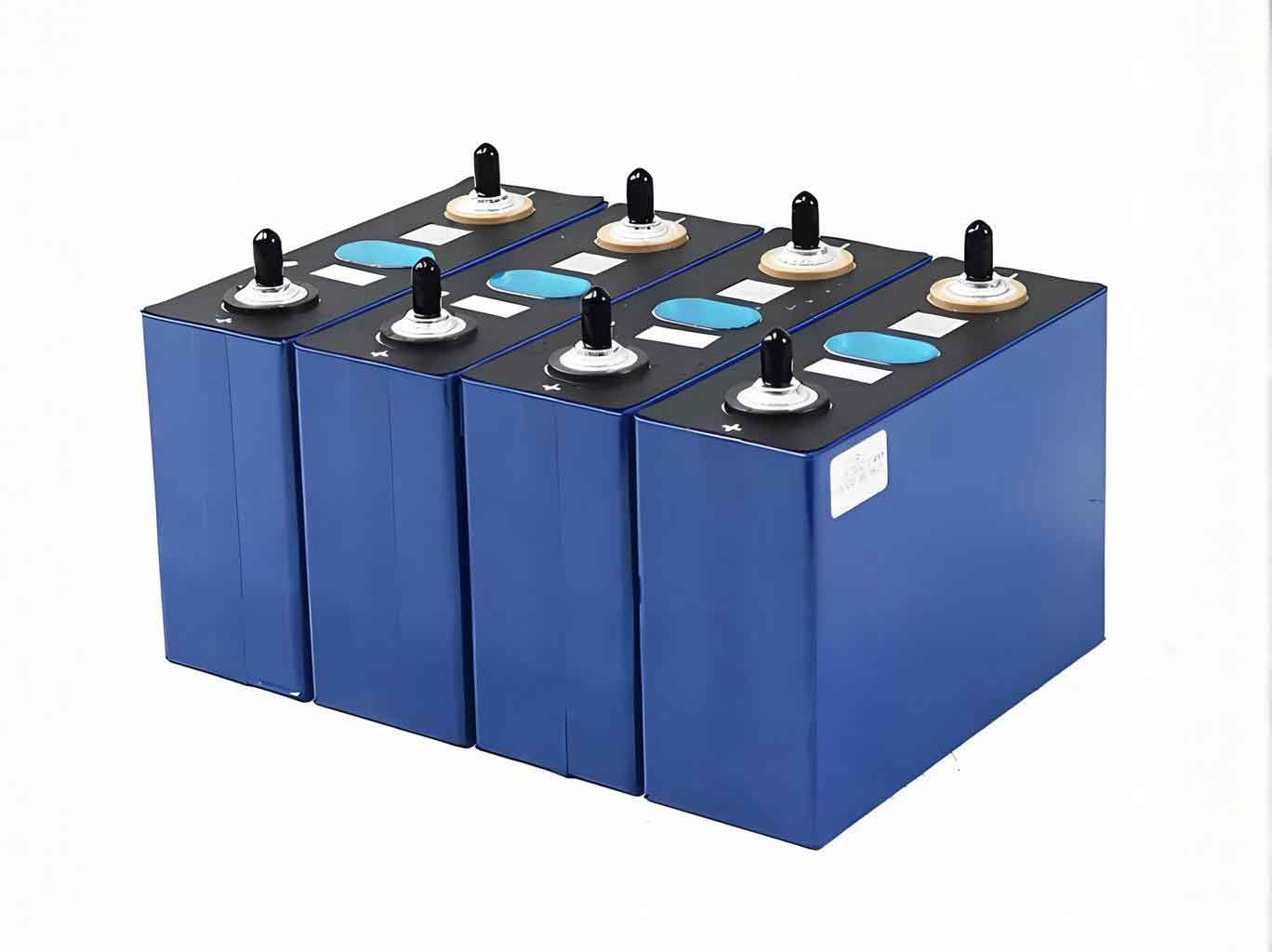
The performance evaluation of an energy storage cell under thermal stress provides critical insights into its long-term viability. In this study, the selected energy storage cell was subjected to continuous charge-discharge cycling at a constant temperature of 45°C. The cycling protocol involved a constant-current constant-voltage (CC-CV) charge to 3.65 V followed by a constant-current discharge to 2.5 V at a 1C rate. The state-of-health (SOH), defined as the ratio of actual capacity to initial capacity, was monitored throughout. The energy storage cell exhibited a gradual capacity decay, reaching approximately 90% SOH after a certain number of cycles, and a more rapid decline thereafter, finally arriving at 60% SOH after about 4750 cycles. This non-linear aging trajectory is characteristic of many lithium-ion energy storage cells and points to evolving degradation modes.
To quantify the electrochemical changes, differential voltage (dQ/dV) analysis was employed. The dQ/dV curves during charging reveal three distinct peaks corresponding to the stage transformations in the graphite anode during lithiation. Let the peak positions be denoted as P1, P2, and P3, with voltages increasing from left to right. The evolution of these peaks provides a fingerprint of the energy storage cell’s health. The area under each peak, $A_i$, is proportional to the capacity associated with that particular lithiation stage. We can express the total capacity $Q_{total}$ as:
$$Q_{total} = \sum_{i=1}^{3} A_i$$
As cycling progressed, a marked decrease in the areas of P2 and P3 was observed, while P1 showed relative stability until later stages. Specifically, the integrated area for P2 decreased by over 50% by the time the energy storage cell reached 60% SOH. Furthermore, the voltage separation between the onset and termination of these peaks increased, indicating a rise in polarization resistance. The merging and eventual disappearance of P3 signify substantial loss of active lithium and degradation of the anode’s structural integrity. This electrochemical signature is a key indicator of the failing mechanisms within the energy storage cell.
The post-mortem analysis commenced with disassembling energy storage cells at different SOH milestones: 100% (fresh), 90%, and 60%. The electrodes were carefully extracted, washed, and dried in an inert atmosphere for subsequent material characterization. The goal was to correlate the macroscopic capacity fade with microscopic changes in the electrode materials, separator, and electrolyte.
Positive Electrode Analysis
The LiFePO4 cathode is generally known for its structural robustness. Scanning electron microscopy (SEM) images of the positive electrode from the aged energy storage cell revealed that while the particles remained largely intact at 90% SOH, some micro-cracks were evident at 60% SOH. These cracks likely originate from repeated lattice stress during lithium-ion insertion and extraction, described by the phase transition between LiFePO4 and FePO4. X-ray diffraction (XRD) patterns provided further evidence. The intensity ratio of characteristic peaks, such as the (020) and (200) planes of the FePO4 phase, increased with aging. This suggests an accumulation of delithiated phase, implying a loss of recyclable lithium ions that can be described by the presence of lithium vacancies. If $x$ in LixFePO4 represents the degree of lithiation, the average $x$ in the aged cathode is less than in the fresh one.
To isolate the contribution of the cathode to capacity loss, electrodes were reassembled into half-cells against lithium metal. The specific charge and discharge capacities were measured at a 0.1C rate. The results are summarized in Table 1. The slight decrease in capacity indicates a minor loss of active material, likely due to particle cracking and electrical isolation.
| SOH State | Charge Capacity (mAh/g) | Discharge Capacity (mAh/g) | Capacity Retention vs. Fresh (%) |
|---|---|---|---|
| 100% (Fresh) | 158.0 | 156.0 | 100.0 |
| 90% | 152.4 | 151.7 | 96.5 |
| 60% | 147.6 | 147.1 | 93.7 |
The loss of active lithium from the positive electrode can be modeled. If $C_{0}$ is the initial capacity attributed to movable Li+ and $\Delta C_{Li,pos}$ is the loss, the remaining effective lithium inventory $C_{Li,eff}$ is:
$$C_{Li,eff} = C_{0} – \Delta C_{Li,pos}$$
Based on the half-cell data, the active material loss from the cathode was calculated to be around 4-6%, which is relatively small. This points to other components, particularly the anode, as the primary failure point in this energy storage cell under high-temperature cycling.
Negative Electrode Analysis
The graphite anode exhibited far more dramatic changes. SEM images showed that the smooth surface of fresh graphite particles became increasingly rough and covered with deposits as the energy storage cell aged. At 60% SOH, distinct grooves and cracks were visible on the particle surfaces, indicating mechanical degradation and structural disordering. XRD analysis confirmed a shift in the (002) peak position from 26.56° to 26.74°, suggesting a change in the interlayer spacing ($d_{002}$) calculated by Bragg’s law:
$$n\lambda = 2d_{002}\sin\theta$$
where $n$ is the order of reflection, $\lambda$ is the X-ray wavelength, and $\theta$ is the Bragg angle. This shift often correlates with structural damage and increased disorder.
Raman spectroscopy provided quantitative evidence of this disorder. The intensity ratio of the D band (∼1350 cm-1, indicative of disordered carbon) to the G band (∼1580 cm-1, indicative of graphitic carbon), known as the $I_D/I_G$ ratio, increased substantially from 0.30 for the fresh anode to 0.86 for the anode from the 60% SOH energy storage cell. This significant increase underscores the breakdown of the graphitic structure, which has profound implications for the stability of the solid electrolyte interphase (SEI) and the kinetics of lithium-ion intercalation.
Half-cell testing of the extracted graphite electrodes revealed a stark capacity loss. The data is consolidated in Table 2. The drastic reduction in specific capacity, especially at 60% SOH, highlights the severe impairment of the anode’s functionality.
| SOH State | Charge Capacity (mAh/g) | Discharge Capacity (mAh/g) | Capacity Retention vs. Fresh (%) |
|---|---|---|---|
| 100% (Fresh) | 336.0 | 360.0 | 100.0 |
| 90% | 345.0 | 423.0 | 102.7* |
| 60% | 196.2 | 228.0 | 58.4 |
*The higher initial charge capacity at 90% SOH may be attributed to additional lithium inventory from the cathode or measurement artifacts during electrode recovery.
The capacity fade of the anode, $\Delta C_{anode}$, can be attributed to two main factors: loss of active material (LAM) due to structural disintegration and loss of active lithium (LLI) consumed in side reactions. If $C_{anode,0}$ is the initial reversible capacity, the remaining capacity is:
$$C_{anode, aged} = C_{anode,0} – \text{LAM} – \text{LLI}_{anode}$$
Based on the half-cell data, the effective capacity loss from anode structural failure was calculated to be approximately 45.5% by 60% SOH, dwarfing the contribution from the cathode. This establishes graphite degradation as a central mechanism in the high-temperature aging of this LiFePO4 energy storage cell.
Solid Electrolyte Interphase (SEI) and Electrolyte Evolution
The degradation of the graphite structure accelerates parasitic reactions at the electrode-electrolyte interface. X-ray photoelectron spectroscopy (XPS) depth profiling was conducted on the anode from the 60% SOH energy storage cell. The evolution of the C 1s peak, specifically the component associated with organic carbonates (COOR, ~289 eV), was monitored during argon ion sputtering. The attenuation of this peak intensity with sputtering time, $I(t)$, can be used to estimate the SEI thickness, $\delta_{SEI}$. Assuming a simple model where the intensity decays exponentially with depth:
$$I(t) = I_0 \exp\left(-\frac{t}{\tau}\right)$$
where $\tau$ is a time constant related to the sputter rate and material density. By calibrating with a standard, the SEI thickness on the aged anode was estimated to be approximately 82.5 nm, nearly double that of the fresh anode (43.7 nm). This continuous growth and reformation of the SEI layer consume both active lithium and electrolyte components, contributing significantly to the LLI. The consumption rate of lithium, $d(LLI)/dt$, can be related to the SEI growth kinetics, often following a parabolic law:
$$\delta_{SEI} = k \sqrt{t}$$
where $k$ is a temperature-dependent rate constant.
Gas chromatography-mass spectrometry (GC-MS) and ion chromatography (IC) were used to analyze the electrolyte composition at different aging stages. The results, summarized in Table 3, show a progressive decomposition of key components. The film-forming additives vinyl carbonate (VC) and fluoroethylene carbonate (FEC) were nearly depleted by 60% SOH. Furthermore, the concentrations of the main solvent ethylene carbonate (EC) and the lithium salt LiPF6 decreased significantly.
| Component | 100% SOH | 90% SOH | 60% SOH | Primary Role |
|---|---|---|---|---|
| Ethylene Carbonate (EC) | 41.6 | 38.2 | 35.0 | Solvent / SEI formation |
| Diethyl Carbonate (DEC) / Dimethyl Carbonate (DMC) / Ethyl Methyl Carbonate (EMC)* | 42.4 | 40.1 | 44.7 | Co-solvents |
| LiPF6 | 14.0 | 12.5 | 10.9 | Conducting Salt |
| Vinyl Carbonate (VC) | 1.0 | 0.5 | ~0 | Additive (Anode SEI stabilizer) |
| Fluoroethylene Carbonate (FEC) | 1.0 | 0.7 | ~0 | Additive (SEI improver) |
*The exact co-solvent blend is proprietary; the value represents the combined mass fraction.
The depletion of these components, driven by continuous SEI repair and other decomposition reactions on the damaged graphite surface, directly reduces the ionic conductivity of the electrolyte and the available lithium inventory, further exacerbating the performance decline of the energy storage cell.
Separator and Cell-Level Impedance Effects
The separator in an energy storage cell plays a critical role in preventing short circuits while facilitating ion transport. SEM analysis of the separator from the 60% SOH cell showed particle clogging of the pores, particularly on the side facing the anode. Energy-dispersive X-ray spectroscopy (EDS) confirmed the presence of deposits containing elements like O, F, and P, likely from decomposed electrolyte and electrode materials. Furthermore, the Al2O3 ceramic coating on the cathode-facing side showed signs of detachment. The porosity and permeability of the separator were assessed by measuring the time required for 100 mL of air to pass through. The results, detailed below, indicate a severe increase in transport resistance, especially in the inner regions of the jellyroll, contributing to increased cell polarization and inhomogeneous current distribution.
| Location in Jellyroll | Time (seconds) | Notes |
|---|---|---|
| Front (5th fold) | 279 | Near the terminal |
| Middle (40th fold) | 300 | Core region |
| Back (80th fold) | 526 | Innermost region |
| Fresh Separator Reference | 190 | Baseline |
This increase in transport resistance, $R_{trans}$, adds to the overall internal resistance ($R_{int}$) of the energy storage cell, which can be expressed as the sum of ohmic, charge transfer, and diffusion resistances:
$$R_{int} = R_{\Omega} + R_{ct} + R_{diff} + R_{trans}$$
The growth of $R_{int}$ directly leads to higher polarization during operation, reducing the usable voltage window and effective capacity, as observed in the charge-discharge curves.
Comprehensive Degradation Model for the Energy Storage Cell
Synthesizing all findings, a coherent picture of the high-temperature aging mechanism for this LiFePO4/graphite energy storage cell emerges. The capacity fade, $\Delta Q_{total}$, is a convolution of multiple factors:
$$\Delta Q_{total} = f(\text{LLI}_{total}, \text{LAM}_{ne}, \text{LAM}_{pe}, \text{Increased Polarization})$$
Where:
- $\text{LLI}_{total}$ is the total loss of active lithium, primarily consumed in SEI growth/reformation on the anode.
- $\text{LAM}_{ne}$ is the loss of active negative electrode material due to graphite structural disordering and disintegration.
- $\text{LAM}_{pe}$ is the minor loss of active positive electrode material.
- $\text{Increased Polarization}$ results from separator clogging, electrolyte depletion, and increased interfacial resistance.
The sequence of degradation appears to be temperature-accelerated. Initially, the elevated temperature promotes faster kinetics of SEI formation and electrolyte decomposition, leading to a steady loss of active lithium (LLI). This is the dominant mode in the early and mid-life of the energy storage cell (down to ~80% SOH). As cycling continues, the graphite structure itself begins to deteriorate, as evidenced by the Raman and XRD data. This structural damage creates fresh, highly reactive surfaces that further catalyze electrolyte decomposition and SEI growth, creating a positive feedback loop. The consumption of electrolyte additives and solvents, coupled with the physical clogging of the separator, then leads to a sharp increase in internal resistance and rapid capacity fade in the final life stage (below 80% SOH).
The role of the energy storage cell’s design and materials is paramount. The graphite anode, while offering high capacity, becomes the Achilles’ heel under high-temperature cycling in this configuration. Therefore, enhancing the thermal resilience of the anode—through material modifications (e.g., surface coatings, different carbon morphologies), optimized electrolyte formulations with more stable additives, or improved thermal management at the system level—is identified as a key strategy for prolonging the lifespan of LiFePO4-based energy storage cells.
Quantitative Partitioning of Capacity Loss
Based on the half-cell data and post-mortem analysis, a semi-quantitative partitioning of the capacity loss at 60% SOH can be attempted. Let the total capacity loss be 40% (i.e., from 100% to 60% SOH). The contributions can be estimated as follows:
| Degradation Mechanism | Estimated Contribution to Total Loss (%) | Primary Evidence |
|---|---|---|
| Active Lithium Loss (LLI) via SEI growth | ~49.2% | Cathode half-cell charge capacity deficit, SEI thickness measurement |
| Graphite Anode Structural Failure (LAMne) | ~45.5% | Anode half-cell capacity loss, Raman/ID/IG increase, SEM |
| LiFePO4 Cathode Active Material Loss (LAMpe) | ~4.0% | Cathode half-cell capacity loss, SEM/XRD |
| Increased Polarization (Resistance Rise) | Amplifies all above | dQ/dV peak shift, separator clogging, electrolyte depletion |
Note that these mechanisms are interdependent, and their contributions are not strictly additive in a simple arithmetic sense, as one mechanism often aggravates another. However, this partitioning clearly highlights the preeminent role of anode-related degradation (LLI + LAMne) in this energy storage cell’s high-temperature failure.
Implications for Energy Storage System Design and Management
The findings from this investigation have direct implications for the design, operation, and health management of battery energy storage systems (BESS) utilizing LiFePO4 chemistry. First, thermal management is critical not only for safety but also for longevity. Operating an energy storage cell at or near 45°C should be avoided where possible, or the cell chemistry must be tailored for such conditions. Second, state-of-health (SOH) estimation algorithms for such energy storage cells can be refined by incorporating features sensitive to anode degradation. The dQ/dV analysis, particularly the evolution of the P2 and P3 peaks, serves as an excellent non-destructive diagnostic tool that could be leveraged in battery management systems (BMS) for early detection of accelerated aging.
Furthermore, the study underscores the importance of accelerated aging tests that faithfully reproduce the dominant failure modes. A test protocol that only induces mild SEI growth may not reveal the catastrophic graphite failure that occurs in later life, leading to an overestimation of cycle life. Therefore, test standards for energy storage cells intended for long-duration, high-temperature service should include protocols that drive the cell to deep states of discharge and low SOH to capture these late-life mechanisms.
From a materials perspective, the development of anodes with higher structural stability under thermal stress, or cathodes with lithium reservoir properties (like certain overlithiated materials) to compensate for LLI, could be beneficial paths for next-generation energy storage cells. Similarly, electrolytes with higher thermal stability and more robust SEI-forming additives are essential.
In conclusion, this comprehensive analysis elucidates that the high-temperature cycle life of commercial LiFePO4/graphite energy storage cells is predominantly limited by the degradation of the graphite anode. The primary sequence involves temperature-accelerated loss of active lithium through SEI reactions, followed by and interacting with the structural disordering and physical breakdown of the graphite itself. These processes are accompanied and exacerbated by electrolyte decomposition and separator fouling. This mechanistic understanding provides a solid foundation for designing more durable energy storage cells and accurately predicting their service life in demanding applications, ultimately contributing to more reliable and cost-effective energy storage solutions.