
1. Introduction
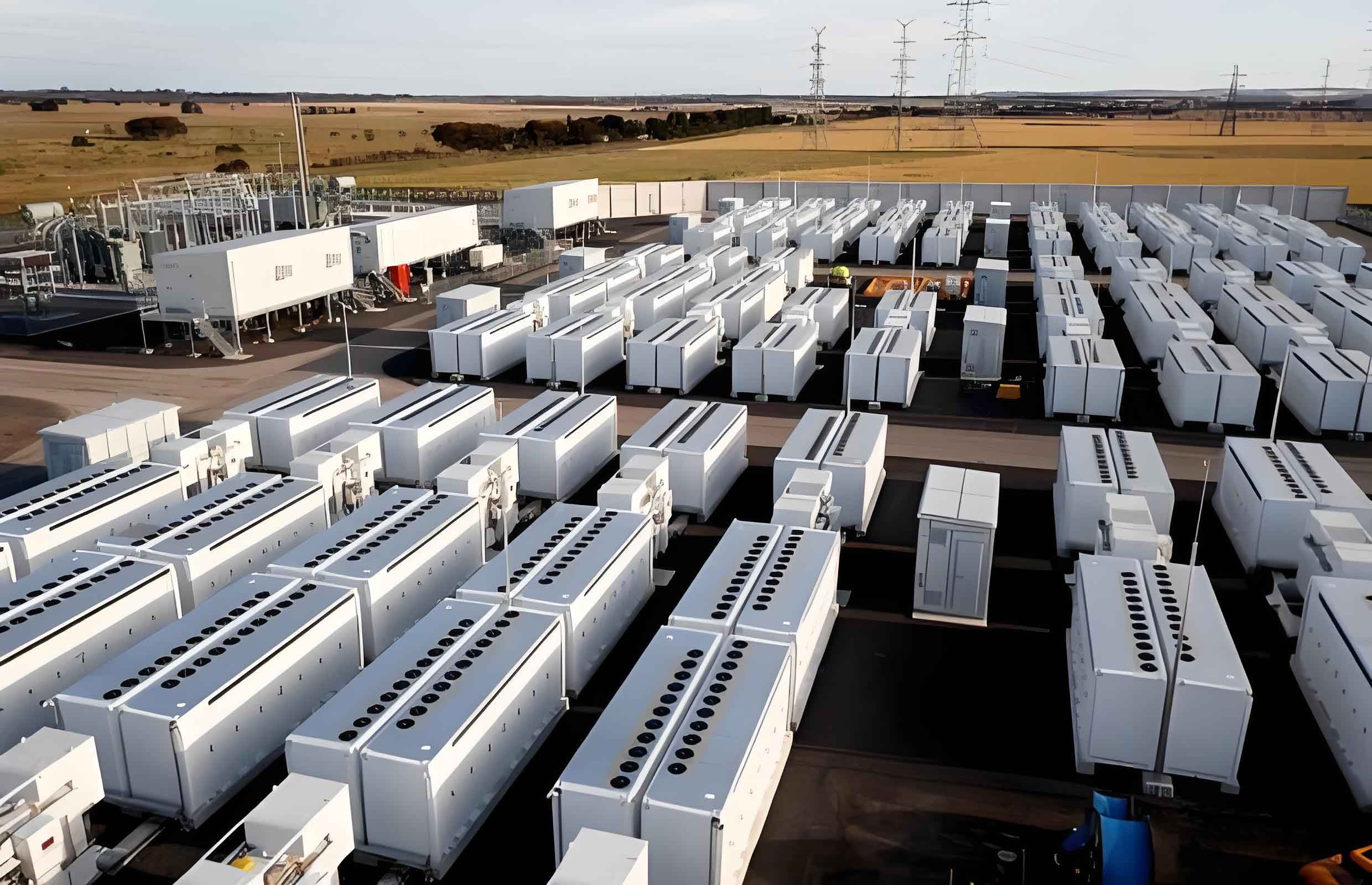
Energy storage technology is pivotal in revolutionizing global energy systems, particularly with the rapid adoption of renewable energy sources. Among various energy storage solutions, lithium-ion energy storage battery dominate due to their high energy density, long cycle life, and scalability. However, high-rate charging/discharging operations generate substantial heat, leading to elevated temperatures (>40°C) and thermal gradients within battery modules. These conditions degrade performance, accelerate aging, and pose safety risks such as thermal runaway. Thus, designing an efficient thermal management system (TMS) is critical for energy storage battery operating under high-rate conditions.
Existing cooling methods—air cooling, phase-change materials (PCM), immersion cooling, and heat pipes—struggle to meet the stringent thermal requirements of high-rate applications. Liquid cooling, with its superior heat transfer efficiency, emerges as a promising solution. This study investigates liquid cooling strategies for energy storage battery modules by establishing a multi-physics coupling model to optimize cold plate arrangements and coolant flow rates.
2. Electric-Thermal-Fluid Coupling Model
2.1 Geometric Configuration
The battery module comprises seven LiFePO₄ cells (3.2 V, 280 Ah), aluminum busbars, liquid cold plates, and interconnects. Nine cold plate configurations are evaluated (Table 1), including single/double large-surface plates, side plates (series/parallel), and combinations with bottom plates.
Table 1: Liquid Cooling Schemes
| Scheme | Configuration | Description |
|---|---|---|
| 1 | Bottom | 1 bottom plate |
| 2 | Single large | 4 series large-surface plates |
| 3 | Single large + bottom | 4 series large-surface + 1 bottom plate |
| 4 | Double large | 8 series large-surface plates |
| 5 | Double large + bottom | 8 series large-surface + 1 bottom plate |
| 6 | Side series | 2 series side plates |
| 7 | Side series + bottom | 2 series side + 1 bottom plate |
| 8 | Side parallel | 2 parallel side plates |
| 9 | Side parallel + bottom | 2 parallel side + 1 bottom plate |
2.2 Mathematical Framework
The coupling model integrates electrothermal dynamics and fluid mechanics to simulate heat generation, conduction, and convective cooling.
2.2.1 Electrical Analysis
Steady-state current density (JJ) and electric field (EE) in busbars are governed by:∇⋅J=0(Continuity)∇⋅J=0(Continuity)∇×E=0(Faraday’s Law)∇×E=0(Faraday’s Law)
Joule heating power density (pp) is calculated as:p=J⋅Ep=J⋅E
2.2.2 Thermal Analysis
Heat transfer includes conduction (Fourier’s Law) and convection (Newton’s Cooling):qcond=−k∇T(Conduction)qcond=−k∇T(Conduction)qconv=hΔT(Convection)qconv=hΔT(Convection)
2.2.3 Fluid Dynamics
Incompressible Navier-Stokes equations govern coolant flow:∇⋅v=0(Continuity)∇⋅v=0(Continuity)ρ(∂v∂t+v⋅∇v)=−∇P+μ∇2v(Momentum)ρ(∂t∂v+v⋅∇v)=−∇P+μ∇2v(Momentum)ρCp(∂T∂t+v⋅∇T)=∇⋅(k∇T)(Energy)ρCp(∂t∂T+v⋅∇T)=∇⋅(k∇T)(Energy)
2.3 Boundary Conditions
- Heat Sources: Each cell generates 33 W; busbar heat derived from Maxwell simulations.
- Coolant: 50% ethylene glycol, inlet temperature 20°C.
- Material Properties:
Table 2: Material Properties
| Material | Density (kg/m³) | Specific Heat (J/kg·K) | Conductivity (W/m·K) |
|---|---|---|---|
| Cell | 2133 | 964 | 9.04 (x-direction) |
| Coolant | 1071 | 3300 | 11.00 (x-direction) |
| TIM | 3000 | 1150 | 0.384 |
3. Results and Discussion
3.1 Temperature Distribution
Simulations reveal that busbars, not cells, are the thermal hotspots due to their role in channeling heat to cold plates. Key findings:
- Bottom Plate Only: Maximum temperature rise (TmaxTmax) = 42 K (unsuitable for high-rate applications).
- Double Large Plates: TmaxTmax = 14 K; adding a bottom plate reduces TmaxTmax to 13 K.
- Side Series Plates: TmaxTmax = 14 K; with a bottom plate, TmaxTmax = 12 K.
3.2 Flow Rate Impact
Coolant flow rate (QQ) significantly affects thermal performance:
- For Q<3 L/minQ<3L/min, increasing QQ reduces TmaxTmax and temperature gradient (RTRT).
- Beyond Q=3 L/minQ=3L/min, diminishing returns occur (e.g., TmaxTmax reduction < 0.6 K).
Table 3: Maximum Temperature Rise vs. Flow Rate
| Scheme | TmaxTmax at 1 L/min (K) | TmaxTmax at 3 L/min (K) |
|---|---|---|
| Double large | 14.0 | 13.4 |
| Double large + bottom | 13.0 | 12.8 |
| Side series | 14.0 | 13.5 |
| Side series + bottom | 12.0 | 11.7 |
3.3 Optimal Cooling Schemes
- Double Large/Side Plates: Tmax<11 KTmax<11K at Q=3 L/minQ=3L/min.
- Single Large Plates: Tmax=15 KTmax=15K (inferior to multi-plate configurations).
- Bottom Plate Addition: Enhances cooling at Q<2 L/minQ<2L/min but offers marginal gains at higher QQ.
4. Experimental Validation
A prototype module (280 A, 1C rate) was tested under six configurations. Key outcomes:
- Double Large Plates: Simulated vs. experimental TmaxTmax error < 0.9 K.
- Side Series Plates: Error < 0.8 K.
- Side Parallel Plates: Error < 0.6 K.
Table 4: Experimental vs. Simulated TmaxTmax
| Scheme | Simulated TmaxTmax (K) | Experimental TmaxTmax (K) | Error (K) |
|---|---|---|---|
| Double large | 14.0 | 14.7 | 0.7 |
| Side series + bottom | 12.0 | 12.5 | 0.5 |
| Side parallel | 13.2 | 13.7 | 0.5 |
5. Conclusions
This study establishes a robust framework for optimizing liquid cooling in energy storage battery under high-rate conditions:
- Cold Plate Configuration: Double large-surface or side-series plates achieve Tmax<11 KTmax<11K.
- Flow Rate: Q=3 L/minQ=3L/min balances cooling efficiency and energy consumption.
- Bottom Plates: Effective at Q<2 L/minQ<2L/min but redundant at higher flow rates.
Future work will explore dynamic heat generation, structural optimization of cold plates, and scalability to larger energy storage battery systems.