
The rapid global transition towards renewable energy sources like wind and solar has created an unprecedented demand for large-scale, cost-effective, and safe energy storage solutions (ESS). While lithium-ion batteries (LIBs) have dominated this space due to their high energy density and proven performance, concerns regarding the geopolitical concentration, long-term supply volatility, and rising cost of lithium resources are prompting a critical search for complementary or alternative technologies. In this context, the sodium-ion battery (SIB) emerges as a highly compelling candidate. Sodium is one of the most abundant elements in the earth’s crust, ensuring low raw material cost and superior supply chain security. Furthermore, SIBs share a similar “rocking-chair” working principle with LIBs, allowing for the leveraging of established lithium-ion manufacturing infrastructure. This article presents a comprehensive study on the development and characterization of a high-power, low-temperature sodium-ion battery system, from the fundamental material selection to the performance validation of a commercial-scale 60 Ah prismatic cell and its integrated module.
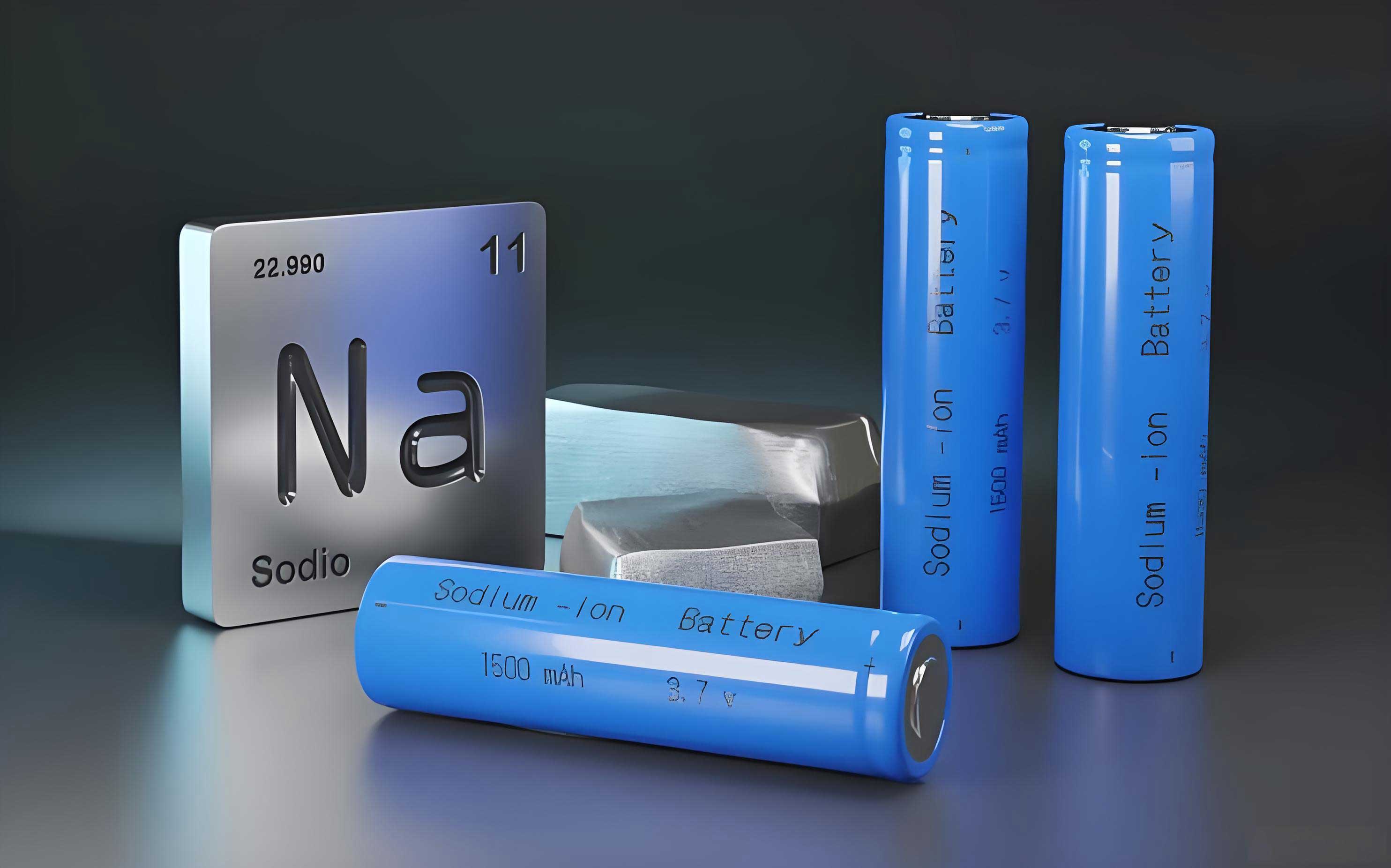
The performance of a sodium-ion battery is fundamentally governed by its electrode materials. Among the various cathode candidates, layered transition metal oxides with the general formula NaxTMO2 (where TM = transition metal(s)) are considered front-runners for commercialization due to their high theoretical capacity, good rate capability, and relative synthesis simplicity. These materials primarily crystallize in two structural types based on the stacking sequence of oxygen layers and the coordination environment of sodium ions: P2 and O3. The letter denotes the prismatic (P) or octahedral (O) site for Na+, and the number indicates the number of transition metal oxide layers in the unit cell.
The O3-type structure, while offering high initial sodium content, suffers from sluggish Na+ diffusion kinetics due to the higher energy barrier associated with Na+ hopping between face-shared octahedral sites. This often leads to significant polarization, poor rate performance, and complex phase transitions during (de)intercalation, which can compromise structural stability. In contrast, the P2-type structure, where Na+ ions reside in prismatic sites, offers a more favorable two-dimensional diffusion path with lower activation energy. The Na+ ions can migrate directly between adjacent face-shared trigonal prismatic sites within the same Na layer, leading to superior ionic conductivity. This intrinsic property makes P2-type oxides particularly attractive for applications demanding high power and operation at low temperatures, which are critical for start-stop systems and energy storage in diverse climates. For this work, a proprietary P2-type layered oxide cathode material was developed and employed. The material’s composition is engineered to leverage the synergistic redox activity of multiple transition metals (e.g., Mn, Ni, Fe, etc.), which helps in stabilizing the structure, mitigating phase transitions, and providing a high operating voltage.
The anode material selected for this sodium-ion battery system is hard carbon. Hard carbon is widely recognized as the most practical anode for SIBs due to its ability to reversibly store sodium ions via adsorption into pores and intercalation between disordered graphene layers. It offers a reasonably high capacity, excellent cycling stability, and a low and safe average operating potential versus Na/Na+. The electrolyte formulation is equally crucial, especially for low-temperature performance. A tailored electrolyte system with optimized salt concentration (e.g., NaPF6 or NaClO4) and solvent blends (typically carbonates like EC, PC, DEC) was used to ensure high ionic conductivity, form a stable solid electrolyte interphase (SEI) on the hard carbon, and maintain low viscosity at sub-zero temperatures.
The electrochemical performance of the individual 60 Ah prismatic sodium-ion battery cells was rigorously evaluated. The rate capability test at 25°C, as shown in the discharge profiles, demonstrates exceptional power characteristics. The cell retains a high percentage of its nominal capacity even at extremely high discharge rates. The delivered capacity at various C-rates can be quantified as follows:
| Discharge Rate (C) | Discharge Capacity (Ah) | Capacity Retention vs. 0.33C (%) | Maximum Temperature Rise (°C) |
|---|---|---|---|
| 0.33 (Reference) | ~60.0 | 100.00 | < 2 |
| 1.0 | ~59.5 | 99.17 | < 5 |
| 3.0 | ~58.2 | 97.00 | < 10 |
| 5.0 | ~56.1 | 93.50 | < 14 |
The minimal polarization and low temperature rise during high-rate discharge are direct consequences of the fast Na+ diffusion kinetics in the P2 cathode and the low-resistance electrode design. This can be conceptually related to the cell’s internal resistance (Rint) and the resulting overpotential (η) during discharge, governed by:
$$ V_{min} = V_{OCV} – I \cdot R_{int} – \eta_{conc} – \eta_{act} $$
where $V_{min}$ is the minimum voltage under load, $V_{OCV}$ is the open-circuit voltage, $I$ is the current, and $\eta_{conc}$ and $\eta_{act}$ are concentration and activation overpotentials, respectively. The superior rate performance indicates low values for $R_{int}$ and the overpotentials.
The low-temperature performance of this sodium-ion battery is particularly noteworthy. Unlike LIBs which suffer from severe lithium plating and conductivity drops, SIBs exhibit more graceful degradation in the cold. The discharge capacity retention across a wide temperature range highlights this advantage. The test protocol adjusted the lower cut-off voltage at very low temperatures to account for increased polarization, a standard practice to evaluate usable energy.
| Temperature (°C) | Discharge Cut-off Voltage (V) | 1C Discharge Capacity (Ah) | Capacity Retention vs. 25°C (%) |
|---|---|---|---|
| 45 | 2.0 | ~60.5 | ~100.8 |
| 25 | 2.0 | ~60.0 | 100.00 |
| 0 | 2.0 | ~57.0 | 95.00 |
| -20 | 1.5 / 2.0 | ~55.0 / ~52.0 | 91.67 / 86.67 |
| -43 | 1.5 / 2.0 | ~53.3 / ~48.3 | 88.80 / 80.45 |
The ability to deliver over 80% of room temperature capacity at -43°C (to 2.0V) is exceptional. This performance stems from the combination of the kinetically favorable P2 structure and the low-freezing-point, highly conductive electrolyte. The ionic conductivity (σ) of the electrolyte as a function of temperature (T) often follows an Arrhenius-type relationship:
$$ \sigma = A \cdot \exp\left(-\frac{E_a}{k_B T}\right) $$
where $E_a$ is the activation energy for ion transport. The tailored electrolyte formulation aims to minimize $E_a$, thereby reducing the conductivity drop at low T.
The high-power capability was further stressed through pulse discharge tests. A 15C (900A) pulse for 20 seconds resulted in a voltage drop to a level well above the minimum operational threshold, with a negligible temperature increase. This confirms the cell’s suitability for applications requiring burst power, such as engine cranking. The low-temperature cranking capability, simulated per relevant standards (e.g., GJB 1724A), involved consecutive high-current pulses at -43°C. The cell voltage remained consistently above the stringent requirement of 1.2V, even after multiple pulses, demonstrating reliable cold-start functionality. This is critical for replacing lead-acid batteries in automotive starting-lighting-ignition (SLI) roles, especially in cold climates.
Moving from cell to system, fourteen 60 Ah cells were configured into a 2P7S module (approximately 110 Ah, 24 V nominal). The module’s performance mirrored the excellent characteristics of the individual cells. The discharge curves under 0.33C rate showed minimal cell-to-cell variation, indicating good consistency in capacity and impedance. The module successfully passed the simulated engine start tests at both 25°C and -43°C. Crucially, it also met the more demanding requirement for a start at -43°C with only 75% State of Charge (SOC). The lowest cell voltage recorded during a 330A, 75-second pulse under these severe conditions was 1.652V, significantly exceeding the standard’s 1.0V limit. This robustness at partial SOC greatly enhances the practical utility and safety margin of the sodium-ion battery system in real-world applications.
Safety is a non-negotiable prerequisite for any battery technology deployed in vehicles or stationary storage. The inherent safety of this sodium-ion battery chemistry was validated through a series of abusive tests, significantly surpassing standard requirements. The results are summarized below:
| Safety Test | Test Condition (Fully Charged Cell) | Observation & Result | Implication |
|---|---|---|---|
| External Short Circuit | 45 mΩ resistance, >1 hour | Negligible temperature rise (0.5°C). No fire, explosion, or leakage. | Very low heat generation rate under worst-case short. Stable chemistry and robust current interrupt device (CID) or separator. |
| Overcharge (Low Rate) | 0.2C charge current to 6.0V (150% of normal voltage) | No thermal runaway, fire, or explosion. | Electrolyte and electrode materials are stable at high voltages. Possible reaction pathways are benign. |
| Overcharge (High Rate) | 1.0C charge current to 6.0V | No thermal runaway, fire, or explosion. | Even under severe electrical abuse, the cell remains safe, indicating excellent chemical and electrochemical stability. |
| Nail Penetration | 3mm steel nail, 40 mm/s speed, held for 1 hour. | No fire or explosion. | The cell tolerates severe internal short circuits without entering thermal runaway. This is a critical advantage over many high-energy LIB chemistries. |
The exceptional safety profile can be attributed to several factors intrinsic to this sodium-ion battery system. Firstly, the aluminum current collector can be used for both the anode and cathode in SIBs, unlike in LIBs where the anode requires copper. Aluminum is more stable and does not catalyze exothermic reactions at high potentials. Secondly, the P2-type cathode and hard carbon anode materials, combined with the stable electrolyte, have higher thermal stability thresholds and less reactive decomposition pathways compared to some high-nickel LIB cathodes and graphite-silicon anodes. The nail penetration test is particularly telling; the internal short caused by the nail generates heat locally, but the cell chemistry does not support a propagating exothermic chain reaction. The heat generation rate $(\dot{Q}_{gen})$ is likely lower than the heat dissipation rate $(\dot{Q}_{diss})$ under such conditions, preventing thermal runaway:
$$ \dot{Q}_{gen} = I_{short}(t) \cdot V(t) + \sum \Delta H_{rxn} \cdot r_{rxn}(T) < \dot{Q}_{diss} = h A \Delta T $$
where $I_{short}$ and $V$ are the short-circuit current and voltage, $\Delta H_{rxn}$ and $r_{rxn}$ are the enthalpy and rate of chemical side reactions, $h$ is the heat transfer coefficient, $A$ is surface area, and $\Delta T$ is the temperature difference.
In conclusion, this work demonstrates the successful development and comprehensive evaluation of a high-power, low-temperature sodium-ion battery system based on an advanced P2-type layered oxide cathode. The 60 Ah prismatic cells exhibit outstanding rate capability, unparalleled low-temperature performance down to -43°C, and exceptional safety under abusive conditions like overcharge, short circuit, and nail penetration. The integrated 2P7S module reliably passes stringent engine cranking simulations at both full and partial states of charge in extreme cold. These results collectively underscore the strong potential of this sodium-ion battery technology as a safe, cost-effective, and high-performance solution for demanding applications. It is a prime candidate not only for large-scale stationary energy storage, where safety and cost are paramount, but also to replace lead-acid batteries in automotive SLI and auxiliary power applications, offering superior cold-cranking performance, lighter weight, and longer cycle life. The future development of the sodium-ion battery ecosystem will focus on further increasing energy density, optimizing supply chains for mass production, and expanding its deployment across these diverse and critical sectors of the global energy landscape.