
The rapid global integration of renewable energy sources like solar and wind power presents a critical challenge: their inherent intermittency and variability. Energy Storage Systems (ESS) have emerged as the indispensable solution for balancing supply and demand, enhancing grid stability, and improving overall energy utilization efficiency. Among the various electrochemical storage technologies, the sodium-ion battery stands out as a highly promising candidate for large-scale, grid-level applications. This promise stems from the abundant natural reserves of sodium, potentially lower raw material costs compared to lithium, inherent safety advantages, and good performance across a wider temperature range. However, like all electrochemical devices, sodium-ion batteries generate heat during operation. This heat, if not managed effectively, can lead to accelerated degradation, reduced lifespan, thermal runaway risks, and ultimately, compromise the safety and economic viability of the entire sodium-ion battery energy storage system. Therefore, developing efficient, tailored thermal management strategies is not merely an optimization step but a fundamental requirement for the successful deployment of sodium-ion battery technology.
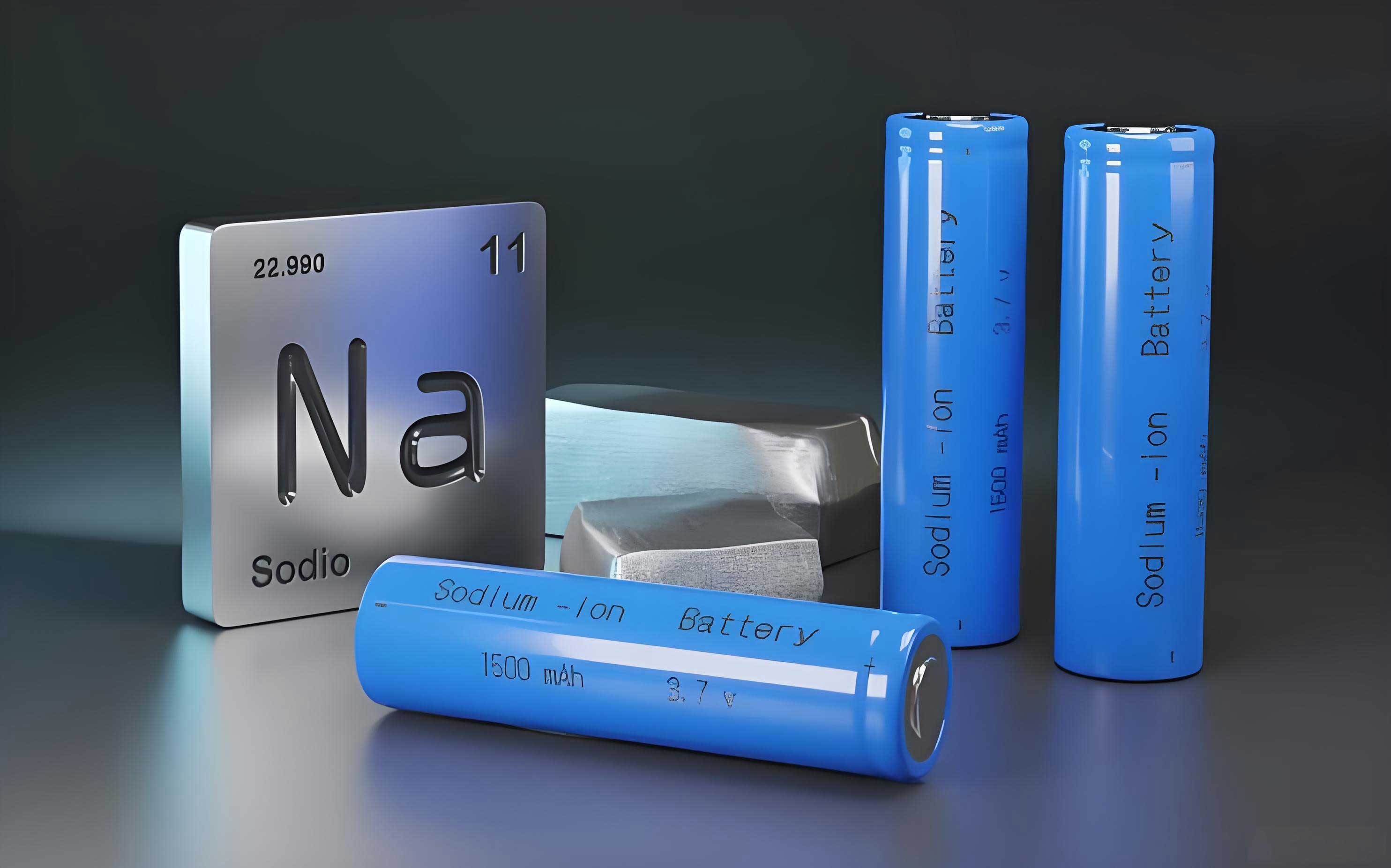
In this work, I investigate the intrinsic heat generation behavior of a commercial sodium-ion battery and propose an optimized thermal management strategy based on these findings. My approach combines experimental characterization with comprehensive numerical modeling. The core premise is that the thermal management system for a sodium-ion battery should not operate with fixed parameters but should dynamically adapt to the battery’s real-time thermal load. This study reveals a significant asymmetry in heat generation between charging and discharging processes, which forms the basis for a novel, multi-stage variable-flow cooling strategy aimed at minimizing system energy consumption while maintaining safe operating temperatures.
Experimental Characterization of Heat Generation
To accurately inform the thermal model, I first conducted experimental measurements to quantify the heat generation of a single 210 Ah sodium-ion battery cell. The tests were performed using an Accelerating Rate Calorimeter (ARC) under adiabatic conditions, which allows for the precise measurement of the cell’s self-heating rate. Two common operational scenarios for an energy storage system were examined: 1P (1-hour rate) and 0.5P (2-hour rate) constant power charging and discharging. The key parameters for these tests are summarized in Table 1.
| Parameter | 1P Scenario | 0.5P Scenario |
|---|---|---|
| Nominal Power | 555 W | 255 W |
| Voltage Range | 2.3 – 3.75 V | 2.0 – 3.75 V |
| Tested Capacity | 150 Ah | 170 Ah |
The results, depicted as heat generation power versus time, unveiled a crucial characteristic of the sodium-ion battery. The heat generation profile is not constant but exhibits distinct, stage-wise patterns that differ dramatically between charge and discharge. For the 1P discharge, the heat generation power rose sharply to an initial plateau around 25W, then climbed steadily to a peak of approximately 70W in the mid-phase, before a final spike and rapid decay at the end of discharge. In stark contrast, the 1P charge cycle showed a brief initial peak near 25W, followed by a rapid decline and maintenance at a much lower power level, generally below 15W. This indicates that the total heat generated during a full discharge is significantly greater—roughly three times—than that during a charge cycle for this sodium-ion battery. The 0.5P tests showed similar trends but with lower magnitude and more frequent fluctuations in heat generation power. This fundamental asymmetry is a critical design input; a thermal management system designed for the peak loads of discharge would be vastly over-engineered and energy-inefficient for the charging phase.
Numerical Model Development for System Simulation
To translate the single-cell behavior to a practical module and evaluate thermal management strategies, I developed a three-dimensional computational fluid dynamics (CFD) model. The physical model represents a standard 1P52S battery module (52 cells in series), structured into four sub-modules. Each sodium-ion battery cell is separated by a thin thermal insulation pad, and the entire assembly is placed on an aluminum cold plate with integrated liquid cooling channels. The geometry of the cold plate features a single inlet and outlet with a streamlined channel design to promote even flow distribution and reduce pressure drop.
The mathematical model solves the governing equations for fluid flow and heat transfer. The fluid domain (coolant) is governed by the conservation of mass, momentum, and energy:
$$ \frac{\partial \rho_f}{\partial t} + \nabla \cdot (\rho_f \vec{u}_f) = 0 $$
$$ \frac{\partial}{\partial t} (\rho_f \vec{u}_f) + \nabla \cdot (\rho_f \vec{u}_f \vec{u}_f) = -\nabla p_f + \nabla \cdot (\mu_f \nabla \vec{u}_f) $$
$$ \frac{\partial}{\partial t} (\rho_f c_{pf} T_f) + \nabla \cdot (\rho_f c_{pf} \vec{u}_f T_f) = \nabla \cdot (k_f \nabla T_f) $$
The solid domains (battery cells, cold plate, insulation) are governed by the heat conduction equation with a volumetric heat source for the sodium-ion batteries:
$$ \frac{\partial}{\partial t} (\rho_s c_{ps} T_s) = \nabla \cdot (k_s \nabla T_s) + \dot{Q}_{gen} $$
Here, $\dot{Q}_{gen}$ is the volumetric heat generation rate derived from the experimental ARC data. This approach directly couples the experimentally measured behavior of the sodium-ion battery into the system-scale simulation. The thermophysical properties of all materials used in the model are listed in Table 2.
| Component | Density, $\rho$ (kg/m³) | Thermal Conductivity, $k$ (W/m·K) | Specific Heat, $c_p$ (J/kg·K) |
|---|---|---|---|
| Sodium-Ion Battery (Anisotropic) | 2719 | $k_x=k_y=20$, $k_z=3$ | 871 |
| Coolant (Water) | 998.2 | 0.6 | 4182 |
| Cold Plate (Aluminum) | 2719 | 202.4 | 871 |
| Insulation Pad | 2719 | 0.02 | 871 |
The boundary conditions included a constant ambient temperature of 25°C and a combined heat transfer coefficient of 10 W/m²·K for exposed surfaces. The initial temperature for all simulations was set to 298 K. The model was discretized using a structured mesh, and a grid independence study was conducted to ensure the accuracy of the results. The simulations were performed using a pressure-based solver with the SIMPLE algorithm for pressure-velocity coupling.
Baseline System Performance and Analysis
With the validated model, I first simulated the baseline thermal performance of the sodium-ion battery module under the 1P and 0.5P cycles with a constant coolant flow rate of 0.3 kg/s. The results clearly confirmed the implications of the experimental data. During the 1P discharge, the module’s maximum temperature rose sharply, following the trend of the high heat generation power, reaching a peak of about 315.8 K (42.8°C). The temperature distribution was uneven, with hotter spots concentrated in the central regions of the module. In contrast, during the 1P charge, the maximum temperature barely exceeded 302.3 K (29.3°C), demonstrating a much milder thermal challenge. The 0.5P scenarios showed proportionally lower temperatures. This stark difference underscores a key finding: applying a uniform, high-intensity cooling strategy throughout the entire charge-discharge cycle of a sodium-ion battery is inherently inefficient.
Proposed Asymmetric and Multi-Stage Thermal Management Strategy
Based on the above analysis, I propose a two-level optimization strategy for the thermal management of the sodium-ion battery energy storage system.
Level 1: Asymmetric Flow for Charge vs. Discharge. Recognizing the order-of-magnitude difference in thermal load, the first optimization is to use significantly different coolant flow rates for charging and discharging operations. A parametric study was conducted to find the optimal flow rate for the demanding discharge process. The relationship between maximum cell temperature ($T_{max}$), system pressure drop ($\Delta P$, a proxy for pumping power), and flow rate ($\dot{m}$) was analyzed. The results, summarized conceptually by the relation below, show a point of diminishing returns:
$$ T_{max} = f_1(\dot{m}^{-a}), \quad \Delta P = f_2(\dot{m}^{b}) $$
where $a$ and $b$ are positive exponents. Beyond approximately 0.4 kg/s, further increases in flow rate yielded minimal temperature reduction but caused a quadratic increase in pressure drop. Therefore, 0.4 kg/s was selected as the optimal baseline discharge flow rate. For the charging process, the analysis showed that even with the pump off ($\dot{m} = 0$ kg/s), the maximum temperature (304.4 K) remained well within a safe margin below the discharge temperature. Thus, the first rule of the strategy is: Use high flow (0.4 kg/s) during discharge and minimal or zero flow during charge for this sodium-ion battery system.
Level 2: Multi-Stage Variable Flow During Discharge. The second optimization delves deeper into the discharge profile itself. The experimental heat generation curve for the 1P discharge was divided into three distinct stages:
- Stage 1 (0-2025 s): Rising but moderate heat generation.
- Stage 2 (2025-2850 s): Peak heat generation period.
- Stage 3 (2850-4000 s): Declining heat generation.
A multi-stage variable flow strategy was designed to match the cooling intensity to the thermal load in each stage, as defined in Table 3.
| Discharge Stage | Time Period (s) | Coolant Flow Rate, $\dot{m}$ (kg/s) | Rationale |
|---|---|---|---|
| Stage 1 | 0 – 2025 | 0.2 | Lower flow sufficient for moderate heat load. |
| Stage 2 | 2025 – 2850 | 0.4 | High flow required to handle peak heat. |
| Stage 3 | 2850 – 4000 | 0.1 | Minimal flow as heat generation decays. |
Performance Evaluation of the Optimized Strategy
The proposed multi-stage variable flow strategy was simulated and compared against a constant high-flow strategy (0.4 kg/s throughout discharge). The thermal performance, in terms of maximum and minimum cell temperatures, was nearly identical between the two strategies. Both successfully maintained the sodium-ion battery module within a safe temperature window. The critical difference emerged in the system pumping power requirement, directly related to the pressure drop across the cold plate.
The energy saving is profound. During Stage 1, the variable strategy uses half the flow, reducing the pressure drop by approximately 64%. During Stage 3, it uses only a quarter of the flow, slashing the pressure drop by about 91%. The pressure drop ($\Delta P$) is related to pumping power ($P_{pump}$) by:
$$ P_{pump} \approx \frac{\Delta P \cdot \dot{m}}{\rho \cdot \eta} $$
where $\eta$ is pump efficiency. Reducing both $\dot{m}$ and $\Delta P$ (which itself is a function of $\dot{m}$) leads to a drastic reduction in $P_{pump}$. Over the entire discharge cycle, the cumulative energy consumption of the thermal management system can be significantly reduced without compromising the safety or performance of the sodium-ion battery. This optimization directly translates to higher overall system efficiency for the energy storage installation.
Discussion and Implications
The findings of this study highlight a path toward more intelligent and efficient thermal management for sodium-ion battery energy storage systems. The strongly asymmetric and stage-wise nature of heat generation is a fundamental characteristic that should be leveraged. A static cooling system is inherently suboptimal. The proposed strategy requires a control system capable of adjusting pump speed or valve positions based on the operating mode (charge/discharge) and the state of charge or elapsed time during discharge. Such control logic is straightforward to implement with modern battery management systems (BMS).
Furthermore, the principles demonstrated here are likely applicable to other battery chemistries, though the specific heat generation profiles and optimal flow setpoints will differ. The methodology of coupling detailed experimental calorimetry with system-level CFD modeling provides a powerful framework for designing and optimizing thermal management for any large-scale battery system. Future work could explore the integration of this variable flow strategy with other techniques, such as advanced coolant formulations or hybrid cooling architectures, to further push the boundaries of efficiency and safety for sodium-ion battery deployments.
Conclusion
In this work, I have systematically investigated the thermal behavior of a commercial sodium-ion battery and developed an optimized thermal management strategy for its application in energy storage systems. Through experimental ARC testing, I quantified the significant asymmetry in heat generation between charge and discharge cycles, with discharge producing roughly three times more heat. This key insight informed the development of a numerical model of a full battery module with liquid cooling.
Based on the model analysis, I proposed a dual-level optimization strategy. First, an asymmetric approach applies high cooling intensity only during the high-heat discharge phase and minimal cooling during the charge phase. Second, within the discharge phase itself, a multi-stage variable flow strategy modulates the coolant flow in response to the real-time heat generation profile. Simulation results confirm that this intelligent strategy maintains the sodium-ion battery module within the same safe temperature range as a constant high-flow system but achieves this with dramatically reduced pumping energy consumption. This study underscores the importance of dynamic, load-following thermal management and provides a concrete strategy to enhance the efficiency, economy, and reliability of sodium-ion battery energy storage systems, supporting their broader adoption in the renewable energy landscape.