
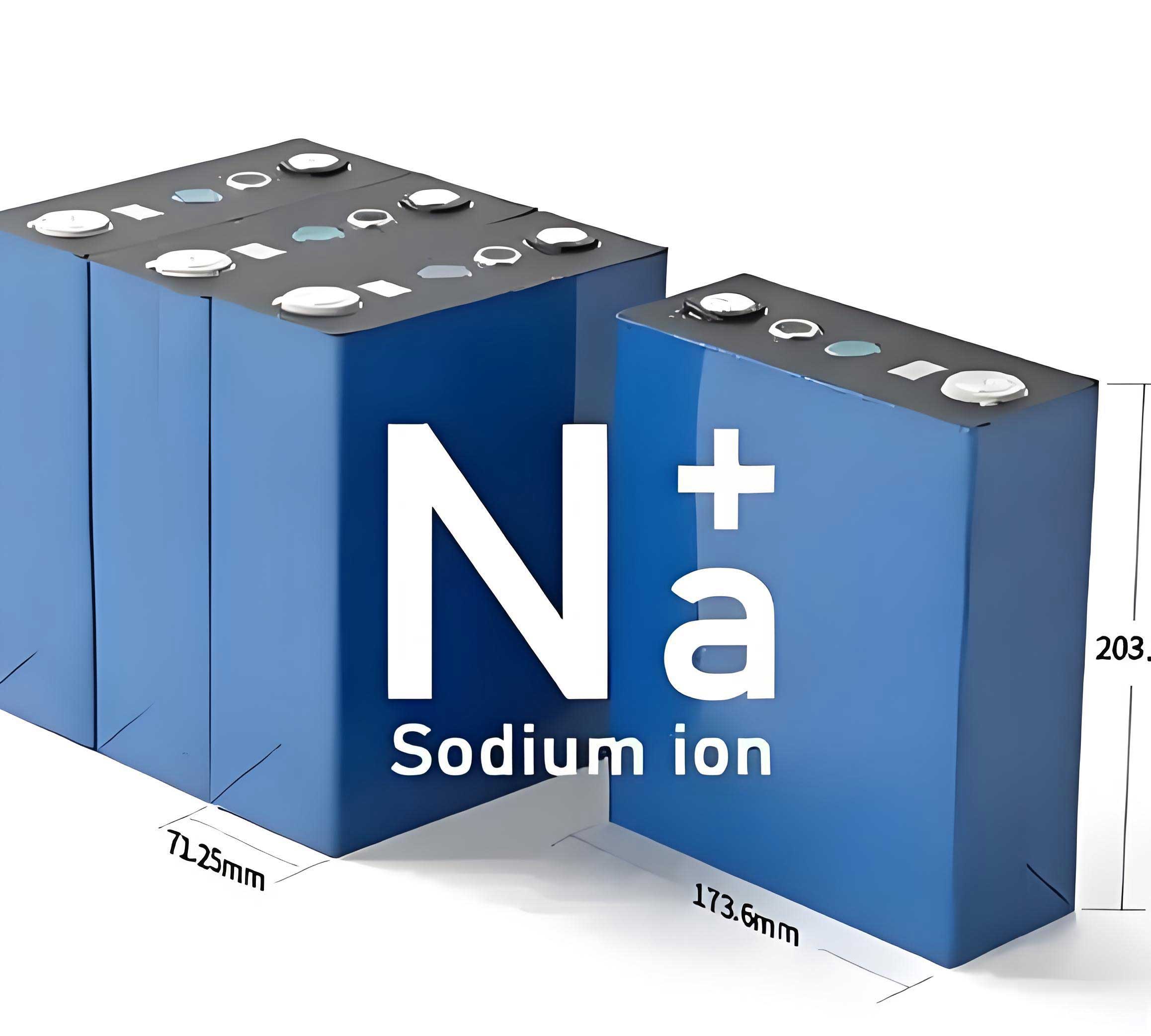
The rapid evolution of new energy technologies has brought the issue of lithium resource scarcity and rising costs into sharp focus. This challenge has spurred intense research into alternative energy storage solutions. Among these, the sodium-ion battery has garnered significant attention from both academia and industry, owing to its cost advantages and the abundant natural reserves of sodium. The performance of a sodium-ion battery is critically dependent on its electrode materials, with the anode playing a pivotal role. Hard carbon, a non-graphitizable carbon material, has emerged as the most promising anode candidate for commercial sodium-ion batteries.
Hard carbon is characterized by its resistance to graphitization even at high temperatures (typically above 2500°C). Its structure consists of randomly oriented, curved graphene-like layers with large interlayer spacing (often > 0.37 nm) and abundant nanoporosity. This unique architecture provides ample space and active sites for the storage and transport of sodium ions, leading to high reversible capacity. The material’s inherent disorder, while limiting electronic conductivity compared to graphite, offers excellent cycling stability and rate capability for sodium-ion battery applications. The synthesis and properties of hard carbon are profoundly influenced by the choice of precursor and the preparation methodology. In this article, I will provide a comprehensive review of hard carbon materials derived from various sources, discuss their synthesis methods, analyze prevailing challenges, and offer perspectives for future development to advance sodium-ion battery technology.
1. Structural Characteristics and Sodium Storage Mechanisms
Unlike graphite used in lithium-ion batteries, the interlayer distance in hard carbon is too large for effective staging intercalation of sodium ions. The generally accepted sodium storage mechanism in hard carbon involves a combination of processes occurring at different potential ranges:
- Slope Region (Above ~0.1 V vs. Na+/Na): This region is attributed to the adsorption of sodium ions on defect sites, pore surfaces, and the edges of the carbon layers. The capacity here is highly dependent on the specific surface area and defect concentration.
- Plateau Region (Below ~0.1 V vs. Na+/Na): This low-voltage plateau is crucial for achieving high energy density. It is primarily associated with the quasi-metallic filling of sodium into the nano-pores or intercalation into the enlarged interlayer spaces between locally ordered carbon domains.
The total reversible capacity (Ctotal) can thus be expressed as the sum of these contributions:
$$ C_{total} = C_{slope} + C_{plateau} $$
where \( C_{slope} \) is the capacity from the slope region and \( C_{plateau} \) is the capacity from the plateau region. The ratio and absolute values of these components are key performance indicators for a sodium-ion battery hard carbon anode.
Another critical parameter is the degree of graphitization, often evaluated by the Raman spectrum’s D-band (disorder) to G-band (graphite) intensity ratio (ID/IG) or by X-ray diffraction (XRD). The interlayer spacing d002 calculated from the (002) diffraction peak using Bragg’s law is a direct measure:
$$ d_{002} = \frac{\lambda}{2 \sin \theta} $$
where \( \lambda \) is the X-ray wavelength and \( \theta \) is the diffraction angle. A larger d002 (>0.37 nm) is typically favorable for sodium ion storage.
2. Precursor-Derived Hard Carbons: Sources and Synthesis
The properties of the final hard carbon material are intrinsically linked to the molecular structure and composition of its precursor. I will categorize and discuss the primary precursor families.
2.1. Pitch-Based Precursors
Pitch, a by-product from coal tar, petroleum refining, or natural asphalt, is an attractive precursor due to its high carbon yield (>50%), low cost, and wide availability. However, pitch is a graphitizable precursor (soft carbon). To convert it into hard carbon, its graphitization pathway must be kinetically hindered.
Synthesis Strategy: The key is to introduce cross-linking or stabilizing functional groups before high-temperature carbonization. This is typically achieved through pre-oxidation in air or with oxidative chemicals. The oxygen-containing groups formed during pre-oxidation create covalent cross-links between pitch molecules, preventing their rearrangement into ordered graphite stacks during subsequent pyrolysis. The process can be summarized as:
$$ \text{Pitch} \xrightarrow[\text{200-400°C}]{\text{Oxidation (Air/O}_3\text{/HNO}_3)} \text{Oxidized Pitch} \xrightarrow[\text{1000-1500°C}]{\text{Carbonization (Inert)}} \text{Hard Carbon} $$
Recent studies focus on co-carbonization or chemical modification to further enhance performance. For instance, cross-linking pitch with agents like divinylbenzene or phthalic alcohol can create a more robust amorphous network, improving cycling stability.
Challenges:
– The pre-oxidation step is time-consuming and must be carefully controlled to avoid excessive burn-off.
– The inherent impurities (heteroatoms like S, N) in pitch can lead to undesirable side reactions and gas evolution during cycling, reducing the initial Coulombic efficiency (ICE).
– Achieving a consistent and high plateau capacity remains a challenge for pitch-derived hard carbons.
2.2. Biomass-Derived Precursors
Biomass represents a sustainable, low-cost, and structurally diverse precursor source. Various agricultural and forestry wastes, such as cellulose, lignin, rice husks, peanut shells, and banana peels, have been successfully converted into hard carbon for sodium-ion batteries.
Synthesis Methods: The conversion typically involves a thermal treatment process. The complexity of biomass (containing cellulose, hemicellulose, lignin) allows for the natural formation of a cross-linked, disordered carbon structure.
| Method | Process Description | Key Features & Effects |
|---|---|---|
| Direct Carbonization | Heating biomass in an inert atmosphere at 800-1500°C. | Simplest method. Product properties heavily depend on biomass type and pyrolysis conditions (temperature, heating rate). Higher temperatures generally increase conductivity but may reduce interlayer spacing. |
| Pre-treatment + Carbonization | Subjecting biomass to acid/alkali washing, hydrothermal carbonization (HTC), or pre-carbonization before high-temperature treatment. | Pre-treatment can remove impurities, introduce porosity (activation), or create a more uniform intermediate (hydrochar via HTC). This often leads to improved rate performance and cycling stability. |
| Activation | Carbonized material is reacted with KOH, ZnCl2, or CO2 at elevated temperatures. | Dramatically increases specific surface area by creating micropores. While beneficial for slope capacity, excessive surface area usually harms ICE due to irreversible electrolyte decomposition. |
The performance is highly tunable. For example, selecting a biomass with natural tubular structures (e.g., cotton) can yield carbon fibers beneficial for ion transport. Doping with heteroatoms (N, P, S) inherently present in the biomass can enhance surface wettability and electronic conductivity.
Challenges:
– Inconsistency in the composition and structure of natural biomass leads to batch-to-batch variability.
– High oxygen content often results in low carbon yield and high porosity, negatively impacting the ICE.
– Scalable and cost-effective purification/pre-treatment processes are needed for industrialization.
2.3. Synthetic Polymer/Resin Precursors
Synthetic polymers, such as phenolic resins, epoxy resins, polyacrylonitrile (PAN), and polyfurfuryl alcohol, offer the highest degree of structural controllability. Their molecular structure, cross-linking density, and composition can be precisely designed.
Synthesis Strategy: These precursors are inherently “hard” due to their highly cross-linked 3D network, which prevents graphitization. The synthesis typically involves:
1. Precursor Synthesis/Polymerization: Controlling parameters like catalyst, solvent, and monomer ratio to tailor the initial polymer’s morphology (e.g., spheres, gels).
2. Stabilization: For some precursors like PAN, an oxidative stabilization step is required before carbonization.
3. Carbonization: Pyrolysis in inert gas at 800-1400°C.
A classic example is the synthesis of phenolic resin-based hard carbon. By adjusting the polymerization conditions (e.g., using a template), one can produce hard carbon with tailored porosity. The carbonization of hexamethylenetetramine-cross-linked phenolic resin can yield hard carbon with a very low specific surface area, which is beneficial for achieving high ICE.
Advantages and Formula Insight: The carbon yield from resins is relatively high (~40-60%). The structure-property relationship can be modeled. For instance, the average interlayer spacing \(d_{002}\) tends to decrease with increasing carbonization temperature \(T\) following a trend that can be approximated (for a specific resin system) as:
$$ d_{002} \approx A – B \cdot \ln(T – T_0) $$
where \(A\), \(B\), and \(T_0\) are empirical constants. This allows for targeted synthesis.
Challenges:
– The high cost of polymer precursors is the primary barrier to large-scale commercial application in sodium-ion batteries.
– The carbonization process of some resins can release toxic gases, requiring proper handling and scrubbing systems.
2.4. Other Organic Precursors
This category includes coal-derived heavy organics (e.g., coal liquefaction residues) and other designed organic molecules (e.g., glucose, citrate). These materials sit between pitch and polymers in terms of cost and controllability.
Synthesis Approach: Similar principles apply: inducing cross-linking or using molecules that carbonize to a disordered state. For example, glucose can be hydrothermally carbonized to form “hydrochar,” which is then pyrolyzed to hard carbon. Coal heavy organics can be cross-linked via Friedel-Crafts alkylation before carbonization.
3. Comparative Analysis and Performance Summary
To provide a clear overview, I have summarized the key characteristics of hard carbons from different precursors in the context of sodium-ion battery anode requirements.
| Precursor Type | Cost | Carbon Yield | Structural Controllability | Typical d002 (nm) | Primary Challenges |
|---|---|---|---|---|---|
| Pitch | Very Low | High (>50%) | Low (requires pre-treatment) | 0.37 – 0.40 | Suppressing graphitization; Low ICE; Impurities. |
| Biomass | Low | Variable (20-40%) | Medium (depends on source & pre-treatment) | 0.38 – 0.42 | Inconsistency; High porosity/O-content; Low ICE. |
| Synthetic Polymer | Very High | Medium-High (40-60%) | Very High | 0.36 – 0.39 | Prohibitive cost; Complex synthesis. |
| Other Organics | Medium | Medium (30-50%) | Medium-High | 0.37 – 0.41 | Process optimization; Scalability. |
| Precursor (Representative) | Synthesis Temp. (°C) | Reversible Capacity (mAh/g) | Initial Coulombic Efficiency (ICE, %) | Cycle Stability (Capacity Retention) | Key Feature |
|---|---|---|---|---|---|
| Oxidized Petroleum Pitch | 1300 | ~300 | ~80 | >95% after 100 cycles | Cost-effective, moderate performance |
| Peanut Shells (KOH activated) | 800 | ~340 | ~65 | >90% after 200 cycles | High slope capacity, low ICE |
| Phenolic Resin (Low SSA) | 1100 | ~310 | ~88 | >98% after 500 cycles | High ICE, excellent cycling |
| Glucose (HTC derived) | 1200 | ~330 | ~82 | >95% after 300 cycles | Good balance, tunable morphology |
The performance metrics, especially the reversible capacity \(C\) and ICE, are critical for the energy density of a full-cell sodium-ion battery. The full-cell capacity is limited by the lower-capacity electrode, and losses from the anode’s ICE must be compensated by extra cathode material, reducing energy density. Therefore, the optimization goal is to maximize both \(C\) and ICE simultaneously, which often involves trade-offs managed through precise synthesis control.
4. Current Challenges and Future Perspectives
Despite significant progress, several key challenges must be addressed to fully realize the potential of hard carbon anodes in commercial sodium-ion batteries.
4.1. Fundamental Understanding and Material Design:
– A more precise, universally accepted model for sodium storage, particularly the nature of the low-voltage plateau (pore-filling vs. intercalation), is needed.
– Rational design principles linking precursor chemistry, pyrolysis conditions, and final electrochemical properties ( \(C_{slope}\), \(C_{plateau}\), ICE) must be established. Machine learning and high-throughput experimentation could accelerate this discovery.
4.2. Performance Optimization – The “ICE-Capacity” Dilemma:
High specific surface area (SSA) often boosts capacity (especially \(C_{slope}\)) but devastates ICE due to solid electrolyte interphase (SEI) formation on excessive surfaces. The SEI formation consumes active sodium ions from the cathode. Future work should focus on creating “closed pores” that contribute to \(C_{plateau}\) without being accessible to the electrolyte, or on engineering a thin, stable SEI. The relationship can be conceptually framed as:
$$ ICE (\%) \propto \frac{1}{SSA_{accessible}} \cdot f(SEI_{stability}) $$
where \(f(SEI_{stability})\) is a function describing the efficiency of SEI formation.
4.3. Scalable and Cost-Effective Manufacturing:
– For pitch: Develop more efficient, continuous pre-oxidation technologies.
– For biomass: Establish standardized supply chains and pre-treatment protocols to ensure consistency. Integrate biorefinery concepts to valorize all biomass components.
– For all precursors: Optimize pyrolysis furnaces for better temperature uniformity and energy efficiency to reduce the overall carbon footprint of the sodium-ion battery.
4.4. Composite and Hybrid Structures:
Future anodes may not be pure hard carbon. Strategic composites are promising:
– Hard Carbon/Soft Carbon Composites: Soft carbon can improve bulk electronic conductivity, while hard carbon provides storage sites. The composite conductivity \(\sigma_{comp}\) can be modeled percolation theory:
$$ \sigma_{comp} \approx \sigma_{SC} \cdot (v – v_c)^t $$
where \(\sigma_{SC}\) is soft carbon conductivity, \(v\) is its volume fraction, \(v_c\) is the percolation threshold, and \(t\) is a critical exponent.
– Heteroatom Doping (N, S, P, B): Systematic doping can enhance surface reactivity, electronic conductivity, and interlayer spacing. The effect on capacity can be additive:
$$ C_{doped} = C_{pure} + \Delta C_{defect} + \Delta C_{pseudocap} $$
where \(\Delta C_{defect}\) is from additional defect sites and \(\Delta C_{pseudocap}\) is from faradaic reactions of the dopant.
– Integration with Buffer Matrices (e.g., Graphene, MXenes): To mitigate volume changes and further boost conductivity.
5. Concluding Remarks
Hard carbon stands as the frontrunner anode material for the next generation of affordable and sustainable sodium-ion batteries. The journey from precursor to performance is complex, governed by the intricate interplay between chemical composition, thermal history, and resulting nano/micro-structure. While pitch offers a cost-effective route and biomass a sustainable one, synthetic polymers provide a blueprint for ideal performance. The future of hard carbon anode development lies in transcending these categories through hybrid and engineered approaches. By deepening the fundamental understanding of sodium storage mechanisms, innovating synthesis pathways to break the ICE-capacity trade-off, and driving down manufacturing costs through scalable processes, hard carbon can solidify its role in enabling the widespread adoption of sodium-ion battery technology for grid storage and electric mobility. The continued research and development in this field are not merely academic but essential for building a more resilient and sustainable energy future.