
The global pursuit of carbon neutrality has catalyzed an unprecedented expansion of renewable energy generation, primarily from wind and solar photovoltaic (PV) sources. This transition, while imperative for environmental sustainability, introduces significant challenges to the stability and reliability of traditional power grids. The inherent intermittency and variability of wind and solar power—subject to sudden ramps and drops due to local weather conditions—directly challenge the system’s frequency regulation reserves. Furthermore, the unique output characteristics and complex grid impedance behaviors of these resources can, when integrated at scale (whether centrally or in a distributed manner), induce frequency oscillations, posing serious threats to power system stability and end-user security.
In this context, the integration of energy storage systems, particularly battery-based solutions, has emerged as a cornerstone technology for enabling a high penetration of renewables. The cell energy storage system offers unparalleled advantages in terms of response speed and control precision. By strategically deploying these systems, grid operators can effectively shave peak loads and fill valleys in net demand, thereby alleviating the peak-shaving pressure on conventional thermal power plants. More critically, a cell energy storage system can provide fast-responding primary frequency regulation (PFR), balancing short-term load-generation mismatches and maintaining system frequency within safe operating limits.
Extensive research has been conducted worldwide on the applications and benefits of energy storage. Studies have explored its promising future, conducted cost-benefit analyses for generation-side and demand-side applications, developed advanced control and management systems for enhanced stability, and designed integrated solutions for projects like PV-storage hybrids and offshore wind farms to ease grid pressure and improve energy utilization. Furthermore, research into optimal configuration models for hybrid storage systems has investigated strategies for leveraging complementary strengths of various flexible resources.
Building upon this foundation, this article delves into the specific applications and critical functions of the battery energy storage system within grid-connected renewable energy environments. We will analyze its roles in load shifting, power smoothing, and frequency support. Subsequently, a case study of an integrated PV-storage microgrid project is examined to evaluate the economic viability of deploying a cell energy storage system. The overarching goal is to demonstrate how this technology not only enhances grid reliability and stability but also can unlock tangible economic value, thereby accelerating the clean energy transition.
Functional Analysis of Battery Energy Storage in Renewable Integration
The integration of variable renewable energy (VRE) sources like wind and solar presents distinct technical challenges that a well-designed cell energy storage system is uniquely positioned to address. Its core value lies in decoupling energy production from consumption in time, providing a buffer that transforms unpredictable generation into a more dispatchable and grid-friendly resource.
1. Peak Shaving and Valley Filling (Load Shifting)
The temporal mismatch between VRE generation and system load, often termed “anti-peak” characteristics, exacerbates grid management. For instance, solar PV produces zero output during the evening peak load period (e.g., 19:00-22:00), while wind power may frequently generate at full capacity during the overnight load trough (e.g., around 24:00). This misalignment increases the demand for both upward and downward regulation reserves from conventional plants and can lead to significant curtailment (“wind spill” or “solar spill”) when transmission capacity is insufficient during high-generation, low-load periods.
A cell energy storage system mitigates these issues by performing energy arbitrage across time. It stores excess renewable energy produced during low-price, off-peak hours (valleys) and discharges it during high-price, peak demand hours. This process effectively “shifts” energy, flattening the net load profile seen by the grid. The technical objective is to constrain the equivalent load (total system load minus VRE output) within the maximum and minimum effective power limits of the VRE plants, thereby minimizing curtailment and load shedding events. This enhances the grid’s hosting capacity for renewables, reduces the need for costly peak-generation assets and spinning reserves, and improves overall system operational efficiency.
2. Power Output Smoothing and Grid Stability
Rapid, minute-to-minute fluctuations in VRE output can destabilize the grid. Grid codes therefore impose strict limits on the rate of change of power (RoCoP) for interconnected renewable plants, as exemplified in the following table summarizing typical requirements.
| VRE Plant Capacity (MW) | Maximum 10-min RoCoP (MW) | Maximum 1-min RoCoP (MW) |
|---|---|---|
| < 30 | 10 | 3 |
| 30 – 150 | 10 – 50 | 3 – 15 |
| > 150 | 50 | 15 |
The primary function of power smoothing is to use a cell energy storage system to mitigate these minute-level fluctuations. The system controls the charge/discharge of the batteries so that the combined output power of the VRE plant and the storage system, denoted as $P(t)$, meets the RoCoP limits defined above. Let $P_{NE}(j)$ be the VRE output at time interval $j$, and $P_{BES}(j)$ be the power output (positive for discharge, negative for charge) of the cell energy storage system. The goal is to ensure that the combined output $P(j) = P_{NE}(j) + P_{BES}(j)$ is smooth.
Two prevalent control algorithms for this purpose are the Point-by-Point Limit Method and the Low-Pass Filter Method.
Point-by-Point Limit Method: This method calculates the allowable range for $P_{BES}(j)$ at each time step based on the RoCoP constraints over the past 1-minute and 10-minute windows.
$$ \text{max}(\Delta P_{10}(j) – P_{y,10}, \Delta P_{1}(j) – P_{y,1}) < P_{BES}(j) < \text{min}(\Delta P_{10}(j) + P_{y,10}, \Delta P_{1}(j) + P_{y,1}) $$
where $\Delta P_{10}(j)$ and $\Delta P_{1}(j)$ are the power changes of the combined output $P$ over the past 10 minutes and 1 minute, respectively, relative to the value at time $j$. $P_{y,10}$ and $P_{y,1}$ are the maximum allowed fluctuation powers for the 10-minute and 1-minute intervals, derived from grid codes.
Low-Pass Filter Method: This technique uses a first-order low-pass filter to attenuate high-frequency components (rapid fluctuations) of the VRE signal. The reference power for the cell energy storage system is derived from the filtered signal.
$$ P_{BES}(j) = \frac{\tau}{t} \left[ \Sigma P(j) – \Sigma P(j-1) \right] $$
Here, $\tau$ is the filter time constant, $t$ is the control cycle period, and $\Sigma P$ represents the filtered signal of the raw VRE power $P_{NE}$. The time constant $\tau$ is determined by the desired cutoff frequency $f_c$: $\tau = \frac{1}{2\pi f_c}$. A lower $f_c$ results in heavier smoothing but requires a larger energy capacity from the cell energy storage system.
3. Primary Frequency Regulation (PFR)
PFR is the first line of defense against sudden imbalances between load and generation, acting autonomously within seconds to arrest frequency deviations. Traditional generators like thermal plants have limited response speeds and defined control deadbands (e.g., ±0.033 Hz for a 50 Hz system). VRE plants often have wider deadbands or limited inherent frequency response capabilities.
A cell energy storage system excels in this role due to its sub-second response time and high precision. It can modulate its output/absorption in proportion to the real-time system frequency deviation ($\Delta f$), providing near-instantaneous active power support. This capability can be assigned independently to a grid-scale cell energy storage system or co-dispatched alongside a renewable generator to help it meet grid code requirements.
The technical specifications illustrate the advantage. Consider a 300 MW thermal unit with a PFR limit of ±8% rated capacity (±24 MW) and a droop of 160 MW/Hz. For a frequency deviation between 0.033 Hz and 0.183 Hz, its power adjustment ranges from 0 to 24 MW. Following a frequency event, its sustained power adjustment might be around ±0.2% of rated capacity (±600 kW). If this duty were entirely assumed by a cell energy storage system, the required discharge/charge duration per event would be very short (e.g., ~10 seconds). Assuming symmetrical probability of over- and under-frequency events, a relatively small energy capacity is sufficient. A system sized at 600 kW / 0.5 hour could be suitable. Coupled with an intelligent State-of-Charge (SOC) management strategy that maintains the battery around 50% SOC with shallow cycles, the cell energy storage system can perform countless PFR cycles daily without significantly degrading battery life.
Advanced control algorithms, such as a dual-boundary improved smoothing control, can further optimize the SOC trajectory during frequent PFR actions, minimizing the required energy capacity of the cell energy storage system while ensuring it remains within a safe and effective operating window.
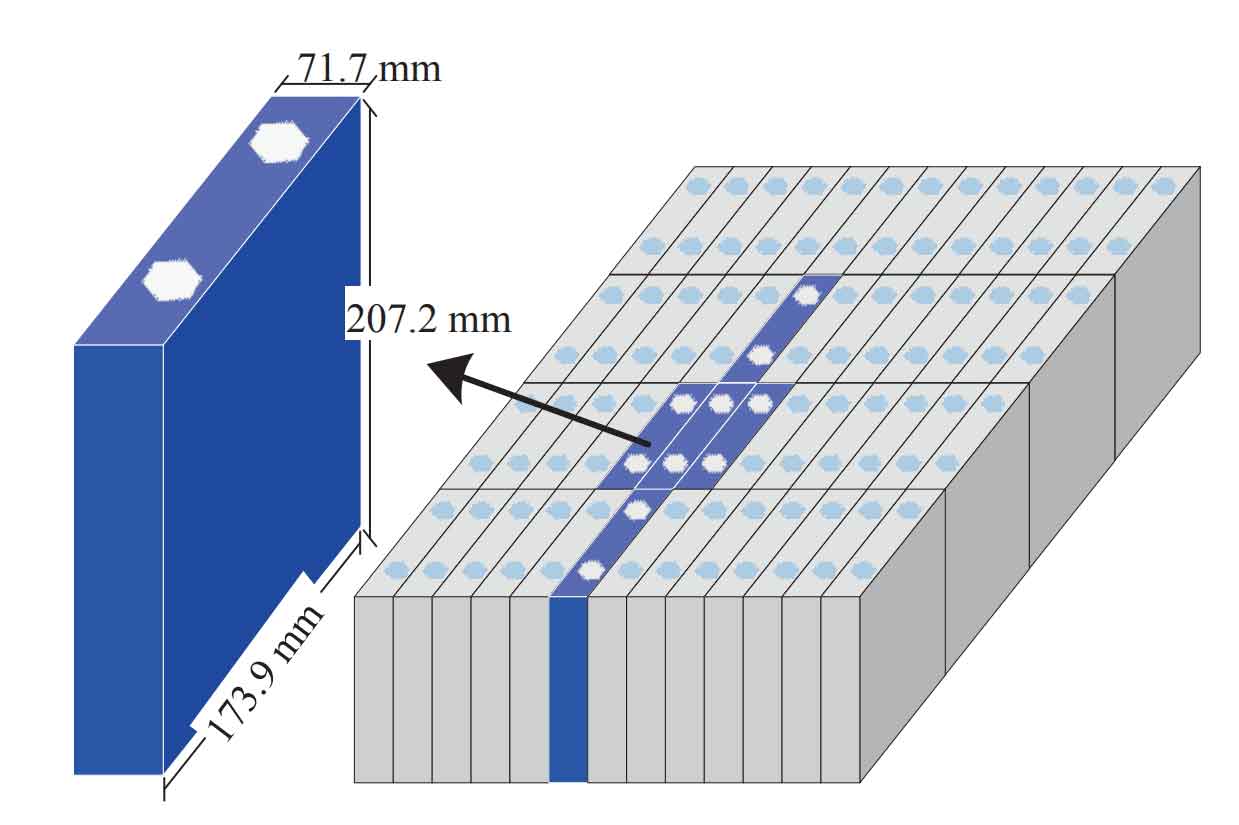
The image above illustrates the fundamental building block of modern large-scale battery energy storage systems: lithium iron phosphate (LFP) battery cells. These cells, known for their safety, long cycle life, and stability, are integrated into modules and then into full containerized systems to form the multi-megawatt-hour cell energy storage system units deployed in grid applications. The technology shown is pivotal for the economic and safe operation of the storage solutions discussed throughout this analysis.
Case Study: Economic Viability in an Integrated PV-Storage Microgrid
To translate technical functions into practical value, we examine a real-world application: an 800 kW PV generation system coupled with a 250 kW / 500 kWh lithium iron phosphate (LFP) battery energy storage system, forming an integrated microgrid operating at a 10 kV connection point. The primary operational mode for the cell energy storage system in this project is economic arbitrage (peak shaving and valley filling).
| System Component | Specification | Quantity / Capacity |
|---|---|---|
| PV Modules | 550W Monocrystalline | 1,455 units (~800 kWp) |
| PV Inverters | 33 kW rated | 22 units |
| LFP Battery Cells | 3.2V / 130Ah | 1,224 cells (500 kWh) |
| Battery Inverter (PCS) | 250 kW | 1 unit |
| Step-up Transformer | 10kV/0.4kV, 800 kVA | 1 unit |
The microgrid employs sophisticated controls, including a “black start” capability where the cell energy storage system can bootstrap the local network upon a main grid failure. It utilizes voltage-current double-loop control for stable battery cycling and a centralized Energy Management System (EMS) for monitoring, protection, and optimized dispatch.
The core economic driver is leveraging time-of-use (ToU) electricity price differentials. The cell energy storage system charges from the grid during low-price, off-peak periods (valleys) and discharges to supply the local load or the grid during high-price, on-peak periods.
Revenue Calculation: Assuming a peak-to-valley price spread of \$0.10/kWh and an operational cycle of one full charge/discharge per day at 90% Depth of Discharge (DoD), the annual revenue can be estimated as:
$$ \text{Annual Revenue} = \text{Price Spread} \times \text{System Energy} \times \text{DoD} \times \text{Cycles per Year} $$
$$ \text{Annual Revenue} = \$0.10/\text{kWh} \times 500 \text{ kWh} \times 0.90 \times 365 \approx \$16,425 $$
This represents a direct financial return from energy arbitrage. An additional, often overlooked benefit is the potential for “non-wires” savings. By reducing the peak power draw from the grid, the required capacity of the grid connection transformer can be downsized, leading to significant capital cost savings on equipment like the substation transformer.
Technical Discussion and Future Perspectives
Supporting grid-connected renewables is a paramount application for the cell energy storage system. Its functions in load shifting, power smoothing, and frequency regulation are essential for maximizing renewable energy hosting capacity, reducing reliance on fossil-fueled peaking plants and spinning reserves, and mitigating renewable curtailment. As forecasting accuracy for minute-ahead VRE generation improves, the synergy with fast-responding storage will further enhance the schedulability and grid-friendliness of renewable resources.
However, the current economic model presents challenges. Stand-alone provision of grid services like frequency regulation may not always guarantee a satisfactory return on investment for the cell energy storage system owner. Furthermore, the economic value of energy arbitrage can exhibit strong seasonal variations, influenced by changing electricity price patterns and renewable generation profiles.
Future research and development must therefore focus on several key areas to unlock the full potential of the cell energy storage system. First, developing multi-service stacking algorithms that allow a single storage asset to simultaneously and optimally participate in multiple value streams (e.g., arbitrage, frequency regulation, and backup power) is crucial for improving project economics. Second, advancements in battery chemistry and system design are needed to enhance performance metrics—such as cycle life, calendar life, and round-trip efficiency—across a wide range of temperatures and operating conditions, ensuring consistent value delivery throughout the year. Finally, the evolution of electricity market structures to properly value the speed, accuracy, and flexibility offered by a cell energy storage system will be a critical enabler for its widespread deployment.
Conclusion
This analysis underscores the indispensable role of the battery energy storage system in the transition to a renewable-dominant power grid. Technically, the cell energy storage system addresses the core challenges of variability and uncertainty through three primary functions: load shifting to align generation with consumption patterns, power smoothing to meet grid code requirements and ensure stability, and primary frequency regulation to provide fast, precise balancing services. The case study demonstrates that, beyond these technical merits, a well-configured cell energy storage system operating in an energy arbitrage mode can generate tangible economic returns, with additional benefits in reducing grid infrastructure costs. In conclusion, the strategic deployment of battery energy storage systems is not merely an option but a necessity for enhancing the reliability, stability, and economic efficiency of power systems with high penetrations of renewable energy. As technology advances and markets evolve, the value proposition of the cell energy storage system will only strengthen, solidifying its position as a cornerstone of a sustainable and resilient energy future.