
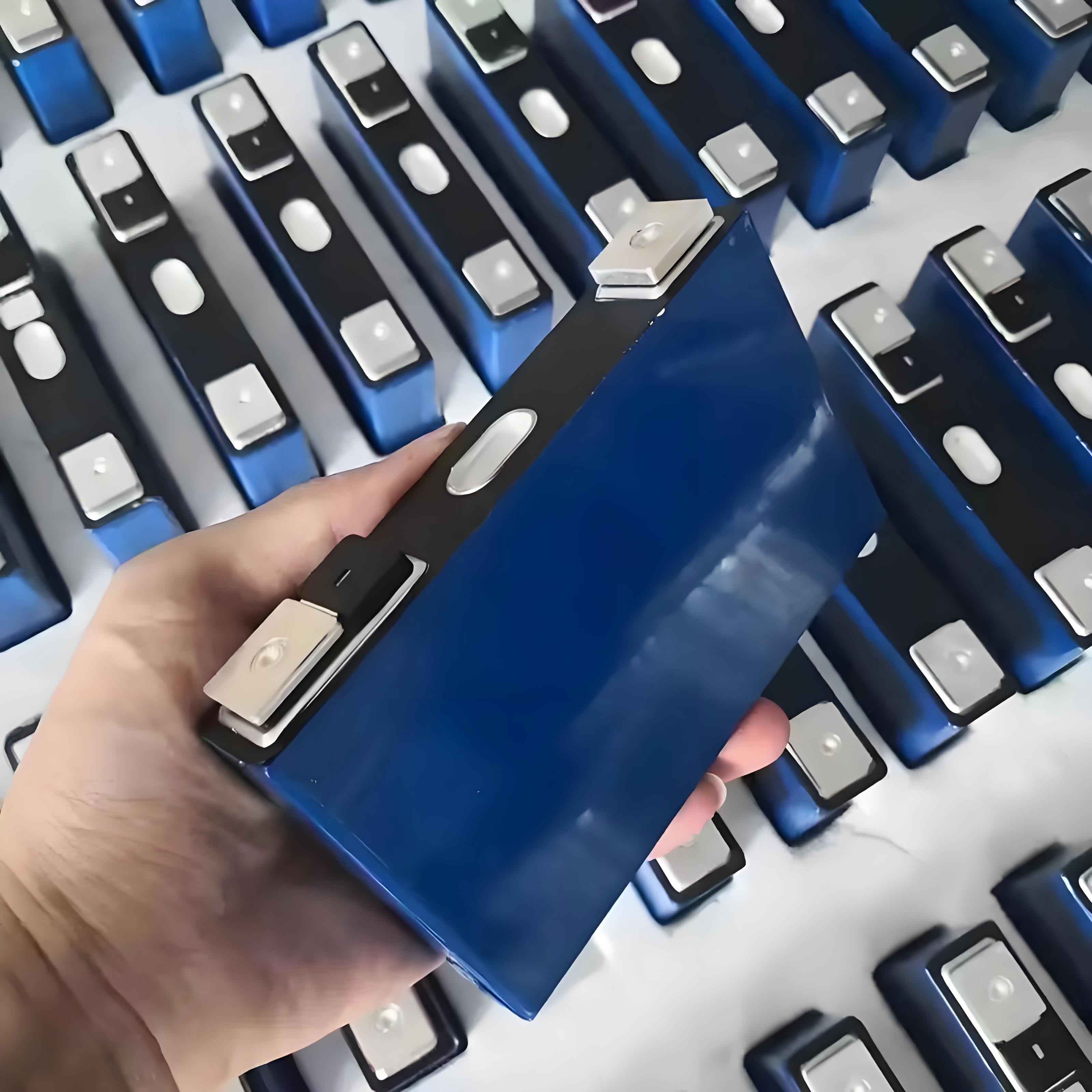
This study presents a sustainable approach for recovering lithium from spent LiFePO4 battery cathode powder using organic acids. The leaching efficiency was systematically optimized, and reaction mechanisms were elucidated through kinetic modeling and material characterization.
1. Optimization of Leaching Parameters
The effects of organic acid types, concentrations, and reaction conditions on Li recovery were investigated. Key findings include:
1.1 Acid-Reducer Combination Screening
| Acid System | Li Recovery (%) |
|---|---|
| Citric acid + Ascorbic acid | 92.7 |
| Oxalic acid + Ascorbic acid | 73.0 |
| Citric acid + H2O2 | 90.6 |
| Oxalic acid + H2O2 | 91.4 |
1.2 Kinetic Analysis
The leaching process was modeled using two approaches:
Liquid boundary layer model: $$ X = k_1 \cdot t $$
Chemical reaction control model: $$ \ln(-\ln(1 – X)) = \ln k_2 + n \ln t $$
| Temperature (K) | R2 | n | Ea (kJ/mol) |
|---|---|---|---|
| 323 | 0.991 | 0.454 | 30.56 |
| 333 | 0.995 | 0.380 | |
| 343 | 0.994 | 0.375 | |
| 353 | 0.994 | 0.492 |
2. Reaction Mechanism
The leaching process involves:
- Proton attack on LiFePO4 structure by citric acid
- Redox reactions facilitated by ascorbic acid
- Selective lithium dissolution via chelation
The primary reactions can be expressed as:
$$ 2\text{H}_3\text{Cit} + 3\text{C}_6\text{H}_8\text{O}_6 + 6\text{LiFePO}_4 \rightarrow 6\text{FePO}_4 + 2\text{Li}_3\text{Cit} + 6\text{H}_2 $$
$$ 3\text{H}_3\text{Cit} + 3\text{LiFePO}_4 \rightarrow \text{Fe}_3(\text{Cit})_2 + \text{Li}_3\text{Cit} + 3\text{H}_3\text{PO}_4 $$
3. Process Optimization
Optimal conditions for LiFePO4 battery cathode recycling:
| Parameter | Optimal Value |
|---|---|
| Citric acid concentration | 1.5 mol/L |
| Ascorbic acid concentration | 0.3 mol/L |
| Temperature | 80°C |
| Solid-liquid ratio | 1:20 |
| Reaction time | 60 min |
4. Industrial Implications
This organic acid-based process offers significant advantages for LiFePO4 battery recycling:
- Reduced environmental impact compared to inorganic acids
- High selectivity for lithium recovery (>92%)
- Lower energy consumption (Ea = 30.56 kJ/mol)
- Direct conversion of LiFePO4 to FePO4
The developed method demonstrates excellent potential for sustainable recovery of critical metals from spent LiFePO4 batteries, contributing to circular economy objectives in the energy storage sector.