
As a researcher deeply involved in sustainable energy and waste management, I have long been concerned with the growing issue of retired li ion batteries. The widespread adoption of li ion batteries across electric vehicles, energy storage systems, and portable electronics has led to an impending surge in end-of-life units. These retired li ion batteries contain valuable metals, but improper handling poses severe environmental risks. In this article, I present an experimental study on a novel method combining mild calcination with low-intensity mechanical grinding to efficiently strip cathode materials from retired li ion batteries. The goal is to achieve high recovery rates while minimizing energy consumption and hazardous emissions, addressing critical gaps in current recycling practices for li ion batteries.
The importance of li ion batteries in modern technology cannot be overstated. These power sources offer high energy density and long cycle life, driving innovations in renewable energy and transportation. However, the average lifespan of a li ion battery is only 5 to 8 years, leading to a massive stream of retired units. Without efficient recycling, valuable resources like cobalt, lithium, nickel, and manganese are wasted, and toxic components can leach into the environment. Therefore, developing green and efficient methods for recovering cathode materials from retired li ion batteries is paramount. Traditional approaches, such as high-temperature pyrolysis, solvent dissolution, or alkaline leaching, often involve high energy inputs, corrosive chemicals, and the generation of harmful gases like hydrogen fluoride. Mechanical methods alone tend to have low efficiency and high impurity levels. My work focuses on overcoming these limitations by integrating mild thermal treatment with controlled mechanical action, offering a sustainable pathway for li ion battery recycling.
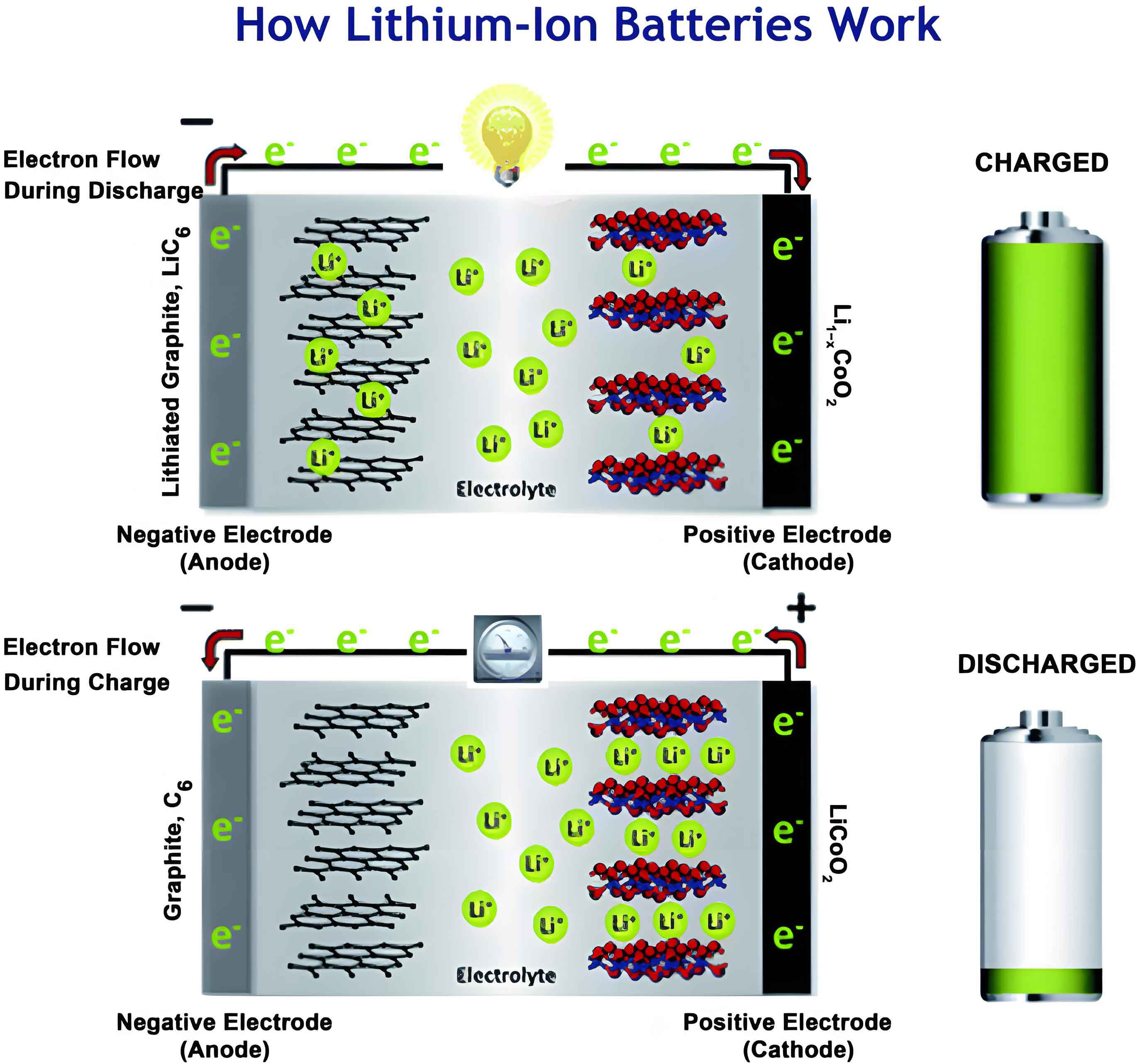
In this study, I propose a method that leverages the viscosity reduction of polyvinylidene fluoride (PVDF) binder upon mild heating. PVDF is commonly used to adhere cathode active materials to aluminum foil current collectors in li ion batteries. By subjecting the cathode sheets to temperatures below the decomposition point of PVDF, the binder softens without producing hydrogen fluoride. Subsequently, a short-duration, low-intensity mechanical grinding step is applied to separate the cathode materials from the foil. This two-step process significantly reduces thermal energy requirements and avoids the use of harsh chemicals, aligning with green chemistry principles for li ion battery recycling. The core innovation lies in optimizing parameters to maximize stripping efficiency while preserving the integrity of the aluminum foil for easy separation and reuse.
To systematically evaluate this method, I designed a series of experiments using retired ternary li ion batteries (NCR21700 type). The batteries were first discharged in a NaCl solution for 24 hours to ensure safety. After disassembly in a blast-proof chamber, the cathode sheets were cut into 10 mm × 10 mm pieces. These pieces underwent mild calcination in a muffle furnace, followed by mechanical grinding in a vibratory mill. The stripping efficiency was quantified using the stripping rate, defined as the mass ratio of detached cathode material to the total cathode material. The formula for stripping rate is expressed as:
$$ \gamma = \frac{m_1}{m} \times 100\% $$
where $\gamma$ is the stripping rate (%), $m_1$ is the mass of detached cathode material (g), and $m$ is the total mass of cathode material (g). To determine $m$, residual cathode material on the foil was dissolved in a sodium hydroxide solution, filtered, dried, and weighed, then added to $m_1$. This metric allowed for precise assessment of how various operational parameters influence the performance of the stripping process for li ion battery cathodes.
The experimental parameters investigated include calcination temperature, grinding time, motor speed, eccentric block angle, medium filling rate, and feed particle size. Each parameter was varied while others were held constant to isolate its effect. For instance, calcination temperature was tested from 100°C to 400°C, with a fixed calcination time of 30 minutes. Grinding time ranged from 10 to 100 seconds. Motor speed was adjusted between 1100 and 1500 rpm, and eccentric block angles from 0° to 180°. Medium filling rate varied from 30% to 50%, and feed particle sizes from 5 mm to 20 mm. The outcomes were analyzed in terms of stripping rate and current collector integrity, providing a comprehensive understanding of the mechanical stripping dynamics in retired li ion batteries.
The results revealed significant insights into the optimization of the stripping process. First, calcination temperature plays a crucial role in softening the PVDF binder. As shown in Table 1, stripping rates increased markedly when temperatures approached the melting point of PVDF (around 180°C). At 250°C, the stripping rate exceeded 96%, and further increases to 350°C only yielded marginal improvements but risked aluminum foil damage and hydrogen fluoride generation. This underscores the advantage of mild calcination for li ion battery recycling, as it lowers energy consumption and avoids toxic emissions.
| Calcination Temperature (°C) | Stripping Rate (%) | Current Collector Integrity | Observations |
|---|---|---|---|
| 100 | ~70 | Excellent | Insufficient binder softening |
| 180 | ~92 | Good | Significant improvement due to PVDF melting |
| 250 | 96.36 | Excellent | Optimal temperature for efficient stripping |
| 300 | 96.80 | Good | Minor enhancement, but higher energy input |
| 350 | 97.20 | Fair (some overgrinding) | Risk of HF generation and foil damage |
| 400 | 97.50 | Poor (severe overgrinding) | Decomposition occurs, not recommended |
Grinding time also proved critical. As illustrated in Table 2, stripping rates improved with longer grinding durations, plateauing at around 60 seconds. Beyond this point, overgrinding occurred, causing aluminum foil wrinkling and edge breakage. This emphasizes the need for precise timing in mechanical assistance for li ion battery cathode stripping. The relationship between grinding time ($t$) and stripping rate ($\gamma$) can be modeled with a saturation curve:
$$ \gamma(t) = \gamma_{\text{max}} \left(1 – e^{-kt}\right) $$
where $\gamma_{\text{max}}$ is the maximum achievable stripping rate (approximately 97.76% in this study) and $k$ is a rate constant dependent on other parameters. This equation helps predict optimal grinding times for different li ion battery types.
| Grinding Time (s) | Stripping Rate (%) | Aluminum Foil Condition | Recommended Range |
|---|---|---|---|
| 10 | ~85 | Excellent | Too short for complete stripping |
| 30 | ~92 | Excellent | Moderate efficiency |
| 60 | 96.41 | Excellent | Optimal for balance of efficiency and integrity |
| 80 | 97.00 | Good (slight bending) | Acceptable but may cause minor damage |
| 100 | 97.20 | Fair (noticeable wrinkles) | Overgrinding occurs, not ideal |
Motor parameters, including speed and eccentric block angle, directly influence the mechanical energy imparted to the cathode sheets. Higher motor speeds (up to 1500 rpm) increased stripping rates by enhancing the velocity difference between grinding media and cathode particles, as described by the kinetic energy transfer equation:
$$ E_k = \frac{1}{2} m_m (v_m – v_p)^2 $$
where $E_k$ is the kinetic energy transferred, $m_m$ is the mass of the grinding medium, $v_m$ is its velocity, and $v_p$ is the velocity of the cathode particle. This energy facilitates the breaking of adhesive bonds in li ion battery cathodes. However, excessive speed can lead to foil deformation. Similarly, the eccentric block angle affects vibration amplitude and force. Angles between 45° and 90° yielded the best results, with 45° providing slightly better foil integrity. At 0°, rapid foil bending occurred, and at angles above 120°, stripping efficiency dropped due to reduced radial motion. These findings are summarized in Table 3, highlighting the importance of tuning mechanical parameters for efficient li ion battery recycling.
| Motor Speed (rpm) | Eccentric Block Angle (°) | Stripping Rate (%) | Foil Integrity | Notes |
|---|---|---|---|---|
| 1100 | 90 | ~90 | Excellent | Low energy input, moderate stripping |
| 1300 | 90 | ~94 | Excellent | Improved with increased speed |
| 1500 | 45 | 96.41 | Excellent | Optimal combination for high efficiency |
| 1500 | 90 | 96.36 | Excellent | Comparable to 45°, but slightly lower integrity |
| 1500 | 135 | ~88 | Good | Reduced stripping due to limited vibration |
| 1500 | 180 | ~80 | Fair | Poor performance, not recommended |
Medium filling rate and feed particle size are additional factors that optimize the grinding environment. The medium filling rate represents the volume percentage of grinding media in the mill. As shown in Table 4, a filling rate of 45% maximized stripping rate at 97.76%, while lower or higher rates led to inefficiencies. This aligns with the theory of collision frequency in granular systems, where an optimal packing density maximizes particle interactions without restricting motion. The collision frequency ($f_c$) can be approximated as:
$$ f_c = \frac{N \cdot v_r}{V} $$
where $N$ is the number of medium particles, $v_r$ is their relative velocity, and $V$ is the mill volume. For li ion battery cathode stripping, a filling rate around 45% balances $N$ and $v_r$ to enhance stripping.
| Medium Filling Rate (%) | Stripping Rate (%) | Foil Integrity | Collision Frequency |
|---|---|---|---|
| 30 | ~88 | Excellent | Low due to sparse media |
| 35 | ~92 | Excellent | Moderate, some residual cathode |
| 40 | 96.41 | Excellent | High, efficient stripping |
| 45 | 97.76 | Excellent | Optimal, maximum efficiency |
| 50 | ~95 | Fair (some damage) | Very high but causes overgrinding |
Feed particle size also plays a pivotal role. Smaller pieces (5-7.5 mm) showed lower stripping rates due to limited surface area for mechanical action, while larger pieces (15-20 mm) tended to bend, trapping cathode material. The optimal size was 10 mm, achieving the highest stripping rate of 97.76% with intact foil. This can be explained by the shear force ($F_s$) acting on the cathode sheet:
$$ F_s = \tau \cdot A $$
where $\tau$ is the shear stress from grinding media and $A$ is the contact area. For li ion battery cathodes, a moderate $A$ (achieved with 10 mm pieces) ensures sufficient $F_s$ for stripping without causing deformation. These insights are critical for scaling up the process for diverse li ion battery formats.
The discussion extends to the environmental and economic benefits of this method. Compared to conventional high-temperature pyrolysis at 500°C, mild calcination at 250°C reduces energy consumption by approximately 50%, based on the Stefan-Boltzmann law for radiative heat transfer:
$$ Q = \epsilon \sigma A (T^4 – T_0^4) $$
where $Q$ is the heat energy, $\epsilon$ is emissivity, $\sigma$ is the Stefan-Boltzmann constant, $A$ is surface area, $T$ is the absolute temperature, and $T_0$ is ambient temperature. Lowering $T$ from 500°C (773 K) to 250°C (523 K) drastically cuts $Q$, making the process more sustainable for li ion battery recycling. Moreover, the absence of hydrogen fluoride generation eliminates the need for gas scrubbing systems, reducing operational costs and environmental impact. The preserved aluminum foil can be directly recycled, enhancing resource recovery from retired li ion batteries.
To further validate the method, I conducted comparative analyses with existing techniques. As summarized in Table 5, the mild calcination-mechanical grinding approach outperforms others in terms of stripping efficiency, energy use, and environmental safety. For instance, solvent-based methods often require toxic chemicals like N-methyl-2-pyrrolidone, while ultrasonic methods have high power demands. This new method offers a balanced solution for the recycling of li ion batteries, aligning with circular economy goals.
| Method | Typical Stripping Rate (%) | Temperature (°C) | Energy Consumption | Environmental Impact | Notes |
|---|---|---|---|---|---|
| High-Temperature Pyrolysis | ~92-97 | 450-550 | High | HF generation, high CO2 emissions | Common but unsustainable |
| Solvent Dissolution | ~90-95 | Room to 100 | Moderate (chemical use) | Toxic solvent waste | Chemical hazards present |
| Alkaline Leaching | ~85-90 | 60-80 | Moderate | Corrosive alkali waste | May damage materials |
| Ultrasonic Cleaning | ~80-90 | Room | High (electricity) | Low chemical use | Limited to small scale |
| Mechanical Grinding Alone | ~70-85 | Room | Low to moderate | Low emissions but high impurities | Poor efficiency |
| Mild Calcination-Mechanical Grinding (This Study) | 97.76 | 250 | Low | No HF, minimal waste | Green and efficient |
In conclusion, my experimental study demonstrates that combining mild calcination with low-intensity mechanical grinding is a highly effective strategy for stripping cathode materials from retired li ion batteries. The optimal parameters include a calcination temperature of 250°C, grinding time of 60 seconds, motor speed of 1500 rpm, eccentric block angle of 45°, medium filling rate of 45%, and feed particle size of 10 mm. Under these conditions, a stripping rate of 97.76% is achievable, with no hydrogen fluoride production and excellent preservation of the aluminum current collector. This method reduces thermal energy input by 50% compared to traditional pyrolysis, offering a green and efficient pathway for li ion battery recycling. Future work could explore applications to other battery chemistries or scale-up for industrial implementation, further advancing the sustainability of li ion battery life cycles.
The implications of this research are profound for the management of retired li ion batteries. As global demand for li ion batteries continues to rise, developing cost-effective and environmentally benign recycling technologies is crucial. This method not only recovers valuable cathode materials but also minimizes carbon footprint and hazardous by-products. By integrating mild thermal treatment with optimized mechanical action, we can pave the way for a circular economy in the li ion battery industry, ensuring that resources are conserved and environmental impacts are mitigated. I believe that continued innovation in this field will be key to addressing the challenges posed by the growing volume of retired li ion batteries worldwide.