
The relentless pursuit of higher energy density has positioned the lithium-ion battery as the cornerstone of modern electrochemical energy storage. As we navigate the path towards carbon neutrality, advancing the performance and stability of lithium-ion battery components is paramount. The cathode material, in particular, is a critical determinant of the overall cost, energy density, and cycle life of a lithium-ion battery. Among various contenders, the layered LiNixCoyMn1-x-yO2 (NCM) family stands out for its compelling combination of high specific capacity and relatively low cost, making it the preferred choice for powering long-range electric vehicles. However, the practical deployment of high-nickel NCM cathodes is hampered by intrinsic structural instability during repeated lithium (de)intercalation.
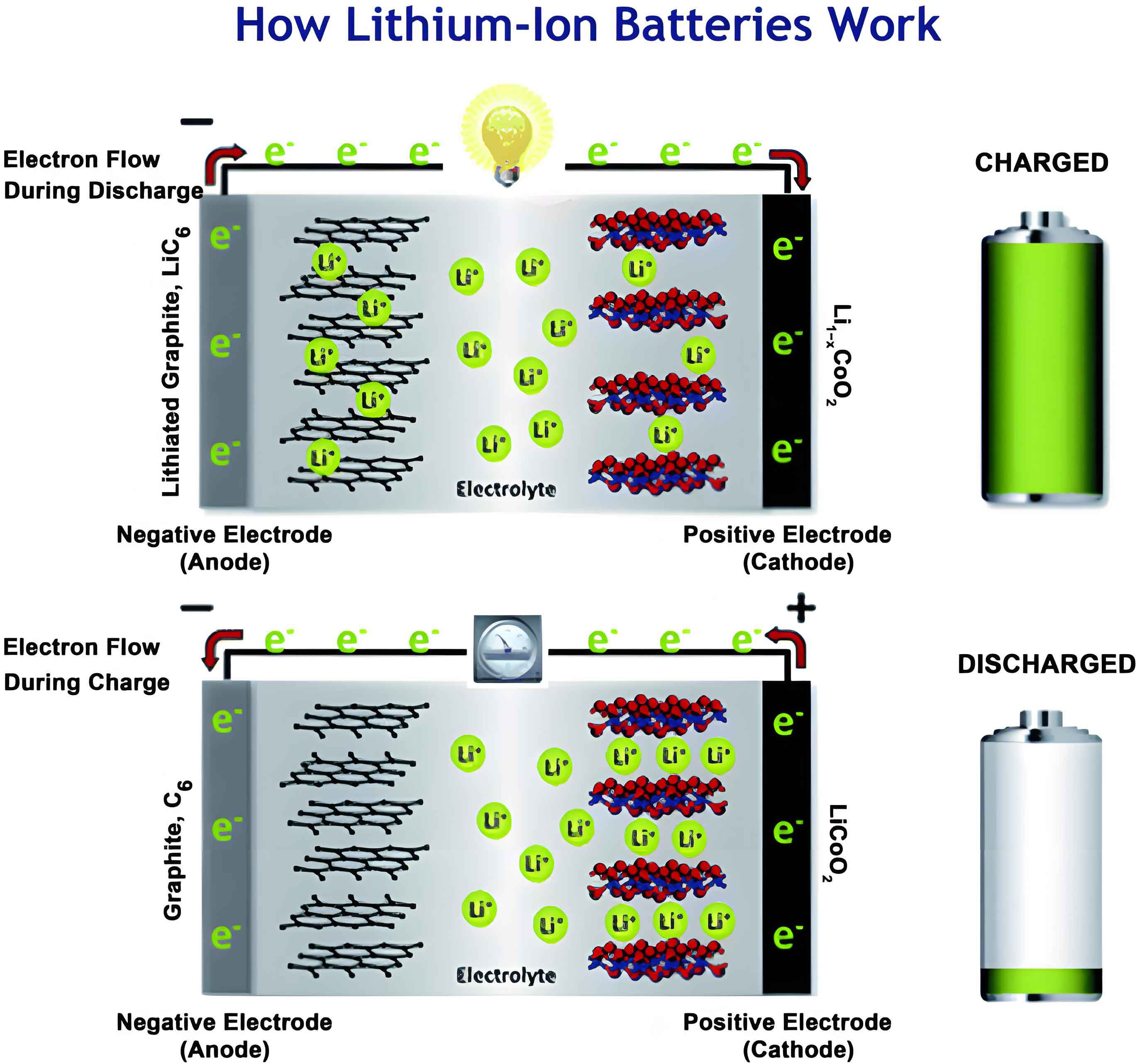
The fundamental challenge lies in the anisotropic lattice strain. As Li+ ions are extracted from and inserted back into the host structure, the crystal lattice undergoes significant and non-uniform expansion and contraction. In conventional polycrystalline NCM materials, this strain accumulates at the grain boundaries between primary particles, inevitably leading to the generation and propagation of intergranular microcracks. These cracks provide pathways for liquid electrolyte penetration deep into the secondary particle interior, triggering detrimental interfacial side reactions. The highly oxidized Ni4+ species, especially prevalent in deeply charged states, readily reacts with the electrolyte, accelerating its decomposition. Concomitantly, the cathode surface undergoes irreversible phase transformations from the layered structure to spinel and finally to rock-salt phases, resulting in rapid capacity fade and impedance growth, thereby compromising the long-term viability of the lithium-ion battery.
To mitigate this issue, the paradigm has shifted from polycrystalline agglomerates to single-crystal NCM particles. Single-crystal cathodes, devoid of grain boundaries, exhibit isotropic volume changes that dissipate strain along the particle surface rather than accumulating internally. This inherent characteristic significantly reduces microcrack formation. Single-crystal NCM materials indeed offer high discharge capacity (>160 mAh g-1), high operating voltage, and improved safety. Nonetheless, they are not immune to degradation. Challenges such as Li+/Ni2+ cation mixing, irreversible phase transitions, lattice oxygen release, and even surface cracking under deep delithiation and prolonged cycling persist. These issues facilitate electrolyte contact with fresh surfaces and exacerbate parasitic reactions, ultimately undermining the stability of the lithium-ion battery.
To address these persistent challenges, various modification strategies, including surface coating and ion doping, have been extensively explored. Doping with alien cations into the transition metal (TM) layer is a particularly effective approach for stabilizing the bulk structure. In this work, we focus on a rational cation doping strategy. We introduce high-valence Mo6+ ions into the lattice of single-crystal LiNi0.5Co0.2Mn0.3O2 (NCM523). Our primary objective is not merely to dope but to leverage this doping to achieve a critical microstructural control: grain ultra-refinement. We hypothesized that the incorporation of Mo species could inhibit grain growth during the high-temperature calcination process, leading to the formation of significantly finer single-crystal particles. We posit that such grain refinement, coupled with the electronic and structural effects of Mo doping, would synergistically strengthen the lattice framework, suppress irreversible phase transformations, widen Li+ diffusion channels, and ultimately create a more robust cathode material for high-voltage, high-stability lithium-ion battery applications. This report details our synthesis methodology, comprehensive characterization, and electrochemical evaluation, demonstrating that targeted Mo doping is a powerful tool for crafting superior single-crystal cathodes.
Experimental Synthesis and Methodology
The synthesis of Mo-doped single-crystal NCM523 materials was designed to be straightforward and scalable. A glucose-urea complex was first prepared as a chelating and fuel agent. Stoichiometric amounts of lithium carbonate (Li2CO3), nickel nitrate hexahydrate (Ni(NO3)2·6H2O), cobalt nitrate hexahydrate (Co(NO3)2·6H2O), manganese nitrate tetrahydrate (Mn(NO3)2·4H2O), and ammonium molybdate tetrahydrate ((NH4)6Mo7O24·4H2O) were dissolved into the glucose-urea solution. A 15% excess of lithium was used to compensate for volatilization during high-temperature treatment. The molar ratio of Mo to total transition metals was varied systematically. The homogeneous mixture was dried and then subjected to a two-step calcination process: a low-temperature pre-calcination at 500 °C for 5 hours to decompose nitrates and organics, followed by a high-temperature sintering at 900 °C for 10 hours to promote crystallization and grain growth. The obtained powders were labeled as xMo-NCM, where x represents the nominal molar ratio of Mo. The pristine, undoped sample is denoted as P-NCM.
| Sample ID | Li : Ni : Co : Mn : Mo (Molar Ratio) | Mo/(Ni+Co+Mn) Molar Ratio |
|---|---|---|
| P-NCM | 1.15 : 0.5 : 0.2 : 0.3 : 0 | 0 |
| 0.1Mo-NCM | 1.15 : 0.5 : 0.2 : 0.3 : 0.1 | 0.01 |
| 0.2Mo-NCM | 1.15 : 0.5 : 0.2 : 0.3 : 0.2 | 0.02 |
| 0.3Mo-NCM | 1.15 : 0.5 : 0.2 : 0.3 : 0.3 | 0.03 |
The structural and morphological properties of the synthesized powders were analyzed using X-ray diffraction (XRD), X-ray photoelectron spectroscopy (XPS), field-emission scanning electron microscopy (FESEM), and transmission electron microscopy (TEM). Electrochemical performance was evaluated using CR2032 coin cells assembled in an argon-filled glovebox. The cathode slurry consisted of active material, conductive carbon (Super P), and polyvinylidene fluoride (PVDF) binder in a weight ratio of 8:1:1. Galvanostatic charge-discharge tests were conducted between 2.0 and 4.5 V vs. Li/Li+ at various C-rates at 25 °C.
Structural and Morphological Evolution Induced by Mo Doping
The XRD patterns of all synthesized samples confirm the successful formation of a well-crystallized layered structure belonging to the α-NaFeO2 type with the R$\bar{3}$m space group. No secondary phases related to Mo oxides were detected, indicating that Mo ions were successfully incorporated into the NCM lattice, forming a solid solution. A closer examination reveals a critical observation: the (003) diffraction peak systematically shifts towards lower angles with increasing Mo doping content. This shift provides direct evidence of lattice expansion along the c-axis, a consequence of the substitution of smaller transition metal ions (Ni2+/3+, Co3+, Mn4+) with larger Mo6+ ions. The lattice expansion can be conceptually represented by the following relationship for the c-axis parameter:
$$c_{Mo-NCM} = c_{NCM} + \Delta c_{Mo}$$
where $\Delta c_{Mo}$ is the positive increment induced by Mo doping. Rietveld refinement quantitatively verified this expansion. For instance, the refined lattice parameters for 0.2Mo-NCM (a = 2.91 Å, c = 14.39 Å) were larger than those for P-NCM (a = 2.87 Å, c = 14.25 Å). This expansion is beneficial as it can widen the Li+ slab spacing, potentially facilitating Li+ diffusion kinetics within the lithium-ion battery cathode.
The degree of Li+/Ni2+ cation mixing, a common defect that hinders Li+ mobility, was assessed using the intensity ratio of the (003) to (104) peaks (I003/I104). The values for P-NCM, 0.1Mo-NCM, 0.2Mo-NCM, and 0.3Mo-NCM were 1.12, 1.19, 1.17, and 1.11, respectively. The optimal doping level (0.02) effectively suppressed cation mixing, likely due to the high valence of Mo6+ which helps stabilize the oxygen framework and reduce Ni2+ formation. However, excessive doping (0.03) reversed this benefit, possibly because too many high-valence dopants induce local charge imbalance, promoting the reduction of Ni3+ to Ni2+ which then migrates to the Li layer.
The most striking impact of Mo doping is revealed through electron microscopy. While both P-NCM and 0.2Mo-NCM exhibit well-defined single-crystal morphology, their particle sizes differ dramatically. The undoped P-NCM consists of particles with an average size of 400-500 nm. In stark contrast, the 0.2Mo-NCM sample is composed of much finer particles, with an average size of only 200-300 nm. This represents a nearly 50% reduction in particle size. The mechanism behind this grain refinement is attributed to the role of Mo species during high-temperature sintering. The incorporated Mo ions, likely segregating at the nascent grain boundaries or altering the surface energy, effectively pin the boundaries and inhibit grain coarsening (Ostwald ripening). This process can be conceptually linked to the Zener pinning effect, where secondary phase particles restrict grain growth. Although Mo is in solid solution, its local segregation or its effect on cation diffusion kinetics may impose a similar drag force on boundary migration. The growth inhibition can be qualitatively described by a modified grain growth equation:
$$D^n – D_0^n = k t \cdot f(C_{Mo})$$
where $D$ is the final grain size, $D_0$ is the initial size, $n$ is the growth exponent, $k$ is a rate constant, $t$ is time, and $f(C_{Mo})$ is a function of Mo concentration that decreases as $C_{Mo}$ increases, effectively reducing the growth rate. High-resolution TEM images further corroborate the high crystallinity of both materials. The measured interplanar spacing of the (003) plane increased from 0.4816 nm in P-NCM to 0.4846 nm in 0.2Mo-NCM, consistent with the XRD lattice expansion. Elemental mapping from energy-dispersive X-ray spectroscopy (EDS) confirms the homogeneous distribution of Ni, Co, Mn, and Mo throughout the 0.2Mo-NCM particles, ruling out surface segregation and confirming bulk doping. XPS analysis further validates the presence of Mo6+ in the doped material, with a characteristic Mo 3d doublet appearing around 233 eV.
Electrochemical Performance Enhancement
The electrochemical superiority of the grain-refined, Mo-doped cathode was unequivocally demonstrated in coin cell tests. Long-term cycling stability at a high rate of 1.0 C (1C ≈ 180 mA g-1) within a high-voltage window of 2.0-4.5 V is a stringent test for any lithium-ion battery cathode material. The results are summarized below.
| Sample | Initial Discharge Capacity (mAh g-1) | Discharge Capacity after 100 cycles (mAh g-1) | Capacity Retention (%) |
|---|---|---|---|
| P-NCM | 196.3 | ~0 (after 20 cycles) | ~0 |
| 0.1Mo-NCM | 199.6 | 121.4 | 60.8 |
| 0.2Mo-NCM | 192.4 | 132.0 | 68.6 |
| 0.3Mo-NCM | 188.4 | 85.2 | 45.2 |
The pristine P-NCM, despite delivering a high initial capacity, suffered catastrophic failure. Its capacity plummeted below 100 mAh g-1 within 10 cycles and was virtually zero after 20 cycles. This rapid degradation highlights the severe structural instability of the unmodified single-crystal material under high-voltage, high-rate cycling in a lithium-ion battery. In dramatic contrast, all Mo-doped samples showed vastly improved cyclability. The optimally doped 0.2Mo-NCM cathode delivered a high initial capacity of 192.4 mAh g-1 and maintained 132.0 mAh g-1 after 100 cycles, corresponding to an impressive retention of 68.6%. This performance starkly underscores the stabilizing effect of combined Mo doping and grain refinement.
The charge-discharge voltage profiles and corresponding differential capacity (dQ/dV) curves provide deeper insights into the electrochemical behavior. The dQ/dV curves are particularly informative as they reflect the phase transition dynamics during (de)lithiation. For P-NCM, the sharp redox peaks observed in the first cycle rapidly broadened, weakened, and shifted upon cycling. By the 10th cycle, the phase transition kinetics had slowed considerably, and by the 20th cycle, the characteristic peaks had almost vanished. This evolution indicates a swift and severe deterioration of the layered structure, likely transforming into electrochemically inactive phases, which aligns with its abrupt capacity collapse. Conversely, the dQ/dV curves for 0.2Mo-NCM exhibited remarkable stability. The redox peaks remained well-defined and their positions showed minimal shift over 100 cycles. This indicates that the phase transition processes remained highly reversible, and the bulk structure was effectively preserved throughout cycling. The charge-discharge curves for 0.2Mo-NCM also showed stable voltage plateaus and minimal polarization growth, further confirming enhanced structural integrity and kinetics. The rate capability test further highlighted the advantage of the refined structure. While all samples experienced capacity decay at increasing C-rates, 0.2Mo-NCM showed superior performance at high rates (e.g., at 2.0 C) and recovered most of its capacity when the rate was returned to 0.1 C, demonstrating good structural resilience and kinetic properties essential for a high-power lithium-ion battery.
Post-Cycling Analysis and Stabilization Mechanism
To decipher the origin of the enhanced stability, we conducted a thorough post-mortem analysis on cycled electrodes. XPS analysis of the electrodes after 100 cycles revealed profound differences in surface chemistry. For the cycled P-NCM, the Ni 2p spectrum showed a significantly higher proportion of Ni2+ species compared to the cycled 0.2Mo-NCM. This accumulation of Ni2+ is a signature of severe surface reduction and cation mixing, directly impeding Li+ transport. The C 1s and O 1s spectra were dominated by strong signals from carbonate species (C=O, O-C=O) and lithium alkyl carbonates (ROCO2Li), indicating massive electrolyte decomposition and a thick cathode-electrolyte interphase (CEI) layer on P-NCM. The F 1s spectrum showed an intense LiF peak, a common decomposition product of LiPF6 salt. In contrast, the surface of cycled 0.2Mo-NCM was much cleaner. The signals from electrolyte decomposition products (C=O, O-C=O, LiF) were markedly weaker. Most notably, a strong lattice oxygen peak was clearly visible in the O 1s spectrum of 0.2Mo-NCM, whereas it was almost absent for P-NCM. This indicates that Mo doping effectively suppressed transition metal dissolution and lattice oxygen loss, preserving the structural integrity of the surface layer.
| Analysis Technique | Observation on P-NCM (Cycled) | Observation on 0.2Mo-NCM (Cycled) | Implication |
|---|---|---|---|
| FESEM | Severe surface deposits, visible micro-cracks and pores. | Cleaner surface, smooth morphology, no visible cracks. | Mo doping inhibits crack formation and electrolyte corrosion. |
| XPS (Ni 2p) | High concentration of Ni2+. | Lower concentration of Ni2+. | Suppressed surface reduction and cation mixing. |
| XPS (C 1s, O 1s) | Intense peaks from carbonate/ether species. | Much weaker parasitic reaction peaks. | Greatly reduced electrolyte decomposition. |
| XPS (O 1s) | Lattice oxygen peak very weak. | Strong lattice oxygen peak present. | Inhibited lattice oxygen loss and surface reconstruction. |
| XPS (F 1s) | Intense LiF peak. | Weak LiF peak. | Reduced salt decomposition. |
| HRTEM | Complete loss of layered structure; only disordered rock-salt phase. | Clear lattice fringes of the layered structure remain. | Bulk structural integrity is maintained. |
Morphological analysis of the cycled particles provided visual confirmation. FESEM images showed that P-NCM particles were covered with a thick layer of deposits and exhibited obvious surface cracks and pores, serving as channels for further electrolyte attack. The 0.2Mo-NCM particles, however, remained relatively smooth and intact, with no visible microcracks. This observation directly validates the efficacy of grain refinement in mitigating mechanically induced degradation. The most compelling evidence came from HRTEM. The interior of a cycled P-NCM particle was completely transformed into a disordered rock-salt structure with no trace of the original layered ordering. Meanwhile, the cycled 0.2Mo-NCM particle clearly exhibited well-defined lattice fringes corresponding to the layered structure, and the Fast Fourier Transform (FFT) pattern confirmed the preserved crystalline order. EDS mapping of cycled particles showed a uniform and dense coverage of C and F on P-NCM, indicative of pervasive side reactions, whereas only sparse signals were detected on 0.2Mo-NCM.
Based on these integrated findings, we propose a consolidated mechanism for the enhanced stability of the Mo-doped, grain-refined single-crystal cathode in a lithium-ion battery:
1. Grain Refinement & Mechanical Robustness: The ultra-refined grains (~200 nm) possess inherently higher mechanical strength and toughness compared to larger grains. According to the Hall-Petch relationship, yield strength ($\sigma_y$) generally increases with decreasing grain size ($d$):
$$\sigma_y = \sigma_0 + k_y d^{-1/2}$$
where $\sigma_0$ and $k_y$ are material constants. While originally for metals, the concept suggests refined microstructures better resist crack initiation and propagation. The smaller particle size reduces the absolute magnitude of strain per particle during volume change and provides a shorter path for stress relaxation, effectively suppressing microcrack formation.
2. Lattice Stabilization & Kinetics Enhancement: The incorporation of high-valence Mo6+ strengthens the TM-O bonds and stabilizes the oxygen lattice, mitigating oxygen loss and the associated irreversible phase transitions. The lattice expansion ($\Delta c$) widens the diffusion channels for Li+ ions, lowering the activation energy for diffusion. This can be conceptually related to a lower energy barrier ($E_a$) in the Arrhenius equation for Li+ diffusion coefficient ($D_{Li^+}$):
$$D_{Li^+} = D_0 \exp\left(\frac{-E_a}{k_B T}\right)$$
A more open structure likely reduces $E_a$, promoting faster and more uniform (de)intercalation.
3. Synergistic Surface Protection: The stable bulk structure and crack-free surface minimize fresh electrolyte contact with highly reactive Ni4+ species. This drastically curtails parasitic reactions, leading to a thinner and more stable CEI. Reduced electrolyte decomposition and transition metal dissolution create a virtuous cycle, further preserving the bulk electrode structure.
Conclusion and Perspective
In summary, we have demonstrated a highly effective strategy to engineer high-stability single-crystal NCM523 cathodes for advanced lithium-ion battery applications. By incorporating a small amount of Mo6+ during synthesis, we achieved a dual purpose: (i) significant grain refinement, producing ultra-fine single-crystal particles of ~200 nm, and (ii) lattice stabilization through cationic doping. This combined effect forged a cathode material with exceptional resilience against the degrading forces prevalent in high-voltage cycling. The optimally doped material (0.2Mo-NCM) delivered a high initial capacity of 192.4 mAh g-1 and retained 68.6% of its capacity after 100 strenuous cycles at 1.0 C within 2.0-4.5 V, a remarkable improvement over the rapidly failing pristine counterpart.
The mechanism hinges on the synergy between microstructure and chemistry. The refined grains impart superior mechanical integrity to resist microcracking. The Mo-doped, expanded lattice enhances structural and interfacial stability, suppresses irreversible phase changes, and facilitates Li+ transport. Together, they create a robust framework that minimizes electrolyte decomposition and surface reconstruction. This work underscores that beyond simple element substitution, strategic doping can be a powerful tool for microstructural control. Tailoring grain size down to the sub-micron scale in single-crystal cathodes presents a promising avenue for developing next-generation, long-lasting, and high-energy-density lithium-ion battery systems. Future work could explore the extension of this grain-refinement-via-doping concept to even higher-nickel content single-crystal NCM or NCA materials, and investigate its performance in practical high-loading pouch cells to fully assess its commercial potential.