
With the increasing capacity of power generation units, the structural complexity of solar power systems has grown significantly. This complexity, combined with harsh operating environments, often leads to faults in critical components. While systems with fault-tolerant capabilities can maintain operation, these faults cause parameter variations in the solar power system, resulting in model changes. If the original control strategy is applied during faults, it may lead to safety incidents and degrade the dynamic and static performance of the solar power system. To enhance system stability, it is essential to analyze and develop global control methods for solar power generation stability. Traditional approaches, such as dual-loop sliding mode control or inertia power compensation methods, often suffer from large fluctuations, excessive oscillations, and poor fault tolerance due to inaccurate fault prediction and inability to derive control laws effectively. This paper proposes a global control method for solar power system stability based on active fault-tolerant sliding mode prediction. The method employs a grey prediction model to forecast faults in the solar power system, derives the control law for the controller, and establishes an active fault-tolerant sliding mode controller to achieve global control, thereby improving the stability of the solar power system.
The solar power system is a critical component in renewable energy generation, and its stability is paramount for reliable power supply. Faults in the system, such as voltage surges or short circuits, can lead to instability, causing oscillations in voltage and power angle. The proposed method addresses these issues by integrating fault prediction and advanced control techniques. In the following sections, we detail the fault prediction system using the grey model, the design of the active fault-tolerant sliding mode controller, and experimental validation through simulations. The results demonstrate the effectiveness of the method in maintaining stability under various fault conditions, with minimal fluctuations and oscillations, and enhanced fault tolerance compared to existing methods.
Fault Prediction in Solar Power Systems Using Grey Model
To achieve global stability control in solar power systems, accurate fault prediction is crucial. The grey prediction model, specifically GM(1,1), is employed for this purpose. This model processes historical data to predict potential faults, enabling proactive control measures. The GM(1,1) model operates on accumulated sequences, where the original input sequence $$ \{x^{(0)}\} $$ is transformed into an accumulated sequence $$ \{x^{(1)}\} $$. The first-order linear differential equation used in the model is given by:
$$ \frac{dx^{(1)}}{dt} + a x^{(1)} = b $$
Here, $$ a $$ and $$ b $$ are parameters estimated using the least squares method. The parameter vector $$ \theta = [a, b]^T $$ is computed as:
$$ \theta = (\Phi^T \Phi)^{-1} \Phi^T Y $$
where $$ \Phi $$ and $$ Y $$ are grey matrices constructed from the accumulated sequence. For a given time $$ i $$, the matrices are defined as:
$$ \Phi(i) = \begin{bmatrix} -z^{(1)}(i) & 1 \\ -z^{(1)}(i+1) & 1 \\ \vdots & \vdots \\ -z^{(1)}(i+k-1) & 1 \end{bmatrix} $$
and
$$ Y(i) = \begin{bmatrix} x^{(0)}(i) \\ x^{(0)}(i+1) \\ \vdots \\ x^{(0)}(i+k-1) \end{bmatrix} $$
The term $$ z^{(1)}(j) $$ is calculated as:
$$ z^{(1)}(j) = \frac{1}{2} [x^{(1)}(j) + x^{(1)}(j-1)] $$
for $$ j = i, i+1, \ldots, i+k-1 $$. The time response function of the grey model is:
$$ \hat{x}^{(1)}(t) = \left( x^{(1)}(t_0) – \frac{b}{a} \right) e^{-a(t – t_0)} + \frac{b}{a} $$
The predicted value $$ \hat{x}^{(0)} $$ is obtained by inverse accumulation:
$$ \hat{x}^{(0)}(i + k) = \hat{x}^{(1)}(i + k) – \hat{x}^{(1)}(i + k – 1) $$
The fault prediction process involves the following steps: First, historical data from sensors at $$ n $$ time instances are collected to form the sequence $$ \{x^{(0)}\} $$. Second, the accumulated sequence $$ \{x^{(1)}\} $$ is generated, and the prediction for the next time step $$ \hat{x}^{(0)} $$ is computed. Third, a threshold $$ \epsilon $$ is set, and if the error $$ e $$ between the predicted value and the actual sensor output exceeds $$ \epsilon $$, a fault alarm is triggered in the solar power system. This proactive approach allows for early detection of potential issues, facilitating timely control actions.
To illustrate the fault prediction accuracy, consider the following table summarizing the prediction results for various system states:
| Experiment Count | Actual System State | Predicted State |
|---|---|---|
| 100 | Normal | Normal |
| 200 | Normal | Normal |
| 300 | Self-Recoverable Fault | Self-Recoverable Fault |
| 400 | Severe Fault | Severe Fault |
| 500 | Self-Recoverable Fault | Self-Recoverable Fault |
| 600 | Ordinary Fault | Ordinary Fault |
| 700 | Self-Recoverable Fault | Self-Recoverable Fault |
| 800 | Ordinary Fault | Ordinary Fault |
This table demonstrates the high accuracy of the grey prediction model in identifying different fault types, which is essential for maintaining the stability of the solar power system.
Active Fault-Tolerant Sliding Mode Controller Design
Based on the fault predictions, an active fault-tolerant sliding mode controller is designed to globally control the stability of the solar power system. Traditional first-order sliding mode controllers often exhibit high-frequency chattering, which can lead to instability. To address this, a second-order sliding mode controller is proposed, which suppresses chattering and improves system robustness.
The first-order sliding mode variable $$ \delta_0 $$ is defined as the deviation between the actual rotor angular velocity $$ \omega_r $$ and the optimal angular velocity $$ \omega_r^* $$:
$$ \delta_0 = \omega_r – \omega_r^* $$
The dynamic model for rotor angular velocity tracking in the solar power system is given by:
$$ \dot{\delta}_0 = \frac{1}{J_t} (T_a – K_t \omega_r – B_t \theta_r – T_g – T_f) – \dot{\omega}_r^* $$
where $$ J_t $$ is the total moment of inertia, $$ T_a $$ is the aerodynamic torque, $$ K_t $$ is the total stiffness coefficient, $$ B_t $$ is the total damping coefficient, $$ \theta_r $$ is the rotor twist angle, $$ T_g $$ is the equivalent electromagnetic torque, and $$ T_f $$ is the fault torque from actuators. The sliding mode reaching law is designed as:
$$ \dot{\delta}_0 = -h_1 \delta_0 – h_2 \text{sgn}(\delta_0) $$
where $$ h_1 $$ and $$ h_2 $$ are positive constants. The first-order sliding mode controller is derived as:
$$ T_g = T_a – K_t \omega_r – B_t \theta_r – T_f – J_t \dot{\omega}_r^* + J_t h_1 \delta_0 + J_t h_2 \text{sgn}(\delta_0) $$
To analyze stability, the Lyapunov function $$ V = \frac{\delta_0^2}{2} $$ is used, and its derivative is:
$$ \dot{V} = \delta_0 \dot{\delta}_0 = -\delta_0 (h_1 \delta_0 + h_2 \text{sgn}(\delta_0)) = -h_1 \delta_0^2 – h_2 |\delta_0| $$
Since $$ \dot{V} \leq 0 $$, the system is stable. However, to mitigate chattering, a second-order sliding mode controller is introduced. The second-order dynamic equation is:
$$ \ddot{\delta}_0 + d_1 \dot{\delta}_0 + d_0 \delta_0 = 0 $$
where $$ d_0 $$ and $$ d_1 $$ are parameters determined via pole placement. Incorporating the derivative of $$ \delta_0 $$, the equation becomes:
$$ \dot{T}_a – K_t \dot{\omega}_r – \dot{T}_g – J_t \ddot{\omega}_r^* + J_t d_1 \dot{\delta}_0 + J_t d_0 \delta_0 = 0 $$
The torque control law with sliding mode terms is:
$$ \dot{T}_g = \dot{T}_a – K_t \dot{\omega}_r – \dot{T}_f – J_t \ddot{\omega}_r^* + J_t d_1 \dot{\delta}_0 + J_t d_0 \delta_0 + \frac{\varsigma [\dot{\delta}_0 + |\dot{\delta}_0|^{1/2} \text{sgn}(\delta_0)]}{|\dot{\delta}_0| + |\delta_0|^{1/2}} $$
where $$ \varsigma > 0 $$. The Lyapunov function for the second-order system is:
$$ V = \frac{J_t d_1 \delta_0^2}{2} + \frac{\dot{\delta}_0^2}{2} $$
Its derivative is computed as:
$$ \dot{V} = J_t d_1 \delta_0 \dot{\delta}_0 + \dot{\delta}_0 \ddot{\delta}_0 $$
Substituting the expressions and simplifying, it can be shown that $$ \dot{V} \leq 0 $$ under conditions $$ h_1 \geq 1 $$, $$ h_2 \geq 1 $$, and $$ d_0 \leq d_1 h_1 $$, ensuring system stability. This controller enhances the robustness of the solar power system by effectively handling faults and disturbances.
Experimental Validation and Results
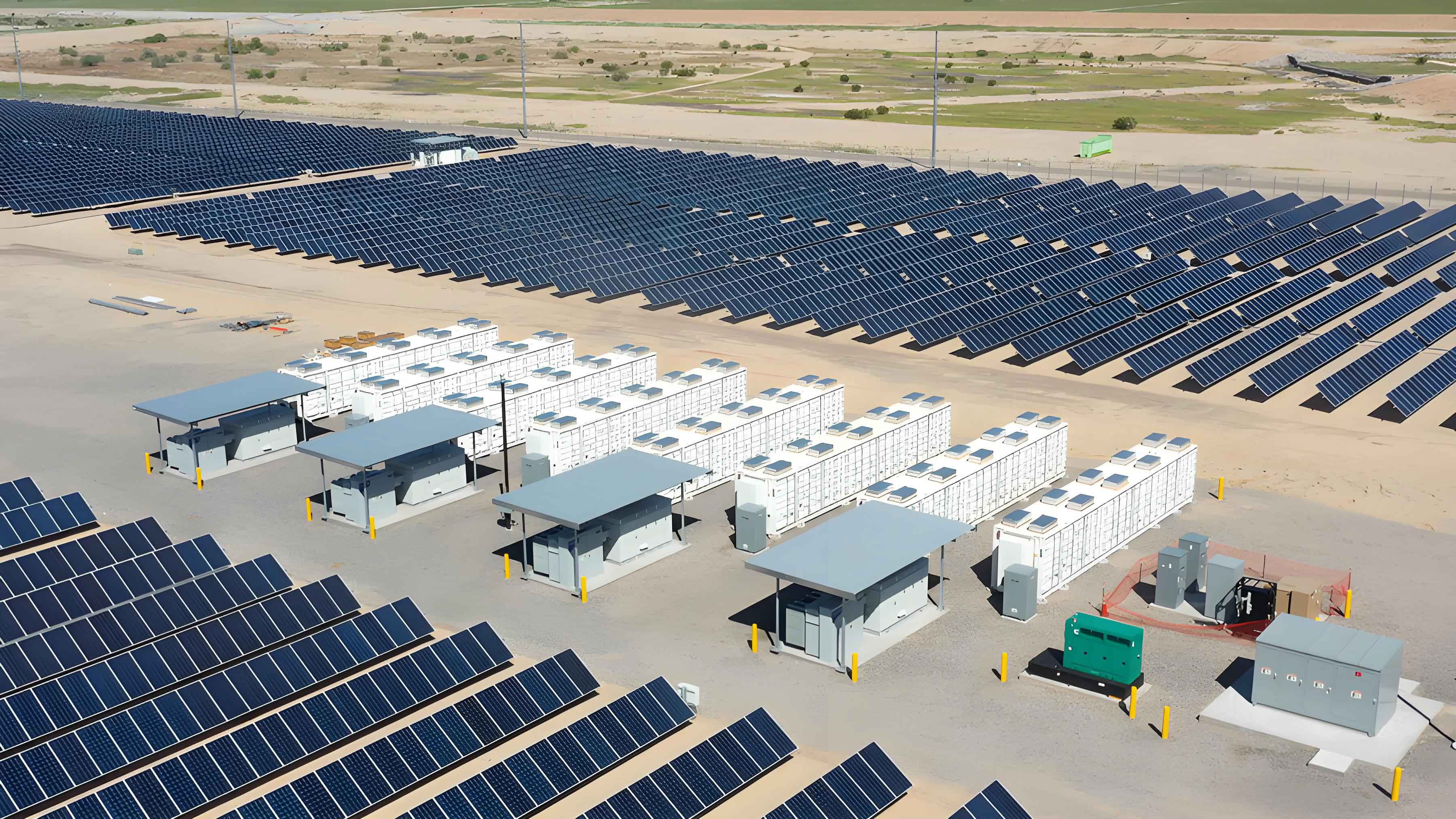
To validate the proposed method, a simulation model was developed in MATLAB. The solar power system model consists of three solar cell strings with varying intensities, simulating real-world conditions. The key parameters are as follows: input capacitance $$ C_{in} = 500 \, \mu\text{F} $$, output capacitance $$ C_{out} = 240 \, \mu\text{F} $$, inductance $$ L = 1 \, \text{mH} $$, load resistance $$ R_{load} = 20 \, \Omega $$, and switching frequency $$ 35 \, \text{kHz} $$. Data sampling was performed every 0.1 seconds to ensure system stability. The solar power system operates under standard conditions with maximum power point voltage $$ V_{max} = 310 \, \text{V} $$, current $$ I_{max} = 10 \, \text{A} $$, open-circuit voltage $$ V_{oc} = 410 \, \text{V} $$, and short-circuit current $$ I_{sc} = 9.1 \, \text{A} $$. The initial simulation voltage was set to 250 V.
The proposed method was compared with existing approaches, such as the dual-loop sliding mode control method (Literature [4]) and the inertia power compensation method (Literature [5]). The performance was evaluated under two fault conditions: sudden generator voltage rise and three-phase short circuit. The dynamic responses of generator terminal voltage increment and generator power angle were analyzed.
Under the sudden generator voltage rise condition, the proposed method stabilized the voltage increment at 1.1 V within 3 seconds and the power angle at 20 rad within 4.5 seconds. In contrast, the Literature [4] and [5] methods exhibited significant oscillations and slower convergence. The following table summarizes the critical clearing times for different methods, which is a key indicator of fault tolerance:
| Experiment Number | Proposed Method (s) | Literature [4] Method (s) | Literature [5] Method (s) |
|---|---|---|---|
| 1 | 0.167 | 0.065 | 0.044 |
| 2 | 0.185 | 0.051 | 0.041 |
| 3 | 0.177 | 0.058 | 0.043 |
| 4 | 0.182 | 0.061 | 0.047 |
| 5 | 0.179 | 0.055 | 0.040 |
| 6 | 0.186 | 0.058 | 0.048 |
| 7 | 0.190 | 0.052 | 0.042 |
| 8 | 0.179 | 0.063 | 0.049 |
| 9 | 0.181 | 0.061 | 0.046 |
| 10 | 0.187 | 0.059 | 0.041 |
The results show that the proposed method has higher critical clearing times (ranging from 0.167 s to 0.190 s) compared to Literature [4] (0.051 s to 0.065 s) and Literature [5] (0.040 s to 0.049 s), indicating superior fault tolerance. Under the three-phase short circuit condition, the proposed method stabilized the voltage increment at 1.0 V within 2 seconds and the power angle at 60 rad within the same time frame, demonstrating rapid response and minimal oscillations.
Furthermore, the fault prediction accuracy was evaluated over 800 experimental iterations. The proposed method correctly identified all system states, including normal operation, self-recoverable faults, ordinary faults, and severe faults, as shown in the earlier table. This accuracy enables proactive control actions, enhancing the overall stability of the solar power system.
Conclusion
In this paper, a global stability control method for solar power systems based on active fault-tolerant sliding mode prediction is proposed. The method integrates grey prediction for fault forecasting and a second-order sliding mode controller for robust control. Experimental results demonstrate that the proposed method effectively stabilizes the solar power system under various fault conditions, with minimal fluctuations and oscillations. The critical clearing times are significantly higher than those of existing methods, indicating improved fault tolerance. Future work will focus on optimizing the grey prediction model for real-time applications and extending the controller to handle more complex fault scenarios in large-scale solar power systems.