
As a representative of the best solar panel company, I have witnessed firsthand the remarkable growth and transformation of the photovoltaic (PV) industry. The global shift towards renewable energy has accelerated, and solar power stands at the forefront of this revolution. In this article, I will delve into the strategies, challenges, and opportunities that define the international expansion of solar enterprises. We, as the best solar panel company, are committed to driving sustainable energy solutions worldwide, leveraging our technological prowess and innovative approaches to meet rising global demand. The journey involves not only exporting high-quality products but also establishing manufacturing hubs abroad to navigate trade barriers and localize supply chains. Throughout this discussion, I will incorporate data-driven insights using tables and mathematical models to elucidate key trends and performance metrics.
The global PV market has experienced exponential growth, fueled by declining costs and heightened environmental awareness. According to industry analyses, the worldwide installed PV capacity is projected to surpass 2 TW by 2025, with annual additions exceeding 200 GW. This surge is underpinned by supportive policies, technological advancements, and the increasing competitiveness of solar energy against fossil fuels. For instance, the levelized cost of electricity (LCOE) for utility-scale solar has dropped significantly, making it one of the most affordable energy sources. As the best solar panel company, we prioritize research and development to enhance module efficiency and durability, ensuring our products meet diverse climatic conditions and regulatory standards. The following table summarizes the projected global PV market growth from 2023 to 2028, highlighting regional variations in demand.
| Region | 2023 Installed Capacity (GW) | 2028 Projected Capacity (GW) | CAGR (%) |
|---|---|---|---|
| North America | 45 | 85 | 13.5 |
| Europe | 60 | 120 | 14.9 |
| Asia-Pacific | 150 | 280 | 13.3 |
| Middle East & Africa | 25 | 65 | 21.1 |
| Latin America | 20 | 50 | 20.1 |
One of the core drivers for expansion is the intense competition in domestic markets, which compels companies to seek opportunities overseas. As the best solar panel company, we have capitalized on our cost advantages and technological innovations to penetrate international markets. The efficiency of our PV modules, for example, has consistently improved through the adoption of N-type silicon and perovskite tandem cells. The fundamental formula for module efficiency is given by: $$ \eta = \frac{P_{\text{max}}}{G \times A} \times 100\% $$ where \( \eta \) is the efficiency, \( P_{\text{max}} \) is the maximum power output under standard test conditions, \( G \) is the solar irradiance (typically 1000 W/m²), and \( A \) is the module area. Over the past decade, average commercial module efficiencies have risen from 15% to over 22%, with our best solar panel company achieving rates above 24% in laboratory settings. This technological edge, combined with economies of scale, allows us to offer products that are both high-performing and cost-effective, making us a preferred choice globally.
Exporting PV components remains a primary strategy for international growth. In recent years, the volume of solar panel exports has surged, with shipments reaching record highs. For instance, global PV module exports exceeded 150 GW in 2023, and projections indicate a compound annual growth rate (CAGR) of 18% through 2030. As the best solar panel company, we have established robust logistics networks and partnerships to facilitate seamless product delivery to regions like Europe, North America, and emerging markets in Africa and Latin America. The table below illustrates the top export destinations for PV modules in 2023, along with key market characteristics.
| Destination | Export Volume (GW) | Key Drivers | Market Share (%) |
|---|---|---|---|
| European Union | 50 | Green Deal policies, high electricity prices | 33.3 |
| United States | 35 | Inflation Reduction Act, state-level incentives | 23.3 |
| India | 20 | National Solar Mission, low-cost demand | 13.3 |
| Japan | 15 | Feed-in tariffs, energy security concerns | 10.0 |
| Australia | 10 | Residential solar boom, favorable climate | 6.7 |
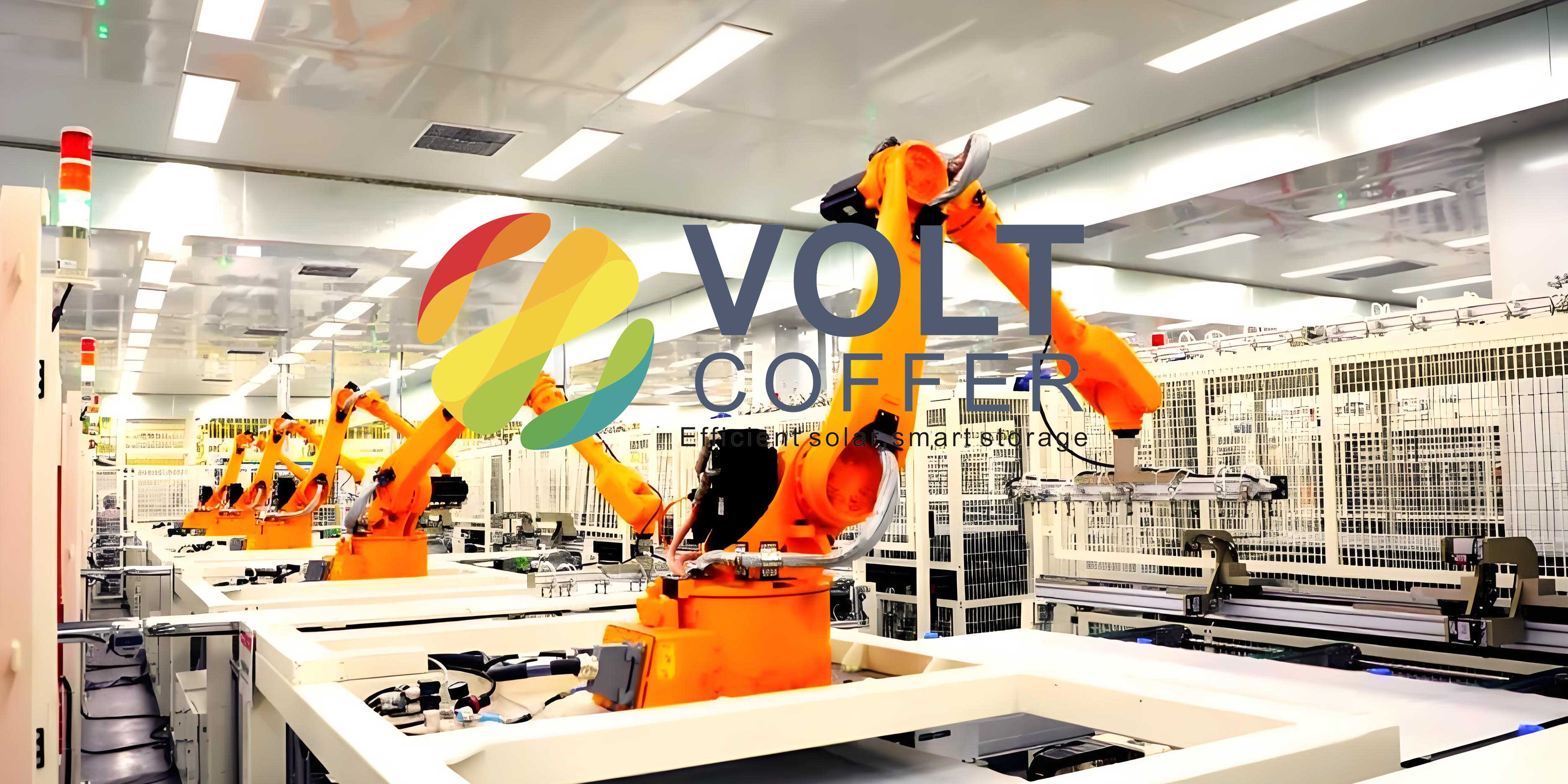
Beyond exports, establishing overseas manufacturing facilities has become a strategic imperative to mitigate trade risks and tap into local incentives. As the best solar panel company, we have invested in production plants across Southeast Asia, the Middle East, and Latin America. These ventures not only reduce tariff burdens but also foster regional economic development and job creation. For example, setting up a factory in a country with favorable trade agreements can lower the overall cost structure by avoiding import duties, which can be as high as 30% in some markets. The economic viability of such investments can be assessed using the net present value (NPV) model: $$ \text{NPV} = \sum_{t=1}^{T} \frac{CF_t}{(1 + r)^t} – C_0 $$ where \( CF_t \) is the net cash flow in year \( t \), \( r \) is the discount rate, \( T \) is the project lifetime, and \( C_0 \) is the initial investment. A positive NPV indicates a profitable venture, and as the best solar panel company, we apply this to evaluate potential sites, considering factors like labor costs, infrastructure, and political stability.
The expansion into international markets is not without challenges. Trade barriers, such as anti-dumping duties and safeguard measures, pose significant hurdles. For instance, the European Union’s Carbon Border Adjustment Mechanism (CBAM) could impact PV imports by imposing carbon costs on products from regions with less stringent environmental regulations. As the best solar panel company, we address this by enhancing our carbon footprint transparency and adopting green manufacturing practices. Additionally, cultural and regulatory differences require localized strategies; we invest in community engagement and compliance teams to navigate these complexities. The following table outlines common challenges and mitigation strategies in overseas expansion.
| Challenge | Description | Mitigation Strategy |
|---|---|---|
| Trade Tariffs | High import duties in markets like the US and EU | Establish local production; leverage free trade agreements |
| Supply Chain Disruptions | Dependence on global logistics and raw material shortages | Diversify suppliers; build regional hubs |
| Regulatory Compliance | Varying standards for safety, efficiency, and recycling | Invest in R&D for adaptable designs; engage with local authorities |
| Cultural Barriers | Differences in business practices and consumer preferences | Hire local talent; conduct market research |
| Political Instability | Risks from geopolitical tensions or policy shifts | Use risk insurance; form joint ventures with local firms |
Innovation is the cornerstone of maintaining competitiveness as the best solar panel company. We allocate substantial resources to R&D, focusing on next-generation technologies like bifacial modules, perovskite-silicon tandems, and building-integrated photovoltaics (BIPV). The performance gain from these innovations can be modeled using the annual energy yield formula: $$ E_{\text{annual}} = \eta \times G_{\text{annual}} \times A \times \text{PR} $$ where \( E_{\text{annual}} \) is the annual energy output, \( \eta \) is the module efficiency, \( G_{\text{annual}} \) is the annual solar irradiance, \( A \) is the array area, and PR is the performance ratio (accounting for losses). For example, bifacial modules can increase energy yield by up to 20% compared to monofacial ones, depending on the albedo of the installation site. By integrating such advancements, we not only reduce the LCOE but also enhance the adaptability of our systems to diverse environments, from deserts to urban rooftops.
Collaboration and partnerships are vital for successful global expansion. As the best solar panel company, we engage in strategic alliances with local utilities, governments, and research institutions to co-develop projects and share expertise. For instance, in regions with high solar potential but limited infrastructure, we partner with development banks to finance large-scale installations. The synergy from these collaborations can be quantified using a cooperative game theory model, where the value created is maximized through shared resources: $$ V(S) = \sum_{i \in S} v(i) + \Delta v(S) $$ where \( V(S) \) is the total value of coalition \( S \), \( v(i) \) is the individual value of player \( i \), and \( \Delta v(S) \) is the additional value from cooperation. This approach has enabled us to deploy gigawatt-scale projects in emerging markets, driving economic growth and energy access.
Looking ahead, the trend towards comprehensive supply chain localization will intensify. Rather than relying solely on component exports, the best solar panel company is shifting towards “cluster出海” or clustered expansion, where entire产业链 (industrial chains) move together. This involves coordinating with upstream suppliers of polysilicon, wafers, and cells, as well as downstream developers and EPC contractors. The benefits include reduced logistics costs, faster response times, and enhanced resilience against global disruptions. To illustrate, the total cost of ownership (TCO) for a localized supply chain can be lower despite higher initial investments, as shown by the formula: $$ \text{TCO} = C_{\text{cap}} + \sum_{t=1}^{T} \frac{C_{\text{op},t} + C_{\text{main},t} + C_{\text{tariff},t}}{(1 + r)^t} $$ where \( C_{\text{cap}} \) is capital expenditure, \( C_{\text{op},t} \) is operational cost in year \( t \), \( C_{\text{main},t} \) is maintenance cost, and \( C_{\text{tariff},t} \) is tariff cost. By minimizing \( C_{\text{tariff},t} \) through localization, the best solar panel company achieves long-term savings and market stability.
Sustainability and environmental stewardship are integral to our identity as the best solar panel company. We adhere to circular economy principles, designing products for recyclability and minimizing waste. The carbon emissions avoided by our installations contribute significantly to global climate goals. For example, a single 1 GW solar farm can offset approximately 1.2 million tons of CO₂ annually, equivalent to planting 20 million trees. The environmental impact can be evaluated using the carbon payback time (CPT): $$ \text{CPT} = \frac{E_{\text{embodied}}}{E_{\text{annual}} \times \text{CI}_{\text{grid}}} $$ where \( E_{\text{embodied}} \) is the embodied energy of the PV system, \( E_{\text{annual}} \) is the annual energy generation, and \( \text{CI}_{\text{grid}} \) is the carbon intensity of the displaced grid electricity. With CPT values typically under 2 years, solar power demonstrates rapid environmental benefits, reinforcing our commitment as the best solar panel company to a greener future.
In conclusion, the global expansion of solar enterprises is a multifaceted endeavor that requires strategic planning, innovation, and resilience. As the best solar panel company, we are poised to lead this charge by leveraging our technological strengths, fostering collaborations, and adapting to local contexts. The integration of data analytics, economic models, and sustainable practices ensures that we not only navigate challenges but also capitalize on emerging opportunities. The journey ahead is promising, and with continued dedication, the best solar panel company will play a pivotal role in powering the world with clean, affordable energy.