
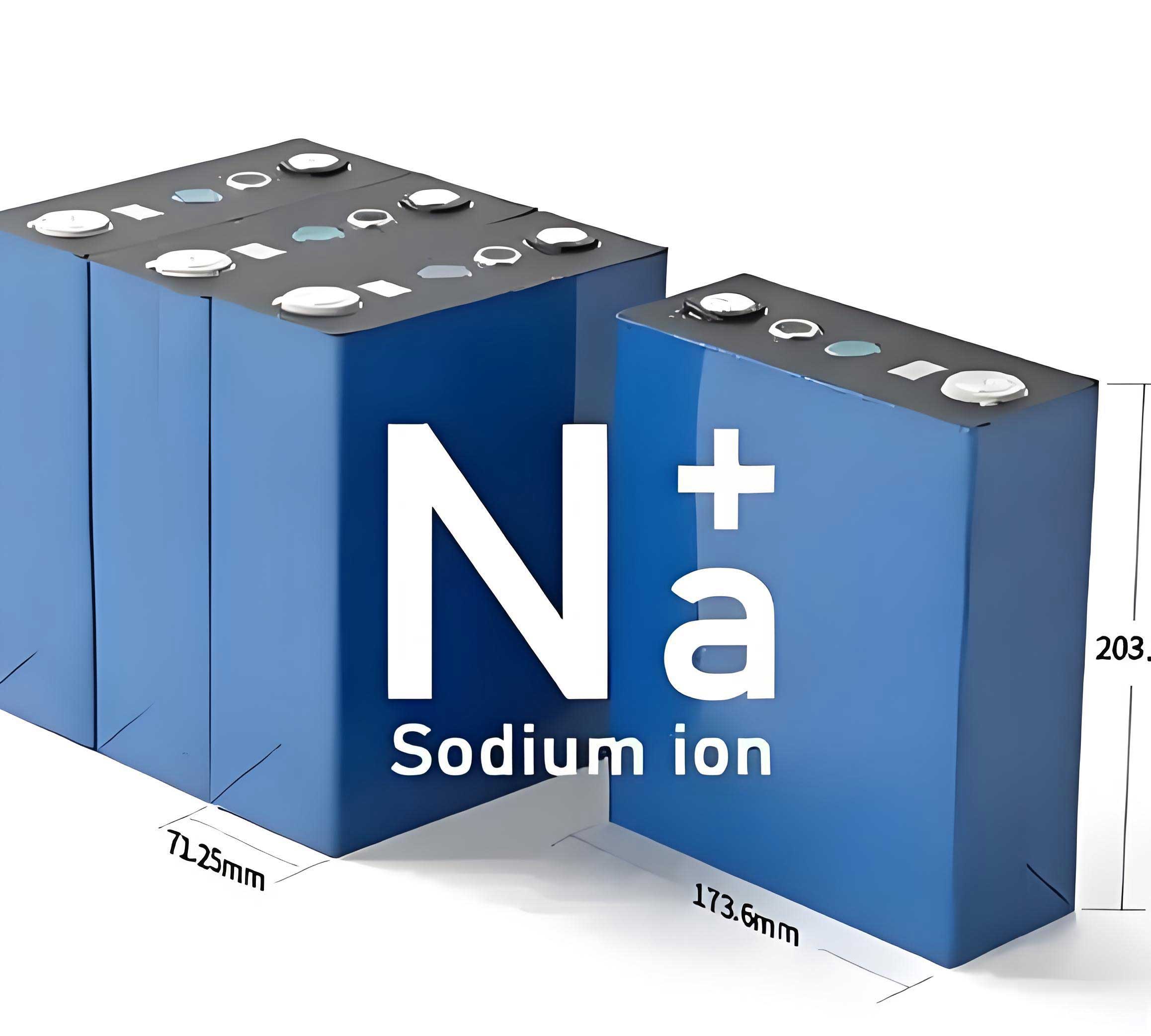
The global energy landscape is undergoing a profound transformation, driven by the dual imperatives of decarbonization and energy security. Within this context, energy storage systems, particularly batteries, have emerged as a cornerstone of the new quality productive forces. While lithium-ion batteries have dominated this space for decades, concerns regarding the geopolitical and supply chain risks associated with lithium and cobalt resources have intensified the search for complementary alternatives. The sodium-ion battery presents a compelling solution. With sodium being the sixth most abundant element in the Earth’s crust, the raw material base for sodium-ion battery technology is inherently more sustainable and geographically widespread. Furthermore, the sodium-ion battery offers distinct advantages, such as the ability to use low-cost aluminum as a current collector on both electrodes (as sodium does not alloy with aluminum) and potentially superior safety characteristics due to more stable electrochemistry. As the sodium-ion battery transitions from laboratory research to initial commercialization for applications in grid storage and low-speed electric vehicles, analyzing its technological trajectory through patent data provides critical insights into global innovation patterns, competitive positioning, and future strategic directions.
This analysis is based on a comprehensive review of global patent data, offering a quantified perspective on the development intensity and focus areas within the sodium-ion battery ecosystem. Patent filings serve as a leading indicator of R&D investment and technological maturation. The data reveals a striking global concentration of innovation activity and delineates the primary technical battles being waged across key cell components: the cathode, anode, electrolyte, and separator.
1. Global Patent Landscape and Macro Trends
The evolution of patent filings for core sodium-ion battery technologies paints a clear picture of an accelerating field. For many years, research progressed at a measured pace. However, a distinct inflection point occurred around 2020, after which the annual volume of patent applications entered a phase of exponential growth. This surge correlates directly with rising industry commitment, policy support worldwide for alternative battery chemistries, and the achievement of critical performance milestones that signaled commercial viability. The most recent years show continued high application volume, although the inherent 18-month publication lag means data for the latest periods is incomplete. Nonetheless, the trend is unequivocal: the sodium-ion battery sector is in a fervent state of innovation.
A breakdown of patent filings by applicant nationality reveals a dominant player. A single country accounts for a staggering 94% of all published patent applications in this domain. This overwhelming concentration underscores a strategic national focus on securing intellectual property leadership in this next-generation technology. Other historically strong players in battery technology, such as Japan, the United States, and the Republic of Korea, collectively account for the remaining share, with Japan showing the most activity among them. This geographical distribution highlights a significant first-mover advantage in patent portfolio building for the sodium-ion battery.
| Region/Country | Approximate Share of Global Patent Filings (%) | Primary Focus Areas |
|---|---|---|
| China | 94 | Comprehensive coverage: Cathode (Layered Oxide, Polyanion), Anode (Hard Carbon, Composites), Electrolyte, Solid-state. |
| Japan | ~3 | Balanced portfolio across Cathode, Anode, and Electrolyte/Additives. |
| Republic of Korea | ~1.5 | Strong focus on Cathode and Anode materials. |
| United States | ~1 | Focus on Layered Oxide Cathodes, Carbon Anodes, and Solid-state Electrolytes. |
| Others | <0.5 | Scattered activity. |
Delving into the distribution of patents across the core components of a sodium-ion battery, it becomes evident that the primary R&D battlefields are the electrode materials. Cathode and anode technologies attract nearly equal levels of inventive activity, together constituting the vast majority of filings. This reflects the fundamental truth that the energy density, cycle life, and cost of a sodium-ion battery are predominantly dictated by the performance of its active materials. Electrolyte technology, including both liquid and solid-state systems, is the next major area of focus, driven by the quest for wider voltage windows, enhanced safety, and interface stability. In contrast, separator technology has attracted relatively minimal dedicated patent activity within the sodium-ion battery context, suggesting that adaptations of existing polyolefin or ceramic-coated separators from lithium-ion technology are often deemed sufficient in the near term.
2. Deep Dive into Core Technology Branches
2.1 Cathode Materials: A Three-Way Race
The cathode is a critical determinant of a sodium-ion battery‘s performance and cost. Patent data reveals three principal material families vying for dominance, each with its own trade-offs between specific capacity, voltage, stability, and cost.
2.1.1 Layered Transition Metal Oxides (NaxTMO2)
This category represents the most mature and heavily patented pathway, leading in initial commercialization efforts. These materials are analogous to the ubiquitous NMC/NCA cathodes in lithium-ion batteries but use sodium instead. Their general formula is NaxMO2, where M is a combination of transition metals like Mn, Ni, Fe, Co, Cu, and Ti. The patent landscape is deeply concerned with specific structural phases (primarily O3 and P2 types, defined by the sodium coordination and stacking sequence) and elemental doping to stabilize these structures.
- O3-type: Offers higher initial specific capacity ($\sim$180-220 mAh/g) but suffers from poorer rate capability and complex phase transitions during (de)sodiation. Patents focus on multi-element doping to suppress unwanted phase changes and improve air stability.
- P2-type: Provides superior rate performance and smoother electrochemical curves due to more favorable sodium ion diffusion pathways, but typically at a lower initial capacity. Patent strategies involve tuning the transition metal slab composition to maximize capacity and prevent detrimental P2-O2 phase transitions at high voltage.
- Composite/Coexistent Phases: An emerging, sophisticated approach captured in patents involves creating materials with O3@P2 core-shell structures or intimate mixtures of phases. The goal is to marry the high capacity of O3 with the kinetic stability of P2. One patent describes a material with an O3-type core rich in nickel for capacity and a P2-type shell doped with stabilizing elements for rate and cycle life, all within a single particle.
The performance of these oxides can be tailored by the stoichiometry and choice of metals. The average voltage and capacity can be estimated from the redox couples involved. For example, the Ni$^{2+}$/Ni$^{3+}$ and Ni$^{3+}$/Ni$^{4+}$ redox activities contribute to high capacity but may compromise stability, often addressed in patents via Co or Mn substitution.
2.1.2 Polyanionic Compounds
This family is characterized by a polyanion framework (XO4)n- (X = P, S, Si, Mo, etc.) that induces a strong inductive effect, raising the operating voltage and enhancing structural and thermal stability. The trade-off is often a lower specific capacity and electronic conductivity. Patent activity is overwhelmingly centered on phosphates.
- Phosphates (NaMPO4): Particularly sodium iron phosphate (NaFePO4) and its manganese variants, are the workhorses of this category. Their stability makes them attractive for long-cycle-life applications. Patents detail nanostructuring, carbon coating, and multi-metal substitution (e.g., Mn, Mg, V) to boost electronic conductivity and capacity.
- Other Polyoxoanions: Fluorophosphates (Na2MPO4F), pyrophosphates (Na2M2(P2O7)), and sulfates (Na2M(SO4)2) appear in patents, offering even higher operating voltages. For instance, the theoretical energy density of a sulfate-based cathode can be significant due to its high voltage plateau versus Na/Na+.
2.1.3 Prussian Blue Analogues (PBAs) and Prussian White
These open-framework materials with the general formula AxM[M'(CN)6]y∙zH2O (A = alkali metal, M/M’ = transition metals) offer very high theoretical capacities and low-cost potential. “Prussian White” refers to the highly sodiated, reduced form. The major patent challenge revolves around mitigating structural water (zH2O), which degrades cycle life and causes gassing, and controlling crystallinity during aqueous synthesis. Patents focus on synthesis methods (controlled precipitation, chelating agents) to reduce vacancies and water content, and on metal site selection (e.g., Fe-Mn systems) to tune voltage and capacity.
| Cathode Type | Typical Formulation Examples | Key Advantages (Patent Focus) | Key Challenges (Patent Solutions Sought) | Relative Patent Activity |
|---|---|---|---|---|
| Layered Oxide | NaNi0.33Mn0.33Fe0.33O2 (O3) Na0.67Ni0.33Mn0.67O2 (P2) |
High capacity, good kinetics, mature synthesis. | Air sensitivity, phase transitions, structural degradation at high voltage. | Highest |
| Polyanionic | NaFePO4, Na3V2(PO4)3, Na2Fe2(SO4)3 | High stability, long cycle life, high operating voltage. | Lower specific capacity, poor intrinsic electronic conductivity. | High |
| Prussian Blue Analogues | Na2FeFe(CN)6, Na2MnFe(CN)6 | Very high theoretical capacity, low-cost potential, simple synthesis. | Crystal water, poor cycling stability, low volumetric energy density. | Moderate |
2.2 Anode Materials: The Reign of Carbon and Composites
While graphite is the standard in lithium-ion batteries, it exhibits very low capacity in a standard sodium-ion battery due to unfavorable thermodynamics for Na-C intercalation. The patent landscape for sodium-ion battery anodes is therefore focused on alternative materials.
2.2.1 Carbon-Based Materials
This is the most prominent category in patents, accounting for roughly half of all anode-related filings. Within this, hard carbon is the undisputed leader. Hard carbon is a non-graphitizable carbon with a highly disordered structure of misaligned graphene sheets and nanopores, providing abundant defect sites and interlayer spacing for sodium storage via adsorption and pseudo-intercalation mechanisms.
Patent innovation in hard carbon is intensely focused on precursor selection and processing:
$$ \text{Biomass Precursor (Rice husk, peat, etc.)} \xrightarrow[\text{Pyrolysis}]{\text{Stabilization (200-400°C)}} \text{Hard Carbon} \xrightarrow[\text{Post-treatment}]{\text{(Acid wash, doping)}} \text{Anode Material} $$
Biomass-derived hard carbons are a major theme, turning agricultural waste (e.g., rice husk, walnut shells, peanut shells) into valuable anode material. Patents detail precise pyrolysis temperature profiles (typically 1000-1500°C), activation steps, and heteroatom doping (e.g., N, P, S) to enhance specific capacity, initial Coulombic efficiency (ICE), and rate performance. The reversible capacity for sodium in hard carbon can be empirically modeled as a combination of adsorption on surfaces and filling of micropores:
$$ C_{\text{total}} = C_{\text{adsorption}} + C_{\text{pore filling}} $$
Other carbon forms like soft carbon, expanded graphite, and carbon nanotubes/nanofibers also feature in patents, often as conductive additives or in composite structures.
2.2.2 Carbon-Based Composites
This is a rapidly growing and highly innovative segment. The strategy is to combine a high-capacity alloying or conversion-based material (which typically suffers from huge volume expansion) with a conductive, elastic carbon matrix. The carbon component buffers mechanical stress, maintains electrical contact, and improves cycle life. Patent examples abound:
- Carbon/Metal Sulfide/Phosphide Composites: SnS2@C, Sb2S3/graphene, P nanoparticles embedded in carbon. The conversion/alloying reactions offer high capacities (e.g., for P: 3Na+ + 3e– + P $\rightleftharpoons$ Na3P, theoretical capacity $\sim$2596 mAh/g).
- Carbon/Metal Oxide Composites: TiO2@C, Na2Ti3O7/CNT. These often operate via intercalation or conversion reactions at low, safe potentials.
- Carbon/Alloy Composites: Sn/C, Sb/C. The carbon confines the alloy particles, mitigating pulverization.
2.2.3 Other Anode Materials
Patent filings also explore titanium-based oxides (e.g., Na2Ti3O7), organic compounds, and pure alloy systems. However, their relative patent volume is smaller compared to the carbon and composite domains.
2.3 Electrolytes and Solid-State Technologies
Electrolyte patents for sodium-ion battery aim to address key challenges: forming stable solid-electrolyte interphases (SEI/CEI), enabling high-voltage operation, improving safety (non-flammability), and enhancing low-temperature performance. The patent distribution shows a strong focus on additives, which are cost-effective levers to dramatically alter interface properties.
| Electrolyte Component | Patent Focus Areas | Example Functions |
|---|---|---|
| Solvents | Carbonate blends (EC/PC/DMC/EMC), ethers (DME, DEGDME), fluorinated solvents. | Optimizing Na+ solvation, viscosity, melting point, flame retardancy. |
| Na Salts | NaPF6, NaClO4, NaTFSI, NaFSI, NaDFOB. | Conductivity, anodic stability, Al corrosion inhibition, SEI formation. |
| Additives | FEC, VC, TMS, CsPF6, HF scavengers, overcharge protectants. | Forming robust SEI/CEI, improving cycle life, enhancing safety, widening voltage window. |
| Formulation Synergy | Specific salt/solvent/additive combinations. | Achieving synergistic effects for specific cathode/anode pairs. |
| Solid-State Electrolytes | Oxides (Na3Zr2Si2PO12), Sulfides (Na3PS4), Polymers (PEO-NaTFSI). | Enabling solid-state sodium-ion battery for ultimate safety and potential use of Na metal anodes. |
Aqueous and solid-state electrolytes for sodium-ion battery are developing in parallel. Aqueous systems focus on high-concentration “water-in-salt” electrolytes to expand the electrochemical window. Solid-state electrolyte patents address critical issues of ionic conductivity at room temperature, interfacial stability, and scalable fabrication methods for oxide, sulfide, and polymer electrolytes.
2.4 Separators
As noted, dedicated separator innovation for sodium-ion battery is less pronounced. The majority of patents relate to polymer composite separators, primarily adaptations of polyethylene (PE) or polypropylene (PP) membranes with ceramic coatings (Al2O3, SiO2) to improve thermal shutdown properties, wettability, and mechanical strength. Another stream involves fiber-based separators (e.g., glass fiber mats), particularly for experimental or aqueous systems. The core function remains unchanged: to electronically isolate the electrodes while allowing facile Na+ ion transport, often described by the ion transference number $t_{\text{Na}^+}$ and MacMullin number.
3. Analysis of Key Innovators and Strategic Postures
The list of top 15 global patent applicants is exclusively composed of entities from the dominant filing country, highlighting their proactive IP strategies. This group includes major research universities, national research academies, and leading industrial corporations that have publicly announced sodium-ion battery product roadmaps.
A closer look at the patent portfolios of selected key players reveals distinct strategic postures:
- Leading Universities/Research Institutes: Their portfolios are deep in foundational materials science, heavily focused on novel cathode and anode compositions, synthesis methods, and fundamental doping strategies. Their work often explores a wider range of “frontier” chemistries. They typically show less activity in applied engineering areas like cell design or manufacturing processes.
- Leading Industrial Corporations: Their portfolios are more holistic and application-oriented. While他们也 heavily invest in cathode material patents (often around specific layered oxide or polyanion formulations targeted for production), their filings show significant parallel activity in complementary areas: electrolyte formulations tailored for their chosen chemistry, anode optimization (especially hard carbon), and integration technologies (cell design, module assembly). This reflects a comprehensive approach to solving the entire sodium-ion battery system puzzle for commercialization.
The strategic posture of other countries is informative. Japan’s portfolio is notably balanced across cathode, anode, and electrolyte, with a focus on incremental improvements and material stabilization. Korea’s filings are concentrated on electrode materials. The United States shows activity in solid-state sodium-ion battery technologies and specific high-voltage cathode materials, indicating a focus on next-generation, high-performance concepts.
4. Legal Status and Implications for the Industry
The legal status of the global patent portfolio provides a snapshot of the technology’s maturity and the competitive environment. Currently, only about one-third of the published filings have matured into granted patents. A significant portion (nearly half) are still undergoing substantive examination. This high proportion of pending applications creates a landscape of uncertainty and potential volatility. A large number of key patents defining the final commercial boundaries of sodium-ion battery technology are still being shaped through prosecution. This means that the freedom-to-operate landscape is fluid, and strategic patent monitoring and engagement (e.g., through observations or oppositions) are crucial for all players. It also indicates that the wave of innovation captured in filings post-2020 is still working its way through the patent system, and a substantial number of new grants can be expected in the coming years, potentially solidifying or shifting the competitive advantage.
5. Conclusions and Strategic Recommendations
The analysis of global patent data unequivocally positions the sodium-ion battery as a technology in the midst of a vigorous and globally concentrated innovation surge. Technological development is currently centered on solving the electrode materials challenge, with layered oxides and hard carbon leading the charge towards first-generation products, while polyanion compounds, Prussian blue, and advanced composites represent important second-wave and specialty options. The IP landscape is dominated by one region, giving its entities a formidable first-mover advantage in building defensive and offensive patent walls.
Based on this analysis, the following strategic recommendations are proposed to navigate and succeed in the evolving sodium-ion battery ecosystem:
1. Deepen Industry-Academia-Research Integration and Accelerate Technology Transfer: The patent data shows a prolific innovation engine within universities and research institutes. A critical imperative is to bridge the “valley of death” between lab-scale discovery and commercial-scale production. Mechanisms should be strengthened for systematic evaluation, marketing, and licensing of high-potential patents from public research organizations. Furthermore, fostering more pre-competitive joint R&D projects between corporations and academia on fundamental issues like long-term degradation mechanisms or novel sodium storage principles can de-risk innovation and accelerate the overall technology pipeline for the sodium-ion battery.
2. Prioritize High-Quality Patenting and Strategic Global Portfolio Management: In a field where most rights are still being established, quality trumps sheer quantity. The focus should be on securing robust patents with clear, defendable claims that cover not just specific material compositions but also critical synthesis processes, unique electrolyte formulations, and inventive cell architectures. Given the pending status of many applications, proactive monitoring of competitor filings and engagement in critical examination proceedings is essential. For entities operating globally, a strategic filing strategy beyond the home jurisdiction is necessary to protect market access and create leverage, even if current production is localized.
3. Sustain and Focus R&D Investment on Foundational Challenges and Next-Generation Concepts: While first-generation sodium-ion battery products are emerging, the performance gap with advanced lithium-ion batteries persists. Sustained R&D is needed to:
- Increase energy density through higher-capacity or higher-voltage cathode/anode pairs.
- Extend cycle life by fundamentally understanding and mitigating degradation at the electrode-electrolyte interface.
- Reduce cost further by innovating in process engineering and exploring earth-abundant material combinations.
- Explore disruptive concepts such as anode-free configurations, new solid-state electrolyte couples, or dual-ion mechanisms.
Patent strategies should evolve to protect these next-generation breakthroughs, ensuring continued leadership in the sodium-ion battery value chain.
In conclusion, the sodium-ion battery stands at a critical juncture, supported by a powerful wave of documented innovation. The patent map provides the navigation chart. Success will belong to those who can effectively translate this patented knowledge into reliable, cost-competitive products while strategically managing their intellectual property to secure a lasting position in the future energy storage economy.