
The pursuit of high-energy-density storage solutions has unequivocally positioned the lithium-ion battery as the cornerstone of modern portable electronics, electric vehicles, and grid-scale energy storage systems. However, this very attribute of high energy density is intrinsically linked to significant safety risks. The conventional components within a lithium-ion battery, particularly the organic liquid electrolytes and polyolefin-based separators, are inherently flammable. During operation, factors such as internal manufacturing defects, uneven aging, or external abuses—electrical, thermal, or mechanical—can precipitate an internal short circuit. This event releases substantial Joule heat, triggering a cascade of exothermic chemical and electrochemical reactions that lead to a rapid, uncontrollable increase in temperature, a condition known as thermal runaway. The consequences are severe: the release of toxic and flammable gases, smoke, fire, and potentially catastrophic explosions. This safety challenge fundamentally limits the further development and widespread deployment of high-energy lithium-ion batteries, making the development of reliable early warning systems not just an engineering goal but a critical societal imperative.
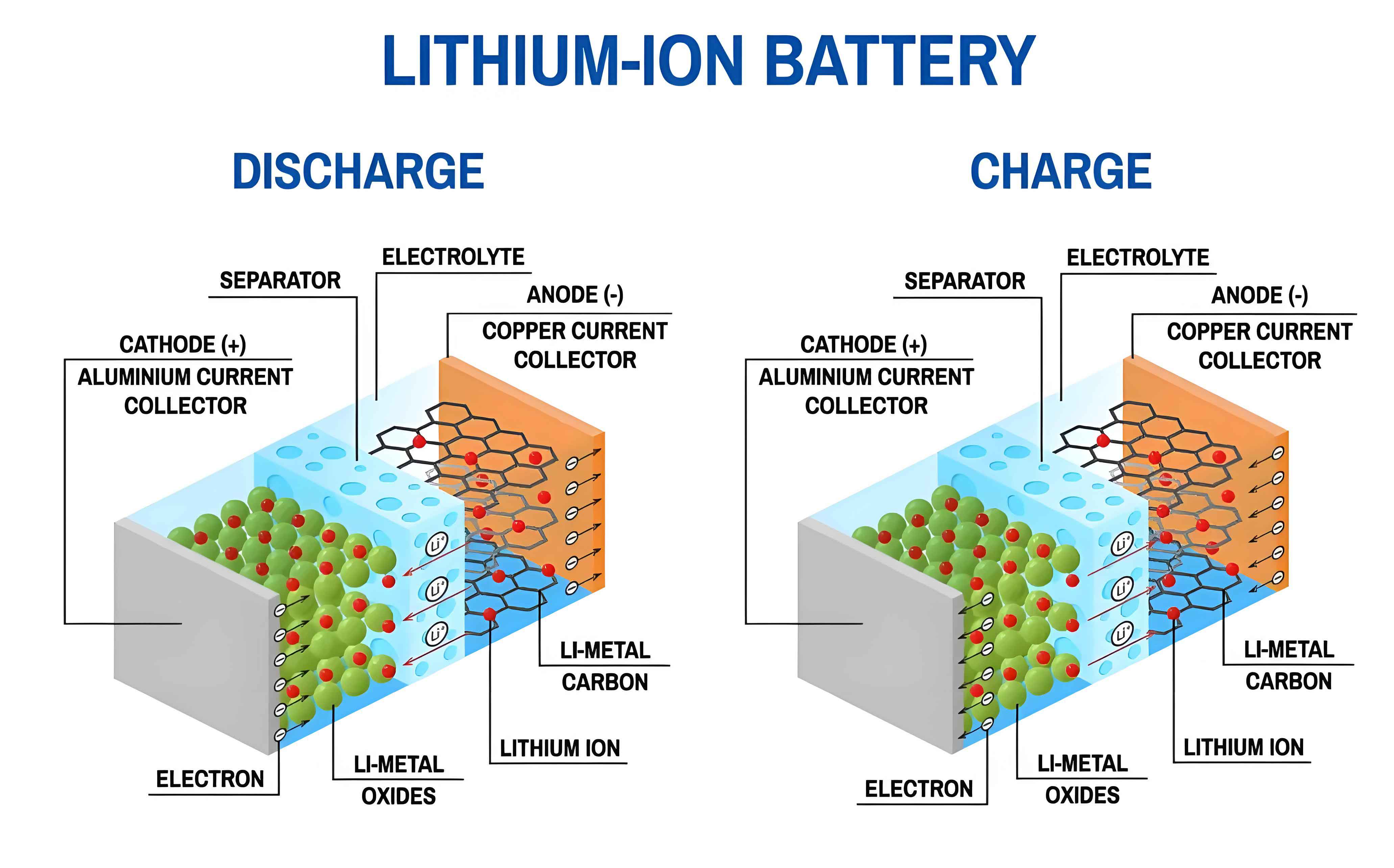
Current strategies for managing the safety of a lithium-ion battery span material innovation (e.g., non-flammable electrolytes, safer electrode materials), system-level design (e.g., advanced thermal management, robust enclosures), and state monitoring. Among these, the real-time monitoring of a battery’s state with the goal of issuing an early warning before the onset of thermal runaway is paramount for ensuring the safe operation of large-scale battery packs and energy storage plants. Traditional monitoring parameters include terminal voltage, current, and surface temperature. While valuable, these signals often exhibit significant changes only in the advanced stages of thermal runaway, providing a warning that may be too late for effective intervention. For instance, the voltage of a lithium-ion battery may remain stable until an internal short circuit becomes severe, and surface temperature sensors lag behind the rapid heat generation occurring inside the cell. Furthermore, the critical temperature for thermal runaway can shift with the state of health of the lithium-ion battery, such as with lithium dendrite growth, reducing the reliability of fixed temperature thresholds.
In contrast, the evolution of gases within a lithium-ion battery offers a far more immediate and sensitive indicator of underlying distress. Throughout the lifecycle of a lithium-ion battery, from normal aging to abusive conditions, a variety of gases are generated through parasitic chemical and electrochemical reactions. During the pre-thermal runaway phase and the thermal runaway event itself, these reactions intensify dramatically, leading to a sharp, orders-of-magnitude increase in the concentration of specific “fingerprint” gases. Research has consistently demonstrated that gas sensors respond to these changes significantly earlier than voltage, temperature, or smoke sensors. Therefore, leveraging gas-sensing technology presents a powerful and promising pathway for the early detection and warning of thermal runaway in lithium-ion batteries, potentially creating the necessary time window to activate safety protocols, isolate the failing cell, and prevent catastrophic propagation.
The Thermal Runaway Process in a Lithium-Ion Battery
Thermal runaway in a lithium-ion battery is not an instantaneous event but a progressive chain reaction fueled by internal heat generation. It can be initiated by three primary abuse conditions: electrical overcharge/over-discharge, external heating or internal hot spots (thermal abuse), and physical damage like crush or penetration (mechanical abuse). Each path ultimately leads to internal short circuits and the release of heat. The process unfolds through several key stages, each characterized by distinct chemical reactions that contribute to heat and gas generation.
1. Solid Electrolyte Interphase (SEI) Decomposition (≈ 80-120 °C): The metastable SEI layer on the graphite anode, crucial for stable operation of the lithium-ion battery, begins to decompose. This is often the first exothermic step.
$$(\text{CH}_2\text{OCOOLi})_2 \rightarrow \text{Li}_2\text{CO}_3 + \text{C}_2\text{H}_4 + \text{CO}_2 + \frac{1}{2}\text{O}_2$$
2. Anode-Electrolyte Reaction (≈ 120-200 °C): With the SEI compromised, the lithiated graphite (at a potential near 0 V vs. Li/Li+) reacts directly with the organic carbonate electrolyte (EC, DEC, DMC, EMC), producing flammable hydrocarbons.
$$2\text{Li} + \text{C}_3\text{H}_4\text{O}_3 (\text{EC}) \rightarrow \text{Li}_2\text{CO}_3 + \text{C}_2\text{H}_4$$
$$2\text{Li} + \text{C}_5\text{H}_{10}\text{O}_3 (\text{DEC}) \rightarrow \text{Li}_2\text{CO}_3 + \text{C}_4\text{H}_{10}$$
3. Separator Meltdown (≈ 135-166 °C for polyolefins): The heat from the anode reactions causes the porous polymer separator to melt, leading to a large-area internal short circuit and a massive surge in Joule heating.
4. Cathode Decomposition (≈ 170-250 °C, material dependent): The delithiated cathode material (e.g., NCM, LCO) becomes thermally unstable, decomposing and releasing oxygen, which is a powerful oxidant and a major heat source.
$$\text{Li}_x\text{CoO}_2 \rightarrow x\text{LiCoO}_2 + \frac{1-x}{3}\text{Co}_3\text{O}_4 + \frac{1-x}{3}\text{O}_2$$
5. Electrolyte Decomposition and Reaction with Oxygen (≈ 200 °C and above): The released oxygen violently oxidizes the electrolyte solvents and other components, producing large volumes of carbon oxides and further accelerating the temperature rise.
$$\text{C}_3\text{H}_4\text{O}_3 (\text{EC}) + 2.5\text{O}_2 \rightarrow 3\text{CO}_2 + 2\text{H}_2\text{O}$$
$$\text{C}_3\text{H}_4\text{O}_3 (\text{EC}) + \text{O}_2 \rightarrow 3\text{CO} + 2\text{H}_2\text{O}$$
6. Binder Reactions (≈ 260 °C and above): Polymers like PVDF in the electrodes can react with lithium or decompose, releasing hydrogen fluoride (HF) and hydrogen gas.
$$-\text{CH}_2-\text{CF}_2- + \text{Li} \rightarrow \text{LiF} + -\text{CH}=\text{CF}- + 0.5\text{H}_2$$
These stages are overlapping and interdependent, creating a positive feedback loop of heat generation that culminates in thermal runaway. The entire sequence is invariably accompanied by the generation of characteristic gases.
Characteristic Gases and Their Generation Mechanisms
The gas emission profile of a lithium-ion battery during thermal runaway is a complex fingerprint that reveals the underlying degradation pathways. The primary characteristic gases include hydrogen (H₂), carbon monoxide (CO), carbon dioxide (CO₂), and various hydrocarbons (C₂H₄, CH₄, C₂H₆, etc.). Trace amounts of oxygen (O₂) and fluorine compounds (HF, POF₃) may also be present. The specific composition and concentration are highly dependent on multiple factors, making the gas signature a rich source of diagnostic information.
The generation of these gases is directly tied to the reaction stages outlined above. For example, C₂H₄ is a hallmark of EC solvent decomposition at the anode. CO and CO₂ are major products from the incomplete and complete oxidation of electrolytes, respectively. H₂ generation is strongly linked to reactions involving lithium metal (e.g., from plated lithium dendrites) with the electrolyte or binders. The concentration of these gases doesn’t increase linearly but experiences sharp, step-like surges as the cell passes through each exothermic threshold.
From an early-warning perspective, not all gases are equally suitable as target analytes. While O₂ release is significant during cathode decomposition, its concentration fluctuates wildly and is heavily diluted by ambient air, making it a poor choice. CO₂, although produced in large volumes, has a high background concentration in air (~400 ppm), requiring sensors with high resolution to detect the initial rise. Fluorine gases are specific to electrolytes containing LiPF₆ or fluorinated binders. Therefore, the most promising candidates for early detection are H₂, CO, and light hydrocarbons (C₂H₄, CH₄). These gases are produced from the earliest stages (SEI and anode reactions), have negligible background concentrations in typical environments, and their rapid increase provides a clear, early warning signal. Studies have shown that in a failing lithium-ion battery, H₂ sensors often trigger an alarm first, followed by CO and hydrocarbon sensors, well before a noticeable temperature spike.
Factors Influencing Gas Generation in Lithium-Ion Batteries
The gas emission profile from a lithium-ion battery is not a fixed property but varies significantly based on the cell’s chemistry, state, and the nature of the abuse. Understanding these dependencies is crucial for calibrating and interpreting gas sensor data for reliable early warning systems.
1. Cell Chemistry: The choice of cathode material has a profound impact. Lithium Iron Phosphate (LFP) cells generally produce a higher proportion of CO₂ and H₂, while high-nickel NCM cells generate more CO. The total gas volume also differs, with NCM cells typically producing more gas than LFP cells under similar abuse conditions. The electrolyte formulation (solvent blend, lithium salt, additives) directly determines the types of hydrocarbons and other organic species released.
2. State of Charge (SOC): This is one of the most critical factors. A fully charged lithium-ion battery contains more active lithium in the anode and a more delithiated (and thus less stable) cathode. During thermal runaway, a high-SOC cell will produce a much larger volume of gas, with a higher proportion of flammable gases like H₂ and CO, and a lower proportion of CO₂ compared to a partially charged cell. The gas release rate is also dramatically faster.
3. Triggering Mechanism and Environment: The way thermal runaway is induced (slow heating, nail penetration, overcharge) affects the kinetics and, to some extent, the gas composition. Overcharge, for instance, can lead to unique gas species from electrolyte oxidation at high voltage. Environmental pressure can also alter gas composition; at low pressures, the production of certain unsaturated hydrocarbons may increase.
The table below summarizes the influence of key factors on the gas generation behavior of a lithium-ion battery, which must be accounted for in sensor system design.
| Influencing Factor | Impact on Gas Generation | Implication for Early Warning |
|---|---|---|
| Cathode Material (e.g., NCM vs. LFP) | Determines dominant gas types (more CO from NCM, more H₂/CO₂ from LFP) and total gas volume. | Sensor array may need tuning for different battery chemistries; threshold levels may vary. |
| State of Charge (SOC) | Higher SOC leads to much larger gas volume, faster release rate, and higher flammability (more H₂/CO). | Warning thresholds could be adaptive based on known SOC. High-SOC packs require more sensitive detection. |
| Abuse Type (Overcharge, Heat, Crush) | Affects reaction pathways and kinetics, potentially altering early gas composition ratios. | Pattern recognition of gas release profiles (e.g., H₂/CO ratio over time) could help diagnose failure mode. |
| Cell Format & Size | Larger cells contain more reactive material, producing more gas. Pouch cells may vent differently than cylindrical cells. | Sensor placement and sensitivity must be scaled for module/pack size and cell geometry. |
Gas Detection and Sensing Technologies
A variety of analytical and sensing techniques have been employed to study and detect the gases emitted from a lithium-ion battery. These range from sophisticated laboratory instruments for mechanistic studies to compact, cost-effective sensors suitable for field deployment in early warning systems.
Laboratory Analytical Techniques: Tools like Gas Chromatography-Mass Spectrometry (GC-MS), Fourier-Transform Infrared Spectroscopy (FTIR), and In-situ Differential Electrochemical Mass Spectrometry (DEMS) are indispensable for fundamental research. They provide detailed, quantitative breakdowns of gas composition, helping us understand the precise reactions occurring inside a failing lithium-ion battery. For example, GC-MS can identify and quantify dozens of organic volatile compounds, while DEMS can correlate gas evolution with electrochemical events in real-time. However, their high cost, large size, and need for skilled operation render them unsuitable for widespread implementation in battery management systems.
Gas Sensors for Early Warning: This category encompasses devices designed for continuous, real-time monitoring in practical applications. The operating principles vary:
- Metal Oxide Semiconductor (MOS) Sensors: These are widely used due to their low cost, small size, and good sensitivity to reducing gases like H₂, CO, and hydrocarbons. When target gas molecules interact with the heated metal oxide surface (e.g., SnO₂), they change its electrical resistance. Their main drawbacks are poor selectivity (cross-sensitivity to many gases) and high operating temperatures.
- Electrochemical Sensors: These sensors offer excellent selectivity for specific gases like CO or H₂. They operate at room temperature and have low power consumption, making them attractive for integration. However, they have a limited lifetime as the internal electrolyte dries out or the electrode catalysts are depleted.
- Optical & Acoustic Sensors: Technologies like Non-Dispersive Infrared (NDIR) for CO₂ detection or photoacoustic spectroscopy offer high specificity and stability. While historically more expensive, miniaturized versions are becoming more feasible for critical applications.
The choice of sensor technology for a lithium-ion battery system involves a trade-off between sensitivity, selectivity, response time, power consumption, cost, and long-term stability. No single sensor is perfect for all target gases. Therefore, the most robust strategy involves using an array of complementary sensors (e.g., an electrochemical cell for CO, a MOS sensor for broad hydrocarbon detection, and a dedicated H₂ sensor). This multi-sensor approach, combined with intelligent data fusion algorithms, can overcome the limitations of individual sensors, improve selectivity through pattern recognition, and drastically enhance the reliability of the early warning system for the lithium-ion battery pack.
Conclusion and Future Perspectives
The integration of gas-sensing technology into lithium-ion battery management systems represents a paradigm shift towards proactive safety management. By monitoring the volatile fingerprint of internal chemical distress, it offers a uniquely early and reliable warning of impending thermal runaway, far surpassing the capabilities of traditional voltage and temperature monitoring. This approach is not merely an add-on but a fundamental enabler for safely pushing the boundaries of energy density in future lithium-ion batteries.
However, the path to widespread, robust implementation requires addressing several key challenges and pursuing innovative research directions:
1. From Mechanism to System-Level Understanding: While the gas generation mechanisms within a single cell are relatively well understood, the behavior in a full-scale battery pack or module is more complex. Future work must focus on modeling and experimentally characterizing gas diffusion dynamics within confined pack enclosures. How do gases from a single failing lithium-ion battery cell disperse? Where should sensors be optimally placed to ensure the earliest possible detection regardless of the failure location within a large module? Answering these questions is essential for designing effective sensor networks.
2. Advancements in Sensor Technology: The development of next-generation sensor materials and devices is critical. The ideal sensor for a lithium-ion battery application would operate at or near room temperature (to eliminate a parasitic heat source and reduce power draw), possess high and unambiguous selectivity to target gases (H₂, CO, C₂H₄), and exhibit long-term stability in harsh environments (wide temperature swings, potential exposure to electrolyte vapors). Research into novel nanomaterials, solid-state electrolytes for electrochemical cells, and miniaturized optical platforms holds great promise.
3. Intelligent Data Fusion and Adaptive Systems: Relying on a single gas concentration threshold is insufficient. The future lies in smart systems that employ artificial intelligence and machine learning algorithms to analyze the temporal profiles from a sensor array. By recognizing the unique “smell-print” of incipient failure—the rate of change, the ratio between different gases, the sequence of sensor activation—the system can not only warn earlier but also reduce false alarms caused by environmental interference or benign outgassing. Furthermore, these systems could become adaptive, learning the baseline gas signature of a specific lithium-ion battery pack over its lifetime and adjusting warning thresholds accordingly.
4. System Integration and Standardization: For gas sensing to become a mainstream safety feature, sensors must be seamlessly integrated into the battery module design, potentially even embedded within cells or modules in a non-invasive manner. This requires close collaboration between battery manufacturers, sensor developers, and system integrators. Furthermore, the development of industry-wide standards for gas-sensing-based early warning protocols, including performance benchmarks, test procedures, and response actions, will be crucial for ensuring reliability and fostering adoption across the energy storage and electric vehicle industries.
In conclusion, gas-sensing technology provides a powerful and essential tool for mitigating the inherent safety risks of high-energy lithium-ion batteries. By offering a critical window of time between the first signs of internal failure and the point of no return, it empowers safety systems to intervene proactively. Continued research and development focused on smart, reliable, and integrated gas-sensing solutions will be fundamental to unlocking the full potential of lithium-ion battery technology for a safer and more sustainable energy future.