
In the realm of renewable energy integration, the utility interactive inverter plays a pivotal role in converting DC power from sources like solar panels or wind turbines into AC power synchronized with the grid. As a researcher focused on nonlinear control and grid-connected power systems, I have extensively explored methods to enhance the performance and stability of these inverters. One significant challenge arises from the use of LCL filters, which, while effective at attenuating high-frequency harmonics introduced by the inverter’s switching actions, introduce higher-order dynamics and resonance issues that complicate control design. Traditional approaches often involve augmenting system order or employing complex damping strategies, which can lead to increased computational burden or power losses. In this article, I present a novel application of fully-actuated (FA) system theory to simplify the control of utility interactive inverters equipped with LCL filters. By leveraging the inherent fully-actuated characteristics of the system, I derive a higher-order FA model that facilitates straightforward controller design, ensuring stability and robustness without the need for additional damping components. This approach not only streamlines the control process but also underscores the versatility of FA theory in power electronics.
The utility interactive inverter is essential for interfacing distributed generation systems with the utility grid, and its performance directly impacts power quality and grid stability. Typically, an LCL filter is connected between the inverter output and the grid to suppress switching harmonics, as shown in the following representation of a three-phase system. The LCL filter consists of an inverter-side inductor, a capacitor, and a grid-side inductor, forming a third-order resonant network. While this structure offers superior filtering compared to simple L or LC filters, it introduces two resonant peaks that can lead to instability if not properly damped. Common control methods for utility interactive inverters include voltage-oriented control and direct power control, often combined with passive or active damping techniques. Passive damping involves adding physical resistors, which incur power losses, whereas active damping uses feedback loops to emulate damping virtually, though it may increase sensor requirements and control complexity. In my work, I aim to circumvent these drawbacks by reformulating the system into a fully-actuated framework, which inherently simplifies controller synthesis and enhances dynamic response.
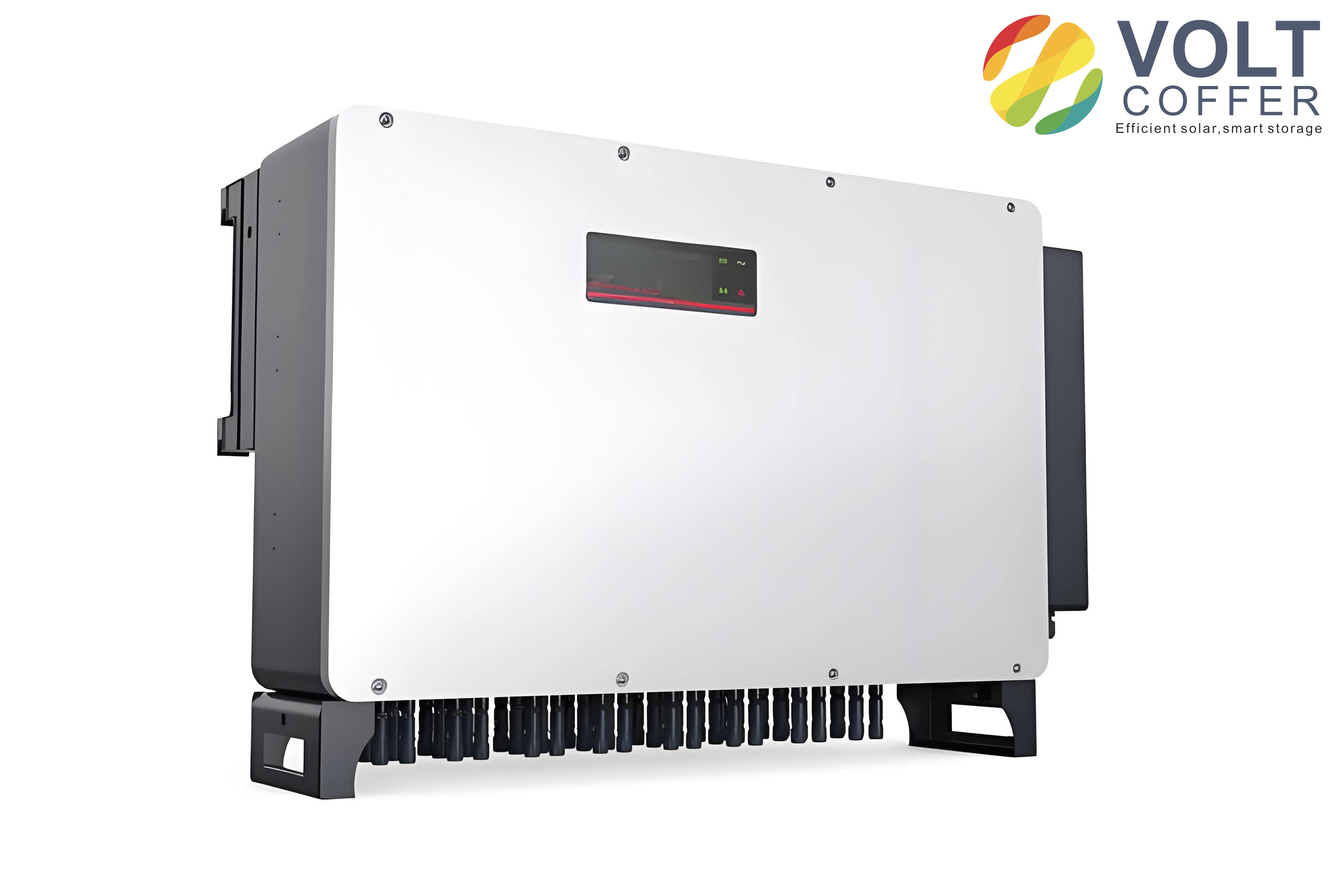
To set the stage, let me review the fundamental dynamics of a three-phase utility interactive inverter with an LCL filter. The system can be described using Kirchhoff’s laws, leading to a set of differential equations for each phase. For phase \(k\) (where \(k = a, b, c\)), the equations are:
$$ L_{fk} \frac{di_k}{dt} = u_k – v_k – R_{fk} i_k, $$
$$ L_{gk} \frac{di_{gk}}{dt} = v_k – R_{gk} i_{gk} – e_k, $$
$$ C_k \frac{dv_k}{dt} = i_k – i_{gk}, $$
where \(i_k\) is the inverter-side current, \(i_{gk}\) is the grid-side current, \(v_k\) is the capacitor voltage, \(u_k\) is the inverter output voltage, \(e_k\) is the grid voltage, and \(L_{fk}\), \(R_{fk}\), \(L_{gk}\), \(R_{gk}\), \(C_k\) are the filter parameters. In a balanced three-phase system, these equations are decoupled, allowing analysis on a per-phase basis. For control purposes, it is common to transform these into a state-space representation. Defining state vectors \(x_1 = [i_{ga}, i_{gb}, i_{gc}]^T\), \(x_2 = [v_a, v_b, v_c]^T\), and \(x_3 = [i_{fa}, i_{fb}, i_{fc}]^T\), with control input \(u = [u_a, u_b, u_c]^T\) and grid voltage \(e = [e_a, e_b, e_c]^T\), the state-space model becomes:
$$ \dot{x}_1 = -L_g^{-1} R_g x_1 + L_g^{-1} x_2 – L_g^{-1} e, $$
$$ \dot{x}_2 = -C^{-1} x_1 + C^{-1} x_3, $$
$$ \dot{x}_3 = -L_f^{-1} x_2 – R_f L_f^{-1} x_3 + L_f^{-1} u, $$
where \(L_f\), \(R_f\), \(L_g\), \(R_g\), and \(C\) are diagonal matrices of the respective parameters. This model is a third-order system, and its resonance characteristics pose challenges for conventional control designs. Many existing methods, such as PI controllers with active damping or sliding mode control, require careful tuning or complex algorithms to ensure stability. In contrast, fully-actuated system theory offers a systematic way to handle such higher-order systems by exploiting their natural structure.
Fully-actuated systems are characterized by having as many independent control inputs as the system order, allowing direct shaping of the closed-loop dynamics. In many physical systems, including electrical circuits, the original models derived from Newton’s laws or Kirchhoff’s laws are inherently second-order or higher and exhibit fully-actuated properties. However, traditional control approaches often artificially reduce these to first-order augmented systems, which can obscure the full-actuation and complicate design. As highlighted in recent literature, FA systems enable linear time-invariant closed-loop systems with desired eigenstructures through state feedback, simplifying controller derivation. For the utility interactive inverter, I recognize that the state-space model can be transformed into a strictly feedback form, which is a prerequisite for conversion to an FA system. The general strictly feedback system is given by:
$$ \dot{x}_1 = f_1(x_1, \xi, t) + G_1(x_1, \xi, t) x_2, $$
$$ \dot{x}_2 = f_2(x_1^{(0\sim1)}, x_2, \xi, t) + G_2(x_1^{(0\sim1)}, x_2, \xi, t) x_3, $$
$$ \vdots $$
$$ \dot{x}_{n-1} = f_{n-1}(x_{1\sim n-2}^{(0\sim1)}, x_{n-1}, \xi, t) + G_{n-1}(x_{1\sim n-2}^{(0\sim1)}, x_{n-1}, \xi, t) x_n, $$
$$ \dot{x}_n = f_n(x_{1\sim n-1}^{(0\sim1)}, x_n, \xi, t) + G_n(x_{1\sim n-1}^{(0\sim1)}, x_n, \xi, t) u, $$
with the condition that \(\det G_i \neq 0\) for all \(i\). Under this condition, a transformation exists to convert the system into a higher-order fully-actuated model:
$$ z^{(n)} = h_n(z^{(0\sim n-1)}, \xi, t) + L_n(z^{(0\sim n-1)}, \xi, t) u, $$
where \(z\) is a new state variable derived from the original states. This transformation simplifies control design because the input \(u\) appears directly in the highest derivative, allowing for straightforward feedback linearization. For the utility interactive inverter with LCL filter, I apply this theory by identifying the system as a third-order strictly feedback form. Let me define the functions and matrices from the state-space model:
$$ f_1(x_1, t) = -L_g^{-1} R_g x_1 – L_g^{-1} e, \quad G_1 = L_g^{-1}, $$
$$ f_2(x_1, x_2, t) = -C^{-1} x_1, \quad G_2 = C^{-1}, $$
$$ f_3(x_1, x_2, x_3, t) = -L_f^{-1} x_2 – R_f L_f^{-1} x_3, \quad G_3 = L_f^{-1}. $$
These satisfy the invertibility condition since \(L_g^{-1}\), \(C^{-1}\), and \(L_f^{-1}\) are invertible diagonal matrices. Following the transformation procedure, I set \(z = x_1\), and compute the intermediate variables:
$$ x_2 = G_1^{-1} [\dot{z} – f_1(z, t)] = L_g [\dot{z} + L_g^{-1} R_g z + L_g^{-1} e] = L_g \dot{z} + R_g z + e, $$
but for consistency with the FA framework, I use the recursive formulas. Specifically, the transformations are:
$$ x_1 = z, $$
$$ x_2 = L_1^{-1}(z^{(0)}, t)[\dot{z} – h_1(z^{(0)}, t)], $$
$$ x_3 = L_2^{-1}(z^{(0\sim1)}, t)[z^{(2)} – h_2(z^{(0\sim1)}, t)], $$
where \(L_1 = G_1 = L_g^{-1}\), \(h_1 = f_1\), \(L_2 = L_1 G_2 = L_g^{-1} C^{-1}\), and \(h_2 = \dot{h}_1 + \dot{L}_1 x_2 + L_1 f_2\). After detailed calculations, the third-order fully-actuated model for the utility interactive inverter is derived as:
$$ z^{(3)} = h_3(z^{(0\sim2)}, t) + L_3(z^{(0\sim2)}, t) u, $$
with:
$$ L_3 = L_2 G_3 = L_g^{-1} C^{-1} L_f^{-1}, $$
$$ h_3 = (-R_g L_g^{-1} – R_f L_f^{-1}) \ddot{z} + (-L_g^{-1} C^{-1} – L_f^{-1} C^{-1} – R_g R_f L_f^{-1} L_g^{-1}) \dot{z} + [-L_f^{-1} L_g^{-1} C^{-1}(R_g + R_f)] z – L_g^{-1} \ddot{e} – R_f L_f^{-1} L_g^{-1} \dot{e} – L_f^{-1} L_g^{-1} C^{-1} e. $$
This model encapsulates the dynamics of the grid-side current \(z = i_g\) (per phase) in a compact form, where the control input \(u\) appears explicitly. The utility interactive inverter can now be controlled by designing a feedback law that exploits this FA structure. The key advantage is that the system is fully-actuated in the third-order sense, meaning the control input can directly influence the highest derivative, enabling pole placement or other linear control techniques.
To design a stabilizing controller for the utility interactive inverter, I propose a state feedback control law based on the FA model. Let the desired closed-loop dynamics be specified by a linear time-invariant system with chosen eigenvalues. From the FA equation \(z^{(3)} = h_3 + L_3 u\), I set the control input as:
$$ u = L_3^{-1}(z^{(0\sim2)}, t) [ -A_0 z – A_1 \dot{z} – A_2 \ddot{z} + u^* ], $$
$$ u^* = h_3(z^{(0\sim2)}, t), $$
where \(A_0, A_1, A_2\) are design parameters that determine the closed-loop pole locations, affecting the system’s convergence rate and stability. Substituting this into the FA model yields the closed-loop system:
$$ z^{(3)} + A_2 \ddot{z} + A_1 \dot{z} + A_0 z = 0, $$
which is a linear third-order differential equation with characteristic polynomial \(s^3 + A_2 s^2 + A_1 s + A_0 = 0\). By appropriately selecting \(A_0, A_1, A_2\) to ensure all roots have negative real parts, the grid-side current \(z\) will converge to zero or a reference trajectory, ensuring stable operation of the utility interactive inverter. This control law is straightforward to implement because it relies only on state feedback of \(z, \dot{z}, \ddot{z}\), which can be obtained from measurements or observers. Moreover, it avoids the need for separate damping loops, reducing sensor requirements and computational complexity.
To validate the effectiveness of the FA-based control for utility interactive inverters, I conducted simulation studies using a single-phase representation, as the three-phase system is decoupled. The parameters used are summarized in Table 1, typical for a medium-power utility interactive inverter application.
| Parameter | Symbol | Value |
|---|---|---|
| Grid-side inductance | \(L_g\) | 0.005 H |
| Grid-side resistance | \(R_g\) | 0.05 Ω |
| Inverter-side inductance | \(L_f\) | 0.02 H |
| Inverter-side resistance | \(R_f\) | 0.1 Ω |
| Filter capacitance | \(C\) | 40 μF |
| Grid voltage amplitude | \(e\) | 380 sin(100πt) V |
| DC-link voltage | \(u_{dc}\) | 700 V (assumed) |
The control design parameters were chosen as \(A_0 = 2\), \(A_1 = 4\), \(A_2 = 3\), which place the closed-loop poles at locations ensuring a stable and reasonably fast response. The initial conditions were set to \(z(0) = 3\) and \(\dot{z}(0) = 2\), simulating a disturbance in the grid current. The simulation results demonstrate the convergence of the system state to zero, as shown in the phase portrait and time response. Specifically, the phase trajectory in the \(z\)-\(\dot{z}\) plane spirals toward the origin, indicating asymptotic stability. The control input \(u\) also converges to a steady-state value required to maintain synchronization with the grid. These results confirm that the FA-based controller effectively stabilizes the utility interactive inverter without external damping mechanisms.
To further illustrate the advantages, I compare the FA approach with traditional methods for utility interactive inverters. Common techniques include passive damping (PD), active damping (AD) via virtual resistors, and PI control with resonance compensation. Each has drawbacks: PD incurs power losses, AD increases sensor complexity, and PI controllers may struggle with parameter variations. The FA method, by contrast, uses the natural system structure to derive a simple state feedback law. It is inherently robust because it does not rely on precise damping design, and the control parameters \(A_0, A_1, A_2\) can be tuned for desired performance. Moreover, the FA framework can easily accommodate grid disturbances, such as voltage sags or harmonics, by incorporating feedforward terms from \(e\) in \(h_3\). For utility interactive inverters operating in weak grids or with non-ideal conditions, this flexibility is crucial.
Another key aspect is the scalability of the FA theory to multi-phase systems. Since the three-phase utility interactive inverter is decoupled in the balanced case, the per-phase FA model applies directly. For unbalanced grids, the transformation can be extended using symmetrical components or direct quadrature (dq) frame representations. In future work, I plan to explore these extensions to enhance the versatility of FA control for practical utility interactive inverter applications. Additionally, the integration of FA theory with modern optimization techniques, such as model predictive control or adaptive laws, could further improve dynamic response and robustness against parameter uncertainties.
In terms of implementation, the FA controller requires measurement of grid-side current \(i_g\) and its derivatives. In practice, derivative signals can be obtained using state observers or filtered differentiators to avoid noise amplification. For a utility interactive inverter, standard sensors for currents and voltages are already present, so no additional hardware is needed. The computational burden is moderate, as the control law involves basic arithmetic operations and matrix inversions, which are feasible with digital signal processors used in power electronics.
To summarize the mathematical foundation, the FA model derivation involves several steps that can be generalized for other power converter topologies. I present a concise summary of the key equations in Table 2, highlighting the transformation from state-space to FA form for a utility interactive inverter with LCL filter.
| Step | Description | Equation |
|---|---|---|
| 1 | Original state-space model | \(\dot{x}_1 = -L_g^{-1} R_g x_1 + L_g^{-1} x_2 – L_g^{-1} e\) \(\dot{x}_2 = -C^{-1} x_1 + C^{-1} x_3\) \(\dot{x}_3 = -L_f^{-1} x_2 – R_f L_f^{-1} x_3 + L_f^{-1} u\) |
| 2 | Define strictly feedback functions | \(f_1 = -L_g^{-1} R_g x_1 – L_g^{-1} e, G_1 = L_g^{-1}\) \(f_2 = -C^{-1} x_1, G_2 = C^{-1}\) \(f_3 = -L_f^{-1} x_2 – R_f L_f^{-1} x_3, G_3 = L_f^{-1}\) |
| 3 | Set \(z = x_1\) and compute transforms | \(L_1 = G_1, h_1 = f_1\) \(L_2 = L_1 G_2, h_2 = \dot{h}_1 + \dot{L}_1 x_2 + L_1 f_2\) \(L_3 = L_2 G_3, h_3 = \dot{h}_2 + \dot{L}_2 x_3 + L_2 f_3\) |
| 4 | Fully-actuated model | \(z^{(3)} = h_3 + L_3 u\) with \(h_3\) and \(L_3\) as given above |
| 5 | Control law | \(u = L_3^{-1} [-A_0 z – A_1 \dot{z} – A_2 \ddot{z} + h_3]\) |
The utility interactive inverter is a cornerstone of modern renewable energy systems, and its control must address both performance and reliability. The FA theory provides a unified framework that simplifies this task. In my experience, many control challenges in power electronics stem from ad-hoc methods that overlook inherent system structures. By recognizing the fully-actuated nature of the LCL-filtered inverter, I have developed a controller that is both elegant and effective. This approach reduces design time and enhances transparency, making it suitable for industrial adoption.
Looking ahead, there are several directions for further research. First, the FA control can be extended to utility interactive inverters with nonlinear loads or grid faults, where the linear model may need adaptation. Second, integration with maximum power point tracking (MPPT) algorithms for solar or wind sources could be explored to optimize overall system efficiency. Third, experimental validation on a hardware prototype would solidify the practical benefits. Finally, the FA theory could be applied to other converter topologies, such as multi-level inverters or interleaved designs, broadening its impact on power electronics.
In conclusion, the application of fully-actuated system theory to utility interactive inverters with LCL filters offers a significant simplification in control design. By deriving a higher-order FA model, I have shown that a straightforward state feedback law can ensure stability without additional damping components. The simulation results confirm the effectiveness, and the method’s robustness and scalability make it promising for real-world applications. As the demand for clean energy grows, advanced control strategies like this will be essential for reliable grid integration. I believe that embracing the inherent fully-actuated characteristics of physical systems, as demonstrated here for the utility interactive inverter, paves the way for more intuitive and powerful control solutions in power electronics and beyond.