
The relentless pursuit of sustainable and cost-effective energy storage solutions has propelled sodium-ion battery (SIB) technology to the forefront of post-lithium research. While lithium-ion batteries (LIBs) dominate portable electronics and electric vehicles, concerns over lithium scarcity, geopolitical supply chain issues, and rising costs have stimulated the search for viable alternatives, particularly for large-scale grid storage. The sodium-ion battery, leveraging the abundant and geographically widespread sodium resources, presents a compelling chemistry with a working principle analogous to LIBs. The fundamental operation involves the shuttling of Na+ ions between a cathode and an anode during charge and discharge. The general electrochemical reaction at a cathode material can be represented as:
$$ \text{Na}_x\text{TMO}_2 \rightleftharpoons \text{Na}_{x-\Delta x}\text{TMO}_2 + \Delta x\text{Na}^+ + \Delta x e^- $$
where TMO2 represents a transition metal oxide framework. However, the larger ionic radius of Na+ (1.02 Å) compared to Li+ (0.76 Å) poses significant challenges for host materials, leading to different structural stabilities and kinetics. This necessitates the dedicated development and optimization of electrode materials specifically for the sodium-ion battery platform.
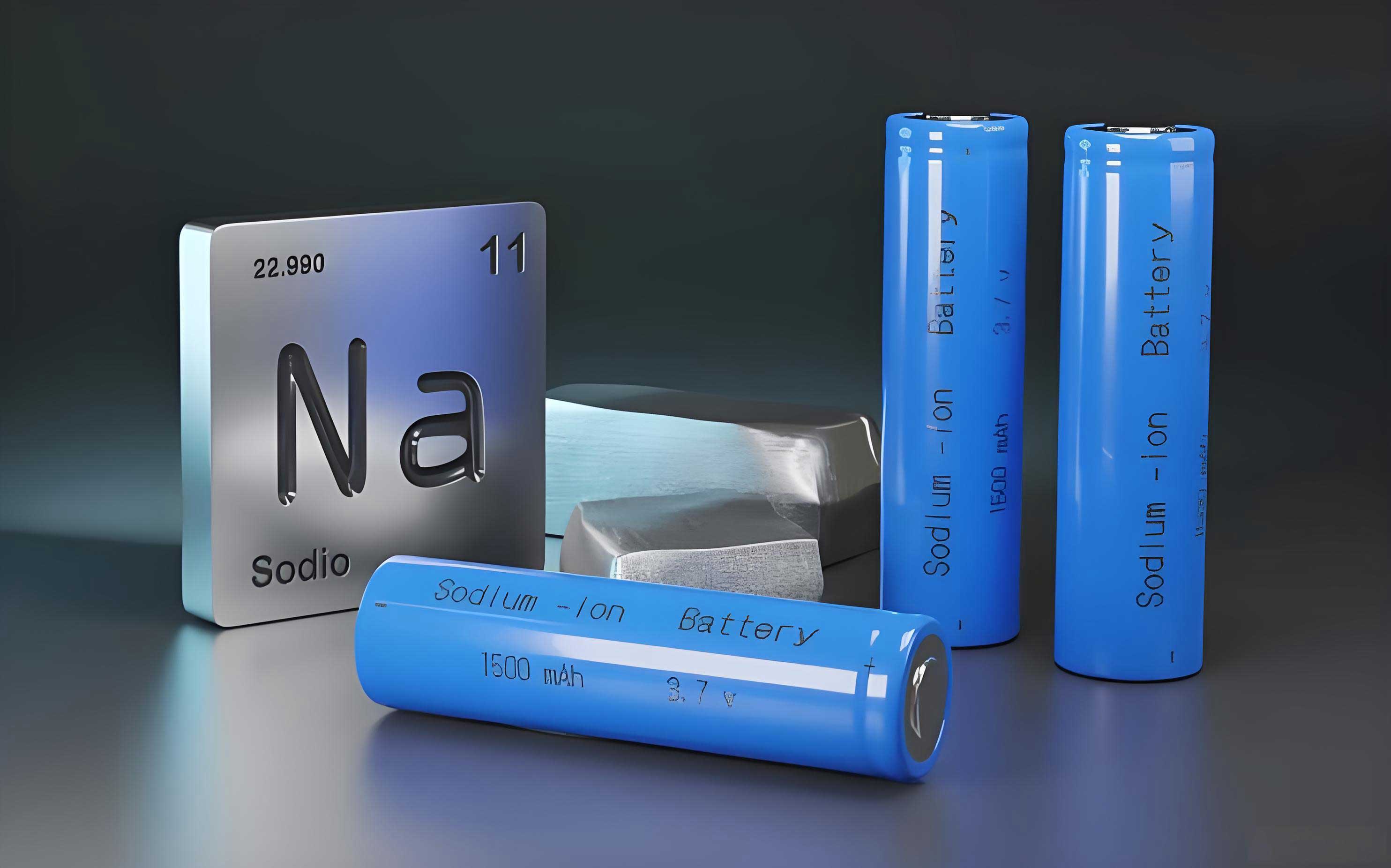
Among the various cathode candidates for sodium-ion batteries, layered transition metal oxides (NaxTMO2) are highly promising due to their high theoretical capacity, relatively simple synthesis, and good ionic conductivity. These materials adopt structures similar to their lithium counterparts, such as O3 and P2 types, where the letter denotes the Na+ site (octahedral or prismatic) and the number indicates the number of TMO2 layers in the unit cell. O3-type phases (space group R-3m) are particularly attractive as they typically offer higher initial Na content. A primary research focus lies in stabilizing these structures during the deep extraction and insertion of the larger Na+ ions to prevent detrimental phase transitions and capacity fade.
This article delves into the science and pedagogy of sodium-ion battery cathode development. We will explore the design, synthesis, and comprehensive electrochemical evaluation of O3-type layered oxides, using a specific composition as a detailed case study. Furthermore, we will broaden the discussion to encompass the wider landscape of cathode materials and advanced characterization techniques, framing it within the context of an effective comprehensive experimental teaching module designed to train the next generation of battery scientists and engineers.
Material Design and Synthesis of O3-Type Layered Oxides
The electrochemical performance of a sodium-ion battery cathode is intrinsically linked to its composition and microstructure. Strategic cation substitution in the transition metal layer is a cornerstone of material design for enhancing structural stability and electrochemical activity. Elements like Fe and Mn are favored for their low cost and environmental friendliness, but Fe/Mn-based O3 oxides often suffer from irreversible phase changes and Jahn-Teller distortion associated with Mn3+. The incorporation of a third metal ion, such as Cu2+, can mitigate these issues. Cu2+ doping is known to suppress the long-range ordering of Na+/vacancies, promoting a solid-solution reaction mechanism throughout the charge/discharge process. This often results in smooth, sloping voltage profiles devoid of distinct plateaus, which is beneficial for reducing local stress and improving rate capability. A representative designed composition is Na0.75Fe0.25Cu0.25Mn0.5O2.
The synthesis of such multi-component oxides requires methods that ensure atomic-level homogeneity. The sol-gel technique is exemplary for laboratory-scale and pedagogical purposes. The process involves chelating metal precursors (e.g., acetates, nitrates) with a complexing agent like citric acid in an aqueous solution. Upon gentle heating and stirring, the solution evolves into a viscous gel. Subsequent drying and high-temperature calcination yield the final crystalline oxide powder. The sol-gel method offers excellent control over stoichiometry and produces materials with fine particle size and good homogeneity. The key reaction during the calcination stage can be conceptually summarized as:
$$ 0.75\text{Na}^+ + 0.25\text{Fe}^{3+} + 0.25\text{Cu}^{2+} + 0.5\text{Mn}^{2+} + \text{Citrate} + \text{O}_2 \xrightarrow{\Delta} \text{Na}_{0.75}\text{Fe}_{0.25}\text{Cu}_{0.25}\text{Mn}_{0.5}\text{O}_2 + \text{Gases} $$
Characterization of the synthesized powder is the first critical step. X-ray Diffraction (XRD) confirms the phase purity and crystal structure. A successful synthesis of the O3-type material will show a diffraction pattern matching the characteristic peaks of the R-3m space group. Scanning Electron Microscopy (SEM) reveals the particle morphology and size distribution, which are crucial for electrochemical performance as they influence the electrode-electrolyte contact area and ionic diffusion paths.
| Method | Principle | Advantages | Disadvantages |
|---|---|---|---|
| Solid-State Reaction | High-temperature calcination of solid precursors. | Simple, scalable, high crystallinity. | Long processing time, high energy consumption, potential inhomogeneity. |
| Sol-Gel | Formation of a molecular network (gel) from solution precursors. | Excellent homogeneity, good stoichiometry control, low calcination temperature. | Use of organic chemicals, longer synthesis time than coprecipitation. |
| Coprecipitation | Simultaneous precipitation of metal hydroxides/carbonates from a salt solution. | Excellent control of particle size and morphology, scalable. | Requires careful control of pH and concentration. |
| Hydrothermal/Solvothermal | Crystallization from aqueous/non-aqueous solution at elevated temperature and pressure. | High purity, controlled morphology, low temperature. | Batch process, safety concerns with high pressure. |
Beyond Layered Oxides: The Cathode Landscape for SIBs
While O3-type layered oxides are a major focus, the cathode chemistry for sodium-ion batteries is rich and diverse. Understanding the broader landscape is essential for a comprehensive education in this field. Three primary families of cathode materials are actively researched, each with distinct advantages and challenges.
1. Polyanionic Compounds: Materials like Na3V2(PO4)3 (NVP), fluorophosphates (e.g., NaVPO4F), and pyrophosphates offer extremely stable frameworks due to the strong covalent bonding of the polyanion groups (PO43-, P2O74-). This translates to outstanding thermal safety, long cycle life, and clear voltage plateaus from the inductive effect. However, their electronic conductivity is typically low, necessitating carbon coating and nano-structuring. The operating voltage can be tuned by the choice of transition metal and polyanion, making them highly versatile for the sodium-ion battery.
2. Prussian Blue Analogues (PBAs): These open-framework materials with the general formula AxM[Fe(CN)6]y·□1-y·nH2O (where A=Na, K; M=Fe, Mn, Ni, Cu, etc.; □=[Fe(CN)6] vacancy) feature large interstitial sites that facilitate rapid Na+ diffusion. They are synthesized via simple aqueous precipitation at room temperature, offering a low-cost and scalable route. Their capacity stems from the redox activity of both the transition metal M and the Fe in the cyanide framework. The main challenges include controlling crystal water content and mitigating vacancies, which impact initial capacity and cycle stability.
3. Other Layered and Tunnel-type Oxides: Beyond O3 and P2 types, materials like Na0.44MnO2 with tunnel structures provide unique 2D or 3D pathways for Na+ migration, often demonstrating excellent rate capability and stability.
| Material Family | Examples | Advantages | Disadvantages | Key Research Focus |
|---|---|---|---|---|
| Layered Oxides (O3/P2) | NaxMO2 (M=Mn, Fe, Co, Ni, Cu, etc.) | High capacity, good rate performance, synthesis simplicity. | Phase transitions, moisture sensitivity, voltage decay. | Cation doping, structural stabilization, surface coatings. |
| Polyanionic Compounds | Na3V2(PO4)3, NaFePO4, Na2FeP2O7 | High safety, long cycle life, stable voltage profile. | Low electronic conductivity, moderate capacity. | Carbon nanocompositing, new structure discovery. |
| Prussian Blue Analogues (PBAs) | NaxFe[Fe(CN)6], NaxMn[Fe(CN)6] | Open framework for fast diffusion, low-cost synthesis. | Low volumetric density, crystal water, vacancies. | Control of composition/defects, electrolyte optimization. |
Electrochemical Characterization: Principles and Methodologies
A deep understanding of electrochemical testing methods is fundamental to evaluating any material for sodium-ion battery applications. These techniques provide insights into capacity, reversibility, kinetics, and degradation mechanisms.
Galvanostatic Charge-Discharge (GCD): This is the most direct method, measuring the capacity and voltage profile of a material under a constant current. The specific capacity (in mAh g-1) is calculated from the discharge curve. For a material undergoing a solid-solution reaction, like the designed Cu-doped oxide, the GCD curves are typically sloping, indicating a single-phase reaction. The average voltage and the polarization (voltage difference between charge and discharge) are key metrics. Cycling stability tests under various current densities (C-rates) assess the long-term performance and rate capability of the sodium-ion battery electrode.
Cyclic Voltammetry (CV): CV records the current response while scanning the electrode potential at a fixed rate. Peaks in the CV curve correspond to redox reactions. The shape, position, and symmetry of the anodic and cathodic peaks reveal electrochemical reversibility and phase transition behavior. For an ideal solid-solution reaction, CV curves may show broad, quasi-rectangular shapes rather than sharp peaks. The relationship between peak current (ip) and scan rate (v) can be used to distinguish between diffusion-controlled (battery-like) and surface-controlled (capacitive-like) processes, following the power law: $$ i_p = a v^b $$ where b=0.5 indicates a diffusion-controlled process and b=1 indicates a capacitive process.
Electrochemical Impedance Spectroscopy (EIS): EIS probes the kinetic processes within the sodium-ion battery cell by applying a small sinusoidal voltage perturbation over a wide frequency range. The resulting Nyquist plot (imaginary vs. real impedance) is modeled using an equivalent circuit. Key parameters include the ohmic resistance (Rs), the charge transfer resistance (Rct) at the electrode/electrolyte interface (seen as a semicircle), and the Warburg impedance (Zw) related to solid-state Na+ diffusion (seen as a sloping line at low frequencies). The sodium-ion diffusion coefficient (DNa+) can be estimated from the Warburg region using the formula:
$$ D_{Na^+} = \frac{R^2 T^2}{2 A^2 n^4 F^4 C^2 \sigma_w^2} $$
where R is the gas constant, T is temperature, A is electrode area, n is electrons transferred, F is Faraday’s constant, C is Na+ concentration, and σw is the Warburg coefficient obtained from the slope of Z’ vs. ω-1/2.
Galvanostatic Intermittent Titration Technique (GITT): This is a powerful method for directly measuring the chemical diffusion coefficient of Na+ (DNa+) as a function of state of charge. It involves applying a short constant-current pulse, followed by a long relaxation period to reach equilibrium. DNa+ is calculated for each step using the equation:
$$ D_{Na^+} = \frac{4}{\pi \tau} \left( \frac{m_B V_M}{M_B S} \right)^2 \left( \frac{\Delta E_s}{\Delta E_\tau} \right)^2 $$
where τ is the pulse duration, mB, MB, and VM are the mass, molar mass, and molar volume of the active material, S is the contact area, ΔEτ is the voltage change during the pulse, and ΔEs is the steady-state voltage change. High DNa+ values across a wide voltage range indicate favorable ionic transport kinetics in the sodium-ion battery cathode.
Case Study: Na0.75Fe0.25Cu0.25Mn0.5O2 as a Model System
Integrating the concepts of material design, synthesis, and characterization, we now examine a specific model system suitable for a comprehensive teaching experiment. The target material is Na0.75Fe0.25Cu0.25Mn0.5O2, an O3-type layered oxide cathode for sodium-ion batteries.
Synthesis & Structural Analysis: The material is synthesized via the sol-gel method as described. XRD analysis confirms the formation of a pure O3 phase with the characteristic R-3m structure. SEM imaging reveals well-defined particles in the micrometer size range. This step teaches students fundamental materials preparation and characterization skills critical for sodium-ion battery research.
Electrochemical Performance: When assembled into a half-cell against a sodium metal anode, this cathode exhibits characteristic electrochemical behavior. Its GCD curves show sloping profiles between 2.5 and 4.1 V, indicative of a solid-solution reaction mechanism facilitated by Cu doping, which suppresses Na+/vacancy ordering. This is a key learning point about how strategic doping modifies electrochemical response in a sodium-ion battery.
The CV curves show broad, quasi-reversible redox couples, further confirming the continuous reaction. Rate capability testing shows that the material maintains a reasonable fraction of its low-rate capacity at higher C-rates (e.g., 0.1C to 2C), demonstrating decent kinetics. Long-term cycling at 1C reveals good capacity retention over 100 cycles, highlighting the structural stability imparted by the compositional design.
Kinetic Analysis: EIS analysis shows a moderate Rct. The calculated DNa+ values from both the low-frequency EIS region and GITT measurements are in the range of 10-12 to 10-11 cm2 s-1, which is comparable to or higher than many reported layered oxides for sodium-ion batteries. The GITT-derived DNa+ profile as a function of voltage is relatively flat, consistent with a single-phase reaction. This part of the experiment allows students to connect electrochemical data with fundamental kinetic parameters, a crucial skill for diagnosing battery performance.
| Test | Condition | Key Result | Interpretation |
|---|---|---|---|
| Initial Capacity | 0.1C, 2.5-4.1V | ~110 mAh g-1 | Reasonable practical capacity for an Fe/Mn-based oxide. |
| Voltage Profile | Galvanostatic | Smooth, sloping curve | Indicates solid-solution behavior, beneficial for structural integrity. |
| Rate Performance | 0.1C to 2C | ~70% capacity retention at 1C | Acceptable rate capability for a sodium-ion battery cathode. |
| Cycle Life | 1C, 100 cycles | >85% capacity retention | Good cycling stability due to suppressed phase transitions. |
| Na+ Diffusion (DNa+) | GITT / EIS | ~10-12-10-11 cm² s-1 | Favorable ionic transport kinetics within the material. |
Design of a Comprehensive Teaching Experiment
Translating this research into an educational module creates a powerful, inquiry-based learning experience. A 12-15 session laboratory course can be structured as follows:
Learning Objectives: Students will (1) master the sol-gel synthesis of a multi-component oxide, (2) perform basic materials characterization (XRD, SEM), (3) fabricate electrodes and assemble CR2032-type coin cells in a glovebox, (4) conduct a suite of electrochemical tests (GCD, CV, EIS), and (5) analyze data to correlate composition, structure, and electrochemical performance in a sodium-ion battery system.
Experimental Schedule:
Weeks 1-2: Literature review, safety training, and synthesis of Na0.75Fe0.25Cu0.25Mn0.5O2.
Week 3: XRD and SEM characterization; data analysis to confirm phase and morphology.
Week 4: Electrode slurry preparation (active material, conductive carbon, binder), coating, drying, and cell assembly in an Ar-filled glovebox.
Weeks 5-7: Electrochemical testing: Open Circuit Voltage (OCV) monitoring, initial GCD cycles at various rates, CV measurements at different scan rates, and EIS.
Weeks 8-9: Data analysis, presentation, and report writing. Students plot GCD curves, calculate capacities, analyze CV shapes, fit EIS data to equivalent circuits, and estimate DNa+.
Advanced Inquiry & Variations: To foster critical thinking, students can be tasked with designing follow-up experiments:
– Investigating the role of Cu content: Synthesize a series Na0.75Fe0.5-xCuxMn0.5O2 (x=0, 0.1, 0.25, 0.4) to study its impact on capacity, voltage profile, and stability.
– Exploring synthesis parameters: Varying calcination temperature or time and observing changes in crystallinity, particle size, and electrochemical performance.
– Comparative study: Synthesizing a different class of cathode material (e.g., a polyanionic compound like Na3V2(PO4)3/C) and comparing its voltage profile, rate performance, and cycling life with the layered oxide.
This pedagogical approach moves beyond simple instruction to mimic authentic research. It integrates knowledge from physical chemistry, materials science, and electrochemistry, requiring students to troubleshoot, analyze complex data, and draw evidence-based conclusions about the factors governing performance in a sodium-ion battery. The hands-on experience with glovebox operation, electrochemical workstations, and data fitting software provides invaluable practical skills for careers in energy storage research and development.
In conclusion, the journey from a designed composition like Na0.75Fe0.25Cu0.25Mn0.5O2 to a functioning sodium-ion battery cathode encapsulates the core challenges and methodologies of modern battery science. By embedding such a research-inspired, comprehensive experiment into the curriculum, we effectively bridge the gap between textbook theory and cutting-edge application. It equips students not only with specific technical competencies but also with the holistic, analytical mindset required to advance the field of sustainable energy storage, ultimately contributing to the development of more efficient, durable, and cost-effective sodium-ion battery technologies for our future energy needs.