
The convergence of architectural design, energy generation, and human-centric living represents one of the most profound challenges and opportunities of our era. As someone deeply immersed in the fields of sustainable construction and renewable energy systems, I participated in a pivotal forum that focused on this very intersection. The discussions there solidified my conviction that Building-Integrated Photovoltaics (BIPV), particularly those utilizing advanced thin film solar panel technology, is not merely an add-on feature but the foundational keystone for the next generation of “comfort homes”—dwellings that are energy-self-sufficient, environmentally responsible, and intrinsically healthier to live in. This article expands on those dialogues, presenting my comprehensive analysis, technical explorations, and forward-looking perspective on harnessing BIPV to create truly autonomous living environments.
The fundamental paradigm shift we must embrace is moving from buildings that consume energy to buildings that produce it. A comfort home, in its ideal form, seamlessly manages thermal comfort (heating and cooling), indoor air quality, lighting, and hot water supply while minimizing its draw on the external grid and fossil fuels. The primary energy source for this self-sufficient system must be local, clean, and abundant: sunlight. Here, the distinction between conventional PV and BIPV becomes critical. Traditional rack-mounted solar panels are attached to a building; true BIPV systems are the building. They replace conventional construction materials in roofs, facades, skylights, and shading devices with photovoltaic elements. Among PV technologies, the thin film solar panel stands out for BIPV applications due to its unique properties: lightweight, flexibility, superior performance in diffuse light and high temperatures, and, most importantly for architects, aesthetic versatility. These panels can be fabricated as semi-transparent modules, colored tiles, or curved surfaces, enabling their integration into the architectural vision rather than compromising it.
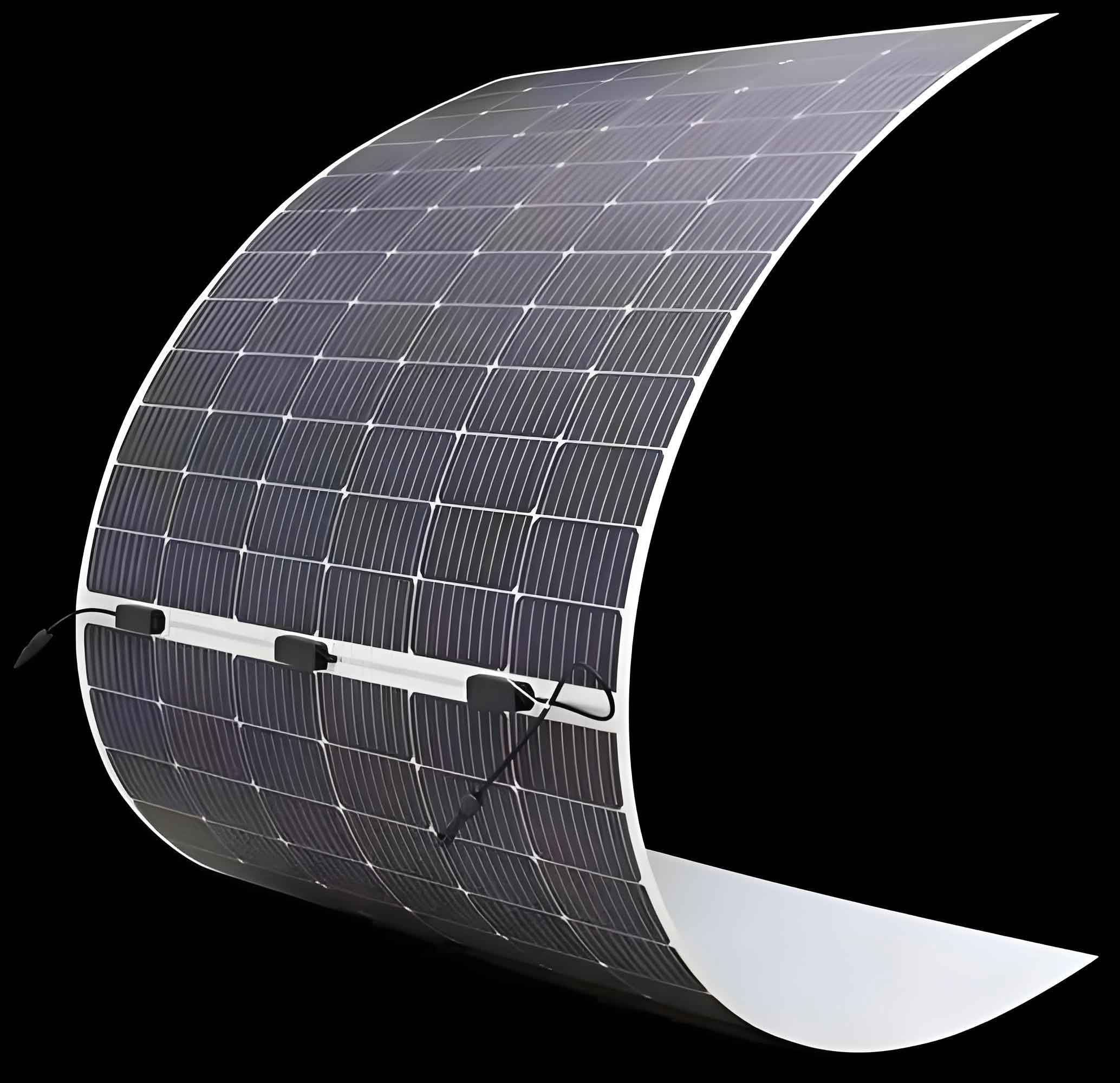
The core technical advantage of a thin film solar panel lies in its manufacturing process and material science. Unlike rigid crystalline silicon panels, thin films are created by depositing photovoltaic active layers—such as Cadmium Telluride (CdTe), Copper Indium Gallium Selenide (CIGS), or amorphous silicon (a-Si)—onto substrates like glass, metal, or flexible polymers. This process results in a uniform, monolithic appearance and allows for cell isolation and interconnection that minimizes losses from partial shading, a common issue in built environments. The key performance metric, the power conversion efficiency (η), for a commercial thin film solar panel can be modeled as a function of incident irradiance (G) and cell temperature (Tc):
$$η = η_{STC} \cdot (1 + β_{P} \cdot (T_{c} – T_{STC})) \cdot \frac{G}{G_{STC}}$$
where ηSTC is the efficiency under Standard Test Conditions (STC: 1000 W/m², 25°C), βP is the temperature coefficient (typically around -0.2% to -0.3%/°C for thin film, which is better than crystalline silicon’s ~-0.4%/°C), TSTC is 25°C, and GSTC is 1000 W/m². The lower temperature coefficient means a thin film solar panel retains a higher percentage of its rated output on hot rooftop days, a significant practical advantage.
Designing a comfort home powered by BIPV requires a holistic, systems-engineering approach. The BIPV system is the primary energy harvester, but its electricity must be stored, managed, and efficiently distributed to various loads. The core system architecture can be broken down as follows:
| System Component | Function | Key Considerations for BIPV Integration |
|---|---|---|
| BIPV Envelope (Roof/Facade) | Energy generation; Weather protection; Architectural expression. | Optimizing tilt/azimuth; Balancing active area with aesthetic/transparency needs; Ensuring building code compliance (wind, fire). |
| Power Conversion & Management | DC-to-AC conversion; Maximum Power Point Tracking (MPPT); System monitoring. | Using micro-inverters or DC-optimizers to mitigate shading on individual thin film solar panel strings; Integrating with home energy management system (HEMS). |
| Energy Storage (Battery) | Stores excess solar energy for use at night or during grid outages. | Sizing based on load profile and desired autonomy; DC-coupling vs. AC-coupling; Battery chemistry (Li-ion, LFP). |
| Thermal Comfort System | Space heating, cooling, and ventilation. | Prioritizing high-efficiency electric systems: Air/Air or Air/Water Heat Pumps. Coefficient of Performance (COP) is critical: $$Q_{heat} = P_{elect} \cdot COP$$ where a higher COP means more heat per kWh consumed. |
| Domestic Hot Water (DHW) | Provides hot water for sanitation. | Using a photovoltaic-thermal (PVT) hybrid thin film solar panel or a standard PV array to power an efficient heat pump water heater. |
| Ventilation with Heat Recovery (HRV/ERV) | Provides fresh air while recovering energy from exhaust air. | Ensuring the unit is powered by PV; Balancing airflow rates for optimal indoor air quality. |
The most significant energy load in a home, especially in colder climates, is space heating. The forum passionately discussed moving from fossil-fuel-based heating to clean electric solutions, directly powered by the BIPV array. The cornerstone technology for this is the heat pump. Its efficiency, expressed as the Coefficient of Performance (COP) for heating, fundamentally changes the solar array sizing requirement. Consider a home with an annual heating demand (QH) of 10,000 kWh. Using a gas boiler with 90% efficiency would require approximately 11,111 kWh of gas energy. Using an air-source heat pump with a seasonal average COP of 3.0, the electrical energy required from the BIPV system is only:
$$P_{elect, heat} = \frac{Q_{H}}{COP} = \frac{10,000 \text{ kWh}}{3.0} \approx 3,333 \text{ kWh}$$
This 70% reduction in required electrical energy compared to direct electric resistance heating (COP=1) makes it feasible for a roof-integrated BIPV system to cover a major portion, if not all, of the heating demand. The required peak power (PBIPV) of the BIPV array can be estimated by considering the winter energy balance. Let Esolar, winter be the solar energy yield per installed kWp during the worst month. The array size must satisfy:
$$P_{BIPV} \geq \frac{P_{elect, heat, month} + P_{other loads, month}}{E_{solar, winter} \cdot PR}$$
where PR (Performance Ratio, typically 0.75-0.85) accounts for system losses. A thin film solar panel, with its better low-light and high-temperature response, often delivers a higher PR in real-world, integrated conditions compared to its STC rating, making it particularly suitable for this demanding application.
Beyond electricity, a fascinating application is the photovoltaic-thermal (PVT) hybrid collector, which can be elegantly realized using thin film solar panel technology. A PVT module generates electricity while simultaneously capturing waste heat from the PV cells via a fluid (air or liquid). This improves the electrical efficiency by cooling the cells and provides a source of low-grade thermal energy. The total useful energy output (Qtotal) per unit area is:
$$Q_{total} = G \cdot (η_{el} + η_{th})$$
where ηel is the electrical efficiency and ηth is the thermal efficiency. This thermal energy can be used for pre-heating domestic hot water or space heating, further increasing the overall energy yield of the building envelope. The following table compares key characteristics of different PV technologies in the context of BIPV for comfort homes:
| Parameter | Monocrystalline Si (Standard) | Thin Film Solar Panel (CIGS/CdTe) | BIPV-optimized Thin Film Solar Panel |
|---|---|---|---|
| Efficiency (ηSTC) | High (19-22%) | Moderate (13-19%) | Moderate (10-16%) |
| Temperature Coefficient (βP) | Poor (~ -0.4%/°C) | Better (~ -0.2 to -0.3%/°C) | Better (~ -0.2 to -0.3%/°C) |
| Low-Light Performance | Good | Excellent | Excellent |
| Aesthetic Integration | Limited (blue/black, rigid) | Good (uniform, black, some flexibility) | Superior (custom colors, transparency, flexible substrates) |
| Weight | Heavy | Light | Very Light |
| Shading Tolerance | Poor (requires bypass diodes) | Good (monolithic structure) | Very Good |
| Ideal BIPV Application | Large roof areas with optimal orientation | Curved roofs, facades, partial-shade conditions | Skylights, spandrels, custom architectural elements |
From an economic perspective, the analysis must shift from simple Levelized Cost of Energy (LCOE) to a holistic Life-Cycle Cost (LCC) analysis that includes dual functions. When a thin film solar panel replaces a conventional building material, its cost is offset by the avoided cost of that material (e.g., granite cladding, metal roofing, glass curtain wall). The effective net cost of the BIPV system (Cnet) becomes:
$$C_{net} = C_{BIPV} – C_{avoided\ material} – \sum_{t=1}^{n} \frac{S_{t}}{(1+d)^{t}}$$
where CBIPV is the installed cost of the BIPV system, Cavoided material is the cost of the conventional material it replaces, St represents the savings from avoided electricity purchases (and possibly sold electricity) in year t, d is the discount rate, and n is the system lifetime. This “dual-revenue” model—saving on materials and generating energy—is key to improving financial viability. Furthermore, the value of a comfort home—with its guaranteed low energy bills, resilience during grid outages, and improved indoor environmental quality—commands a premium in the real estate market, an aspect often overlooked in standard ROI calculations.
However, the path to widespread adoption is not without obstacles. First, there is a significant knowledge gap among architects, builders, and contractors. Integrating a thin film solar panel into a building envelope requires understanding of both electrical systems and building physics (thermal bridging, waterproofing, structural attachment). Second, regulatory and permitting processes are often outdated, treating BIPV as an electrical appliance rather than a construction product. We need new building codes and standards that recognize and facilitate BIPV integration. Third, while costs are falling, the initial investment remains higher than conventional construction, necessitating innovative financing models like green mortgages, Property Assessed Clean Energy (PACE) programs, or leasing models specifically for building-integrated solutions.
Looking forward, the true potential lies in smart integration. The BIPV system will be the cornerstone of a digital, active energy management system. Data from the thin film solar panel array (generation forecast), smart meters, weather stations, and IoT sensors within the comfort home (occupancy, temperature, air quality) will feed into an AI-driven Home Energy Management System (HEMS). This HEMS will optimize energy flows in real-time: directing surplus solar power to charge the battery or pre-heat water, adjusting the thermostat based on predicted solar yield, and even managing the charging of an electric vehicle. The home becomes an intelligent, grid-interactive entity that maximizes self-consumption of locally produced solar energy.
In conclusion, the vision of a fully integrated, energy-autonomous comfort home is within our technical and economic reach. The forum I attended was a microcosm of the broader collaboration needed between the photovoltaic industry, building material scientists, architects, HVAC engineers, and policymakers. The versatile, high-performing thin film solar panel is a critical enabling technology for this vision, breaking down the traditional barriers between energy system and building skin. By embracing a holistic design philosophy where every surface is considered for its energy-harvesting potential, we can move decisively towards a built environment that nourishes its inhabitants, respects planetary boundaries, and operates in elegant harmony with nature. The journey from concept to commonplace will require persistence, innovation, and cross-disciplinary dialogue, but the destination—a world of sustainable, comfortable, and self-reliant homes—is undoubtedly worth the effort.