
In the context of large-scale energy storage systems, which are pivotal for integrating renewable energy sources, lithium-ion batteries have emerged as a cornerstone technology due to their high energy density, long cycle life, and low self-discharge rates. Among these, the LiFePO4 battery is particularly favored for electrochemical storage units because of its enhanced safety profile and robust electrochemical performance. However, safety concerns persist, as abusive conditions can lead to battery failure, thermal runaway, and potentially catastrophic fires or explosions. Thermal runaway in LiFePO4 batteries involves complex exothermic reactions, including SEI decomposition, separator melting, electrode decomposition, and internal short circuits, accompanied by the release of significant heat and flammable gases. These gases, collectively termed battery thermal runaway vent gas (BVG), primarily consist of H2, CO, CO2, and small hydrocarbons like CH4 and C2H4. Understanding the flammability characteristics of BVG is crucial for risk assessment and fire safety engineering. This study focuses on analyzing the flammability limits of thermal runaway gas from LiFePO4 batteries under varying states of charge (SOC) and capacities, employing experimental measurements, computational simulations, and theoretical calculations to elucidate key factors influencing fire hazards.
The inherent safety of LiFePO4 battery chemistry does not eliminate thermal runaway risks entirely. During thermal runaway, the vented gases can mix with air and ignite upon contact with hot particles, leading to fires or explosions. The flammability limit, defined as the concentration range of a fuel-oxidizer mixture within which flame propagation is sustained, is a critical parameter. It comprises the lower flammability limit (LFL) and upper flammability limit (UFL), expressed as volume percentages of fuel in the mixture. Prior research has investigated BVG from various lithium-ion batteries, indicating that gas composition and flammability are influenced by factors such as SOC, chemistry, and environmental conditions. For instance, studies on NCM and LCO batteries show that higher SOC typically reduces the LFL and increases fire risk. However, comprehensive data on LiFePO4 battery systems, especially regarding the effects of capacity and SOC on gas composition and flammability limits, remain limited. This work aims to address this gap by systematically examining thermal runaway gas from LiFePO4 batteries with different capacities and SOC levels, providing insights into safer battery design and storage practices.
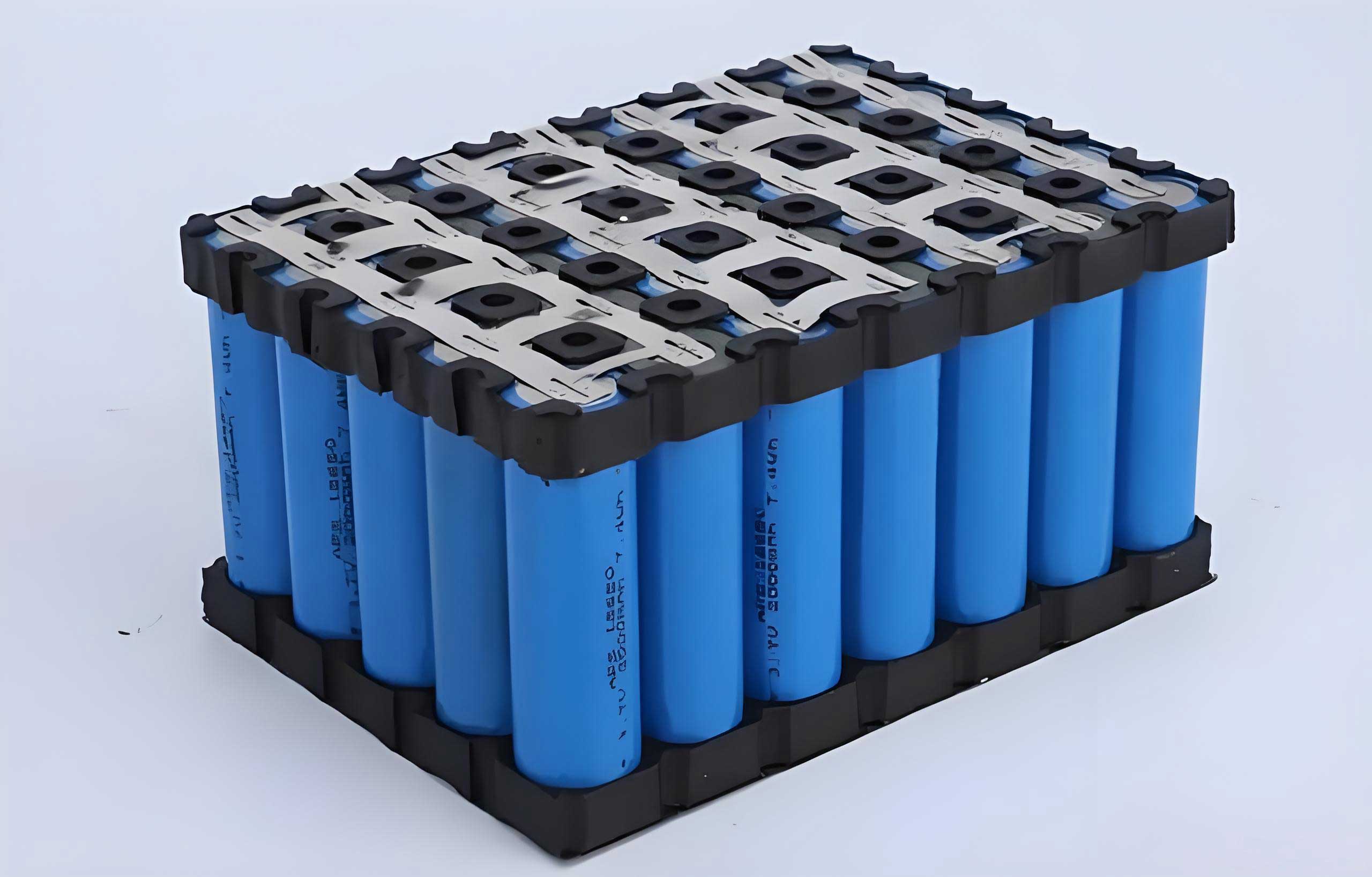
To investigate the flammability limits of thermal runaway gas from LiFePO4 batteries, we conducted a series of experiments using a sealed pressure vessel. Three LiFePO4 battery samples were selected, varying in capacity and SOC, as detailed in Table 1. The samples included a high-capacity LiFePO4 battery at full charge, a medium-capacity LiFePO4 battery at full charge, and a medium-capacity LiFePO4 battery at a lower SOC. Each LiFePO4 battery was preconditioned by charging and discharging cycles under controlled conditions (25°C, ≤90% humidity, 86–106 kPa). A 500 W insulated heating pad was attached to the large surface of the LiFePO4 battery to trigger thermal runaway, with thermocouples placed at the battery surface and vent to monitor temperature. The LiFePO4 battery was enclosed in a metal chamber to contain released gases. Heating continued until thermal runaway criteria were met: a voltage drop exceeding 25% of initial voltage or temperature surpassing the maximum operating temperature, coupled with a temperature rise rate >1°C/s for over 3 seconds. After cooling, gases were collected and analyzed via gas chromatography to determine composition.
| Sample ID | Type | Capacity (Ah) | State of Charge (SOC, %) |
|---|---|---|---|
| 1# | Prismatic | 180 | 100 |
| 2# | Prismatic | 134 | 100 |
| 3# | Prismatic | 134 | 30 |
Computational simulations were performed using the PREMIX code, a one-dimensional laminar premixed flame model, modified to incorporate radiative heat losses via the statistical narrow-band (SNB) model. This adjustment is essential for accurate flammability limit predictions near extinction points. The energy equation with radiation source term is given by:
$$ m \frac{dT}{dx} – \frac{1}{c_p} \frac{d}{dx} \left( \lambda \frac{dT}{dx} \right) + \frac{1}{c_p} \sum_{k=1}^{K} \rho Y_k V_k c_{pk} \frac{dT}{dx} + \frac{1}{c_p} \sum_{k=1}^{K} \dot{\omega}_k h_k w_k – \dot{q}_r = 0 $$
where \( m \) is the mass flux, \( T \) is temperature, \( c_p \) is specific heat, \( \lambda \) is thermal conductivity, \( \rho \) is density, \( Y_k \) is mass fraction, \( V_k \) is diffusion velocity, \( \dot{\omega}_k \) is reaction rate, \( h_k \) is enthalpy, \( w_k \) is molecular weight, and \( \dot{q}_r \) is radiation heat loss. The LLNL chemical mechanism, encompassing 116 species and reactions involving C, H, O, and N, was employed to model combustion kinetics. To resolve solution discontinuities near flammability limits, the single-point temperature control method was applied. Additionally, the Le-Chatelier (L-C) formula was used for theoretical flammability limit calculations:
$$ FL_{\text{mix}} = \left( \sum_{i=1}^{n} \frac{X_i}{FL_i} \right)^{-1} \times 100\% $$
where \( FL_{\text{mix}} \) is the mixed gas flammability limit, \( FL_i \) is the flammability limit of component \( i \), and \( X_i \) is its volume fraction. For mixtures with inert gases like CO2, adjusted limits were derived from standard curves before applying the L-C formula.
Thermal runaway characteristics varied among the LiFePO4 battery samples. The high-capacity LiFePO4 battery (1#) exhibited a longer time to thermal runaway and a lower peak temperature compared to the medium-capacity LiFePO4 battery (2#) at full SOC. The low-SOC LiFePO4 battery (3#) showed significantly reduced temperature rise rates and maximum temperatures, underscoring the pronounced impact of SOC on thermal behavior. Gas chromatography results, after removing atmospheric O2 and N2, revealed composition differences, as summarized in Table 2. The LiFePO4 battery with higher capacity had slightly lower H2 and CO2 content but higher hydrocarbon levels. Notably, the low-SOC LiFePO4 battery produced gas with substantially more CO2 and less H2, indicating SOC’s dominant role over capacity in dictating gas composition.
| Component | Sample 1# (180 Ah, 100% SOC) | Sample 2# (134 Ah, 100% SOC) | Sample 3# (134 Ah, 30% SOC) |
|---|---|---|---|
| H2 | 32.520 | 37.572 | 19.176 |
| CO2 | 20.880 | 23.039 | 42.829 |
| CO | 11.980 | 14.171 | 20.055 |
| CH4 | 13.490 | 10.433 | 5.421 |
| C2H6 | 3.830 | 2.501 | 1.872 |
| C2H4 | 11.580 | 9.654 | 9.572 |
| C3H8 | 1.380 | 0.568 | 0.309 |
| C3H6 | 3.820 | 1.905 | 0.765 |
Flammability limits were simulated at standard conditions (25°C, 0.1 MPa). The laminar flame speed as a function of gas concentration displayed a characteristic shape, with peaks near stoichiometric mixtures. For the LiFePO4 battery samples, flame speeds peaked at 60 cm/s, 63 cm/s, and 37 cm/s for samples 1#, 2#, and 3#, respectively, reflecting the inhibiting effect of high CO2 content in the low-SOC LiFePO4 battery. The flammability limits, determined from inflection points in flame speed curves, are compared with L-C formula predictions in Table 3. The LFL values from simulations were 6.7%, 8.0%, and 10.8% for samples 1#, 2#, and 3#, respectively, while UFL values were 41.1%, 45.1%, and 44.8%. The L-C calculations yielded slightly lower LFLs except for sample 3#, where discrepancies in UFL were larger due to high CO2 content. This highlights the LiFePO4 battery’s reduced fire risk at lower SOC, as a higher LFL implies less susceptibility to ignition.
| Sample ID | Simulation LFL (%) | L-C LFL (%) | Simulation UFL (%) | L-C UFL (%) |
|---|---|---|---|---|
| 1# | 6.7 | 5.7 | 41.1 | 35.3 |
| 2# | 8.0 | 5.9 | 45.1 | 43.9 |
| 3# | 10.8 | 9.1 | 44.8 | 53.6 |
The influence of initial temperature on flammability limits was analyzed using empirical linear relations derived from prior studies. For thermal runaway gas from LiFePO4 batteries, the LFL decreases and UFL increases with rising temperature, broadening the flammable range and elevating hazard potential. The relationships are expressed as:
$$ \text{LFL} = L_{298} – 0.012 \times (T – 298) $$
$$ \text{UFL} = U_{298} + 0.034 \times (T – 298) $$
where \( L_{298} \) and \( U_{298} \) are limits at 298 K (25°C), and \( T \) is temperature in Kelvin. For instance, a 100°C increase reduces LFL by approximately 1.2% and increases UFL by 3.4%, making LiFePO4 battery vent gas more flammable under hot conditions. This temperature dependence underscores the importance of thermal management in LiFePO4 battery systems to mitigate fire risks during thermal runaway events.
Discussion of the results emphasizes the critical role of SOC in governing the safety of LiFePO4 batteries. Capacity variations had minimal impact on gas composition and flammability, whereas lower SOC led to higher CO2 production, which acts as a diluent, raising the LFL and narrowing the flammable range. This aligns with the inherent stability of LiFePO4 battery chemistry at partial charge states. The simulation and L-C methods showed good agreement for LFL predictions, but deviations in UFL for high-CO2 mixtures suggest that theoretical models may require refinement for inert-rich gases. From a safety perspective, storing LiFePO4 batteries at moderate SOC levels, such as 50%, can balance electrochemical performance and fire risk, as lower SOC reduces thermal severity and increases ignition resistance. Furthermore, the inclusion of flame retardants or ventilation systems in LiFePO4 battery enclosures could enhance safety by diluting or dispersing vented gases.
In conclusion, this study comprehensively evaluates the flammability limits of thermal runaway gas from LiFePO4 batteries, integrating experimental data, computational simulations, and theoretical formulas. The LiFePO4 battery’s gas composition is strongly influenced by SOC, with low-SOC conditions yielding more CO2 and higher LFL values, thereby reducing fire hazards. Capacity effects are negligible in comparison. Simulations using modified PREMIX code provide reliable flammability limits, corroborated by L-C calculations for most cases. Temperature elevation widens the flammable range, highlighting the need for cooling strategies in LiFePO4 battery applications. These findings contribute to safer design and operation of energy storage systems utilizing LiFePO4 batteries, reinforcing their viability for large-scale renewable integration. Future work could explore additional factors such as aging effects, pressure variations, and mixed battery chemistries to further optimize safety protocols for LiFePO4 battery deployments.
The robustness of LiFePO4 battery technology in energy storage is underscored by its thermal runaway gas properties. As the demand for LiFePO4 battery systems grows, understanding these flammability characteristics becomes paramount for risk assessment and mitigation. Continued research on LiFePO4 battery safety will enable advancements in battery management systems and fire suppression techniques, ensuring reliable and secure energy storage solutions. The methodologies applied here—combining experimental analysis with advanced simulations—offer a framework for assessing other battery types, but the unique attributes of LiFePO4 battery chemistry warrant focused attention. Ultimately, promoting the safe use of LiFePO4 batteries through informed practices will support the global transition to sustainable energy infrastructure.