
As a researcher deeply involved in the field of energy storage safety, I have observed the rapid expansion of power grids and the large-scale integration of renewable energy sources like wind and solar. Energy storage technology plays a pivotal role in ensuring grid stability and security. Among various forms, electrochemical energy storage, particularly using lithium iron phosphate (LiFePO4 or lifepoe4) batteries, has become the mainstream due to its widespread application, technological maturity, and superior stability. However, the increasing number of fire incidents caused by thermal runaway in these lifepoe4 battery systems has raised significant public concern. In this article, I will explore the fire characteristics of lifepoe4 batteries, evaluate different fire suppression methods, and propose comprehensive design strategies based on experimental studies.
The safety of energy storage systems is paramount. Accidents often occur due to a lack or delay of warnings, leading to thermal runaway initiated by battery faults or BMS failures. Without effective protection measures, fires can spread rapidly within a battery container or station. Conventional firefighting systems are not tailored for battery fires, making early suppression challenging and often resulting in total loss. Therefore, controlling fire propagation during thermal runaway and minimizing damage is the core focus of fire protection design for lifepoe4 battery energy storage stations.
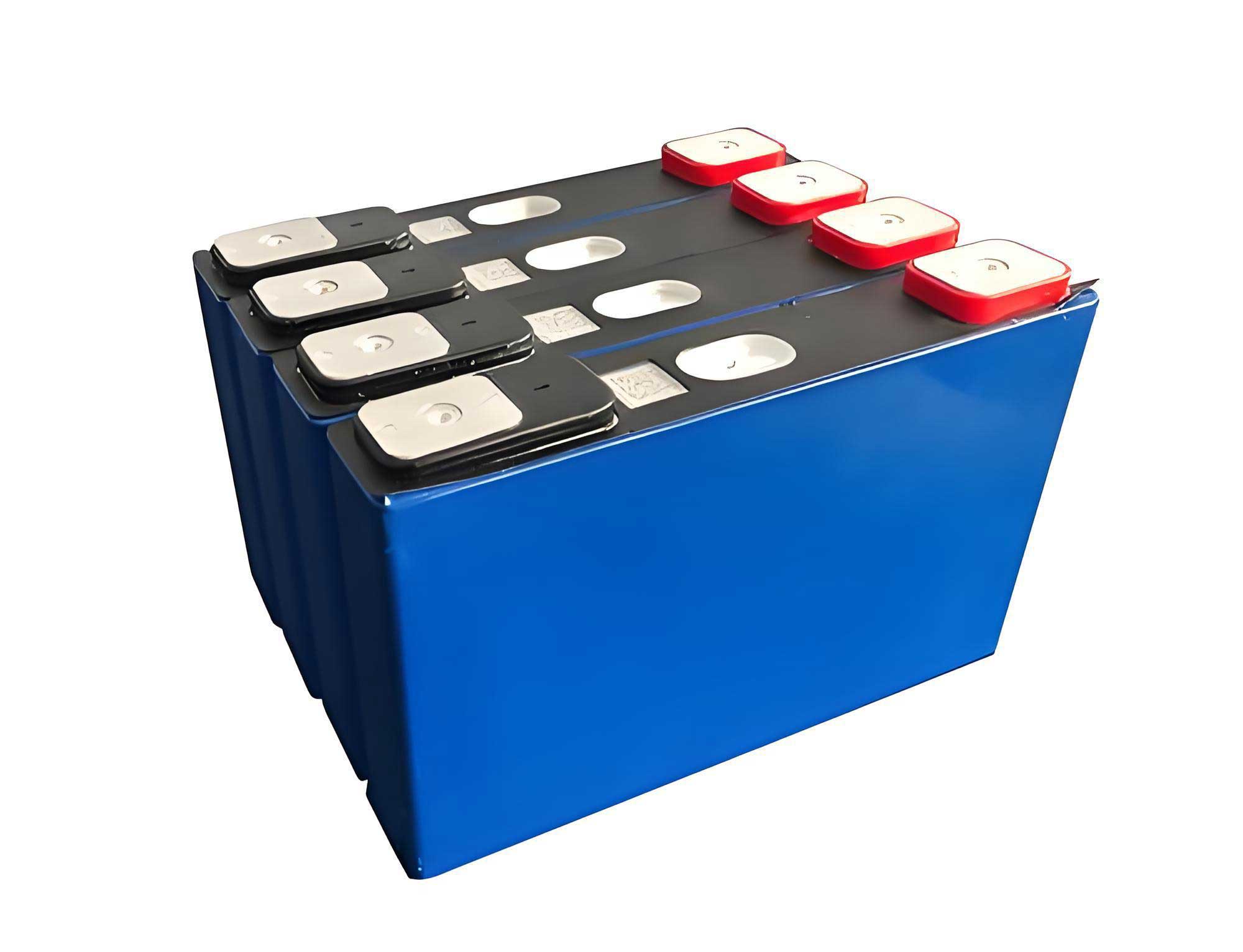
Understanding the fire behavior of lifepoe4 batteries is crucial. Although lifepoe4 batteries are generally stable, thermal runaway incidents are not uncommon. Statistics indicate that approximately 72% of energy storage accidents happen during construction, commissioning, or within the first two years of operation, highlighting vulnerabilities in early lifecycle stages. The primary mechanism for lifepoe4 battery ignition involves external factors damaging the separator, leading to internal short circuits, heat generation, and eventual thermal runaway. These external factors include mechanical damage (e.g., punctures, impacts), high temperatures causing separator meltdown, overcharging or short circuits piercing the separator, and quality issues like aging, short circuits, or electrolyte leakage.
Unlike conventional fires, lifepoe4 battery fires are driven by exothermic chemical reactions within the cell. Observations from combustion tests reveal a distinct staged progression:
- Internal heating and expansion of the lifepoe4 battery.
- Initial ignition and jet fire (first ejection).
- Stable combustion phase.
- Multiple episodes of flame and smoke ejection.
- Gradual extinguishment.
This phased nature complicates fire suppression, as simply quenching visible flames may not address underlying thermal reactions.
To quantify these phenomena, consider the heat release rate during thermal runaway. The total energy released can be modeled using the Arrhenius equation for reaction kinetics:
$$ k = A e^{-\frac{E_a}{RT}} $$
where \( k \) is the rate constant, \( A \) is the pre-exponential factor, \( E_a \) is the activation energy, \( R \) is the universal gas constant, and \( T \) is the temperature. For a lifepoe4 battery, the exothermic reactions involve decomposition of electrolytes and electrode materials. The heat generation rate \( \dot{Q} \) can be expressed as:
$$ \dot{Q} = \Delta H \cdot \frac{dm}{dt} $$
where \( \Delta H \) is the enthalpy change and \( \frac{dm}{dt} \) is the mass loss rate. Integrating this over time gives the total fire energy, which is critical for designing cooling systems.
Fire model tests are essential to evaluate suppression agents. Common dry powder extinguishers can quickly put out visible flames in lifepoe4 battery fires but fail to inhibit thermal runaway, leading to frequent reignition. Based on manufacturer practices, extensive experiments were conducted comparing different media: gas extinguishing systems, water mist systems, and a combined gas-water mist approach. Tests involved placing battery modules in sealed compartments, inducing thermal runaway via overcharging, and applying suppression agents to observe effectiveness.
The results are summarized in the table below, which compares key performance metrics:
| Fire Suppression Method | Flame Extinguishment Time (s) | Reignition Prevention | Cooling Capacity | Post-fire Battery Usability |
|---|---|---|---|---|
| Gas (e.g., HFC-227ea, FK-5-1-12) | 15-30 | Poor | Low | Low |
| Water Mist Alone | 30-60 | Good (with sustained spray) | High | Moderate to High |
| Gas + Water Mist | 20-40 | Excellent | Very High | High |
From the data, gas-based systems like heptafluoropropane or perfluorohexanone can extinguish open flames but cannot prevent reignition due to inadequate cooling. Water mist systems, when applied continuously, not only suppress flames but also cool the lifepoe4 battery cells, effectively halting thermal runaway. The combined approach—using gas to quickly knock down flames followed by water mist for cooling—proves most effective in fully extinguishing fires and preventing recurrence.
A critical concern for operators is whether unaffected batteries in the same enclosure remain functional after water mist application. In one experiment, three vertically stacked BYD C15FHNE 25.6V/326Ah lifepoe4 battery modules were equipped with intrusive water mist nozzles. After two hours of spray, the modules showed no adverse effects on normal operation, confirming that water mist does not compromise healthy lifepoe4 batteries. This finding supports the economic viability of such systems, as they minimize loss by preserving assets.
The ideal extinguishing agent for lifepoe4 battery fires must combine rapid flame suppression with sustained cooling capability. Water-based agents excel due to their high heat absorption capacity. The cooling efficiency can be quantified using Newton’s law of cooling:
$$ \frac{dT}{dt} = -h A (T – T_{\text{env}}) $$
where \( \frac{dT}{dt} \) is the rate of temperature change, \( h \) is the heat transfer coefficient, \( A \) is the surface area, \( T \) is the battery temperature, and \( T_{\text{env}} \) is the ambient temperature. For a lifepoe4 battery pack, the total heat removed by water mist can be calculated as:
$$ Q_{\text{removed}} = \int m_w c_w \Delta T_w \, dt $$
where \( m_w \) is the mass of water, \( c_w \) is the specific heat capacity of water, and \( \Delta T_w \) is the temperature rise of the water. This demonstrates why water mist is superior for mitigating thermal runaway in lifepoe4 battery systems.
Based on these insights, I propose a multi-layered fire protection design for lifepoe4 battery energy storage stations. The design integrates existing gas-based systems with module-level water mist systems. Alternatively, flooding the battery container with water can solve reignition issues, but this approach may cause greater damage to unaffected lifepoe4 batteries. While the water mist solution requires higher initial investment, it offers better post-fire recovery, reducing overall losses. The design framework includes:
- Early detection systems using temperature and gas sensors.
- Automatic activation of gas suppression for initial flame knockdown.
- Sustained water mist cooling to prevent thermal runaway propagation.
- Regular maintenance and testing of lifepoe4 battery health to preempt failures.
To further optimize, we can model fire spread within a lifepoe4 battery array. Consider a simplified thermal network model where each cell is a node. The heat transfer between adjacent lifepoe4 battery cells can be described by:
$$ C_i \frac{dT_i}{dt} = P_i + \sum_{j} k_{ij} (T_j – T_i) $$
where \( C_i \) is the heat capacity of cell \( i \), \( T_i \) is its temperature, \( P_i \) is the internal heat generation (positive during thermal runaway), and \( k_{ij} \) is the thermal conductance between cells \( i \) and \( j \). This model helps predict hotspot formation and guide nozzle placement for water mist systems.
Another aspect is the electrochemical stability of lifepoe4 batteries. The voltage profile during charging/discharging can be analyzed using the Nernst equation:
$$ E = E^0 – \frac{RT}{nF} \ln Q $$
where \( E \) is the cell potential, \( E^0 \) is the standard potential, \( n \) is the number of electrons transferred, \( F \) is Faraday’s constant, and \( Q \) is the reaction quotient. Abnormalities in this profile, detectable via BMS, can serve as early warnings for lifepoe4 battery failure.
In terms of system architecture, the following table outlines key components and their functions in a lifepoe4 battery energy storage station fire protection system:
| Component | Function | Specification |
|---|---|---|
| Thermal Sensors | Monitor lifepoe4 battery temperature | Range: -20°C to 200°C; Response time < 5s |
| Gas Detection | Detect electrolytes or combustion gases | Sensitivity: 1 ppm for CO/H₂ |
| Gas Suppression System | Rapid flame extinguishment | Agent: HFC-227ea/FK-5-1-12; Discharge time < 10s |
| Water Mist System | Cooling and reignition prevention | Droplet size: 50-200 µm; Flow rate: 0.5 L/min per nozzle |
| Control Unit | Integrate signals and activate suppression | Redundant PLC with manual override |
Economic analysis is also vital. The total cost of ownership for a lifepoe4 battery energy storage station includes initial investment, maintenance, and potential loss from fires. Implementing a combined gas-water mist system may increase upfront costs by 15-20%, but it can reduce fire-related losses by over 80%, offering a favorable return on investment. The net present value (NPV) can be calculated as:
$$ \text{NPV} = \sum_{t=0}^{N} \frac{C_t}{(1 + r)^t} $$
where \( C_t \) are the cash flows (savings from reduced losses minus costs) and \( r \) is the discount rate. For a typical 10 MWh lifepoe4 battery station, the NPV of adding advanced fire protection is positive within 3-5 years.
Future research should focus on improving early warning algorithms for lifepoe4 battery failures. Machine learning models trained on operational data can predict thermal runaway before it occurs. Additionally, developing new coolant materials with higher thermal conductivity could enhance water mist efficiency. For instance, nanofluids or phase-change materials might offer better heat dissipation for lifepoe4 battery packs.
In conclusion, the fire safety of lifepoe4 battery energy storage stations hinges on understanding thermal runaway dynamics and employing tailored suppression strategies. Based on experimental evidence, a hybrid approach combining gas for quick flame knockdown and water mist for sustained cooling is highly effective. This design not only mitigates fire risks but also preserves the functionality of unaffected lifepoe4 batteries, minimizing economic losses. As the adoption of lifepoe4 battery energy storage grows, continuous innovation in fire protection will be essential to ensure safe and reliable grid integration.
To encapsulate key parameters, here is a summary of lifepoe4 battery fire characteristics and suppression requirements:
| Parameter | Typical Value for LiFePO4 Battery | Implication for Fire Design |
|---|---|---|
| Thermal Runaway Onset Temperature | 150-250°C | Detection threshold should be set below 100°C |
| Heat Release Rate Peak | 5-10 kW per cell | Cooling capacity must exceed this rate |
| Total Fire Energy per Module | 10-50 MJ | Suppression system must absorb this energy |
| Reignition Probability after Gas Suppression | 60-80% | Mandates additional cooling |
| Water Mist Cooling Efficiency | Reduces temperature by 5-10°C/s | Sufficient to halt thermal runaway |
Ultimately, protecting lifepoe4 battery energy storage stations requires a holistic approach that blends technology, design, and economics. By prioritizing fire safety, we can harness the full potential of lifepoe4 batteries for a sustainable energy future.