
As a researcher in fire safety engineering, I have been closely monitoring the rapid expansion of energy storage technologies, particularly those based on lithium-ion batteries. Among these, LiFePO4 battery systems have gained widespread adoption due to their inherent stability and cost-effectiveness. Prefabricated cabin-style energy storage stations, which utilize containerized structures to house battery modules, have become a popular solution for grid-scale applications. However, the消防安全 of these installations has emerged as a critical concern, especially in light of recent fire incidents globally. In this article, I will delve into the fire hazards associated with LiFePO4 battery modules, analyze key防火 design principles, and propose strategies to enhance safety. Throughout, I will emphasize the importance of understanding the unique behavior of LiFePO4 battery systems.
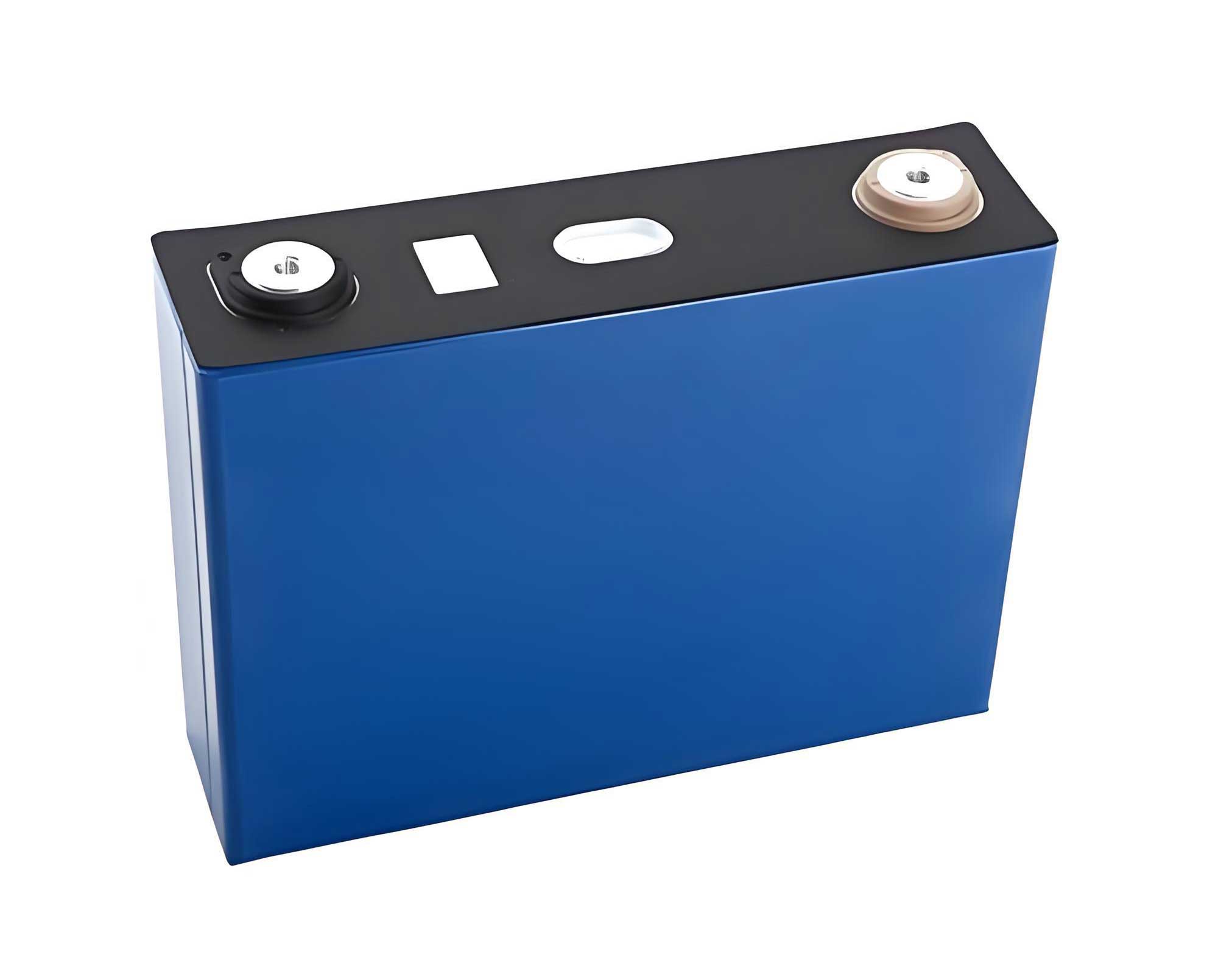
The core of any fire safety assessment for LiFePO4 battery energy storage stations lies in comprehending the combustion characteristics of the battery modules under fault conditions. One of the most likely scenarios leading to fire is overcharging, which can occur due to failures in the battery management system (BMS). To investigate this, I conducted a series of experiments on a standard LiFePO4 battery module, similar to those used in prefabricated cabins. The module consisted of 32 prismatic cells in a 4-parallel 8-series configuration, with a nominal voltage of 25.6 V and a capacity of 2752 Ah, storing approximately 8.8 kWh of energy. The test involved placing a single module inside a模拟 prefabricated cabin and subjecting it to constant-current overcharging at a rate of 0.5C (172 A).
The observed combustion process can be mathematically modeled to understand the thermal runaway progression. The rate of heat generation during thermal runaway can be described by an Arrhenius-type equation:
$$r = A \exp\left(-\frac{E_a}{RT}\right)$$
where \( r \) is the reaction rate, \( A \) is the pre-exponential factor, \( E_a \) is the activation energy, \( R \) is the universal gas constant, and \( T \) is the temperature. This equation helps explain the exponential increase in heat release once critical temperature thresholds are crossed in LiFePO4 battery cells.
The fire development followed three distinct stages, as summarized in Table 1. These stages highlight the progressive nature of thermal runaway in LiFePO4 battery modules, which is crucial for designing effective fire detection and suppression systems.
| Stage | Time from Start | Key Phenomena | Implications for Fire Safety |
|---|---|---|---|
| Initial Thermal Runaway | ~16 hours 41 minutes | First battery safety vent opens, releasing minimal smoke; detectable by specific gas sensors (e.g., H₂, CO). | Opportunity for early warning and preventive action (e.g., power cutoff). |
| Severe Thermal Runaway | ~24 hours 12 minutes to 26 hours 50 minutes | Multiple vents open violently, ejecting combustible gases, electrolyte, and solid residues; cabin fills with dense white smoke. | Smoke detectors activate; temperature remains low, so heat detectors may not trigger; risk of explosive gas mixture formation. |
| Sustained Combustion | From ~26 hours 50 minutes onward | Initial deflagration or explosion-like flame, followed by steady burning for over 30 minutes; gradual decay of fire. | Heat detectors activate; significant fire load requiring suppression and cooling. |
It is noteworthy that when the overcharging was halted immediately after the first gas detection (early in Stage 1), only a few additional vents opened, and no fire occurred. This underscores the critical importance of早期预警 in preventing catastrophic failures in LiFePO4 battery systems.
Building on these experimental insights, I now turn to the key防火 design considerations for prefabricated cabin LiFePO4 battery energy storage stations. Each aspect must be addressed to mitigate the unique risks posed by LiFePO4 battery technology.
Fire Hazard Classification of LiFePO4 Batteries
Determining the appropriate fire hazard classification is foundational for防火 design. Current standards, such as the Chinese code for electrochemical energy storage stations, often categorize lithium-ion batteries, including LiFePO4 battery types, under low-hazard classes. However, based on my research, LiFePO4 battery modules, when subjected to overcharge or thermal abuse, exhibit fire behaviors that surpass those of ordinary combustible solids (Class C in some systems). The energy density and potential for thermal runaway suggest that LiFePO4 battery systems should be classified at least as a moderate fire hazard, comparable to or greater than Class C materials. This reclassification would mandate stricter防火 measures in design codes.
Fire Separation Distances for Battery Cabins
The arrangement of prefabricated cabins on-site significantly influences fire spread risks. I recommend a multi-tiered approach to防火间距, informed by both international practices and the specific burning characteristics of LiFePO4 battery modules. The heat release rate during a LiFePO4 battery fire can be estimated using:
$$\dot{Q} = \chi \dot{m} \Delta H_c$$
where \( \dot{Q} \) is the heat release rate, \( \chi \) is the combustion efficiency, \( \dot{m} \) is the mass loss rate, and \( \Delta H_c \) is the heat of combustion. This formula helps quantify the radiant heat flux between cabins, guiding spacing decisions.
Table 2 outlines recommended防火间距 based on cabin orientation and grouping considerations. These distances aim to prevent flame impingement and reduce radiant heat exposure, while also accommodating firefighting access.
| Scenario | Recommended Minimum Distance | Rationale | Notes |
|---|---|---|---|
| Between cabin short sides (door ends) | ≥ 10 meters | Higher risk of flame ejection during deflagration; allows for firefighting operations. | Based on observed jetting flames in tests. |
| Between cabin long sides | ≥ 6 meters | Primarily radiant heat transfer; aligns with some international guidelines (e.g., NFPA). | Can be reduced with fire barriers (1-hour rating). |
| Cabin group to other site buildings/equipment | ≥ 15 meters | Prevents fire spread to critical infrastructure. | May vary based on building occupancy and protection. |
| Site boundary to cabin group | ≥ 20 meters | Protects adjacent properties; complies with zoning regulations. | Subject to local fire codes. |
For large-scale stations with numerous cabins, grouped arrangements may be necessary. In such cases, additional measures like fire barriers (with 1-hour耐火极限) between cabins or enhanced automatic suppression should be considered to compensate for reduced spacing, ensuring that LiFePO4 battery fires do not propagate.
Fire Detection and Alarm Strategy
A graded fire warning strategy is paramount for LiFePO4 battery energy storage stations. Given the staged development of thermal runaway, relying solely on conventional smoke or heat detectors may result in delayed response. I propose a three-level integrated approach, as detailed in Table 3. This system leverages multiple sensing technologies to provide early intervention and accurate fire confirmation.
| Level | Detection Method | Trigger Condition | Automatic Actions | Objective |
|---|---|---|---|---|
| 1: Early Warning | Specific gas detectors (H₂, CO, etc.) | Low concentration of characteristic gases from initial venting. | Immediate power cutoff to battery system; alert to operators. | Prevent escalation to thermal runaway; avoid fire. |
| 2: Pre-fire Alert | High-sensitivity smoke detectors | Rapid increase in aerosol density from violent gas ejection. | Shut down HVAC; activate exhaust fans to dilute gases; confirm power cutoff. | Prevent accumulation of explosive mixtures; prepare for suppression. |
| 3: Fire Alarm | Heat detectors, flame detectors, or confirmed smoke | Sustained high temperature or visible flames. | Initiate fixed灭火 system after confirming electrical isolation; alert fire department. | Suppress active fire; minimize damage. |
This hierarchical strategy ensures that the unique signatures of LiFePO4 battery failure are captured promptly, maximizing the chances of preventing a fire or containing it at the earliest stage.
Design of In-Cabin Fire Suppression Systems
Selecting an effective fixed灭火 system for prefabricated cabins housing LiFePO4 battery modules is challenging due to the complex fire nature—involving deep-seated solid, gas, liquid, and electrical components. Traditional全淹没 gas systems like七氟丙烷 have shown limitations in preventing re-ignition, as the LiFePO4 battery cells can continue exothermic reactions post-extinguishment. The cooling capacity required to mitigate this can be estimated by considering the residual heat generation rate:
$$P_{\text{cool}} \geq \frac{dQ_{\text{res}}}{dt}$$
where \( P_{\text{cool}} \) is the cooling power needed and \( \frac{dQ_{\text{res}}}{dt} \) is the rate of residual heat release from cells after initial suppression.
Current research explores two main avenues for LiFePO4 battery cabin protection:
- Water Mist Systems: Fine water mist applications at the module or cluster level offer cooling, oxygen displacement, and heat radiation attenuation. They show promise in extinguishing flames and providing sustained cooling to prevent re-ignition in LiFePO4 battery arrays.
- Enhanced Gas Systems: Multi-stage discharge gas systems, such as those using七氟丙烷 or newer agents like perfluorohexanone, aim to achieve initial knockdown followed by extended cooling phases. However, their efficacy for large-scale LiFePO4 battery fires requires validation.
I stress that any fixed system must be validated through large-scale fire tests on actual LiFePO4 battery modules or clusters. Moreover, activation must strictly follow a “power-off before suppression” protocol to avoid electrical hazards. For existing installations with gas systems, supplemental manual firefighting via external water cooling remains a critical backup.
Fire Water Supply and Access
Given the potential for prolonged burning and re-ignition in LiFePO4 battery fires, reliable on-site消防水源 is indispensable. I advocate for the installation of an outdoor fire water supply system at all LiFePO4 battery energy storage stations, sourced either from municipal networks, dedicated fire reservoirs, or natural water bodies, complying with relevant standards like NFPA 22 or equivalent. The required water flow rate can be approximated based on the cabin’s fire area and cooling needs:
$$Q_{\text{water}} = k \cdot A \cdot q$$
where \( Q_{\text{water}} \) is the flow rate, \( k \) is a safety factor, \( A \) is the cabin surface area exposed, and \( q \) is the required application density (e.g., L/min·m²).
Additionally, a ring-shaped fire lane around the cabin group should be provided, with a minimum width of 6 meters and appropriate turning radii to ensure fire apparatus access. This facilitates external cooling operations and manual intervention, which are often necessary even after fixed systems activate in LiFePO4 battery incidents.
Future Perspectives
The safety of LiFePO4 battery energy storage stations is an evolving field. As codes are updated and new technologies emerge, continuous research and testing are vital. Key areas for future work include: developing standardized large-scale fire tests for LiFePO4 battery systems, refining computational models to predict thermal runaway propagation, and integrating advanced monitoring (e.g., internal temperature sensing, impedance spectroscopy) for real-time health assessment of LiFePO4 battery modules. Collaboration between fire safety engineers, battery manufacturers, and utility operators will drive the development of robust防火 designs that enable the safe scaling of LiFePO4 battery-based energy storage.
In conclusion, safeguarding prefabricated cabin LiFePO4 battery energy storage stations demands a holistic approach grounded in a deep understanding of LiFePO4 battery combustion behavior. By implementing graded detection, appropriate防火间距, validated suppression systems, and reliable消防 infrastructure, we can mitigate risks and support the sustainable growth of this critical technology. The lessons learned from studying LiFePO4 battery fires will undoubtedly contribute to safer energy storage solutions worldwide.