
In this paper, I propose a finite-control-set model predictive control (FCS-MPC) strategy for a three-phase inverter with an LC filter to enhance dynamic response and reduce total harmonic distortion (THD) in output voltage. The three-phase inverter is widely used in applications such as renewable energy systems and uninterruptible power supplies, where high-quality voltage output is critical. Traditional control methods often involve complex parameter tuning and modulation stages, but the FCS-MPC approach directly generates switching signals without a modulator, simplifying implementation and improving performance. I derive a discrete-time mathematical model of the system, develop a load current estimation strategy, and design a cost function to select optimal switching states. Simulation results in MATLAB/Simulink validate the effectiveness of the proposed method under various load conditions.
The three-phase inverter with an LC filter is a key power electronic device that converts DC power to AC power. The LC filter, composed of inductors and capacitors, attenuates high-frequency harmonics, resulting in a smoother sinusoidal output. However, the inclusion of the filter increases system complexity, necessitating advanced control strategies. Model predictive control has gained attention due to its ability to handle nonlinearities, constraints, and multi-variable systems with fast dynamic response. In this work, I focus on a finite-control-set approach, where the inverter’s limited switching states are evaluated online to minimize a predefined cost function. This method eliminates the need for a pulse-width modulation (PWM) stage, directly driving the inverter switches based on predictive calculations.
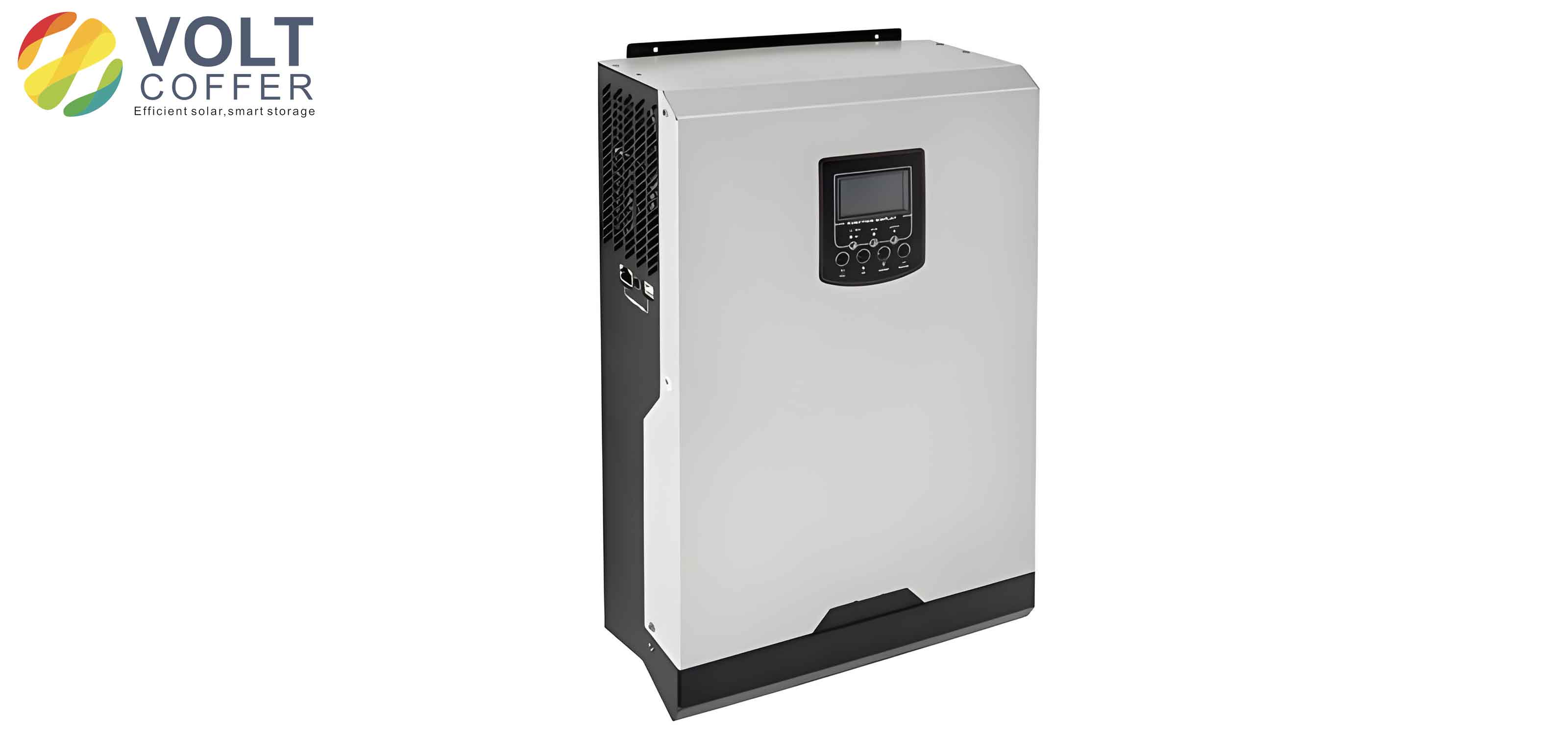
I begin by modeling the three-phase inverter system. The two-level three-phase inverter consists of three half-bridge circuits, each with two switches (e.g., IGBTs or MOSFETs). The switching states for the three phases (a, b, c) are defined as binary variables, leading to eight possible combinations. The output voltage space vector is derived from these states and the DC-link voltage. The LC filter, connected to the inverter output, is modeled using differential equations for the inductor currents and capacitor voltages. To facilitate digital control, I discretize these equations using the forward Euler method. Additionally, since the load current is often unknown in practical scenarios, I estimate it using measured inductor currents and output voltages, assuming slow variation between sampling instants. This estimation compensates for the unknown load in the prediction model.
The core of the FCS-MPC strategy lies in predicting the system behavior for all possible switching states and selecting the one that minimizes a cost function. The cost function is designed to minimize the tracking error between the reference and predicted output voltages. At each control interval, the algorithm computes the future output voltage for each switching state, evaluates the cost function, and applies the optimal state to the inverter. This single-loop control structure avoids cascaded loops, enhancing dynamic response. I simulate the system in MATLAB/Simulink with resistive loads to assess steady-state and transient performance. Results show low THD and fast recovery under load changes, demonstrating the efficacy of the proposed control method for three-phase inverter applications.
Mathematical Modeling of the Three-Phase Inverter with LC Filter
The three-phase inverter topology is based on a two-level circuit, as shown in Figure 1. Each phase leg has two switches, and the switching states are represented by variables S_a, S_b, and S_c, which can be 0 or 1. The combined switching state S is defined as a complex variable: $$ S = S_a + aS_b + a^2S_c $$ where a is the complex operator $$ a = e^{j(2\pi/3)} $$. The output voltage vector V_i of the three-phase inverter is then given by: $$ V_i = V_{DC} S $$ where V_DC is the DC-link voltage. This equation generates eight voltage vectors, but due to redundancy (V_0 and V_7 are zero vectors), only seven distinct vectors are used, as illustrated in Table 1.
| S_a | S_b | S_c | Voltage Vector V_i |
|---|---|---|---|
| 0 | 0 | 0 | V_0 = 0 |
| 1 | 0 | 0 | V_1 = (2/3)V_{DC} |
| 1 | 1 | 0 | V_2 = (1/3)V_{DC} + j(\sqrt{3}/3)V_{DC} |
| 0 | 1 | 0 | V_3 = -(1/3)V_{DC} + j(\sqrt{3}/3)V_{DC} |
| 0 | 1 | 1 | V_4 = -(2/3)V_{DC} |
| 0 | 0 | 1 | V_5 = -(1/3)V_{DC} – j(\sqrt{3}/3)V_{DC} |
| 1 | 0 | 1 | V_6 = (1/3)V_{DC} – j(\sqrt{3}/3)V_{DC} |
| 1 | 1 | 1 | V_7 = 0 |
The LC filter, connected to the output of the three-phase inverter, consists of an inductor L and a capacitor C per phase. The dynamics of the filter are described by the following equations in the continuous-time domain: $$ L \frac{d\mathbf{i}_f}{dt} = \mathbf{V}_i – \mathbf{V}_c $$ $$ C \frac{d\mathbf{V}_c}{dt} = \mathbf{i}_f – \mathbf{i}_o $$ where \mathbf{i}_f is the filter inductor current vector, \mathbf{V}_c is the capacitor voltage vector (output voltage), and \mathbf{i}_o is the output current vector. To represent these equations in state-space form, I define the state vector \mathbf{x} = [\mathbf{i}_f, \mathbf{V}_c]^T. The system can then be written as: $$ \frac{d\mathbf{x}}{dt} = \mathbf{A} \mathbf{x} + \mathbf{B} \mathbf{V}_i + \mathbf{E} \mathbf{i}_o $$ where \mathbf{A}, \mathbf{B}, and \mathbf{E} are matrices derived from the filter parameters. For digital implementation, I discretize the model using the forward Euler method with a sampling time T_s: $$ \mathbf{i}_f(k+1) = \mathbf{i}_f(k) + \frac{T_s}{L} (\mathbf{V}_i(k) – \mathbf{V}_c(k)) $$ $$ \mathbf{V}_c(k+1) = \mathbf{V}_c(k) + \frac{T_s}{C} (\mathbf{i}_f(k) – \mathbf{i}_o(k)) $$ This discrete model is used to predict the future states of the system for each possible switching state of the three-phase inverter.
In practical applications, the output current \mathbf{i}_o is often unknown and variable due to load changes. To address this, I estimate the output current using measurements from the previous sampling instant. From the capacitor voltage equation, the output current at time k-1 can be estimated as: $$ \mathbf{i}_o(k-1) = \mathbf{i}_f(k-1) – C \frac{\mathbf{V}_c(k) – \mathbf{V}_c(k-1)}{T_s} $$ Assuming that the output current changes slowly compared to the control frequency, I approximate \mathbf{i}_o(k) \approx \mathbf{i}_o(k-1). This estimation is incorporated into the prediction model to account for unknown load conditions, enhancing the robustness of the control strategy for the three-phase inverter system.
Finite-Control-Set Model Predictive Control Design
The FCS-MPC algorithm for the three-phase inverter involves predicting the system output for all possible switching states and selecting the one that minimizes a cost function. The cost function is defined to achieve accurate voltage tracking. Specifically, I use the error between the reference output voltage and the predicted output voltage. The cost function J is given by: $$ J = |V_c^*(k+1) – V_c(k+1)|^2 $$ where V_c^*(k+1) is the reference voltage vector at time k+1, and V_c(k+1) is the predicted voltage vector from the discrete model. Since the reference voltage is typically sinusoidal, it is represented in the αβ-frame for simplicity. Thus, the cost function can be expanded as: $$ J = (V_{c\alpha}^*(k+1) – V_{c\alpha}(k+1))^2 + (V_{c\beta}^*(k+1) – V_{c\beta}(k+1))^2 $$ where V_{c\alpha}^* and V_{c\beta}^* are the real and imaginary parts of the reference voltage, and V_{c\alpha} and V_{c\beta} are the predicted values.
The control algorithm operates as follows: at each sampling instant k, the controller measures the current inductor current \mathbf{i}_f(k) and output voltage \mathbf{V}_c(k). It then estimates the output current \mathbf{i}_o(k) using the method described earlier. For each of the eight possible switching states of the three-phase inverter, the controller calculates the corresponding voltage vector \mathbf{V}_i and uses the discrete model to predict the output voltage at k+1. The cost function J is computed for each prediction, and the switching state that minimizes J is applied to the inverter during the next sampling period. This process is repeated every T_s, ensuring real-time optimization.
One advantage of this approach is its simplicity and direct control over the switching states, eliminating the need for a modulation stage. However, the computational load increases with the number of switching states, but for a three-phase inverter with eight states, it is manageable with modern digital signal processors. The block diagram of the proposed FCS-MPC system is shown in Figure 2. It includes the prediction model, cost function minimization, and the switching signal generator. The system relies on voltage and current sensors for feedback, and the load current estimation module compensates for unknown disturbances.
To illustrate the prediction process, consider the discrete equations: $$ \mathbf{i}_f(k+1) = \mathbf{i}_f(k) + \frac{T_s}{L} (\mathbf{V}_i(k) – \mathbf{V}_c(k)) $$ $$ \mathbf{V}_c(k+1) = \mathbf{V}_c(k) + \frac{T_s}{C} (\mathbf{i}_f(k) – \mathbf{i}_o(k)) $$ By substituting \mathbf{V}_i(k) for each switching state, I obtain eight predictions for \mathbf{V}_c(k+1). The cost function is evaluated for each, and the optimal state is selected. This method ensures that the three-phase inverter output closely follows the reference, even under load variations.
Simulation Model and Results Analysis
I implemented the proposed FCS-MPC strategy in MATLAB/Simulink to evaluate its performance for the three-phase inverter with an LC filter. The simulation model includes a two-level three-phase inverter bridge, an LC filter, and a resistive load. The system parameters are listed in Table 2. The control algorithm was coded in MATLAB m-language, with a control period T_s of 0.00005 s and a simulation step size of 0.0000001 s for high resolution. The THD was calculated using the built-in THD analysis tool in Simulink.
| Parameter | Description | Value |
|---|---|---|
| C | Filter capacitance | 40 μF |
| L | Filter inductance | 2.4 mH |
| V_DC | DC-link voltage | 520 V |
| T_s | Sampling time | 0.00005 s |
| f | Output frequency | 50 Hz |
In steady-state tests, I set the reference voltage amplitude to 200 V and frequency to 50 Hz. For a 10 Ω load, the output voltage waveform is nearly sinusoidal with a THD of 4.5%, as shown in Figure 3. The output current, being proportional to voltage for resistive load, also exhibits a sinusoidal shape. Similarly, for a 30 Ω load, the THD is 5.8%, indicating consistent performance across different loads. These results demonstrate the ability of the FCS-MPC to maintain low harmonic distortion in the three-phase inverter output.
To assess dynamic performance, I simulated a load step change. Initially, the three-phase inverter was unloaded, and at t = 0.07 s, a 5 Ω load was connected. Figure 4 shows the output voltage and current during this transient. The voltage dips momentarily but recovers within 0.7 ms, highlighting the fast dynamic response of the predictive control. The output current increases abruptly with the load connection, but the voltage regulation remains stable. This rapid recovery is attributed to the single-loop structure of the FCS-MPC, which does not have the delays associated with cascaded control loops.
The THD is calculated using the formula: $$ THD = \frac{\sqrt{\sum_{n=2}^{\infty} V_n^2}}{V_1} \times 100\% $$ where V_n is the RMS value of the n-th harmonic voltage, and V_1 is the RMS value of the fundamental frequency voltage. In both steady-state and transient conditions, the THD values are below 6%, meeting power quality standards for three-phase inverter applications. The simulation confirms that the proposed method effectively reduces harmonic distortion while providing excellent dynamic response.
Conclusion and Future Work
In this paper, I have presented a finite-control-set model predictive voltage control strategy for a three-phase inverter with an LC filter. The method leverages a discrete-time model to predict system behavior and a cost function to select optimal switching states directly, eliminating the need for a modulator. Simulation results in MATLAB/Simulink show that the proposed approach achieves low THD and fast dynamic response under various load conditions. The three-phase inverter system maintains sinusoidal output voltage with minimal distortion, demonstrating the effectiveness of the FCS-MPC in practical scenarios.
However, the current method has limitations in disturbance rejection, primarily due to the load current estimation strategy. To address this, I plan to investigate disturbance observer-based techniques for more accurate current estimation, improving robustness. Additionally, the cost function may cause chattering in switching signals; thus, future work will explore alternative cost function formulations to reduce chattering and enhance control precision. Another direction is extending the prediction and control horizons in the MPC framework to further improve performance and anti-interference capability for the three-phase inverter. These advancements will build on the foundation laid in this work, contributing to more reliable and efficient power conversion systems.
The three-phase inverter is a critical component in modern power electronics, and the FCS-MPC approach offers a promising solution for high-performance applications. By continuously refining the control strategy, I aim to achieve even better voltage quality and dynamic response, ensuring the three-phase inverter meets the demands of evolving energy systems.