
As a researcher focusing on renewable energy finance, I have observed that energy structure adjustment is pivotal for developing a low-carbon economy. Solar panel companies, as representative entities in the新能源 sector, have garnered significant attention from governments worldwide. The best solar panel company often faces challenges related to substantial capital investments and long payback periods, making financing a critical concern for business owners. In this article, I will explore the financing models and their effects, drawing insights from a case study of a leading enterprise in the industry. My analysis aims to provide warnings and references for other companies in the solar panel sector, emphasizing the importance of optimal financing strategies for sustainable growth.
The 21st century has witnessed rapid economic development, but issues like energy shortages, population growth, and environmental pollution due to global warming have raised global concerns. As a major manufacturing nation, my country has actively promoted low-carbon economies. For instance, in 2003, the UK government introduced the concept in its energy white paper, and by 2007, during the APEC meeting, my nation explicitly committed to transitioning from a high-emission, high-consumption, and high-pollution “extensive economy” to a low-emission, low-consumption, and low-pollution low-carbon economy. This shift underscores the role of the best solar panel company in driving this transformation, as they contribute to cleaner energy production and reduce carbon footprints.
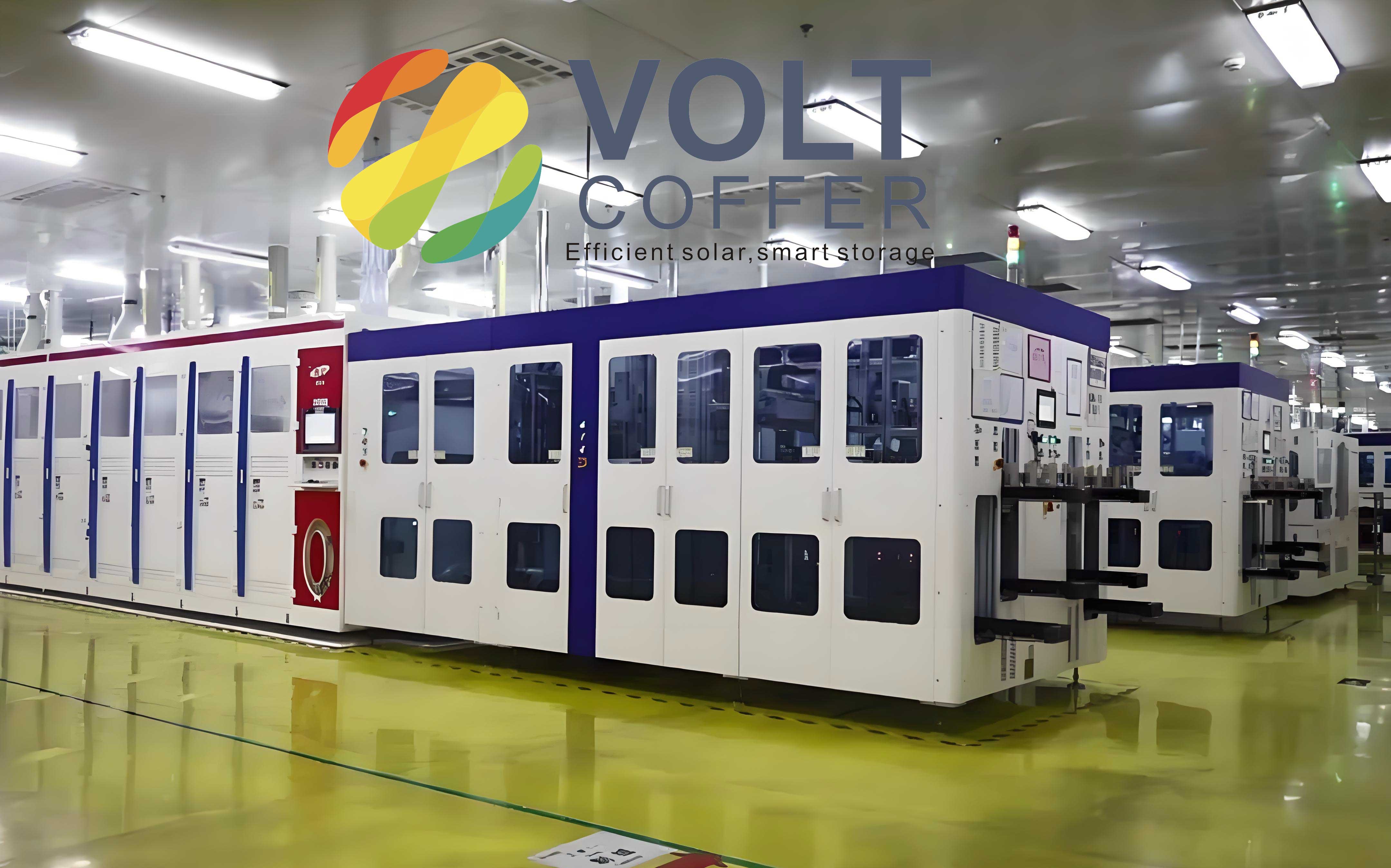
In examining the financing landscape, I have found that the best solar panel company typically relies on a mix of internal and external funding sources. Internal financing, primarily through retained earnings, offers advantages such as lower costs and fewer restrictions compared to external options. Retained earnings include components like surplus reserves and undistributed profits, which can be leveraged to support strategic expansions without incurring additional debt. For example, in a typical scenario, the best solar panel company might see a significant growth in undistributed profits over years, enabling it to fund new projects while minimizing融资风险.
To illustrate the internal financing structure, consider the following table summarizing key components over a five-year period for a representative best solar panel company. This table highlights how revenues and retained earnings correlate, demonstrating the company’s focus on self-funding mechanisms.
| Year | Surplus Reserves (in billion USD) | Undistributed Profits (in billion USD) | Total Revenue (in billion USD) |
|---|---|---|---|
| 2016 | 0.19 | 1.268 | 5.0 |
| 2017 | 0.25 | 2.5 | 6.5 |
| 2018 | 0.4 | 4.0 | 8.0 |
| 2019 | 0.7 | 7.5 | 10.0 |
| 2020 | 1.15 | 19.353 | 15.0 |
As shown, undistributed profits increased approximately 15-fold from 2016 to 2020, indicating that the best solar panel company effectively utilizes internal funds to meet capital needs during expansion phases. This approach reduces reliance on external financing, thereby lowering overall融资成本 and enhancing financial stability.
Moving to debt financing, bank loans represent a common method where companies borrow from financial institutions by pledging assets like fixed properties. In many economies, over 75% of corporate financing depends on bank loans, particularly for larger firms. However, for the best solar panel company, which may have substantial assets, bank借款 can be structured with a balance between long-term and short-term components. The table below outlines the composition of bank loans for a hypothetical best solar panel company, showing how short-term and long-term debts evolve over time.
| Year | Short-Term Bank Loans (in billion USD) | Long-Term Bank Loans (in billion USD) | Total Bank Loans (in billion USD) |
|---|---|---|---|
| 2015 | 0.5 | 0.3 | 0.8 |
| 2016 | 0.7 | 0.4 | 1.1 |
| 2017 | 1.0 | 0.6 | 1.6 |
| 2018 | 1.2 | 0.8 | 2.0 |
| 2019 | 1.5 | 1.0 | 2.5 |
| 2020 | 1.8 | 1.2 | 3.0 |
From this data, I observe that while bank loans increase gradually, the proportion remains relatively low compared to other sources. The best solar panel company must manage short-term debts carefully to avoid liquidity crises, as an imbalance could lead to financial distress. Additionally, bond financing, though more prevalent in mature markets, offers benefits like tax shields and leverage optimization. For the best solar panel company, issuing bonds can diversify funding sources, but it requires careful consideration of market conditions and regulatory frameworks.
Equity financing is another critical avenue, often employed through initial public offerings (IPOs) or private placements. For instance, a best solar panel company might list on a stock exchange to raise capital, as seen in a case where funds were allocated to subsidiaries for projects like高效单晶 PERC battery and component manufacturing. This not only injects capital but also enhances the company’s reputation and融资能力. The table below summarizes equity financing activities for a representative best solar panel company, highlighting how share issuances support growth initiatives.
| Year | Type of Equity Issue | Amount Raised (in billion USD) | Purpose |
|---|---|---|---|
| 2012 | IPO | 0.5 | General expansion |
| 2015 | Private Placement | 2.4 | Subsidiary investment |
| 2017 | Convertible Bonds | 1.0 | Stabilize stock price |
| 2020 | Follow-on Offering | 3.0 | R&D and capacity increase |
This equity-based approach allows the best solar panel company to leverage shareholder funds without immediate repayment pressures, fostering long-term development. However, it necessitates balancing ownership dilution and control issues.
To evaluate the effects of these financing models, I have conducted a comprehensive analysis of short-term偿债能力, cash flows, earnings per share (EPS), and development potential. Short-term偿债能力 is assessed using ratios like current ratio, quick ratio, and cash flow ratio, with ideal values typically set at 2 for current ratio and 1 for quick ratio. For the best solar panel company, these metrics reveal potential vulnerabilities, as shown in the table below.
| Year | Current Ratio | Quick Ratio | Cash Flow Ratio |
|---|---|---|---|
| 2016 | 1.8 | 1.2 | 0.15 |
| 2017 | 1.6 | 1.1 | 0.12 |
| 2018 | 1.4 | 1.0 | 0.10 |
| 2019 | 1.5 | 1.1 | 0.18 |
| 2020 | 1.3 | 0.9 | 0.20 |
As evident, the current ratio consistently falls below the ideal value of 2, indicating that the best solar panel company may face challenges in meeting short-term obligations. Although the quick ratio remains near or above 1, the declining trend warrants attention to avoid financial risks. Cash flow ratios show improvement in recent years, but excessive cash holdings could imply suboptimal returns, highlighting the need for efficient working capital management.
Cash flow analysis further illuminates the best solar panel company’s financial health, categorizing flows into operating, investing, and financing activities. The table below presents cash flow trends, emphasizing how expansion phases impact liquidity.
| Year | Operating Cash Flow (in billion USD) | Investing Cash Flow (in billion USD) | Financing Cash Flow (in billion USD) | Net Cash Flow (in billion USD) |
|---|---|---|---|---|
| 2016 | 0.8 | -0.5 | 0.3 | 0.6 |
| 2017 | 1.0 | -1.0 | 0.5 | 0.5 |
| 2018 | 1.2 | -2.0 | 0.8 | 0.0 |
| 2019 | 1.5 | -1.5 | 1.0 | 1.0 |
| 2020 | 2.0 | -1.0 | 1.5 | 2.5 |
In 2018, negative net cash flow resulted from intensive investments in production capacity, a common scenario for the best solar panel company during growth phases. By 2020, robust cash flows indicate improved偿债能力, but I caution that over-reliance on cash reserves might limit profitability. Thus, the best solar panel company should strive for a balance between liquidity and investment returns.
Earnings per share (EPS) analysis provides insights into profitability and the impact of financing decisions. The formula for EPS is given by:
$$ \text{EPS} = \frac{\text{Net Income}}{\text{Number of Common Shares}} = \text{Net Profit Margin} \times \text{Total Asset Turnover} \times \text{Equity Multiplier} \times \text{Book Value per Share} $$
Using the chain substitution method, I can decompose the effects of various factors on EPS. For example, in a given year, changes in net profit margin and book value per share (reflecting equity financing) significantly influence EPS. The tables below summarize annual EPS components and their contributions for the best solar panel company, demonstrating how融资决策 shape performance.
| Year | EPS (USD) | Net Profit Margin (%) | Total Asset Turnover | Equity Multiplier | Book Value per Share (USD) |
|---|---|---|---|---|---|
| 2016 | 0.50 | 8.0 | 0.6 | 2.0 | 5.0 |
| 2017 | 0.60 | 9.0 | 0.65 | 2.1 | 5.5 |
| 2018 | 0.55 | 7.5 | 0.62 | 2.2 | 5.8 |
| 2019 | 0.70 | 10.0 | 0.68 | 2.0 | 6.2 |
| 2020 | 0.85 | 11.0 | 0.70 | 1.9 | 6.8 |
To quantify the impact, I apply the chain substitution method for each year. For instance, in 2016, the change in EPS can be broken down as follows:
| Factor | Change (%) | Contribution to EPS Change |
|---|---|---|
| Net Profit Margin | +4.69 | +0.19 |
| Total Asset Turnover | +0.05 | +0.02 |
| Equity Multiplier | +0.1 | +0.03 |
| Book Value per Share | +1.97 | +0.38 |
This shows that equity financing, represented by book value per share, had a substantial positive effect on EPS, underscoring the importance of股权融资 for the best solar panel company. Similar analyses for subsequent years reveal consistent trends, where融资决策 involving debt and equity interplay to drive earnings growth.
For 2017, the factors influencing EPS are summarized below:
| Factor | Change (%) | Contribution to EPS Change |
|---|---|---|
| Net Profit Margin | +1.0 | +0.05 |
| Total Asset Turnover | +0.05 | +0.03 |
| Equity Multiplier | +0.1 | +0.04 |
| Book Value per Share | +0.5 | +0.10 |
In 2018, external factors like policy changes may have dampened performance, but the best solar panel company’s resilience is evident in the recovery by 2019 and 2020. The tables for 2018, 2019, and 2020 further illustrate these dynamics.
| Factor | Change (%) | Contribution to EPS Change (2018) |
|---|---|---|
| Net Profit Margin | -1.5 | -0.08 |
| Total Asset Turnover | -0.03 | -0.02 |
| Equity Multiplier | +0.1 | +0.03 |
| Book Value per Share | +0.3 | +0.06 |
| Factor | Change (%) | Contribution to EPS Change (2019) |
|---|---|---|
| Net Profit Margin | +2.5 | +0.12 |
| Total Asset Turnover | +0.06 | +0.04 |
| Equity Multiplier | -0.2 | -0.05 |
| Book Value per Share | +0.4 | +0.08 |
| Factor | Change (%) | Contribution to EPS Change (2020) |
|---|---|---|
| Net Profit Margin | +1.0 | +0.06 |
| Total Asset Turnover | +0.02 | +0.01 |
| Equity Multiplier | -0.1 | -0.03 |
| Book Value per Share | +0.6 | +0.12 |
Overall, EPS shows a steady increase, reflecting effective融资策略 by the best solar panel company. This positive trend is further supported by development capacity metrics, such as operating profit growth rate, shareholder equity growth rate, and total asset growth rate. The table below compares these indicators over time, highlighting the company’s expansion potential post-financing.
| Year | Operating Profit Growth Rate (%) | Shareholder Equity Growth Rate (%) | Total Asset Growth Rate (%) |
|---|---|---|---|
| 2016 | 25.0 | 20.0 | 18.0 |
| 2017 | 15.0 | 15.0 | 12.0 |
| 2018 | -5.0 | 10.0 | 8.0 |
| 2019 | 20.0 | 18.0 | 15.0 |
| 2020 | 30.0 | 25.0 | 22.0 |
In 2018, a dip in operating profit growth可能 be attributed to external policies, but the best solar panel company rebounded strongly, demonstrating robust development capabilities. This resilience is crucial for long-term sustainability, as the best solar panel company navigates industry cycles.
Based on this analysis, I have identified several advantages and drawbacks of the existing financing models for the best solar panel company. On the positive side, the融资结构 is reasonably balanced, incorporating a mix of internal funds, debt, and equity. For example, early reliance on debt financing transitioned to IPOs and private placements, enhancing融资能力 without losing control. The use of convertible bonds further stabilized stock prices and provided flexible capital. Moreover, the effective deployment of funds has led to improvements in net profit margins and EPS, indicating strong growth potential for the best solar panel company.
However, there are notable shortcomings. The best solar panel company is highly dependent on government policies, as seen in 2018 when regulatory shifts adversely affected profitability. As subsidies phase out in the era of grid parity, the best solar panel company must innovate to reduce costs and enhance competitiveness. Additionally, weak short-term偿债能力, with current ratios below ideal levels, poses a risk of financial crises. Thus, the best solar panel company should prioritize liquidity management to mitigate these vulnerabilities.
To optimize financing, I recommend that the best solar panel company focus on rational allocation of internal funds and capital structure optimization. Given the high R&D requirements and long investment cycles in the solar panel industry, internal financing offers low costs and minimal risks. By leveraging retained earnings, the best solar panel company can fund expansions while reducing external debt. Furthermore, diversifying融资渠道 is essential; exploring innovative options like green bonds and public-private partnerships (PPPs) can lower融资成本 and spread risks. For instance, green bonds align with environmental goals and attract socially responsible investors, while PPPs facilitate collaborative projects with governments.
In conclusion, the solar panel industry has rebounded from challenges like trade investigations and debt crises, leading to surging financing demands. Optimizing融资行为 is key to enhancing operational capabilities and market share for companies like the best solar panel company. As the industry leader, the best solar panel company’s experiences offer valuable lessons for peers. However, with declining government support and unforeseen events like pandemics, the sector must transition from external “blood transfusions” to self-sustaining “blood generation.” This requires continuous innovation, prudent financial management, and adaptive strategies. Through my research, I emphasize that the best solar panel company can achieve lasting success by refining its financing approaches, ultimately contributing to a sustainable low-carbon future.
In summary, the best solar panel company exemplifies how strategic financing can drive growth in the renewable energy sector. By analyzing internal and external funding mechanisms, assessing effects through ratios and EPS, and addressing weaknesses, the best solar panel company can serve as a benchmark for others. As I reflect on this, it is clear that the best solar panel company must remain agile in the face of evolving economic and environmental landscapes, ensuring that financing models not only support expansion but also foster resilience and innovation.