
Faced with global challenges such as energy shortages and environmental pollution, the electrification of transportation has become an irreversible trend. As the core component of electric vehicles, power batteries will inevitably age with increased usage. Typically, when a battery’s capacity fades to approximately 80% of its initial value, it is considered to have reached its end-of-life for vehicular applications and is retired. However, these retired batteries still retain a significant portion of their energy, making them potentially suitable for applications with less demanding requirements. Directly recycling them at this stage represents a substantial waste of resources. This is particularly true for LiFePO4 batteries, which, compared to their NCM counterparts, have lower intrinsic material recovery value, longer lifespan, and superior safety. Therefore, maximizing their value through cascaded reuse across multiple application stages is not only economically sensible but also crucial for promoting a circular economy.
The key to successful reuse lies in the predictable and manageable degradation of battery performance. A primary concern is the consistency among battery cells after years of service in vehicles, influenced by factors like initial manufacturing variance, Battery Management System (BMS) strategies, and thermal management. This study systematically investigates the feasibility of multi-stage reuse for commercial LiFePO4 batteries by subjecting them to simulated lifecycle testing with progressively reduced load intensities. The goal is to analyze degradation patterns in capacity, internal resistance, and electrochemical impedance to propose viable reuse scenarios.
1. Experimental Platform and Methodology
1.1. Test Platform and Samples
The experiments were conducted using a battery test system (MCV8-100/10-5) controlled by a host computer. A constant temperature and humidity chamber (ETH-1000) maintained the ambient temperature at 25°C for all tests. Electrochemical Impedance Spectroscopy (EIS) measurements at different lifecycle stages were performed using a Zahner electrochemical workstation.
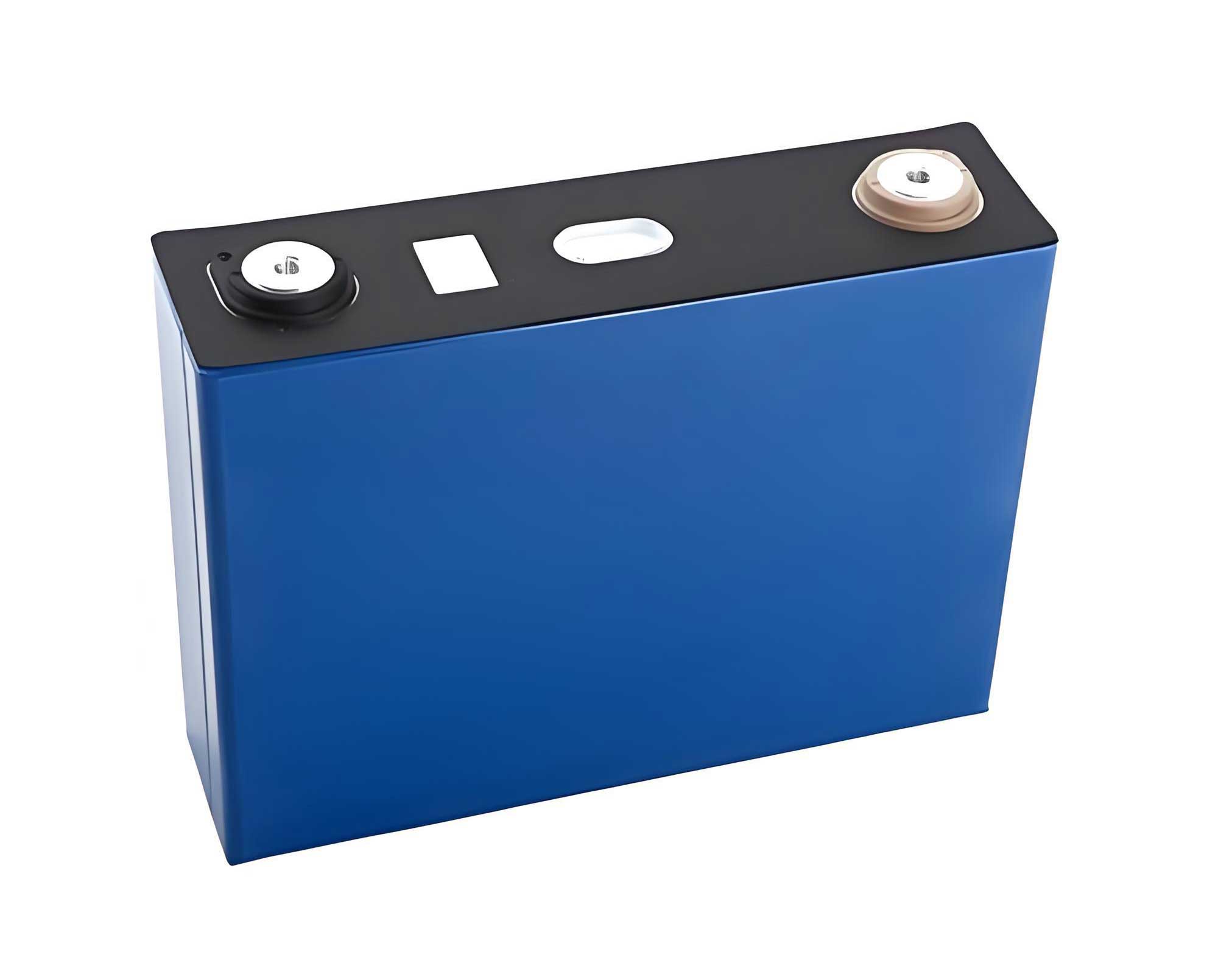
The test samples were commercial 18650 cylindrical LiFePO4 batteries with a graphite anode. Their key specifications are summarized in Table 1.
| Parameter | Value |
|---|---|
| Nominal Voltage | 3.2 V |
| Nominal Capacity | 1.5 Ah |
| Discharge Cut-off Voltage | 2.5 V |
| Charge Cut-off Voltage | 3.65 V |
| Dimensions (D×H) | 18.3 × 65 mm |
Table 1: Specifications of the tested LiFePO4 battery samples.
1.2. Multi-Stage Lifecycle Test Protocol
To simulate the battery’s journey from high-stress vehicular use to milder second-life applications, a three-phase test protocol with decreasing load intensity was designed. Each phase consisted of repeated charge-discharge cycles followed by periodic performance check-ups. The specific parameters for each phase are detailed in Table 2.
| Phase | Charge Current | Discharge Current | Performance Check Frequency | Phase Termination Criterion |
|---|---|---|---|---|
| Phase I | 2C (3A) | 2C (3A) | Every 80 cycles | Capacity ≤ 70% of initial or DCIR ≥ 120% of initial |
| Phase II | 1C (1.5A) | 1C (1.5A) | Every 50 cycles | Capacity ≤ 70% of Phase II initial capacity |
| Phase III | 0.5C (0.75A) | 0.5C (0.75A) | Every 50 cycles | Capacity ≤ 70% of Phase III initial capacity |
Table 2: Parameters for the three-phase lifecycle test protocol.
The cyclic test procedure for each phase was as follows:
- Rest for 10 minutes.
- Constant Current (CC) charge at the specified current to 3.65V, then Constant Voltage (CV) charge at 3.65V until the current drops to 0.02C.
- Rest for 10 minutes.
- CC discharge at the specified current to 2.5V.
- Repeat steps 1-4 until the cycle count for the periodic check is reached.
- Perform capacity and DC internal resistance (DCIR) check tests.
- Repeat steps 1-6 until the phase termination criterion is met.
1.3. Performance Evaluation Methods
Capacity Check: A standard 1/3C (0.5A) charge/discharge test was used to determine the actual capacity at different lifecycle stages. This involved a CC-CV charge (to 3.65V, 0.02C cutoff) and a CC discharge (to 2.5V) at 1/3C, repeated three times with rests in between. The average discharge capacity was recorded.
DC Internal Resistance (DCIR) Check: The Hybrid Pulse Power Characterization (HPPC) method was employed. At a specific State of Charge (SoC, typically 80% Depth of Discharge, DOD), a 10-second discharge pulse at 5C (7.5A) followed by a 10-second charge pulse at 4C (6A) was applied. The DCIR was calculated from the instantaneous voltage change (ΔV) at the beginning of the pulse divided by the current (I).
$$ R_{DC} = \frac{\Delta V}{I} $$
Electrochemical Impedance Spectroscopy (EIS): EIS measurements were conducted at selected lifecycle intervals. The tests were performed at 25°C with a sinusoidal perturbation amplitude of 10 mV over a frequency range from 10 kHz to 0.1 Hz. The resulting Nyquist plots were analyzed using an equivalent circuit model.
Computed Tomography (CT) Scan: To observe internal physical changes, selected LiFePO4 battery samples were scanned using a nanoVoxel-4000 series 3D X-ray microscope at the end of each major test phase.
2. Results and Discussion: Degradation Across Phases
2.1. Phase I: High-Stress Simulated Vehicular Operation
Phase I, with 2C charge/discharge rates, represents aggressive usage similar to demanding electric vehicle driving cycles. The capacity fade and DCIR growth for a sample set are shown in Figure 1 (conceptual data plot). The capacity degradation exhibited a distinct two-stage pattern. Up to around 880 cycles, the fade was remarkably linear. Post-880 cycles, the fade accelerated, following a non-linear, exponential trend. This can be modeled as:
$$ Q(n) = Q_0 – k_1 n \quad \text{for } n < n_c $$
$$ Q(n) = Q_{n_c} \cdot e^{-k_2 (n – n_c)} \quad \text{for } n \ge n_c $$
where \( Q(n) \) is capacity at cycle \( n \), \( Q_0 \) is initial capacity, \( n_c \) is the cycle number at the transition point (~880), and \( k_1 \), \( k_2 \) are degradation rate constants.
The DCIR at 80% DOD showed a corresponding behavior. It remained relatively stable with minimal increase (≈2%) until ~880 cycles, after which it began to grow more rapidly. The cell-to-cell consistency, measured as the standard deviation of capacity among all samples, started to increase significantly after about 640 cycles, indicating the divergence in aging paths began earlier than the sharp capacity fade.
EIS analysis provided further insight. The Nyquist plots were fitted with a common equivalent circuit: \( R_b + Q/(R_{ct} + Z_w) \), where \( R_b \) is the bulk/ohmic resistance, \( Q \) is a constant phase element representing the double-layer capacitance, \( R_{ct} \) is the charge transfer resistance, and \( Z_w \) is the Warburg impedance for diffusion. The fitted parameters revealed that \( R_b \) showed a gradual increasing trend throughout Phase I, suggesting progressive factors like electrolyte depletion or slight contact loss. \( R_{ct} \) initially decreased slightly due to activation, stabilized, and then increased notably after 1200 cycles, pointing to accelerated degradation of electrode active materials or growth of the Solid Electrolyte Interphase (SEI).
2.2. Phase II: First Reuse Stage in Moderate Applications
After Phase I ended (capacity ~70% of initial), the batteries entered Phase II with a reduced load of 1C. The results demonstrated that these aged LiFePO4 batteries could still perform predictably under milder conditions. The capacity fade in this phase also showed a two-stage pattern but with a gentler slope initially. The DCIR growth was more monotonic compared to Phase I, without the initial flat period. This suggests that the degradation mechanisms activated in Phase I continued to evolve under the reduced stress.
EIS measurements at the end of Phase II showed a continued increase in both \( R_b \) and \( R_{ct} \). The rise in \( R_{ct} \) was more pronounced, aligning with the ongoing capacity fade and indicating further deterioration of the electrode/electrolyte interfaces.
2.3. Phase III: Final Reuse Stage in Low-Power Applications
Upon reaching the end-of-phase criterion in Phase II, the batteries entered the final test phase with a very low load of 0.5C. A critical observation emerged here. While the majority of the LiFePO4 battery samples continued to degrade in a slow, linear, and relatively consistent manner, one individual sample exhibited “sudden death” – a rapid, non-linear drop in capacity. This phenomenon highlights a key challenge for reuse in very late lifecycle stages: increasing performance divergence and the risk of individual cell failure.
The consistency of the pack, as measured by capacity standard deviation, deteriorated sharply at the beginning of Phase III primarily due to this one outlier. When this outlier was excluded, the remaining group’s consistency followed a more predictable, gradually widening trend. The DCIR and EIS data for the failing cell showed a sharp upward trajectory, distinct from the more stable trend of the healthier cells.
2.4. Physical Structure Evolution: CT Scan Analysis
CT scans provided visual evidence of the internal changes correlating with electrochemical degradation. The scans of the same cell at different lifecycle milestones are summarized below:
- Fresh Cell: Clear, well-defined cylindrical structure with a visible central mandrel void.
- End of Phase I: Initial signs of electrode stack swelling, beginning to encroach on the central void.
- End of Phase II: Significant swelling, further reducing the central void space.
- End of Phase III: The central void was nearly completely filled by the expanded electrode assembly.
This progressive swelling is attributed to multiple factors: gas generation from electrolyte decomposition and side reactions, particle cracking in the active materials, thickening of the SEI layer on the anode, and possible corrosion of current collectors. This physical expansion contributes directly to the increase in ohmic resistance (\( R_b \)) and can mechanically stress components, potentially leading to internal shorts or accelerated degradation as seen in the Phase III outlier.
3. Proposed Framework for Multi-Stage Reuse of LiFePO4 Batteries
Based on the systematic degradation analysis, a practical framework for cascading LiFePO4 batteries can be established. The feasibility and recommended form of reuse depend heavily on the observed consistency and failure modes.
| Lifecycle Stage | Simulated Load / Application | Key Degradation Characteristics | Recommended Reuse Form & Applications |
|---|---|---|---|
| Phase I (Primary Life) | High-Stress / Electric Vehicles | Predictable linear→nonlinear fade. Good consistency until later stages. | Not applicable (primary use). |
| Phase II (First Reuse) | Moderate-Stress / Grid Storage, Backup Power, Low-Speed EVs | Continued predictable fade. Manageable consistency if properly screened and re-grouped. | Module or Pack-level integration. Suitable for systems where battery management can handle moderate cell divergence (e.g., stationary energy storage for renewable integration, telecom backup, electric scooters/rickshaws). |
| Phase III (Second Reuse) | Low-Stress / Solar Lighting, Portable Devices | Slow linear fade for most cells, but high risk of individual sudden failure. Poor overall pack consistency. | Single-cell or small-block level use. Applications where the failure of one unit is isolated and non-critical (e.g., standalone solar street lights, garden lights, portable power banks, tool battery packs). |
Table 3: Proposed multi-stage reuse pathway for retired LiFePO4 batteries.
The economic and operational rationale is clear. Using retired LiFePO4 batteries in Phase II applications extends their service life by several years, dramatically improving the lifecycle economics compared to immediate recycling. Phase III utilization extracts the final value from the cells, though it requires a different, more decentralized approach to management due to consistency issues. This staged approach aligns perfectly with the “utilize first, recycle later” principle, maximizing resource efficiency.
4. Conclusion
This comprehensive experimental study verifies the technical feasibility of multi-stage reuse for commercial LiFePO4 batteries. The key findings are:
- Predictable Degradation: LiFePO4 batteries exhibit regular and analyzable degradation patterns under both high and moderate stress conditions (Phases I & II), making them suitable for second-life applications with proper assessment and screening.
- Consistency is Key: Cell-to-cell consistency remains manageable through Phase II, supporting reuse in aggregated systems like battery energy storage systems (BESS). However, in the final low-stress stage (Phase III), consistency deteriorates significantly, and the risk of individual cell “sudden death” increases.
- Adaptive Reuse Strategy: A two-tier reuse strategy is recommended. Moderately aged batteries (retired from vehicles) are well-suited for module/pack-level reuse in grid support or mobility applications. Deeply aged batteries are best deployed in single-cell or small-block applications where failure isolation is inherent.
- Holistic Value Maximization: For LiFePO4 batteries, which have low direct recycling value, this cascaded multi-stage use is the most effective strategy to maximize lifecycle value, reduce environmental impact, and support the sustainable development of the electric vehicle and energy storage industries.
Future work should focus on developing fast, accurate, and low-cost screening techniques to classify retired batteries efficiently, as well as advanced BMS algorithms capable of managing heterogeneous battery packs in second-life applications to further enhance safety and longevity.