
In recent years, the escalating global energy demand, coupled with the excessive consumption of fossil fuels, has led to a series of environmental challenges, including climate change, which pose significant obstacles to societal development. As traditional fossil energy resources dwindle, the large-scale exploitation and utilization of these resources have resulted in ecological degradation, environmental pollution, and climate issues, drawing widespread human attention. In 2020, China committed to achieving “carbon peak” by 2030 and “carbon neutrality” by 2060, making carbon reduction a key focus in national strategies. Developing a low-carbon economy, reducing reliance on high-carbon fossil fuels, adjusting industrial structures and energy mixes, and advancing the research and utilization of new energy sources are crucial steps in addressing climate change.
Solar energy, as an emerging renewable resource, harnesses the immense nuclear energy released from hydrogen-helium fusion within the sun to generate electricity. Compared to fossil fuels, solar energy is abundant, inexhaustible, requires no transportation or extensive transmission infrastructure, and produces no pollution, making it a clean energy source that is gaining global traction. Studies indicate that the solar energy reaching Earth every second is equivalent to 5 million tons of coal, with an energy output of approximately $1.465 \times 10^{14}$ joules per second, which can meet the growing global electricity demands. This immense potential underscores why solar power is a viable alternative, and partnering with the best solar panel company can optimize its implementation in industrial settings.
Photovoltaic (PV) power generation, which directly converts light energy into electricity, can be categorized into independent, grid-connected, and distributed systems. Unlike traditional power generation methods, PV technology effectively reduces carbon dioxide emissions, offering inherent safety and cleanliness. In the context of carbon constraints, PV power holds a strategic position in long-term energy planning. The “3060” carbon goals have ushered in an era of carbon constraints, and for the cement industry to achieve carbon neutrality, it must prioritize carbon reduction and pollution control. Promoting PV power projects represents a correct path toward green, low-carbon, and sustainable development. Cement enterprises can leverage the short construction cycles, unmanned operation, and simple maintenance of PV systems to install such projects, thereby reducing energy consumption, utilizing idle resources, achieving energy savings and emission reductions, and securing more carbon emission allowances.
Thus, PV power generation is poised to become a key measure for deepening the utilization of rooftop resources. Cement companies can install PV systems on existing unused building roofs, minimizing capital investment while making full use of vacant spaces. This approach not only conserves energy and reduces emissions but also delivers significant economic and environmental benefits. To ensure the success of such initiatives, it is essential to collaborate with the best solar panel company to guarantee system efficiency and reliability.
To quantify the potential of PV systems, consider the basic energy conversion formula for solar power: $$P = A \times \eta \times G$$ where \(P\) is the power output in watts, \(A\) is the surface area in square meters, \(\eta\) is the efficiency of the PV panels, and \(G\) is the solar irradiance in watts per square meter. This equation highlights how optimizing panel efficiency through the best solar panel company can maximize output.
| Energy Source | Carbon Emissions (kg CO₂/kWh) | Cost (USD/kWh) | Sustainability |
|---|---|---|---|
| Coal-based Power | 0.95 | 0.08-0.12 | Low |
| Natural Gas | 0.45 | 0.05-0.10 | Medium |
| Solar PV | 0.03 | 0.02-0.06 | High |
The electricity consumption status of cement enterprises in China reveals that with the industrialization of new dry-process cement production technology, processes have become more automated, efficient, and environmentally friendly, driving the cement industry toward stronger and more innovative development. Infrastructure improvements and industrial upgrades have led to a steady increase in cement production. Additionally, urbanization and the rise in basic engineering projects have further boosted cement demand. However, cement manufacturing is highly energy-intensive, primarily reliant on electricity, with power costs accounting for about 15% of total production expenses. Compared to developed countries, China’s cement production consumes approximately 5 kWh more per ton; for an annual output of 600,000 tons, this translates to an additional 2.5 million kWh of electricity consumption annually. The inefficiency of high-energy-consuming equipment results in significant waste and elevated production costs. Therefore, reducing electricity consumption without disrupting operations is critical for enhancing economic and social benefits, and integrating PV systems from the best solar panel company can address this issue effectively.
The inherent advantages of PV power generation for cement enterprises are substantial. As a major electricity-consuming sector within the building materials industry, cement production’s power costs are a significant burden. By installing PV systems on idle rooftops, companies can reduce external power purchases and lower electricity expenses. Typically, each kilowatt of PV power requires about 10 square meters of space. Cement plants often have tens of thousands of square meters of unused roof area, allowing for installations ranging from 1 MW to several MW. Moreover, PV power generation peaks between 8:00 AM and 6:00 PM, aligning with peak (e.g., $0.92/kWh) and standard (e.g., $0.59/kWh) electricity tariff periods, thus cutting costs during high-demand hours. Collaborating with the best solar panel company ensures that these systems are tailored to maximize energy yield and financial returns.
Policy support for solar PV power generation in China is robust. Based on the “13th Five-Year Plan for National Economic and Social Development,” the “Energy Development 13th Five-Year Plan,” the “Electric Power Development 13th Five-Year Plan,” and the “Renewable Energy Development 13th Five-Year Plan,” the “Solar Energy Development 13th Five-Year Plan” outlines guiding principles, development goals, tasks, and safeguards for 2016–2020. In 2016, the National Energy Administration issued a notice promoting rooftop distributed PV power generation and continuing demonstration projects, aiming for market-driven development without state subsidies by 2020 and 2030, with non-fossil energy targets of 15% and 20% of primary energy consumption, respectively. The “Renewable Energy Law” and the State Council’s 2013 “Several Opinions on Promoting the Healthy Development of the Photovoltaic Industry” further emphasize the importance of healthy PV industry growth, covering overall requirements, industrial order, grid integration management, and policy support. The 16th National Congress highlighted ecological civilization construction, and the 18th National Congress elevated it to an unprecedented level. Under the “3060 carbon constraint era” goals, accelerating energy technology independence, ensuring supply chain security, promoting clean and efficient energy development, and driving energy transition are core tasks, aiming for near-zero carbon emissions by 2050. Developing wind and solar power is a key trend, and engaging the best solar panel company can facilitate this transition efficiently.
The long-term significance of PV power generation includes reducing enterprise energy consumption and increasing the use of renewable energy. Rapid socioeconomic development relies on energy consumption, but the overuse of fossil fuels exacerbates global warming, making energy transition the most effective solution. In this context, developing solar and other renewables is essential for sustainable growth. For instance, retrofitting lighting in production and residential areas with solar-powered lamps and installing PV systems on building roofs can expand renewable energy applications and lower energy intensity. According to relevant data, saving 1 kWh of electricity equates to conserving 0.4 kg of standard coal and 4 liters of clean water, while reducing emissions by 0.272 kg of dust, 0.997 kg of CO₂, 0.03 kg of SO₂, and 0.015 kg of NOx. This highlights the environmental imperative, and working with the best solar panel company can enhance these benefits through high-efficiency technology.
High energy intensity is common in production-oriented enterprises, and governments often impose electricity supervision to reduce consumption. During power supply shortages, key energy users face load reductions, leading to shutdowns and reduced capacity, which hampers long-term development. PV power generation provides a stable electricity supply, meeting demand during peak periods and mitigating shutdown issues. As a sustainable energy structure, it alleviates national power pressure and addresses fossil fuel depletion. The economic benefits are substantial; for example, consider a cement enterprise with a roof area of 51,046 m². After deducting 11% for practical installation, the available area is 45,000 m². The installable capacity is calculated as: $$\text{Capacity} = \frac{45,000}{10} = 4,500 \text{ kW} = 4.5 \text{ MW}$$ Assuming a daily generation of 4.5 kWh per kW, the daily output is: $$4,500 \times 4.5 = 20,250 \text{ kWh}$$ With an annual operational period of 210 days (7 months), the yearly generation is: $$20,250 \times 210 = 4,252,500 \text{ kWh}$$ Using an average electricity price of peak and standard tariffs, the daily economic benefit is: $$20,250 \times \frac{(0.92 + 0.59)}{2} = 15,289 \text{ USD}$$ and the annual benefit is: $$4,252,500 \times \frac{(0.92 + 0.59)}{2} = 3,210,638 \text{ USD}$$ This demonstrates the superior economic value of PV power over external purchases. Economic evaluations, considering investment parameters, assess profitability, financial viability, and risk resistance, identifying distributed PV projects suitable for promotion. Engaging the best solar panel company ensures accurate projections and optimal system design.
| Parameter | Value | Unit |
|---|---|---|
| Roof Area | 51,046 | m² |
| Usable Area (after 11% deduction) | 45,000 | m² |
| Installable Capacity | 4.5 | MW |
| Daily Generation per kW | 4.5 | kWh |
| Annual Operational Days | 210 | days |
| Annual Electricity Generation | 4,252,500 | kWh |
| Average Electricity Price | 0.755 | USD/kWh |
| Annual Economic Benefit | 3,210,638 | USD |
The environmental value of PV power is immense, aligning with modern ecological and sustainable development principles due to its safety, renewability, and ubiquity. Compared to traditional thermal power, PV generation avoids fossil fuel combustion, equivalent to saving standard coal, reducing pollutant emissions, and avoiding potential pollution taxes or fines. According to the “Interim Measures for the Management of Voluntary Greenhouse Gas Emission Reduction Transactions,” voluntary emission reductions registered with the National Development and Reform Commission, measured in “tons of carbon dioxide equivalent,” can offset emissions from key enterprises. In the upcoming carbon constraint era, converting non-CO₂ greenhouse gases to equivalent CO₂ amounts allows trading in carbon markets, easing emission control pressures. Given the current environmental challenges, installing PV systems in cement plants reduces CO₂ emissions, helps meet节能减排 targets, and fulfills corporate environmental responsibilities. This fosters green development, production, and corporate culture, implements green strategic management, combats pollution, and enhances green competitiveness. PV systems, mounted on fixed racks on building roofs, do not occupy additional land, benefit from ample sunlight without disrupting production, and uphold a positive environmental image, setting an industry benchmark. By saving energy, reducing emissions, and achieving sustainability, enterprises fulfill social obligations and improve industry reputation. Partnering with the best solar panel company is crucial to realizing these environmental gains through reliable and efficient technology.
To illustrate the environmental impact, the CO₂ emission reduction can be calculated using: $$\text{CO}_2 \text{ reduction} = E \times EF$$ where \(E\) is the electricity generated in kWh and \(EF\) is the emission factor (e.g., 0.997 kg CO₂/kWh for coal power). For the example above, the annual CO₂ reduction is: $$4,252,500 \times 0.997 = 4,239,242.5 \text{ kg CO}_2 = 4,239.24 \text{ tons CO}_2$$ This significant reduction underscores the role of PV systems in climate mitigation.
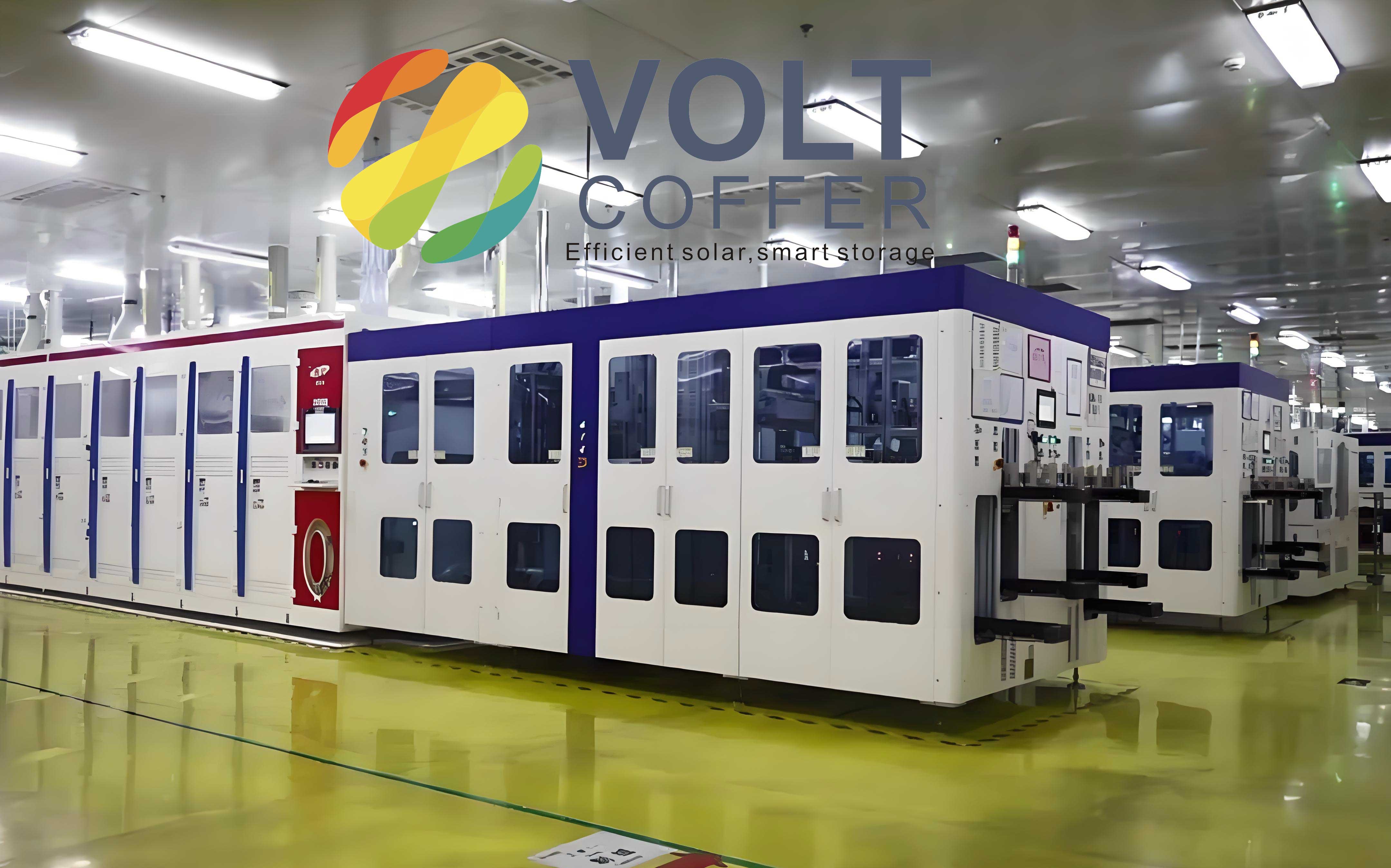
Looking ahead, an increasing number of countries are investing in solar energy applications and developing related energy-saving products. Since the 21st century, many nations have formulated renewable energy plans including solar power. With declining investment costs and ongoing policy support, China’s solar power industry has achieved considerable scale and technological maturity. China is now a global manufacturing base for PV applications, with the focus shifting to grid-connected systems, including building-integrated PV. The International Energy Agency (IEA) reported in “Renewables 2020” that solar and wind energy will surpass natural gas by 2023 and coal by 2024, with solar accounting for 60% and wind for 30% of renewable usage by 2025. Renewables are expected to constitute 95% of global renewable electricity generation, becoming the primary power source within five years. This trend highlights the growing importance of solar energy, and cement enterprises should proactively adopt PV systems to stay competitive. Selecting the best solar panel company will ensure access to cutting-edge technology and maximize long-term benefits.
In conclusion, PV power generation represents a green, eco-friendly energy source that is inexhaustible. For cement enterprises, installing PV systems on roofs offers both economic and social benefits, aligning with low-carbon, clean production principles and supporting energy strategy transformation. As the industry moves toward sustainability, collaboration with the best solar panel company will be instrumental in achieving these goals, driving innovation, and fostering a greener future. The feasibility of PV power in cement plants is clear, and with continued advancements, it will play a pivotal role in the global energy landscape.