
In modern energy storage systems, LiFePO4 batteries have gained widespread adoption due to their high safety, long cycle life, and environmental friendliness. However, a critical challenge arises when these batteries are subjected to long-term storage, as performance degradation can occur, impacting their reliability in applications such as electric vehicles and grid storage. As a researcher focused on battery technology, I have conducted an in-depth investigation into the failure mechanisms of LiFePO4 batteries during extended storage under various conditions. This article presents a comprehensive analysis based on experimental studies, aiming to elucidate the factors driving capacity fade and internal resistance growth. The insights derived here are crucial for optimizing storage protocols and enhancing the longevity of LiFePO4 battery systems.
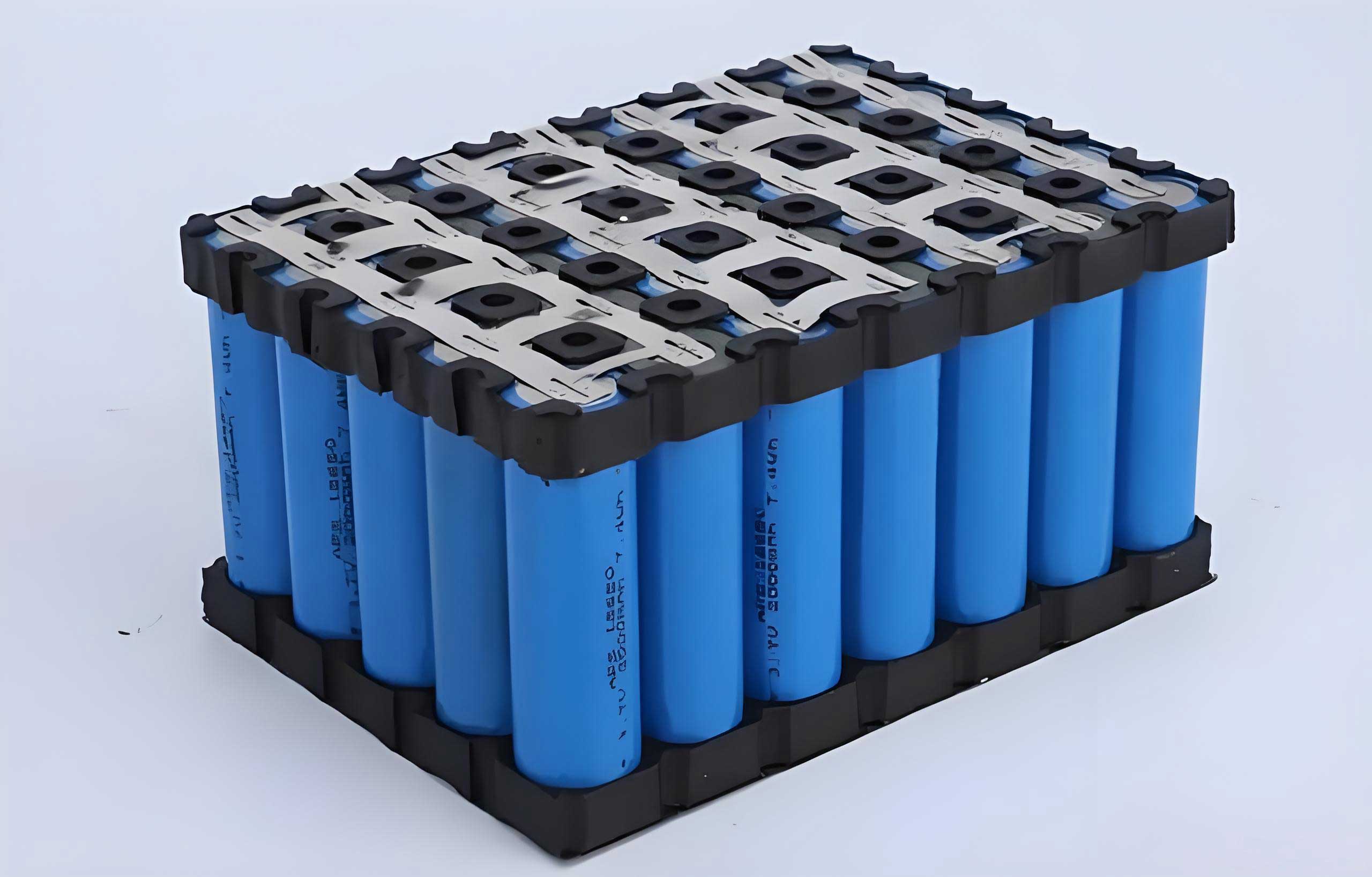
The performance degradation of LiFePO4 batteries during storage is influenced by multiple parameters, including temperature, state of charge (SOC), and time. To systematically evaluate these effects, we designed experiments using 20 Ah LiFePO4 pouch cells, which are representative of commercial products. These LiFePO4 batteries consist of lithium iron phosphate cathodes, artificial graphite anodes, polyethylene separators, and carbonate-based electrolytes with LiFSI salts. The storage conditions were varied across temperatures of 25°C and 45°C, and SOC levels of 50%, 80%, and 100%, with periodic testing over six months. This approach allows us to monitor changes in capacity and DC internal resistance (DCR), providing a foundation for understanding the underlying failure mechanisms in LiFePO4 batteries.
From a methodological perspective, the evaluation of LiFePO4 battery degradation involves both electrochemical testing and material characterization. After storage periods, cells were discharged to 2.0 V at 0.1 C rates, followed by disassembly in an argon-filled glovebox. Electrodes were harvested, cleaned, and dried for further analysis. Single-layer cells were fabricated to isolate the contributions of cathode and anode to capacity loss, using techniques such as scanning electron microscopy (SEM), X-ray diffraction (XRD), and X-ray photoelectron spectroscopy (XPS). These tools enable us to probe morphological, structural, and compositional changes in the electrodes of LiFePO4 batteries after storage. Additionally, inductively coupled plasma (ICP) spectroscopy was employed to quantify metallic deposits, particularly iron and lithium, on electrode surfaces. By integrating these methods, we aim to build a holistic view of the degradation processes in LiFePO4 batteries.
The capacity retention of LiFePO4 batteries during storage exhibits a time-dependent decay, as summarized in Table 1. The data clearly indicate that higher temperatures and SOC levels accelerate capacity fade. For instance, after six months at 45°C and 100% SOC, the capacity retention drops to approximately 86%, compared to 94% at 25°C and 50% SOC. This trend underscores the sensitivity of LiFePO4 batteries to environmental stress. The decay can be modeled using an exponential function, where the capacity retention \( C(t) \) is given by:
$$ C(t) = C_0 \cdot e^{-kt} $$
Here, \( C_0 \) is the initial capacity, \( t \) is storage time in months, and \( k \) is a degradation rate constant that depends on temperature and SOC. For LiFePO4 batteries, \( k \) increases with rising temperature, reflecting enhanced kinetic processes. Similarly, the DC internal resistance growth, a key indicator of power capability, follows a linear trend in many cases, but at elevated temperatures, it shows a more pronounced increase. Table 2 summarizes the DCR growth rates under different conditions, highlighting that high-temperature storage can lead to a 25% increase in DCR over six months, which compromises the power output of LiFePO4 batteries.
| Storage Temperature (°C) | SOC (%) | Capacity Retention (%) | Degradation Rate Constant \( k \) (month⁻¹) |
|---|---|---|---|
| 25 | 50 | 94.2 | 0.010 |
| 25 | 80 | 92.5 | 0.013 |
| 25 | 100 | 91.0 | 0.015 |
| 45 | 50 | 90.1 | 0.018 |
| 45 | 80 | 87.8 | 0.022 |
| 45 | 100 | 86.4 | 0.025 |
| Storage Temperature (°C) | SOC (%) | DCR Growth Rate (%) | Estimated Power Loss (%) |
|---|---|---|---|
| 25 | 50 | 4.2 | 3.8 |
| 25 | 80 | 6.5 | 5.9 |
| 25 | 100 | 8.0 | 7.3 |
| 45 | 50 | 12.3 | 11.0 |
| 45 | 80 | 15.6 | 13.9 |
| 45 | 100 | 18.2 | 16.2 |
To delve deeper into the capacity fade mechanisms, we disassembled LiFePO4 batteries after 140 days of storage and constructed single-layer cells from the harvested electrodes. The capacity contributions from cathodes and anodes were quantified, allowing us to decompose the total capacity loss into three components: active lithium loss, cathode material degradation, and polarization-induced loss. The formulas for these components are derived from electrochemical principles. For active lithium loss, we calculate the irreversible consumption based on the difference in residual lithium between fresh and stored electrodes. Let \( C_{\text{rev, fresh}} \) and \( C_{\text{rev, stored}} \) represent the reversible capacities of fresh and stored cathodes, respectively, and \( C_{\text{res, fresh}} \) and \( C_{\text{res, stored}} \) denote their residual capacities. Similarly, for anodes, we use \( A_{\text{rev}} \) and \( A_{\text{res}} \). The active lithium loss \( L_{\text{active}} \) is given by:
$$ L_{\text{active}} = \frac{(C_{\text{res, stored}} – C_{\text{res, fresh}}) – (A_{\text{res, stored}} – A_{\text{res, fresh}})}{C_{\text{rev, fresh}} – A_{\text{res, fresh}}} $$
This formulation highlights that active lithium loss dominates the capacity fade in LiFePO4 batteries, as confirmed by our experimental data. In contrast, cathode material degradation loss \( L_{\text{cathode}} \) is computed as:
$$ L_{\text{cathode}} = \frac{C_{\text{rev, fresh}} – C_{\text{rev, stored}}}{C_{\text{rev, fresh}} – C_{\text{res, fresh}}} $$
and polarization loss \( L_{\text{polarization}} \) is:
$$ L_{\text{polarization}} = \frac{A_{\text{res, stored}} – A_{\text{res, fresh}}}{C_{\text{rev, fresh}} – A_{\text{res, fresh}}} $$
Based on these calculations, we found that active lithium loss accounts for over 80% of the total capacity fade in LiFePO4 batteries stored at high temperatures and SOC, while cathode degradation and polarization contribute less than 10% each. This emphasizes the critical role of anode-electrolyte interactions in the storage performance of LiFePO4 batteries.
The active lithium loss in LiFePO4 batteries is primarily attributed to the repair and reorganization of the solid electrolyte interphase (SEI) on graphite anodes. During storage, especially at elevated temperatures, the SEI layer undergoes continuous dissolution and reformation, consuming lithium ions from the electrolyte. This process is exacerbated by the presence of transition metal impurities, such as iron, which can catalyze side reactions. To quantify the lithium loss, we performed ICP analysis on anode sheets from stored LiFePO4 batteries. The lithium content \( m_{\text{Li}} \) in anodes was measured and compared to the theoretical lithium loss calculated from cathode residual capacities. The theoretical lithium loss \( m_{\text{Li, theor}} \) is derived from the cathode residual capacity \( C_{\text{res}} \) using the formula:
$$ m_{\text{Li, theor}} = \frac{0.001 \times 3600 \times C_{\text{res}}}{e \times N_A} \times A_r(\text{Li}) \times 10^{-3} $$
where \( e \) is the elementary charge (1.6 × 10⁻¹⁹ C), \( N_A \) is Avogadro’s number (6.02 × 10²³ mol⁻¹), and \( A_r(\text{Li}) \) is the atomic weight of lithium (6.941 g/mol). The results, presented in Table 3, show a close match between measured and theoretical lithium values, with ratios near unity. This confirms that active lithium consumption at the anode is the main driver of capacity fade in LiFePO4 batteries, with minimal contribution from other sources.
| Storage Condition | Measured Lithium in Anode (mg) | Theoretical Lithium from Cathode (mg) | Ratio (Measured/Theoretical) |
|---|---|---|---|
| 25°C, 50% SOC | 5.132 | 4.968 | 1.033 |
| 25°C, 100% SOC | 5.345 | 5.539 | 0.965 |
| 45°C, 50% SOC | 6.258 | 6.400 | 0.978 |
| 45°C, 100% SOC | 7.981 | 7.801 | 1.023 |
Morphological and structural analyses of electrodes from LiFePO4 batteries provide further insights into the degradation processes. SEM images reveal that cathode surfaces remain relatively unchanged after storage, with no significant deposition or cracking. In contrast, anode surfaces exhibit rough textures with particulate deposits, indicative of SEI growth and electrolyte decomposition products. These deposits become more pronounced at higher storage temperatures, aligning with the accelerated capacity fade observed in LiFePO4 batteries under such conditions. XRD patterns of cathodes confirm the stability of the LiFePO4 crystal structure, with no phase transformations detected. However, for anodes, a slight shift in the graphite (002) peak toward lower angles is observed, suggesting an increase in interlayer spacing \( d_{002} \). This expansion can be described by Bragg’s law:
$$ n\lambda = 2d \sin \theta $$
where \( \lambda \) is the X-ray wavelength, \( d \) is the interplanar spacing, and \( \theta \) is the diffraction angle. The increase in \( d_{002} \) implies a reduction in graphitization degree, which may contribute to increased polarization in LiFePO4 batteries, though its impact on capacity fade is secondary.
Chemical analysis via XPS unveils the surface composition changes in electrodes of LiFePO4 batteries. For cathodes, the F1s spectra show a significant increase in LiF peaks after storage, particularly at high temperatures, indicating electrolyte decomposition and the formation of a cathode-electrolyte interphase (CEI). The P2p spectra reveal the presence of P-F bonds in samples stored at 45°C, suggesting fluoride incorporation from electrolyte salts. These surface modifications, however, have a limited effect on active lithium loss. For anodes, the Li1s spectra demonstrate elevated levels of LiF and other lithium salts like Li₂CO₃, consistent with SEI repair. Moreover, the Fe2p spectra detect elemental iron on anode surfaces, with peak intensities correlating with storage temperature. This iron originates from the dissolution of LiFePO4 cathodes, where iron ions migrate to the anode during charging and are reduced to metallic iron. The deposition of iron catalyzes further electrolyte decomposition, accelerating active lithium consumption in LiFePO4 batteries. The XPS peak areas for key functional groups are summarized in Table 4, highlighting the compositional shifts.
| Functional Group | Fresh Battery | After 25°C Storage | After 45°C Storage |
|---|---|---|---|
| Cathode: C-F/P-F | 48,866.5 | 394,399.8 | 309,051.4 |
| Cathode: LiF | 4,607.9 | 354,708.7 | 546,546.8 |
| Cathode: P-F | 0 | 0 | 16,185.7 |
| Cathode: P-O/P=O | 13,848.9 | 13,909.4 | 42,348.5 |
| Anode: LiF | 2,688.5 | 11,291.8 | 16,217.3 |
| Anode: Li₂CO₃/ROCO₂Li | 81.7 | 8,056.5 | 10,831.6 |
| Anode: Fe2p₃/₂ | — | 31,494.4 | 85,976.2 |
| Anode: Fe2p₁/₂ | — | 30,724.5 | 62,947.6 |
The iron deposition on anodes of LiFePO4 batteries is a critical factor exacerbating storage degradation. ICP measurements quantify the iron content, as shown in Table 5, where higher storage temperatures lead to increased iron accumulation. This iron catalyzes parasitic reactions, such as electrolyte reduction, which consume active lithium and thicken the SEI layer. The relationship between iron content \( [\text{Fe}] \) and capacity fade \( \Delta C \) can be approximated by a linear model:
$$ \Delta C = \alpha + \beta \cdot [\text{Fe}] $$
where \( \alpha \) represents the baseline fade from SEI repair, and \( \beta \) is the catalytic coefficient. For LiFePO4 batteries stored at 45°C and 100% SOC, \( \beta \) is estimated to be 0.05% per ppm of iron, indicating a significant impact. This underscores the need to mitigate iron dissolution in LiFePO4 batteries to improve storage stability.
| Storage Condition | Iron Content (ppm) | Corresponding Capacity Fade (%) |
|---|---|---|
| Fresh | 0 | 0 |
| 25°C, 50% SOC | 92 | 4.8 |
| 25°C, 100% SOC | 146 | 6.2 |
| 45°C, 50% SOC | 269 | 8.1 |
| 45°C, 100% SOC | 1380 | 12.5 |
In addition to electrochemical and material analyses, we explored the kinetic aspects of degradation in LiFePO4 batteries. The rate of active lithium loss \( r_{\text{Li}} \) can be described by an Arrhenius-type equation, accounting for temperature dependence:
$$ r_{\text{Li}} = A \cdot e^{-E_a / (RT)} \cdot f(\text{SOC}) $$
where \( A \) is a pre-exponential factor, \( E_a \) is the activation energy for SEI repair, \( R \) is the gas constant, \( T \) is temperature in Kelvin, and \( f(\text{SOC}) \) is a function of state of charge. For LiFePO4 batteries, \( E_a \) is estimated around 50 kJ/mol, implying that a 10°C rise in temperature nearly doubles the loss rate. The function \( f(\text{SOC}) \) typically increases with SOC due to higher electrode potentials, which drive more vigorous side reactions. This model helps predict storage life for LiFePO4 batteries under various conditions, aiding in logistics and management.
Furthermore, the DC internal resistance growth in LiFePO4 batteries is linked to increased interfacial resistance from SEI thickening and contact loss within electrodes. The resistance rise \( \Delta R \) over time \( t \) can be expressed as:
$$ \Delta R = R_0 \cdot (1 + \gamma t) $$
where \( R_0 \) is the initial resistance, and \( \gamma \) is a growth coefficient dependent on temperature and SOC. For LiFePO4 batteries stored at 45°C, \( \gamma \) values range from 0.02 to 0.03 per month, leading to substantial power degradation. This has implications for applications requiring high power output, such as in electric vehicles where LiFePO4 batteries are commonly used.
To mitigate storage-induced degradation in LiFePO4 batteries, several strategies can be employed. First, optimizing storage conditions by maintaining lower temperatures (e.g., below 25°C) and moderate SOC levels (around 50%) can significantly slow capacity fade and resistance growth. Second, enhancing electrolyte formulations with SEI stabilizers, such as vinylene carbonate or fluoroethylene carbonate, can reduce active lithium consumption by forming more robust interfacial layers. Third, improving the stability of LiFePO4 cathodes through coating or doping can minimize iron dissolution, thereby decreasing catalytic effects on anodes. These approaches are essential for extending the shelf life of LiFePO4 batteries, ensuring they meet performance requirements after long-term storage.
In conclusion, the long-term storage failure of LiFePO4 batteries is predominantly driven by active lithium loss due to SEI repair on anodes, exacerbated by iron dissolution from cathodes. Through comprehensive experimental analysis, we have quantified the contributions of various factors, highlighting the sensitivity to temperature and SOC. The integration of electrochemical testing, material characterization, and kinetic modeling provides a thorough understanding of the degradation mechanisms in LiFePO4 batteries. Future work should focus on advanced materials and storage protocols to enhance the resilience of LiFePO4 batteries, supporting their sustainable deployment in energy storage systems. This research underscores the importance of proactive management for LiFePO4 batteries, ensuring their reliability across diverse applications.
As a final note, the study of LiFePO4 battery degradation is an ongoing endeavor, with complexities arising from real-world usage scenarios. However, by leveraging insights from controlled storage experiments, we can develop predictive models and improvement strategies. The LiFePO4 battery, with its inherent advantages, remains a cornerstone of modern energy storage, and addressing its storage challenges is key to unlocking its full potential. Through continuous innovation, we aim to push the boundaries of LiFePO4 battery technology, contributing to a greener and more efficient energy future.