
The pervasive adoption of electric bicycles has undeniably transformed urban mobility, offering a convenient and eco-friendly alternative to traditional transportation. At the heart of this revolution lies the lithium-ion battery, a high-energy-density power source. However, this very advantage is shadowed by significant safety concerns. Statistical data paints a grim picture: fires originating from lithium-ion battery failures account for over 80% of all electric bicycle fire incidents nationally, with reported cases reaching 21,000 in 2023 alone, marking a year-on-year increase of 17.4%. These fires, often occurring during charging, generate intense heat and toxic fumes, posing severe risks of burns, poisoning, and hindering escape, thereby presenting a critical threat to public safety.
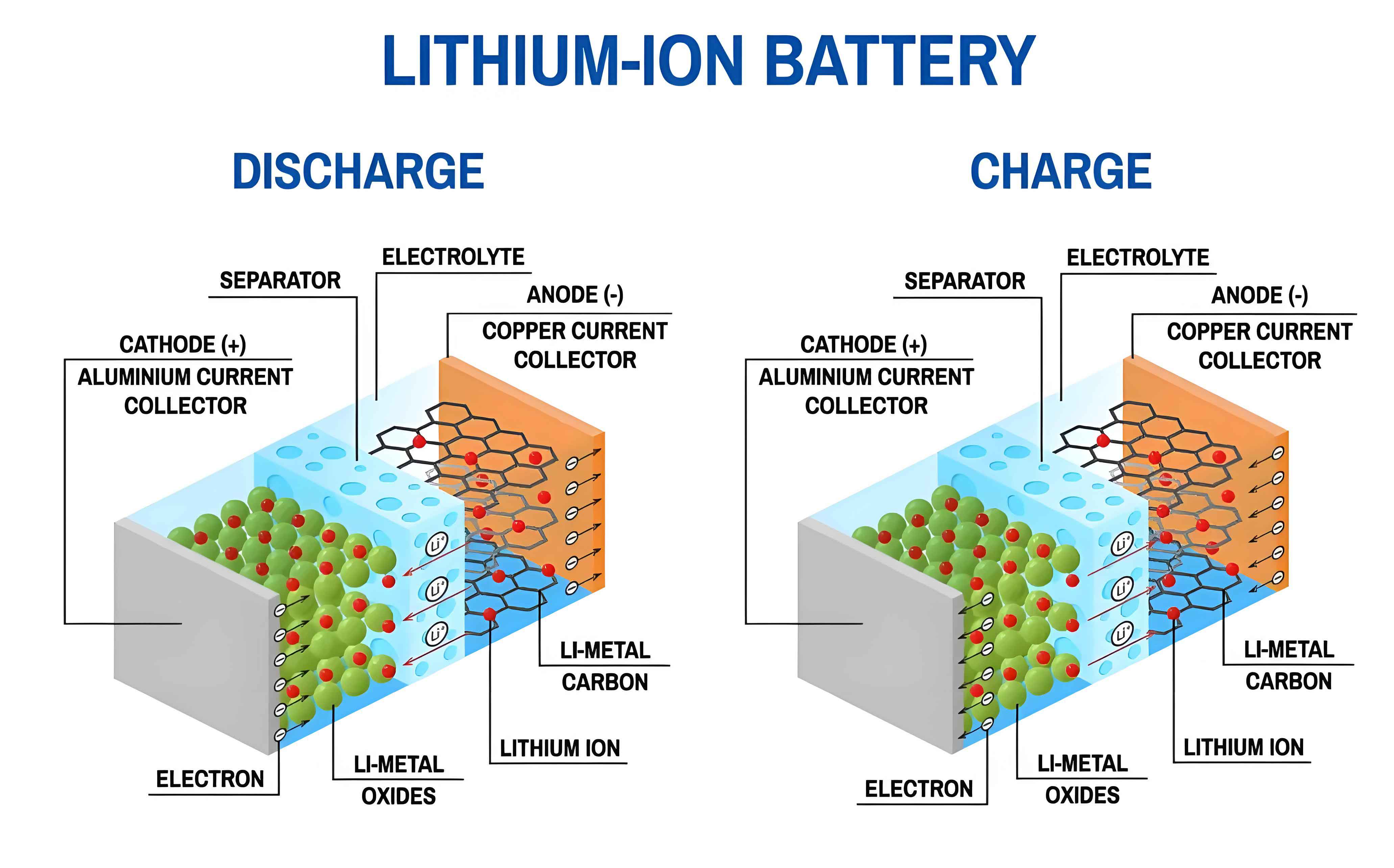
Recognizing this urgent challenge, regulatory bodies have stepped in. The release of the “Guidelines for Health Assessment of Lithium-ion Batteries for Electric Bicycles” in December 2024 by multiple ministries represents a pivotal policy push aimed at mitigating safety risks and steering the industry toward safer, more sustainable development. This regulatory framework underscores a pressing technical necessity: the establishment of a scientific, standardized, and actionable system for the health detection and evaluation of electric bicycle lithium-ion batteries. The construction of such a system carries profound multi-dimensional value. Socially, it serves as a frontline defense, enabling the early identification of latent defects in lithium-ion batteries to prevent thermal runaway and short circuits, thereby safeguarding lives and property. Economically, it empowers users with knowledge of their battery’s health, informing timely maintenance or replacement decisions, fostering a circular economy through standardized recycling, and catalyzing industry upgrades via trade-in programs. Technologically, it presents an opportunity to leap beyond rudimentary checks by integrating dynamic monitoring, machine learning, and advanced data analytics to achieve precise, real-time health state prediction, vastly improving upon the accuracy and efficiency of traditional methods.
The operational blueprint for a lithium-ion battery health assessment service is designed for accessibility and rigor. It begins with a user submitting a detection request via a dedicated mini-program or web portal. Upon receiving the physical lithium-ion battery unit and the corresponding request form, a certified technician initiates a meticulous inspection process. This process is structured into several key phases, each targeting specific failure modes and degradation indicators of the lithium-ion battery.
The initial phase involves a thorough visual and label inspection, a critical first filter for immediate hazards. Any lithium-ion battery exhibiting physical compromise such as casing damage, leakage, deformation, or signs of arcing and burning is flagged for mandatory scrapping. Similarly, label inspection enforces regulatory and safety compliance: batteries lacking brand identification, mandatory CCC certification (for units produced after November 1, 2025), those exceeding the 48V nominal voltage limit, or those that have surpassed their recommended safe service life are designated for immediate cessation of use.
Following the initial screening, the core parametric evaluation of the lithium-ion battery commences. This involves quantitative measurements against well-defined thresholds, as summarized in the table below.
| Test Item | Test Method | Failure Threshold | Technical Basis |
|---|---|---|---|
| Maximum Output Voltage | Measurement at full charge state (accuracy ±0.5%) | > 60 V | Annex 1 of the Guidelines |
| Internal Resistance | Measurement using AC internal resistance tester (accuracy ±1%, frequency 1.0 kHz) | > 0.5 Ω | Annex 1 of the Guidelines |
| Discharge Capacity Fade Rate | Calculated using formula: η = 1 – (C/C₀) × 100%, where C is measured capacity. | > 50% | Annex 1 of the Guidelines |
The technician uses calibrated instruments—an internal resistance meter and a voltage meter—to capture the first two parameters, uploading the measurement curves for record. The discharge capacity test, which determines the fade rate (η), is conducted using a discharge cycler. The system software automatically computes η based on the measured capacity (C) and the battery’s nominal or initial capacity (C₀). A fade rate exceeding 50% indicates the lithium-ion battery has reached its end-of-life from a performance and safety perspective. All data and images are consolidated into a comprehensive health assessment report, accessible to both the user and the technician through the digital platform.
Beyond basic parameters, a robust assessment protocol for a lithium-ion battery must verify its electronic safety features. This involves two key checks. First, the Charging Interoperability Test validates the mutual recognition and handshake protocol between a specific lithium-ion battery pack, its designated electric bicycle, and charger. Successful authentication is required to initiate charging, preventing mismatched or incompatible equipment from causing overcharge scenarios. Second, a functional diagnostic of the Battery Management System (BMS) is performed. This check scrutinizes the circuitry responsible for critical protections—including short-circuit, over-charge, over-discharge, and over-current discharge—ensuring these electronic safeguards are operational and can effectively intervene during fault conditions.
The physical deployment of this assessment system relies on a network of strategically located evaluation outlets. The planning principles emphasize coverage and standardization. Priority is given to areas with high concentrations of electric bicycles and older lithium-ion battery packs, such as older residential communities and logistics delivery hubs, with temporary assessment points encouraged for wider reach. Each outlet must be standardized, equipped with regularly calibrated detection equipment, and staffed by personnel who have undergone specialized training. To incentivize public participation,便民 measures like subsidy policies are essential. Users who proactively submit end-of-life lithium-ion batteries can receive discounts on new battery purchases or direct recycling subsidies. Furthermore, each outlet must function as a node in a safe recycling闭环, equipped for the secure temporary storage of scrapped lithium-ion batteries before their periodic transfer to formal recycling facilities. Pilot projects implementing this model have demonstrated tangible results, notably enhancing detection efficiency, improving user satisfaction with service网点, and enabling the real-time collection of lithium-ion battery health data for proactive safety warnings.
To transcend the limitations of periodic manual checks, the frontier of lithium-ion battery health evaluation lies in continuous dynamic monitoring and advanced data analytics. The first step involves sophisticated signal processing and feature extraction from operational data. During charge and discharge cycles, raw voltage, current, and temperature signals are noisy. Techniques like Ensemble Empirical Mode Decomposition (EEMD) are employed to decompose these signals into intrinsic mode functions (IMFs), separating high-frequency noise from low-frequency trend components that truly reflect degradation. A reconstructed signal, emphasizing these low-frequency components, provides a cleaner health indicator. This can be conceptually represented as focusing on specific IMFs and the residual:
$$ V_{trend}(t) = \sum_{i=7}^{9} IMF_i(t) + Res(t) $$
Where $IMF_{7-9}$ represent low-frequency components and $Res(t)$ is the residual sequence, often correlating with long-term capacity fade trends.
Subsequently, multi-dimensional health factors are extracted. The Maximum Information Coefficient (MIC) is used to identify dynamic features—such as charge termination voltage curve characteristics, average operating temperature, and discharge rate distribution—that have a strong correlation (MIC > 0.8) with capacity fade. Principal Component Analysis (PCA) is then applied to reduce dimensionality and eliminate redundancy among these correlated features, resulting in a concise yet comprehensive health factor set. This set spans multiple dimensions:
| Dimension | Example Health Factors |
|---|---|
| Electrochemical | Internal resistance, capacity fade rate (η), voltage plateau slope. |
| Operational | Cumulative depth of discharge (DOD), ratio of fast to slow charging time. |
| Structural | Electrode alignment metrics, separator integrity scores (derived from industrial CT). |
The incorporation of industrial computed tomography (CT) scanning technology is a significant advancement. It allows for the non-destructive quantification of internal microstructural defects within the lithium-ion battery, such as active material particle detachment, electrolyte distribution non-uniformity, or electrode layer delamination, providing a direct “structural health” metric that complements electrical measurements.
These rich, multi-modal health factors serve as input for optimized machine learning models tasked with State of Health (SOH) prediction and Remaining Useful Life (RUL) estimation. Hybrid neural network architectures are developed to handle different data characteristics effectively. For instance, Long Short-Term Memory (LSTM) networks are adept at processing high-dimensional time-series features like detailed voltage/temperature curves to capture long-term dependencies. In contrast, Gated Recurrent Units (GRU), with their simpler gating mechanism, offer computational efficiency advantages in scenarios involving large-scale, parallel monitoring of multiple lithium-ion battery units. On pilot project datasets, such hybrid LSTM-GRU models have achieved SOH prediction errors of less than 2.5% while reducing training time by approximately 18% compared to single-architecture models.
For scenarios with limited historical data, Bayesian Optimized Gaussian Process Regression (BO-GPR) presents a powerful solution. This method uses Bayesian optimization to automatically and adaptively tune the GPR model’s hyperparameters (e.g., kernel length scale, noise variance), overcoming the reliance on manual tuning. Its strength is maintaining high prediction accuracy (e.g., RMSE < 1.2%) even with small sample sizes (e.g., N=50), making it particularly suitable for early-stage fault warning in a lithium-ion battery. A critical aspect of prognostic models is quantifying prediction uncertainty, especially given phenomena like capacity regeneration that can temporarily reverse degradation trends. Techniques like Monte Carlo sampling are integrated to output confidence intervals for RUL predictions, thereby enhancing the reliability of safety warnings. Models like the Particle Swarm Optimized Extreme Learning Machine (PSO-ELM) have shown efficacy for real-time SOH monitoring, with evaluation errors below 3%, while uncertainty-aware frameworks improve RUL precision by modeling long-term dependencies and regeneration uncertainties.
The assessment paradigm evolves further through cross-industry technological fusion, leading to a multi-modal evaluation system. Inspired by practices in the electric vehicle sector, a comprehensive health grade for a lithium-ion battery can be assigned by synthesizing electrical and structural data. For example, clustering analysis of cell ohmic resistance can identify modules with poor consistency, while CT-derived structural scores provide independent validation. This fusion leads to a dual-dimension (“electrochemical-structural”) grading standard, as illustrated below:
| Grade | Capacity Fade Rate (η) | Structural Integrity (CT Score) | Battery Health State |
|---|---|---|---|
| A | ≤ 30% | ≥ 90 | Good |
| B | 30% < η ≤ 50% | 70 – 90 | Fair |
| C | > 50% | < 70 | Poor (Fail) |
To ensure data integrity and traceability across the battery’s lifecycle, the integration of blockchain technology is explored. A decentralized platform can create an immutable health档案 for each lithium-ion battery, recording all assessment results, CT images, repair history, and ownership transfers, enabling full traceability from production through use to final recycling.
Despite promising progress, significant challenges persist in mainstreaming lithium-ion battery health assessment. A primary technical bottleneck is the time-consuming nature of full discharge capacity tests, which may lead some service points to adopt simplified, less accurate procedures. Accurately identifying illegally modified or counterfeit lithium-ion battery packs remains difficult and requires collaborative efforts with manufacturers to build feature databases for recognition. On the policy front, recommendations include promoting nationwide standardization of assessment outlet qualifications, detection workflows, and data formats to ensure consistency and reliability. Expanding financial incentive mechanisms, such as broadening the scope of “trade-in” subsidies, is crucial to encourage voluntary user participation in health evaluation programs for their lithium-ion battery.
Looking ahead, the future direction points towards holistic, technology-driven lifecycle management. The vision is to seamlessly combine dynamic in-situ monitoring, AI-powered analytics, and secure blockchain tracing to establish a closed-loop ecosystem of “assessment-early warning-regrading/recycling-reuse” for every lithium-ion battery. This system must remain adaptable, continuously evolving its detection and evaluation methodologies to keep pace with rapid technological iterations in lithium-ion battery chemistry and design, such as the advent of solid-state or silicon-anode batteries.
In conclusion, the systematic construction of a health detection and evaluation framework for electric bicycle lithium-ion batteries is an indispensable strategic measure for preemptively controlling fire risks and ensuring public safety. Through the synergistic combination of regulatory guidance, continuous technological innovation—spanning dynamic signal processing, multi-modal machine learning, and industrial imaging—and practical field validation via pilot networks, a foundational system is taking shape. The path forward demands sustained collaboration across industry, academia, and government to refine these tools, overcome existing challenges, and fully realize a circular, safe, and intelligent ecosystem for electric mobility powered by reliable lithium-ion batteries.