
In recent years, the rapid development of renewable energy systems has heightened the demand for efficient and safe energy storage solutions. Among these, energy storage lithium battery technologies, particularly lithium iron phosphate (LiFePO4) batteries, have gained prominence due to their superior thermal stability and safety profile compared to other chemistries. However, thermal runaway (TR) propagation in large-scale energy storage lithium battery modules remains a critical safety concern, as it can lead to catastrophic failures in energy storage systems. This issue is exacerbated in high-capacity configurations, such as the 280 Ah modules commonly used in grid-scale applications, where thermal management challenges are amplified. To address this, we propose an immersion cooling strategy, where battery modules are partially or fully submerged in a dielectric coolant to enhance heat dissipation and mitigate thermal hazards. In this study, we investigate the thermal safety performance of energy storage lithium battery modules under various immersion conditions, focusing on TR propagation characteristics, temperature dynamics, voltage responses, and mass loss during overcharge-induced failure scenarios.
Our experimental setup involved a series-connected module of three 280 Ah LiFePO4 energy storage lithium batteries, designated as B1, B2, and B3, with B2 serving as the trigger cell for overcharge-induced TR. The batteries were housed in a stainless steel explosion-proof chamber, and we employed a customized immersion cooling system using a dielectric fluid (Taihang Yundong SC-03) with high dielectric strength, thermal conductivity, and specific heat capacity. The immersion height ratio (himm), defined as the percentage of battery height submerged in the coolant, was varied across tests: 0% (non-immersion), 60%, 100%, and 120%. We instrumented each energy storage lithium battery with K-type thermocouples at strategic locations—large surface centers, side centers, and top surfaces—to monitor temperature distributions, and we recorded voltage data using a data acquisition system. A constant temperature bath maintained the coolant at 25°C, with a flow rate of 2 L/min, simulating realistic operating conditions for energy storage lithium battery systems. Overcharge tests were conducted on B2 at a 0.35 C rate (98 A) to initiate TR, and we defined TR onset as a temperature rise rate exceeding 1°C/s coupled with a rapid voltage drop.
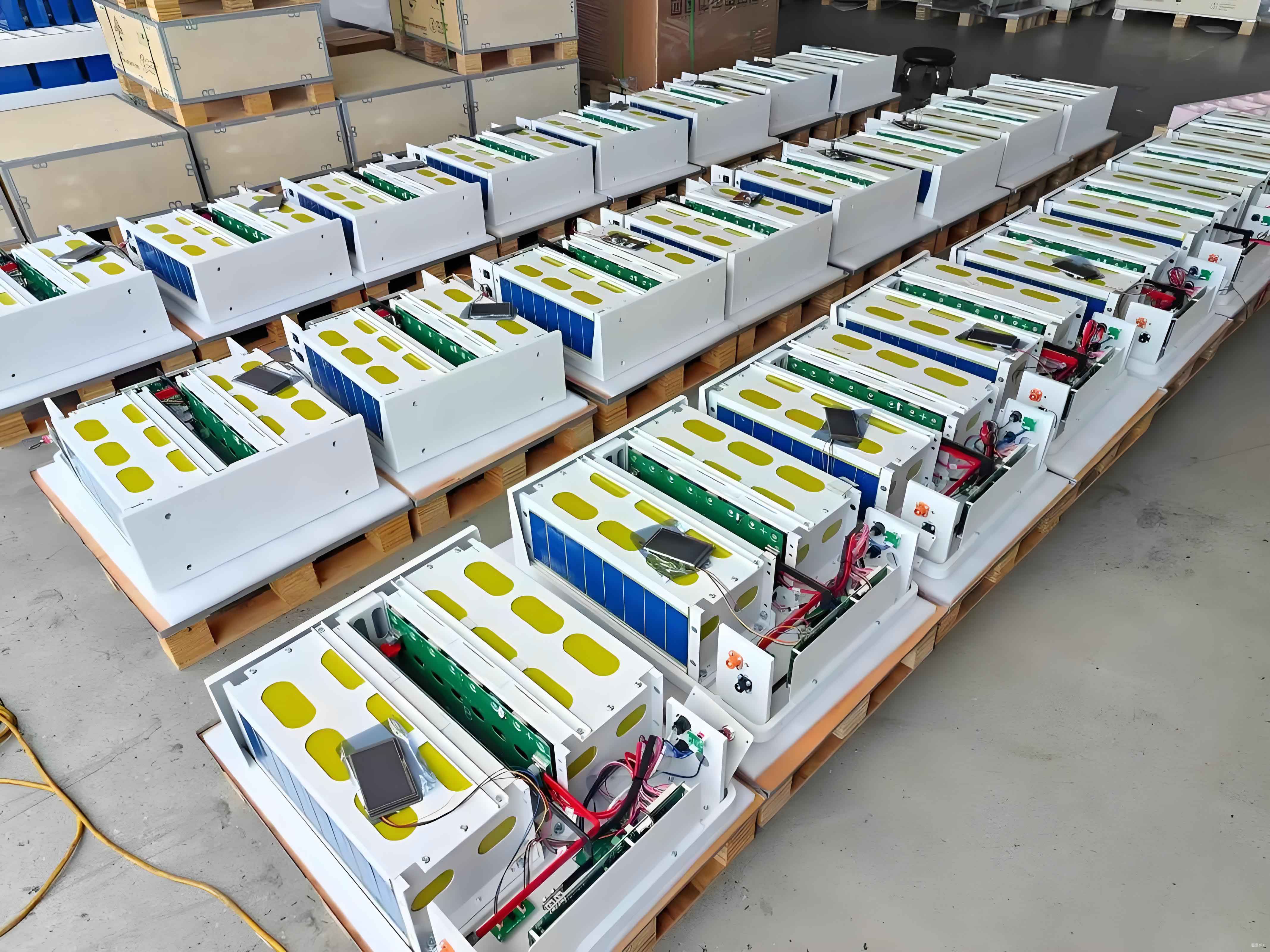
The physical parameters of the energy storage lithium battery and coolant are summarized in Table 1, providing a foundation for understanding the thermal interactions. The energy storage lithium battery has a nominal voltage of 3.2 V and a specific heat capacity of 1029 J/(kg·°C), while the coolant exhibits a thermal conductivity of 0.1312 W/(m·°C) and a high breakdown voltage of 75 kV, ensuring electrical isolation. These properties are critical for evaluating the heat transfer efficiency in immersion cooling systems for energy storage lithium battery applications.
| Object | Parameter | Value |
|---|---|---|
| Battery | Dimensions (mm) | 173 × 72 × 205 |
| Capacity (Ah) | 280 | |
| Mass (g) | 5400 ± 5 | |
| Nominal Voltage (V) | 3.2 | |
| Specific Heat Capacity (J/(kg·°C)) | 1029 | |
| Density (kg/m³) | 2118 | |
| Thermal Conductivity (W/(m·°C)) | X/Y/Z: 21.6/21.6/2.1 | |
| Coolant | Density (kg/m³) | 782.8 |
| Kinematic Viscosity at 20°C (mm²/s) | 6.051 | |
| Specific Heat Capacity (J/(kg·°C)) | 1970 | |
| Thermal Conductivity (W/(m·°C)) | 0.1312 | |
| Breakdown Voltage (kV) | 75 | |
| Boiling Point (°C) | 220 | |
| Flash Point (°C) | 143 |
Under non-immersion conditions (himm = 0%), the energy storage lithium battery module exhibited severe TR propagation. Overcharging B2 led to safety vent opening at approximately 1006 s, followed by TR at 2134 s, characterized by a peak temperature rise rate of 16.6°C/s and a maximum surface temperature of 406.8°C. The intense heat release triggered sequential TR in adjacent batteries B3 and B1 at 2576 s and 2847 s, respectively, with B3 reaching a peak temperature of 635.4°C and a mass loss rate of 23.26%. The voltage profile showed a rapid surge to 24.1 V before collapsing to zero, indicating internal short circuits. This chain reaction underscores the vulnerability of energy storage lithium battery modules to thermal propagation in absence of effective cooling, highlighting the need for advanced thermal management strategies like immersion cooling.
In contrast, immersion scenarios demonstrated significant suppression of TR propagation across all himm values. For himm = 60%, vent opening occurred at 1258 s, and TR initiated at 2134 s with a peak temperature of 291.7°C and a temperature rise rate of 14°C/s. The coolant limited the maximum temperature of adjacent batteries to 283.9°C, preventing TR propagation. At himm = 100%, vent opening delayed to 1438 s, and TR featured a lower peak temperature of 322.6°C and a reduced temperature rise rate of 12.3°C/s. Adjacent batteries remained below 242.6°C, with no TR propagation observed. Further increasing himm to 120% resulted in similar behavior, with vent opening at 1489 s and TR parameters comparable to himm = 100%, suggesting a saturation point in cooling efficacy. The voltage responses in immersion cases showed a plateau around 5.2 V before abrupt drops, aligning with TR onset, and no voltage fluctuations in neighboring batteries, confirming isolation from TR propagation. The cooling performance can be modeled using a simplified heat transfer equation: $$ \frac{dT}{dt} = \frac{q_{\text{gen}} – hA(T – T_{\text{coolant}})}{mC_p} $$ where \( \frac{dT}{dt} \) is the temperature change rate, \( q_{\text{gen}} \) is the heat generation rate during overcharge, \( h \) is the heat transfer coefficient, \( A \) is the submerged surface area, \( T \) is battery temperature, \( T_{\text{coolant}} \) is coolant temperature, \( m \) is battery mass, and \( C_p \) is specific heat capacity. This equation illustrates how immersion cooling enhances heat dissipation, reducing \( \frac{dT}{dt} \) and delaying TR.
We analyzed the TR process in immersion cases through three distinct phases: Phase I (charging to vent opening), Phase II (vent opening to TR imminent), and Phase III (TR to cooling). The duration of each phase varied with himm, as summarized in Table 2. Increasing himm prolonged Phase I and Phase II, due to improved heat removal, but Phase III remained relatively constant, indicating that once TR initiates, the reaction kinetics dominate. The temperature non-uniformity, quantified by the maximum temperature difference (MTD) on B2, decreased with higher himm, emphasizing the role of full immersion in maintaining thermal homogeneity. For instance, at himm = 60%, MTD exceeded 10°C for 1151 s, whereas at himm = 100% and 120%, it was 1934 s and 1902 s, respectively, demonstrating enhanced thermal stability. This is critical for prolonging the lifespan of energy storage lithium battery systems, as reduced thermal gradients minimize mechanical stress and degradation.
| Immersion Height Ratio (%) | Vent Opening Time (s) | TR Trigger Time (s) | Peak Temperature (°C) | Peak Temperature Rise Rate (°C/s) | Adjacent Battery Max Temperature (°C) | Mass Loss Rate (%) |
|---|---|---|---|---|---|---|
| 0 | 1006 | 2134 | 635.4 | 17.5 | 635.4 (B3) | 23.26 |
| 60 | 1258 | 2134 | 291.7 | 14.0 | 283.9 | 15.42 |
| 100 | 1438 | 2134 | 322.6 | 12.3 | 242.6 | 3.85 |
| 120 | 1489 | 2134 | 330.1 | 12.5 | 245.3 | 3.92 |
The mass loss analysis further revealed the effectiveness of immersion cooling in containing TR severity. As shown in Table 2, mass loss rates decreased dramatically from 23.26% in non-immersion to 3.85% at himm = 100%, with negligible changes beyond this point. This reduction is attributed to the coolant’s ability to absorb ejection energy, suppress venting, and facilitate post-TR cooling. The relationship between himm and mass loss rate can be expressed as: $$ \text{Mass Loss Rate} = k_1 e^{-k_2 \cdot h_{\text{imm}}} + c $$ where \( k_1 \), \( k_2 \), and \( c \) are constants derived from experimental data, indicating an exponential decay in mass loss with increasing immersion. This underscores the importance of full immersion in minimizing electrolyte and active material loss, thereby enhancing the safety and environmental compatibility of energy storage lithium battery systems.
Voltage-temperature correlations during overcharge provided insights into the internal failure mechanisms of the energy storage lithium battery. In all cases, voltage initially rose due to lithium plating and electrolyte oxidation, plateaued around 5.2 V, and then dropped precipitously during TR. The time to voltage zero decreased with lower himm, but at himm ≥ 100%, voltage collapse coincided with TR onset, suggesting synchronized internal short circuits. This behavior can be modeled using an empirical equation: $$ V(t) = V_0 + \alpha t – \beta e^{-\gamma t} $$ where \( V(t) \) is voltage at time \( t \), \( V_0 \) is initial voltage, and \( \alpha \), \( \beta \), \( \gamma \) are parameters related to overcharge reactions and TR dynamics. The immersion coolant’s role in delaying voltage anomalies highlights its potential for early warning systems in energy storage lithium battery management.
Discussion of the results emphasizes that immersion cooling alters the heat transfer pathways in energy storage lithium battery modules. By submerging the batteries, the coolant not only conducts heat away but also isolates cells from thermal radiation and convection, preventing cascade failures. The critical immersion height ratio appears to be 100%, beyond which additional benefits diminish, implying an optimization point for practical designs. Moreover, the coolant’s high specific heat capacity and thermal conductivity enable rapid absorption of TR energy, as evidenced by the post-TR cooling rates—0.365°C/s at himm = 100% compared to 0.008°C/s at himm = 60%. This rapid cooling is vital for preventing re-ignition and ensuring system integrity in energy storage lithium battery applications. We also observed that full immersion eliminated oxygen availability, reducing the risk of combustion, which aligns with the absence of flames in all tests.
In conclusion, our experimental study demonstrates that immersion cooling significantly enhances the thermal safety of energy storage lithium battery modules by suppressing TR propagation, reducing peak temperatures, and minimizing mass loss. The immersion height ratio plays a pivotal role, with full immersion (himm ≥ 100%) offering optimal performance without further gains at higher ratios. These findings provide valuable guidelines for designing immersion-based thermal management systems in large-scale energy storage lithium battery installations, contributing to safer and more reliable renewable energy integration. Future work could explore the effects of different coolants, flow rates, and module configurations to refine these insights for diverse energy storage lithium battery scenarios.