
In recent years, the widespread adoption of lithium-ion batteries, particularly LiFePO4 batteries, in energy storage systems has raised significant safety concerns due to the risk of thermal runaway and fires. As a researcher focused on industrial fire safety, I have conducted a series of experiments to explore the effectiveness of composite water-based extinguishing agents in suppressing fires involving LiFePO4 batteries. This study aims to develop efficient fire suppression strategies that can enhance the safety of battery energy storage stations, given the limitations of traditional extinguishing agents like perfluorohexanone and gaseous systems. The work involves testing single-component additives, formulating composite solutions, and investigating the influence of fine water mist parameters, all while delving into the underlying mechanisms through surface tension and thermal analysis.
The experimental platform was constructed based on the full-scale test standard ISO 9705, consisting of an explosion-proof chamber (1.5 m × 1.5 m × 2 m), a battery fixation platform, a heating system, and an exhaust system. Commercial LiFePO4 pouch batteries with a nominal voltage of 3.2 V and capacity of 10 Ah were used, all at 100% state of charge (SOC). To trigger thermal runaway, a heating rod with a power of 200 W was placed in direct contact with the first battery in a two-battery setup, simulating heat propagation. Temperature data were collected using K-type sheathed thermocouples connected to a paperless recorder, and the combustion process was recorded with high-definition cameras. The fine water mist system, positioned 1.5 m above the platform, included nozzles with adjustable atomization cone angles and working pressures to deliver the extinguishing agents.
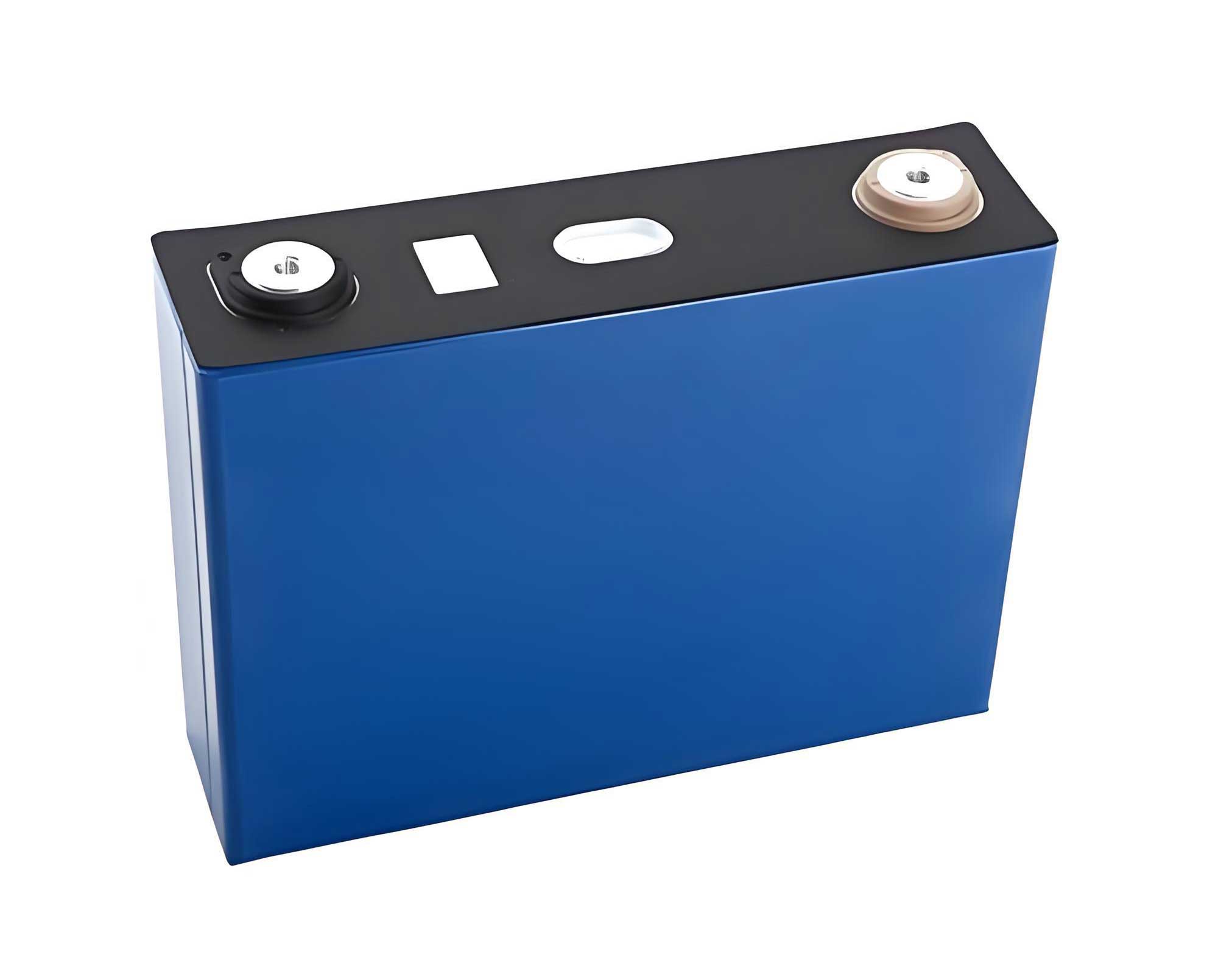
Initial experiments focused on single-component additives to determine their optimal concentrations for fire suppression. Four additives were tested: urea (CH4N2O), sodium bicarbonate (NaHCO3), perfluorobutylsulfonyl fluoride (FC-4, a cationic surfactant), and decyl glucoside (APG0810, a non-ionic surfactant). Each was dissolved in water at varying mass fractions, and 10 L of the solution was applied during the incipient stage of thermal runaway in LiFePO4 batteries. Key parameters measured included the maximum surface temperature ($T_{\text{max}}$), average cooling rate ($V_{\text{cool}}$) from $T_{\text{max}}$ to 50°C, and extinguishment time ($t$). The average cooling rate is calculated as:
$$ V_{\text{cool}} = \frac{T_{\text{max}} – 50}{\Delta t_2} $$
where $\Delta t_2$ is the time required for the temperature to drop from $T_{\text{max}}$ to 50°C after agent application. Similarly, the average heating rate ($V_{\text{heat}}$) after agent release is given by:
$$ V_{\text{heat}} = \frac{T_{\text{max}} – T_0}{\Delta t_1} $$
where $T_0$ is the surface temperature at the moment of agent release, and $\Delta t_1$ is the time to reach $T_{\text{max}}$. The results, averaged over multiple trials, are summarized in Table 1, highlighting the performance of each additive at its optimal concentration. For instance, urea at 0.32% mass fraction showed a peak cooling rate of 0.339°C/s, while sodium bicarbonate at 2% achieved 0.312°C/s. Surfactants like FC-4 at 0.15% and APG0810 at 1% also demonstrated significant cooling effects, with FC-4 reaching 0.357°C/s. These findings underscore the importance of concentration optimization, as beyond critical points, effectiveness plateaus due to factors like critical micelle concentration for surfactants.
| Additive | Optimal Mass Fraction | $T_{\text{max}}$ (°C) | $V_{\text{cool}}$ (°C/s) | $t$ (s) |
|---|---|---|---|---|
| Urea (CH4N2O) | 0.32% | ~350 | 0.339 | ~60 |
| Sodium Bicarbonate (NaHCO3) | 2% | ~340 | 0.312 | ~55 |
| FC-4 | 0.15% | ~330 | 0.357 | ~50 |
| APG0810 | 1% | ~325 | 0.365 | ~48 |
Based on these results, four composite water-based extinguishing agents (labeled CS-1 to CS-4) were formulated by combining physical and chemical additives. Each agent included at least one surfactant and one water-soluble salt, with FC-4 and urea as fixed components due to their superior performance. The compositions are detailed in Table 2, where CS-4, for example, contains 0.15% FC-4, 1% APG0810, 0.32% urea, and 2% sodium bicarbonate, with the remainder being deionized water. These agents were tested on LiFePO4 battery packs to assess their ability to suppress fires and prevent thermal runaway propagation. In all cases, the composite agents effectively halted heat transfer between batteries, with CS-4 showing the lowest peak temperatures and shortest extinguishment times.
| Agent | FC-4 | APG0810 | Urea | Sodium Bicarbonate | Water |
|---|---|---|---|---|---|
| CS-1 | 0.15% | — | 0.32% | — | 99.53% |
| CS-2 | 0.15% | 1% | 0.32% | — | 98.53% |
| CS-3 | 0.15% | — | 0.32% | 2% | 97.53% |
| CS-4 | 0.15% | 1% | 0.32% | 2% | 96.53% |
To quantitatively evaluate the extinguishing effectiveness, an evaluation parameter $\beta$ was introduced, which integrates cooling rate, peak temperature, heating rate, and extinguishment time:
$$ \beta = \frac{V_{\text{cool}}}{T_{\text{max}} \cdot V_{\text{heat}} \cdot t} $$
A higher $\beta$ value indicates better overall suppression performance. As shown in Table 3, CS-4 achieved a $\beta$ value of approximately 13.34 × 10⁻⁶, which is about 12.3 times that of pure water (1.08 × 10⁻⁶) and 1.5–2 times higher than other composite agents. This underscores the synergistic effects in CS-4, where multiple additives work together to enhance cooling and flame inhibition. Notably, the average cooling rate for CS-4 was 0.770°C/s, compared to 0.178°C/s for pure water, demonstrating a 4.3-fold improvement. These results highlight the critical role of cooling capacity in suppressing LiFePO4 battery fires, as rapid temperature reduction is essential to prevent re-ignition and thermal runaway propagation.
| Agent | $T_{\text{max}}$ (°C) | $V_{\text{heat}}$ (°C/s) | $V_{\text{cool}}$ (°C/s) | $t$ (s) | $\beta$ (×10⁻⁶) |
|---|---|---|---|---|---|
| Pure Water | 469 | 5.419 | 0.178 | 65 | 1.08 |
| CS-1 | 451 | 5.032 | 0.405 | 57 | 3.13 |
| CS-2 | 439 | 2.674 | 0.505 | 54 | 7.97 |
| CS-3 | 442 | 3.944 | 0.469 | 52 | 4.98 |
| CS-4 | 433 | 2.564 | 0.770 | 52 | 13.34 |
The influence of fine water mist system parameters was also investigated to optimize fire suppression. Experiments varied the working pressure (0.6 MPa for low pressure and 8 MPa for high pressure) and atomization cone angle (25°, 45°, 60°, and 90°), using CS-4 as the extinguishing agent. Under high pressure, the finer mist droplets and higher flow rate (≈8 L/min) led to faster flame suppression, with extinguishment in 52 seconds, compared to 61 seconds under low pressure (flow rate ≈3.5 L/min). High-pressure mist exhibited better penetration and evaporation, cooling the fire source more effectively. In contrast, low-pressure mist initially suppressed flames but sometimes caused flame intensification due to turbulence and vapor interactions. Regarding atomization cone angle, the suppression efficiency followed a “V” shape, with the best performance at 60°. At this angle, the mist coverage balanced droplet distribution and momentum, whereas wider angles (e.g., 90°) reduced evaporation efficiency. These findings emphasize the importance of tailoring mist characteristics for LiFePO4 battery fires.
To elucidate the suppression mechanisms, the surface tension and thermal decomposition properties of the composite agents were analyzed. Surface tension measurements revealed that CS-4 had the lowest value at 14.45 mN/m, a 79.73% reduction compared to pure water (71.2 mN/m). Lower surface tension promotes smaller droplet sizes, increasing the surface area for heat absorption and evaporation. This can be described by the relationship between droplet diameter ($d$) and surface tension ($\gamma$), approximated as $d \propto \sqrt{\gamma}$ in atomization processes. Thus, reduced $\gamma$ enhances mist cooling efficiency. Thermal analysis using differential scanning calorimetry (DSC) and thermogravimetry (TG) showed that CS-4 had the highest total endothermic enthalpy (2422.98 J/g) and weight loss (94.86%), indicating strong heat absorption and decomposition reactions. For instance, urea decomposes endothermically around 130-180°C, producing ammonia and isocyanic acid:
$$ \text{CH}_4\text{N}_2\text{O} \rightarrow \text{NH}_3 + \text{HNCO} $$
Sodium bicarbonate decomposes at about 120°C, releasing carbon dioxide and water vapor:
$$ 2\text{NaHCO}_3 \rightarrow \text{Na}_2\text{CO}_3 + \text{H}_2\text{O} + \text{CO}_2 $$
These reactions contribute to cooling and oxygen dilution. Additionally, Fourier-transform infrared spectroscopy (FTIR) confirmed the presence of functional groups like O-H, C=O, and N-H, consistent with the additives. The synergistic mechanism involves physical cooling through evaporation, chemical radical scavenging by metal ions (e.g., Na⁺ from NaHCO₃), and inert gas generation, all crucial for suppressing LiFePO4 battery fires.
Furthermore, practical applicability tests were conducted on CS-4, including metal corrosion and electrical insulation assessments. The corrosion rate was measured at 13.4 mg/(d·dm²), meeting the GB 17835-2008 standard for water-based extinguishing agents. Electrical conductivity was 34 μS/cm, indicating good insulation properties; LiFePO4 batteries immersed in CS-4 could still function after drying, supporting its use in energy storage environments. These results validate CS-4 as a viable agent for real-world applications, combining effectiveness with safety.
In summary, this comprehensive study demonstrates that composite water-based extinguishing agents, particularly CS-4, significantly enhance the suppression of LiFePO4 battery fires. The optimized formulation leverages both physical and chemical actions, with key additives reducing surface tension and providing endothermic decomposition. Fine water mist parameters, such as high pressure and a 60° atomization cone angle, further improve performance. The evaluation parameter $\beta$ offers a quantitative tool for assessing extinguishing effectiveness. These insights contribute to safer battery energy storage systems, highlighting the potential for tailored fire protection strategies. Future work could explore larger-scale tests and long-term effects on battery modules, paving the way for standardized safety protocols.