
As the automotive industry rapidly evolves, the pressing issues of energy scarcity and environmental pollution have become increasingly critical. To achieve sustainable development, electric vehicles (EVs) that emphasize energy saving and emission reduction have garnered widespread attention. The heart of these EVs is the power battery, which serves as the primary energy source determining overall performance and range. Among various power batteries, the lithium-ion battery stands out as a key technological direction in the industry, offering high energy density, elevated voltage, fast charging capabilities, and relatively good safety. Its development prospects are promising, and it has already established a comprehensive industrial chain. However, the heat generated during the charge and discharge processes of lithium-ion batteries, along with associated thermal management challenges, significantly impacts their performance and safety. Particularly under high discharge rates and elevated ambient temperatures, thermal management becomes paramount. Excessive battery temperatures can not only degrade performance and efficiency but also shorten lifespan and even pose safety risks. Therefore, investigating the thermal characteristics of lithium-ion batteries, especially their thermal behavior such as temperature fields and internal resistance variations under different environmental conditions, is crucial for ensuring battery safety and enhancing performance.
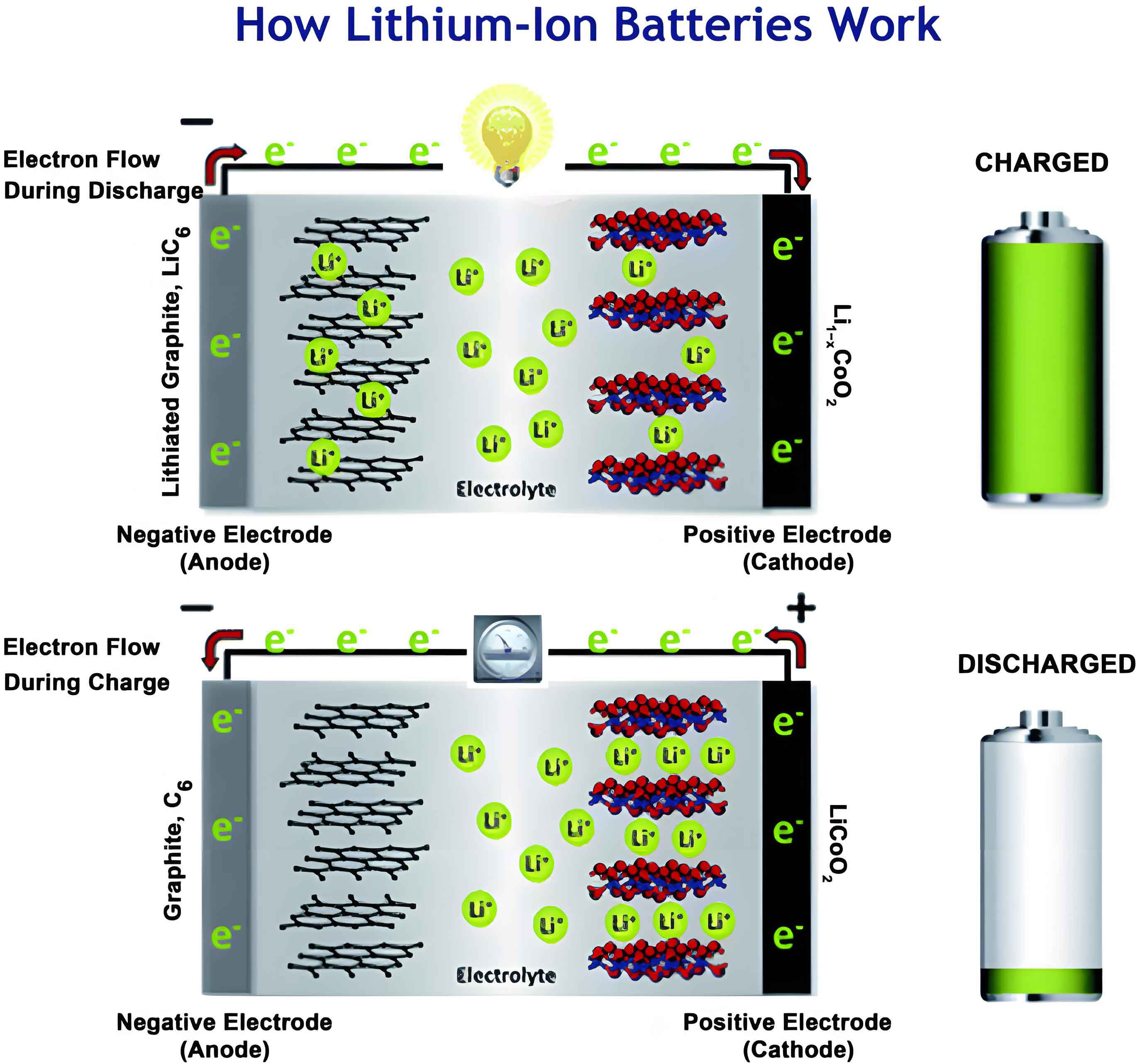
In this study, I focus on the thermal performance of a prismatic lithium-ion battery with a ternary system. Through experimental investigations and numerical simulations, I aim to analyze the effects of ambient temperature, discharge rate, and state of charge (SOC) on the internal resistance and temperature distribution of the lithium-ion battery. The thermal characteristics of lithium-ion batteries are fundamental parameters derived from battery thermal management, essential for assessing safety during operation. Understanding these characteristics is vital for ensuring long-term, safe, and normal operation. The heat generated in a lithium-ion battery primarily originates from five sources: ohmic resistance heat, polarization resistance heat, chemical reaction heat at the electrodes, organic electrolyte decomposition heat, and SEI film decomposition heat. Under normal operating conditions, the latter two are negligible. Internal resistance is not only related to heat generation but also a key parameter reflecting ion mobility and conductivity within the lithium-ion battery, influencing overall performance and lifespan.
My experimental approach involves using the Hybrid Pulse Power Characterization (HPPC) method to study the thermal characteristics of the ternary lithium-ion prismatic battery. This method, recommended by the U.S. FreedomCAR Battery Test Manual for power-assist hybrid electric vehicles, analyzes voltage curves during discharge, rest, and pulse feedback to calculate internal resistance at specific SOC states. The HPPC current pulse profile typically includes a discharge pulse followed by a regeneration pulse, allowing for the determination of ohmic and polarization resistances. The formulas for calculating these resistances are as follows:
$$ R_o = \frac{\Delta U_{0-1}}{I} = \frac{U_0 – U_1}{I} $$
$$ R_p = \frac{\Delta U_{1-2}}{I} = \frac{U_1 – U_2}{I} $$
where \( R_o \) is the ohmic resistance (in Ω), \( R_p \) is the polarization resistance (in Ω), \( U_0 \), \( U_1 \), and \( U_2 \) are voltages at specific time points during the pulse, and \( I \) is the current.
The experimental setup consists of a battery charge-discharge instrument, a temperature chamber, and a temperature acquisition system. The lithium-ion battery under test is a 40 Ah ternary system prismatic cell with key parameters summarized in Table 1.
| Parameter | Specification |
|---|---|
| Rated Capacity | 40 Ah (1C) |
| Rated Voltage | 3.6 V |
| Standard Charge Current | 20 A (0.5C) |
| Charge Cut-off Voltage | 4.2 V |
| Charge Cut-off Current | 2 A (0.05C) |
| Discharge Cut-off Voltage | 2.75 V |
| Operating Temperature Range | -20°C to 55°C |
| Dimensions | 230 mm × 161 mm × 7.8 mm |
| Weight | 615 ± 5 g |
The experimental procedure involved conditioning the lithium-ion battery at 25°C with a constant current charge until reaching 4.2 V, followed by a constant voltage charge until the current dropped to 2 A. The battery was then placed in a temperature chamber set to various ambient temperatures: 55°C, 40°C, 25°C, 0°C, -20°C, and -30°C. After stabilizing for one hour, HPPC tests were conducted at different discharge rates: 0.3C, 1.0C, 1.5C, and 2.5C. The SOC was adjusted in steps from 0.9 to 0 in increments of 0.1, with a one-hour rest between each step to ensure thermal equilibrium. Voltage and current data were recorded using the BTS 7.6.X software, and internal resistances were calculated using the above formulas.
The results from the internal resistance tests under different ambient temperatures are presented in Table 2, which summarizes the average ohmic and polarization resistances across the SOC range for each temperature.
| Ambient Temperature (°C) | Average Ohmic Resistance (mΩ) | Average Polarization Resistance (mΩ) |
|---|---|---|
| -30 | 12.5 | 15.8 |
| -20 | 9.8 | 12.3 |
| 0 | 7.2 | 9.1 |
| 25 | 5.6 | 7.4 |
| 40 | 4.9 | 6.5 |
| 55 | 4.3 | 5.9 |
As observed, both ohmic and polarization resistances decrease with increasing ambient temperature. This trend is attributed to enhanced ionic conductivity and reduced viscosity of the electrolyte at higher temperatures, facilitating ion movement within the lithium-ion battery. At -30°C, the internal resistances are significantly higher due to electrolyte phase changes and increased sluggishness in electrochemical reactions. The variation in ohmic resistance with temperature is more pronounced in low-temperature environments, with fluctuations observed during discharge at -30°C, indicating instability in the lithium-ion battery’s internal structure under extreme cold.
Similarly, the effects of discharge rate on internal resistance are summarized in Table 3 for tests conducted at 25°C ambient temperature.
| Discharge Rate (C) | Average Ohmic Resistance (mΩ) | Average Polarization Resistance (mΩ) |
|---|---|---|
| 0.3 | 6.1 | 8.0 |
| 1.0 | 5.6 | 7.4 |
| 1.5 | 5.3 | 7.1 |
| 2.5 | 4.8 | 6.7 |
Interestingly, the ohmic resistance decreases slightly with increasing discharge rate, while polarization resistance remains relatively stable. This behavior suggests that at higher currents, the lithium-ion battery experiences increased Joule heating, which may temporarily lower ionic resistance, but polarization effects related to charge transfer and diffusion become more complex. The overall internal resistance of the lithium-ion battery is thus influenced by a balance between these factors.
The relationship between internal resistance and SOC is crucial for understanding heat generation dynamics. In general, for the lithium-ion battery tested, ohmic resistance shows minimal variation across SOC under most conditions, whereas polarization resistance increases notably when SOC falls below 0.3. This increase is due to depletion of active materials and increased concentration polarization at low SOC, hindering ion diffusion and charge transfer in the lithium-ion battery. The electromotive force temperature coefficient (\( \frac{dE}{dT} \)) was also measured, and its variation with SOC is expressed by the following empirical formula derived from experimental data:
$$ \frac{dE}{dT} = a \cdot SOC^5 + b \cdot SOC^4 + c \cdot SOC^3 + d \cdot SOC^2 + e \cdot SOC + f $$
where coefficients \( a, b, c, d, e, f \) are determined through curve fitting. For instance, at 25°C, the fitted equation is:
$$ \frac{dE}{dT} = -0.15 \cdot SOC^5 + 0.42 \cdot SOC^4 – 0.38 \cdot SOC^3 + 0.12 \cdot SOC^2 – 0.01 \cdot SOC + 0.002 $$
This coefficient is essential for calculating the reversible heat generated during electrochemical reactions in the lithium-ion battery.
To further analyze thermal behavior, I developed a numerical simulation model using COMSOL Multiphysics software. The model focuses on the temperature field distribution within the prismatic lithium-ion battery during discharge. Assumptions were made to simplify the model: the lithium-ion battery components are homogeneous with uniform physical properties; electrolyte convection is negligible; radiation heat transfer is ignored due to small temperature differences; and heat generation is uniformly distributed. The three-dimensional unsteady heat conduction equation in cylindrical coordinates (adapted for the prismatic shape via coordinate transformation) is:
$$ \rho C_p \frac{\partial T}{\partial t} = \lambda_r \frac{1}{r} \frac{\partial}{\partial r} \left( r \frac{\partial T}{\partial r} \right) + \lambda_\phi \frac{1}{r^2} \frac{\partial^2 T}{\partial \phi^2} + \lambda_z \frac{\partial^2 T}{\partial z^2} + \dot{q} $$
where \( \rho \) is the average density of the lithium-ion battery (2130 kg/m³), \( C_p \) is the specific heat capacity (900 J/(kg·K)), \( \lambda \) is the thermal conductivity (0.99 W/(m·K)), and \( \dot{q} \) is the internal heat source (W/m³). The internal heat source is derived from the total heat generation power \( Q_{\text{total}} \), which includes ohmic heat, polarization heat, and reversible reaction heat:
$$ Q_{\text{total}} = I^2 (R_o + R_p) + I T \frac{dE}{dT} $$
Thus, the volumetric heat source is:
$$ \dot{q} = \frac{Q_{\text{total}}}{V} $$
where \( V \) is the volume of the lithium-ion battery. Based on experimental data, I fitted relationships between the internal heat source and SOC for various conditions. These fitted equations are polynomial functions of SOC, as shown in Table 4 for selected ambient temperatures and discharge rates.
| Condition (Ambient Temp, Discharge Rate) | Fitted Equation for \( \dot{q} \) (W/m³) as a function of SOC (x) | R² Value |
|---|---|---|
| 25°C, 0.3C | \( \dot{q} = 10^5 \times (-2.9x^5 + 8.71x^4 – 9.7x^3 + 4.89x^2 – 1.08x + 0.1) \) | 0.9837 |
| 25°C, 1.0C | \( \dot{q} = 10^5 \times (-40x^5 + 10x^4 – 100x^3 + 60x^2 – 10x + 1.05) \) | 0.9845 |
| 25°C, 1.5C | \( \dot{q} = 10^5 \times (-5.77x^5 + 20x^4 – 20x^3 + 10x^2 – 3.89x + 0.70) \) | 0.9942 |
| 25°C, 2.5C | \( \dot{q} = 10^5 \times (10x^5 – 30x^4 + 9.84x^3 + 4.01x^2 – 2.95x + 0.69) \) | 0.9882 |
| 55°C, 1.0C | \( \dot{q} = 10^5 \times (-30x^5 + 90x^4 – 100x^3 + 50x^2 – 10x + 0.86) \) | 0.9829 |
| 40°C, 1.0C | \( \dot{q} = 10^5 \times (-5.13x^5 + 20x^4 – 20x^3 + 8.85x^2 – 2.03x + 0.02) \) | 0.9849 |
| 0°C, 1.0C | \( \dot{q} = 10^5 \times (-20x^5 + 50x^4 – 60x^3 + 30x^2 – 8.45x + 1.35) \) | 0.9982 |
| -20°C, 1.0C | \( \dot{q} = 10^5 \times (-20x^5 + 70x^4 – 90x^3 + 50x^2 – 20x + 3.06) \) | 0.9988 |
| -30°C, 1.0C | \( \dot{q} = 10^5 \times (6.67x^5 – 10x^4 + 5.66x^3 + 5.86x^2 – 6.38x + 3.41) \) | 0.9873 |
These equations allow for dynamic simulation of heat generation throughout the discharge process of the lithium-ion battery. The simulation results for temperature fields under different conditions reveal insightful patterns. For example, at an ambient temperature of 25°C, increasing discharge rates lead to higher overall temperatures and greater temperature rises within the lithium-ion battery. This is attributed to the increased internal heat source at higher currents. At a 2.5C discharge rate, the maximum temperature reaches 37.02°C, approaching the upper limit of the operating temperature range (-20°C to 55°C) for this lithium-ion battery, highlighting the need for effective thermal management.
Under a constant discharge rate of 1.0C but varying ambient temperatures, the simulation shows that lower ambient temperatures result in larger temperature rises. This counterintuitive finding is due to increased internal resistance at low temperatures, which amplifies heat generation. The temperature distribution within the prismatic lithium-ion battery is non-uniform, with the center region being hottest and the corners coolest. This non-uniformity can impact performance and longevity, especially in battery packs where thermal gradients may cause imbalances.
To quantify temperature uniformity, I calculated the maximum temperature difference (\( \Delta T_{\text{max}} \)) within the lithium-ion battery at the end of discharge for various conditions. The results are summarized in Table 5.
| Condition | Maximum Temperature Difference, \( \Delta T_{\text{max}} \) (°C) |
|---|---|
| 25°C, 0.3C | 2.1 |
| 25°C, 1.0C | 3.5 |
| 25°C, 1.5C | 4.8 |
| 25°C, 2.5C | 6.2 |
| 55°C, 1.0C | 2.8 |
| 40°C, 1.0C | 3.2 |
| 0°C, 1.0C | 4.1 |
| -20°C, 1.0C | 5.7 |
| -30°C, 1.0C | 10.5 |
The data indicates that \( \Delta T_{\text{max}} \) increases with discharge rate and decreases with ambient temperature. At -30°C, the maximum difference exceeds 10°C, indicating poor temperature uniformity that could adversely affect the lithium-ion battery’s performance and cycle life. This underscores the importance of thermal management systems, especially in extreme environments.
Further analysis of the heat generation mechanisms in the lithium-ion battery reveals that the reversible heat term \( I T \frac{dE}{dT} \) can be either positive or negative depending on the sign of \( \frac{dE}{dT} \), which varies with SOC. During most of the discharge, this term is positive, indicating heat absorption, but near the end of discharge (low SOC), it may become negative, contributing to heat generation. This complex interplay between irreversible and reversible heat sources necessitates precise modeling for accurate thermal predictions in lithium-ion batteries.
In addition to internal resistance and temperature fields, I explored the impact of cycling on the thermal performance of the lithium-ion battery. Repeated charge-discharge cycles can lead to degradation, increasing internal resistance and altering heat generation characteristics. However, this study focuses on fresh cells, and future work could incorporate aging effects.
The simulation model was validated by comparing simulated temperature profiles with experimental measurements at select points. The agreement was within acceptable limits, confirming the model’s reliability for predicting thermal behavior in prismatic lithium-ion batteries. Discrepancies were attributed to assumptions like uniform heat generation and neglecting contact resistances, which could be refined in future iterations.
From a practical perspective, the findings have implications for battery thermal management system (BTMS) design. For instance, the high internal resistance at low temperatures suggests that preheating strategies may be necessary to improve performance and safety of lithium-ion batteries in cold climates. Similarly, the increased heat generation at high discharge rates calls for enhanced cooling mechanisms, such as liquid cooling or phase change materials, to maintain temperatures within safe limits.
Moreover, the non-uniform temperature distribution highlights the need for spatially resolved thermal management. Active cooling systems with distributed channels or thermal interface materials can help homogenize temperatures, thereby reducing stresses and prolonging the life of lithium-ion batteries.
To generalize the results, I derived dimensionless correlations for internal resistance as a function of temperature and discharge rate. For ohmic resistance, a simplified empirical relation is:
$$ R_o(T, C) = R_{o,ref} \left( \frac{T}{T_{ref}} \right)^{-\alpha} \left( \frac{C}{C_{ref}} \right)^{-\beta} $$
where \( T_{ref} = 25^\circ \text{C} \), \( C_{ref} = 1 \text{C} \), and \( \alpha \) and \( \beta \) are fitting parameters. From my data, \( \alpha \approx 0.2 \) and \( \beta \approx 0.05 \) for the lithium-ion battery tested. Such correlations can facilitate system-level simulations for electric vehicle powertrains.
In terms of heat transfer, the Biot number (Bi) for the lithium-ion battery was calculated to assess the significance of internal thermal resistance relative to surface convection. With typical convection coefficients, Bi < 0.1, indicating that temperature gradients within the battery are modest, justifying the lumped capacitance approach for some simplified analyses. However, for precise designs, the full conduction model is necessary.
The study also touches on safety aspects. Overheating can trigger thermal runaway in lithium-ion batteries, a chain reaction leading to fire or explosion. By understanding heat generation patterns, thresholds for safe operation can be established. For example, my simulations show that at 2.5C discharge and 55°C ambient, temperatures can exceed 60°C, nearing critical levels. Thus, monitoring and controlling temperature is paramount for lithium-ion battery safety.
Future research directions include extending the study to battery packs, where thermal interactions between cells complicate management. Additionally, incorporating real-world driving cycles into simulations would provide more realistic thermal loads. The integration of machine learning for predictive thermal management based on operational data is another promising avenue for lithium-ion batteries.
In conclusion, this comprehensive experimental and simulation study on the thermal performance of prismatic lithium-ion batteries provides valuable insights into the effects of ambient temperature, discharge rate, and state of charge. The internal resistance of the lithium-ion battery increases with decreasing temperature and, to a lesser extent, with increasing discharge rate. Temperature non-uniformity is more pronounced under low-temperature and high-discharge-rate conditions, necessitating effective thermal management. The fitted heat source models and simulation tools developed can aid in the design and optimization of battery thermal management systems, ensuring the safety, efficiency, and longevity of lithium-ion batteries in electric vehicles and other applications. As the demand for high-performance energy storage grows, continued research into the thermal characteristics of lithium-ion batteries will remain crucial for advancing sustainable transportation and energy solutions.