
As the global energy landscape shifts towards renewable sources like wind and solar power, the integration of energy storage systems has become paramount to ensure grid stability and reliability. Among various technologies, lithium-ion batteries, particularly those based on lithium iron phosphate (LiFePO4) chemistry, have emerged as a dominant solution due to their favorable safety profile, long cycle life, and cost-effectiveness. However, despite these advantages, LiFePO4 batteries are not immune to thermal runaway—a dangerous chain reaction triggered by thermal, electrical, or mechanical abuse, leading to excessive heat generation, gas emission, and potential fire or explosion. In large-scale energy storage applications, such as containerized battery compartments, a single battery failure can escalate into catastrophic events, underscoring the critical need for early detection and mitigation strategies. This article, from my perspective as a researcher in energy storage safety, delves into the effectiveness of various sensors for monitoring thermal runaway in LiFePO4 battery compartments and proposes optimized detection strategies based on experimental findings. The focus is on evaluating multi-parameter composite sensors, analyzing thermal runaway gas diffusion dynamics, and formulating guidelines for sensor deployment to enhance safety in LiFePO4 battery energy storage systems.
The proliferation of LiFePO4 battery-based energy storage has been remarkable, with installations soaring globally. Yet, incidents of fires and explosions in battery storage facilities have raised alarms, highlighting vulnerabilities in thermal management and safety protocols. Thermal runaway in LiFePO4 batteries initiates with internal short circuits, electrolyte decomposition, and exothermic reactions, releasing flammable gases such as hydrogen (H₂), carbon monoxide (CO), and volatile organic compounds (VOCs). If undetected, these gases can accumulate, leading to deflagration or detonation. Therefore, real-time monitoring using sensors that detect key parameters—like gas concentrations, smoke density, temperature, and pressure—is essential for early warning and preventive action. My investigation centers on a full-scale 40-foot energy storage compartment, where I conducted controlled experiments to simulate thermal runaway in LiFePO4 batteries and assess the performance of different sensor technologies. The goal is to identify the most responsive sensors, understand gas propagation patterns, and derive practical insights for safeguarding LiFePO4 battery installations.
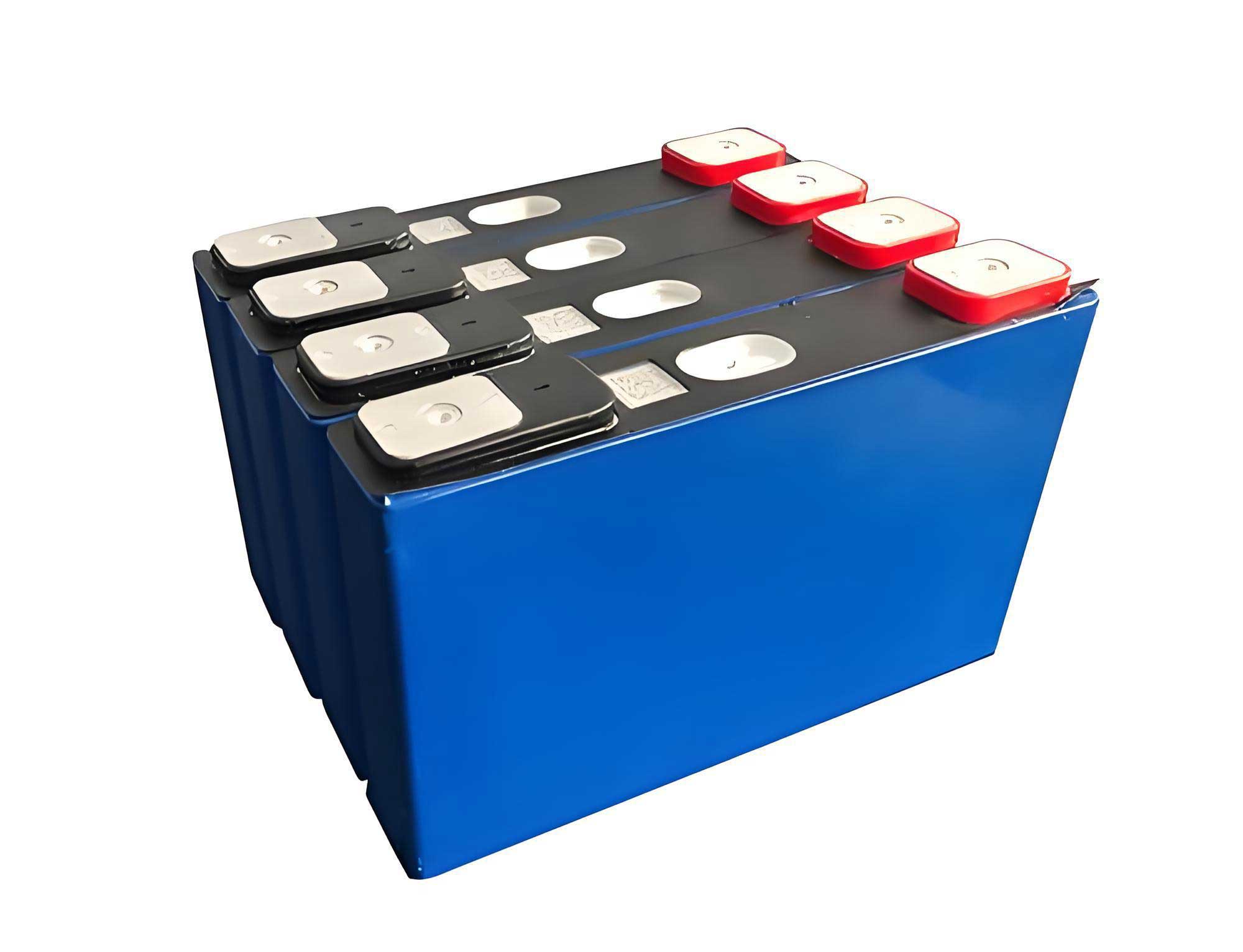
In my experimental setup, I designed and fabricated five types of multi-in-one composite sensors, each integrating various detection principles for parameters including H₂, CO, carbon dioxide (CO₂), VOC volume fractions, smoke mass fraction, compartment pressure, and temperature. These sensors, labeled A through E, were deployed at multiple locations within the compartment to capture spatial variations during thermal runaway events. The LiFePO4 batteries used were 280 Ah cells, charged to 100% state-of-charge (SOC) to replicate worst-case scenarios. Thermal runaway was induced via external heating, and tests were conducted with and without ignition to examine the impact of open flames on gas dynamics. The sensors’ data acquisition systems recorded at 1 Hz, while thermocouples monitored battery surface temperatures. To contextualize the findings, I also performed auxiliary tests on battery components like blue film and high-temperature tape to isolate their contributions to gas emissions. This comprehensive approach allows for a nuanced evaluation of sensor effectiveness in LiFePO4 battery environments.
The core of my analysis revolves around the sensor technologies employed. For H₂ detection, I compared electrochemical, semiconductor, and catalytic combustion principles; for VOCs, I evaluated solid polymer electrochemical and photoionization methods. Each sensor type has distinct advantages and limitations in terms of sensitivity, response time, longevity, and cost, which are critical for LiFePO4 battery applications where reliability over long operational lifetimes is key. The table below summarizes the sensor specifications and performance metrics based on my experiments.
| Sensor Type | Detection Principle | Range (Volume Fraction) | Sensitivity | Accuracy | Lifetime (Years) |
|---|---|---|---|---|---|
| H₂ (Electrochemical) | Electrochemical Reaction | Up to 2 × 10⁻³ | (0.010 ± 0.005) µA/10⁻⁶ | ≤ 3% FS | 2 |
| H₂ (Semiconductor) | Semiconductor Conductivity Change | Up to 2 × 10⁻³ | Resistance Ratio ≥ 5 in H₂ | ≤ 5% FS | 10 |
| H₂ (Catalytic Combustion) | Catalytic Oxidation Heat Release | Up to 2 × 10⁻³ | (0.4 ± 0.2) nA/10⁻⁶ | ≤ 5% FS | 10 |
| VOC (Solid Polymer Electrochemical) | Solid Polymer Electrochemical Reaction | Up to 10⁻³ | (35 ± 15) nA/10⁻⁶ | ≤ 3% FS | 3 |
| VOC (Photoionization) | Photoionization with UV Light | Up to 10⁻² | > 0.1 mV/10⁻⁶ | ≤ 2% FS | 2 |
| CO (Electrochemical) | Electrochemical Reaction | Up to 10⁻³ | (45 ± 15) nA/10⁻⁶ | ≤ 3% FS | 2 |
| CO₂ (Infrared Optical) | Infrared Absorption | Up to 5 × 10⁻³ | (0.32 ± 0.04) mV/10⁻⁶ | ≤ 5% FS | 3 |
| Smoke (Semiconductor) | Semiconductor Particle Detection | Up to 10,000 mg/m³ | Resistance Ratio ≥ 5 in Propane | ≤ 5% FS | 10 |
| Temperature (Thermocouple) | Thermoelectric Effect | Up to 125°C | (11 ± 0.3) mV/°C | ≤ 3% FS | 15 |
| Pressure (Piezoresistive) | Piezoresistive Sensing | Up to 110 kPa | (0.0345 ± 0.0021) µA/Pa | ≤ 5% FS | 10 |
My experiments revealed distinct thermal runaway phases for LiFePO4 batteries. Upon heating, the battery temperature rises until the solid electrolyte interface (SEI) decomposes at around 90°C, releasing CO₂. As temperatures exceed 150°C, the anode reacts with the electrolyte, producing H₂ and CO, while the safety valve opens at internal pressures around 1–2 MPa, venting gases and electrolyte vapors. Eventually, separator meltdown leads to a full thermal runaway with rapid gas generation and smoke emission. The temporal evolution of key parameters can be modeled using Arrhenius-type equations to describe reaction rates. For instance, the rate of gas production during thermal runaway in a LiFePO4 battery can be expressed as:
$$ \frac{dC_i}{dt} = A_i \exp\left(-\frac{E_{a,i}}{RT}\right) f_i(T, SOC) $$
where \( C_i \) is the concentration of gas species \( i \) (e.g., H₂, CO, VOCs), \( A_i \) is the pre-exponential factor, \( E_{a,i} \) is the activation energy, \( R \) is the universal gas constant, \( T \) is the absolute temperature, and \( f_i(T, SOC) \) is a function accounting for temperature and state-of-charge effects specific to LiFePO4 batteries. This equation highlights the exponential dependence on temperature, underscoring why early detection is crucial to prevent escalation.
In terms of sensor response, I found that VOC sensors, particularly those based on photoionization, were the fastest to detect thermal runaway onset in LiFePO4 batteries, often signaling an alert up to 600 seconds before full runaway. This early warning is attributed to the volatilization of electrolyte solvents and decomposition of battery materials like blue film, which emits VOCs at temperatures as low as 200°C. The photoionization VOC sensor outperformed the solid polymer electrochemical variant due to its higher sensitivity and broader detection range. For H₂, catalytic combustion sensors exhibited the quickest response, detecting H₂ approximately 100 seconds earlier than electrochemical or semiconductor types. This advantage stems from the direct thermal conversion of H₂ oxidation, which provides a rapid signal change. However, electrochemical H₂ sensors offered better accuracy for low-concentration monitoring in LiFePO4 battery environments. The table below compares the response times and peak concentrations for key parameters during thermal runaway in LiFePO4 batteries, based on my data.
| Parameter | First Detection Time (s after heating) | Peak Concentration (Non-Ignition) | Peak Concentration (Ignition) | Suggested Threshold for Early Warning |
|---|---|---|---|---|
| VOC (Photoionization) | ~750 | > 10,000 × 10⁻⁶ | ~5,778 × 10⁻⁶ | 200 × 10⁻⁶ |
| H₂ (Catalytic Combustion) | ~1,462 | > 2,000 × 10⁻⁶ | > 2,000 × 10⁻⁶ | 500 × 10⁻⁶ |
| CO (Electrochemical) | ~1,665 | 684 × 10⁻⁶ | > 1,000 × 10⁻⁶ | 100 × 10⁻⁶ |
| Smoke (Semiconductor) | ~1,683 | 4,801 mg/m³ | > 10,000 mg/m³ | 1 mg/m³ |
| CO₂ (Infrared Optical) | ~1,758 | 1,296 × 10⁻⁶ | > 5,000 × 10⁻⁶ | 1,000 × 10⁻⁶ |
The diffusion of thermal runaway gases in a LiFePO4 battery compartment follows complex dynamics influenced by buoyancy, compartment geometry, and initial release momentum. Upon venting, hot gases form a plume that rises to the ceiling, spreads horizontally as a ceiling jet, and gradually mixes with ambient air. The propagation velocity \( v \) of a gas species can be estimated using Fick’s law of diffusion, modified for thermal gradients. For a LiFePO4 battery compartment, the effective diffusion coefficient \( D_{\text{eff}} \) accounts for both ordinary and thermal diffusion:
$$ D_{\text{eff}} = D_0 \left( \frac{T}{T_0} \right)^{3/2} + \alpha \Delta T $$
where \( D_0 \) is the baseline diffusion coefficient at reference temperature \( T_0 \), \( \alpha \) is a thermal expansion factor, and \( \Delta T \) is the temperature difference between the gas and environment. The propagation distance \( x \) over time \( t \) can be approximated as:
$$ x = v t = \sqrt{2 D_{\text{eff}} t} $$
In my tests, for a sensor spacing of 2.4 meters, the propagation times ranged from 80 to 200 seconds, depending on the parameter and location. Edge-mounted sensors detected gases faster than center-mounted ones due to boundary effects, with velocities calculated as shown below. Ignition significantly increased propagation velocities by a factor of 4 to 8, owing to enhanced thermal convection and gas expansion from combustion.
| Condition | H₂ Propagation Velocity (mm/s) | CO Propagation Velocity (mm/s) | VOC Propagation Velocity (mm/s) | Smoke Propagation Velocity (mm/s) | CO₂ Propagation Velocity (mm/s) |
|---|---|---|---|---|---|
| Edge Heating (Non-Ignition) | 28.26 | 29.57 | 21.30 | 26.15 | 51.90 |
| Center Heating (Non-Ignition) | 23.48 | 27.21 | 15.41 | 21.75 | 35.71 |
| Center Heating (Ignition) | 97.61 | 132.76 | 132.53 | 129.95 | 194.80 |
Based on these velocities, I can derive optimal sensor spacing for LiFePO4 battery compartments. Assuming a required detection time of 30–60 seconds as per safety standards, the maximum spacing \( d_{\text{max}} \) between sensors is given by:
$$ d_{\text{max}} = v \times t_{\text{detection}} $$
For VOC sensors under non-ignition conditions, with \( v = 15.41 \, \text{mm/s} \) for center heating, \( d_{\text{max}} \) ranges from 0.462 to 0.924 meters. However, considering practical deployment and redundancy, I recommend a spacing of 0.9 to 1.8 meters for center areas and 0.6 to 1.3 meters for edges in LiFePO4 battery compartments. This ensures timely detection while minimizing sensor count and cost.
The impact of ignition on thermal runaway parameters in LiFePO4 batteries is profound. When open flames are present, combustion consumes VOCs and H₂, reducing their concentrations by up to 50%, while producing more CO, CO₂, and smoke. Temperature rises dramatically, with ceiling temperatures increasing by over 0.78°C/min compared to negligible changes in non-ignition scenarios. This alters the detection strategy: for early warning, VOC and H₂ sensors are optimal; for fire confirmation, CO, smoke, and temperature sensors become critical. Pressure sensors, while less sensitive to single-cell events, are useful for monitoring large-scale gas accumulation in sealed LiFePO4 battery compartments. A multi-tiered detection approach is thus advisable, combining fast-response sensors for early alerts with robust sensors for verification and action.
From my experiments, I propose a comprehensive detection strategy for LiFePO4 battery energy storage systems. First, deploy catalytic combustion H₂ sensors and photoionization VOC sensors at the compartment ceiling, spaced as per the above guidelines, to capture initial gas release. Second, supplement these with electrochemical CO and semiconductor smoke sensors for fire indication, especially in ignition-prone scenarios. Third, integrate infrared CO₂ and thermocouple sensors for secondary confirmation and thermal monitoring. The logic for alarm triggering can be based on threshold combinations, such as:
$$ \text{Early Warning: } C_{\text{VOC}} > 200 \times 10^{-6} \text{ OR } C_{\text{H}_2} > 500 \times 10^{-6} $$
$$ \text{Fire Alarm: } (C_{\text{CO}} > 100 \times 10^{-6} \text{ AND } \rho_{\text{smoke}} > 1 \, \text{mg/m}^3) \text{ OR } \Delta T > 5^\circ \text{C/min} $$
where \( C \) denotes volume fraction and \( \rho \) denotes mass concentration. This layered strategy enhances reliability and reduces false alarms in LiFePO4 battery applications.
In conclusion, the safety of LiFePO4 battery energy storage compartments hinges on effective thermal runaway monitoring. My research demonstrates that sensor selection and placement are critical, with photoionization VOC and catalytic combustion H₂ sensors offering the best early detection capabilities for LiFePO4 batteries. Gas propagation is influenced by location and ignition, necessitating tailored spacing and multi-parameter verification. By implementing the proposed strategies, operators can mitigate risks, ensure timely interventions, and uphold the integrity of energy storage infrastructures. Future work should explore sensor fusion algorithms and adaptive thresholds for dynamic LiFePO4 battery environments, further advancing safety in the renewable energy era.