
The increasing penetration of renewable energy sources, characterized by power electronic interfaces, has fundamentally transformed the inertia characteristics of modern power systems. The displacement of traditional synchronous generators, which inherently provide rotational inertia through their massive rotors, leads to reduced system inertia. This low-inertia condition makes the grid frequency more vulnerable to disturbances, increasing the risk of large frequency deviations and excessive Rate-of-Change-of-Frequency (RoCoF), which can trigger protection actions and even cause cascading failures. Accurate assessment of the system’s available inertia is therefore paramount for maintaining frequency stability and ensuring secure grid operation.
In this context, the Battery Energy Storage System (BESS) has emerged as a crucial resource for providing fast frequency response and synthetic inertia. By rapidly modulating its power output in proportion to the observed RoCoF, a BESS can emulate the inertial response of a synchronous generator, effectively bolstering the grid’s resistance to frequency changes. However, a critical and often overlooked aspect is the long-term degradation of the BESS itself. The very action of frequently charging and discharging to provide inertial support accelerates battery aging, leading to a gradual yet significant reduction in its available peak power capability. If this degradation is not accounted for in system-wide inertia assessments, the grid operator may overestimate the available inertia headroom. This overestimation creates a false sense of security; a disturbance that the system is deemed capable of handling based on an optimistic inertia estimate could, in reality, push RoCoF or frequency nadir beyond safe limits because the actual power output from the aged BESS is lower than expected.
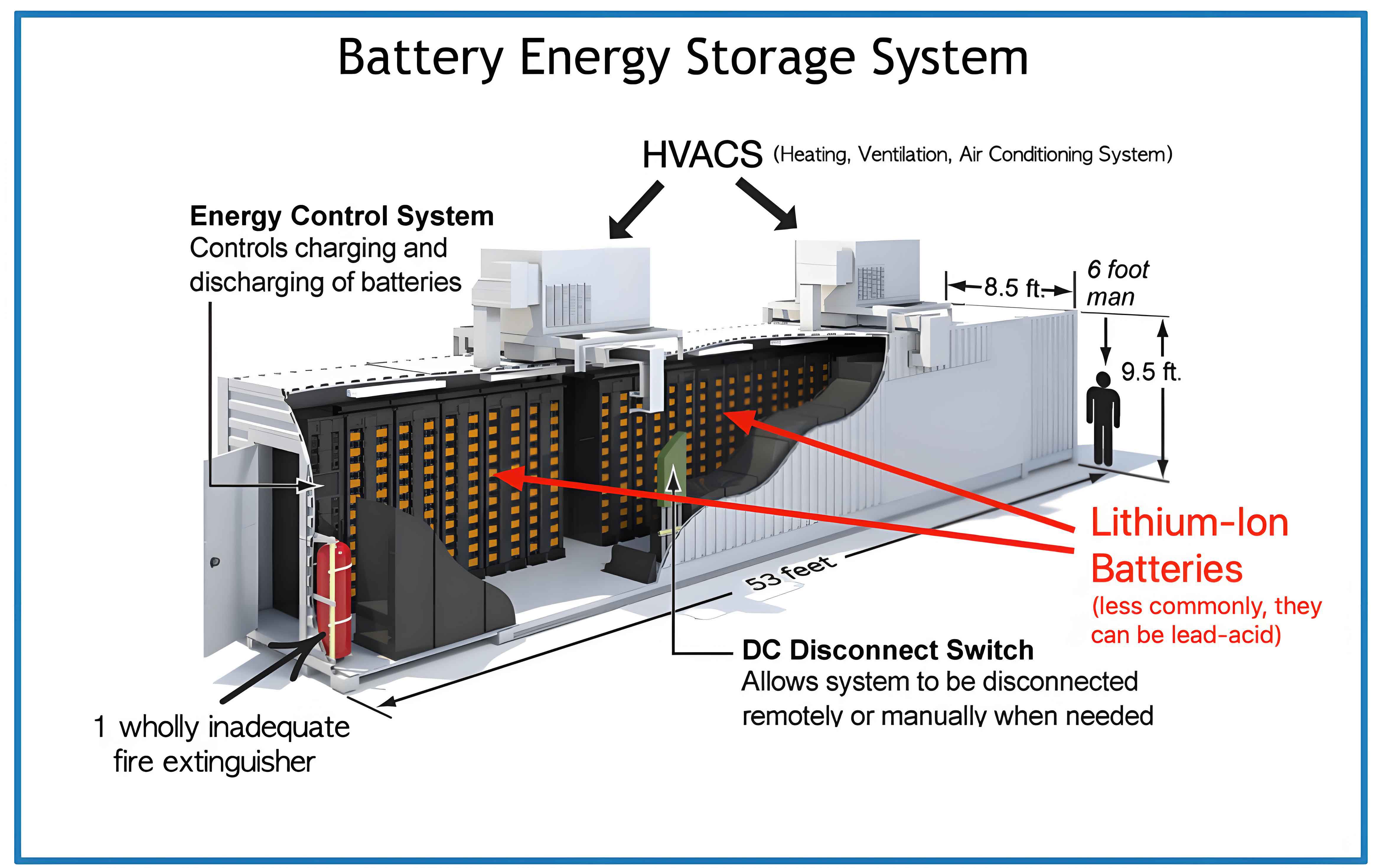
This paper addresses this gap by proposing a comprehensive framework for evaluating the Inertia Stability Region (ISR) of a power grid, explicitly incorporating the long-term aging effects of the Battery Energy Storage System. The ISR defines the range of system inertia within which frequency stability constraints are satisfied. Our method dynamically adjusts the upper boundary of the ISR based on the estimated degradation of the BESS’s power capability, while the lower boundary is determined from frequency stability requirements. This approach provides a more realistic and reliable picture of the system’s inertia adequacy over extended periods.
1. Quantifying Peak Power Degradation in BESS under Long-term Inertia Support
The cornerstone of our proposed method is a model that quantifies how the peak power capability of a Battery Energy Storage System decays over time when it is regularly dispatched for inertia support. The assessment follows a three-step process, as illustrated in the flow chart.
Step 1: Modeling BESS Inertia Support. The BESS provides synthetic inertia by releasing or absorbing power in response to the system RoCoF. Its output power $$P_{BESS}(t)$$ at time $$t$$ is modeled as:
$$ P_{BESS}(t) = -K_B(\mu) \frac{d f(t)}{dt} $$
where $$K_B(\mu)$$ is the inertia response coefficient and $$\frac{d f(t)}{dt}$$ is the RoCoF. To prevent the Battery Energy Storage System from reaching its state-of-energy (SOE) limits too quickly, the coefficient $$K_B$$ is made adaptive to the SOE ($$\mu$$). It consists of a discharge coefficient $$K_d$$ and a charge coefficient $$K_c$$, which vary with SOE to prioritize charging at low SOE and discharging at high SOE, ensuring sustained support. The SOE dynamics are given by:
$$ \mu(t+\Delta t) = \mu(t) – \frac{P_{BESS}(t)\Delta t}{E_{BESS}} $$
where $$E_{BESS}$$ is the energy capacity of the Battery Energy Storage System.
Step 2: Cycle Counting via Rainflow Algorithm. The time-series SOE data from Step 1, which results from the grid’s continuous small disturbances, is processed using the rainflow counting algorithm. This algorithm decomposes the complex SOE profile into a set of simple, full charge-discharge cycles, each characterized by its depth $$d_i$$, average SOE level $$M_{SOE,i}$$, and the number of such cycles $$c_i$$.
Step 3: Long-term Peak Power Degradation Model. The degradation of a Battery Energy Storage System’s peak power is attributed to both calendar aging and cycle aging. An empirical model fitted from experimental data is used:
$$ P_{d\_cal} = 0.0033 \cdot M_{SOE}^{0.4513} \cdot t $$
$$ P_{d\_cyc} = \sum_{i=1}^{N} \left( 1.1725 \times 10^{-6} \cdot d_i^{0.7891} \cdot c_i \right) $$
$$ P_{total} = P_{d\_cal} + P_{d\_cyc} $$
where $$P_{d\_cal}$$ is calendar aging degradation (%), $$P_{d\_cyc}$$ is cycle aging degradation (%), $$P_{total}$$ is the total peak power degradation, $$t$$ is the operational time in months, and $$N$$ is the total number of cycle groups identified by the rainflow algorithm. By inputting the cycle information $$(d_i, c_i, M_{SOE,i})$$ accumulated over a long simulation period (e.g., by rolling a shorter, representative SOE profile), the long-term degradation trend of the Battery Energy Storage System can be estimated.
2. Inertia Stability Region Assessment Framework Considering BESS Aging
2.1 System Frequency Response Model
To assess the system-level impact of inertia, we employ a standard System Frequency Response (SFR) model. This aggregate model represents the dynamics of synchronous generators, their governors, and turbines, combined with the virtual inertia from renewable sources and the Battery Energy Storage System. The system’s total inertia constant $$H$$ is a key parameter:
$$ H = H_g + H_{re} + H_{BESS} $$
where $$H_g$$, $$H_{re}$$, and $$H_{BESS}$$ are the aggregate inertia time constants of synchronous generators, renewables, and the Battery Energy Storage System, respectively. The frequency dynamics following a power disturbance $$\Delta P$$ can be derived in the time domain, involving parameters like damping ratio $$\zeta$$ and natural frequency $$\omega_n$$, which are functions of $$H$$, governor droop $$R$$, and turbine time constants.
2.2 Inertia Stability Region Evaluation Model
The Inertia Stability Region is defined by its upper and lower boundaries in terms of system “calculated inertia” (in MWs), which is the product of a unit’s inertia constant and its available power.
Upper Boundary ($$E_{sys}^{high}$$): This represents the maximum available system inertia, limited by the rated capacities of all sources and the degraded power capability of the Battery Energy Storage System.
$$ E_{sys}^{high} = H_g S_{SG}^N + H_{re} S_{re}^N + (1 – P_{total}) H_{BESS} S_{BESS}^N $$
Here, $$S^N$$ terms represent rated capacities, and $$P_{total}$$ is the total degradation from the battery model. This equation shows explicitly how the aging of the Battery Energy Storage System reduces the upper limit of the ISR over time.
Lower Boundary ($$E_{sys}^{low}$$): This is the minimum system inertia required to keep frequency dynamics within safe limits (RoCoF < $$R_{max}$$, frequency deviation < $$\Delta f_{max}$$) following a credible disturbance $$\Delta P$$. It is found by solving an optimization problem that minimizes the total system inertia constant $$H$$ subject to these frequency stability constraints derived from the SFR model.
Once the minimum required inertia constant $$H_{min}$$ is obtained, the corresponding lower boundary for calculated inertia, considering the real-time dispatch $$P_{SG}, P_{re}, P_{BESS}$$, is:
$$ E_{sys}^{low} = H_g P_{SG} + \frac{(H_{min}-H_g)P_{re}}{2} + \frac{(H_{min}-H_g)P_{BESS}}{2} $$
Real-time System Inertia ($$E_{sys}$$): The actual system inertia at any time depends on the online units and their dispatch:
$$ E_{sys} = H_g P_{SG} + H_{re} P_{re} + H_{BESS} P_{BESS} $$
2.3 Inertia Stability Margin
To provide a clear operational indicator, we define an Inertia Stability Margin $$r_{sys}$$:
$$ r_{sys} = \frac{E_{sys} – E_{sys}^{low}}{E_{sys}^{low}} \times 100\% $$
A positive margin indicates the system has inertia headroom. A negative margin $$(r_{sys} < 0\%)$$ signals that the current inertia is below the safety threshold, serving as an early warning for the grid operator to take corrective actions, such as committing additional synchronous generation or adjusting the virtual inertia settings of the Battery Energy Storage System and other resources.
2.4 Integrated Assessment Procedure
The overall assessment framework operates as follows:
- Input: Forecast or real-time data for load/generation disturbances ($$\Delta P$$).
- BESS Simulation: The disturbance data is fed into the SFR and BESS inertia support models to generate long-term BESS SOE profiles.
- Aging Estimation: The SOE profile is analyzed using the rainflow algorithm and the degradation model to update the value of $$P_{total}$$ periodically (e.g., monthly).
- ISR Update: The updated $$P_{total}$$ is used to recalculate the ISR upper boundary $$E_{sys}^{high}$$. The lower boundary $$E_{sys}^{low}$$ is calculated based on the disturbance $$\Delta P$$ and frequency constraints.
- Monitoring & Warning: The real-time inertia $$E_{sys}$$ and the margin $$r_{sys}$$ are continuously monitored against the dynamic ISR. Alerts are generated if $$r_{sys}$$ approaches zero or if $$E_{sys}^{low}$$ is seen to be trending above the decaying $$E_{sys}^{high}$$.
3. Case Study and Analysis
A test system was modeled in MATLAB/Simulink with the following parameters: Synchronous generation capacity: 50 MW ($$H_g=5s$$), Renewable capacity: 40 MW ($$H_{re}=4.8s$$), Battery Energy Storage System capacity: 30 MW ($$H_{BESS}=4.8s$$). A 24-hour realistic power disturbance profile was used as input.
3.1 BESS Power Degradation under Inertia Support
The SOE profile of the Battery Energy Storage System, responding to continuous disturbances, was generated and cyclically extended to simulate long-term operation. The rainflow analysis of one year’s data revealed numerous small cycles, as summarized below:
| Average SOE Range | Cycle Depth Range | Approx. Cycle Count (per year) |
|---|---|---|
| 0.3 – 0.4 | 0 – 5% | 180 |
| 0.4 – 0.5 | 0 – 5% | 210 |
| 0.5 – 0.6 | 0 – 5% | 195 |
| 0.6 – 0.7 | 0 – 5% | 165 |
| Various | 5% – 10% | 50 |
| Various | > 10% | 20 |
Feeding this cyclic data into the degradation model projected the peak power degradation of the Battery Energy Storage System over ten years, as shown in the following results:
| Operational Time | Peak Power Degradation ($$P_{total}$$) |
|---|---|
| 1 month | ~0.02% |
| 5 years (60 months) | ~1.2% |
| 10 years (120 months) | ~2.4% |
3.2 Impact on Grid Inertia Stability Region
The evolving ISR under a specific 10-hour disturbance scenario was evaluated for different stages of Battery Energy Storage System aging. The key finding is the downward shift of the ISR upper boundary.
| BESS Aging State | ISR Upper Boundary ($$E_{sys}^{high}$$) | ISR Lower Boundary ($$E_{sys}^{low}$$) Range* |
|---|---|---|
| After 1 month | ~525 MWs | 380 – 450 MWs |
| After 5 years | ~512 MWs | 380 – 450 MWs |
| After 10 years | ~500 MWs | 380 – 450 MWs |
*The lower boundary varies with the instantaneous power disturbance magnitude.
This demonstrates a critical risk: if aging is ignored, the upper boundary is consistently overestimated (e.g., fixed at 525 MWs). During a high-disturbance period where the required $$E_{sys}^{low}$$ could reach 470 MWs, an aging-oblivious view would show ample margin. However, the true aged upper boundary might only be 500 MWs. If a subsequent disturbance pushes the required $$E_{sys}^{low}$$ to 505 MWs, it would exceed the true $$E_{sys}^{high}$$. The system, relying on the faulty assessment, would fail to activate preventive measures, leading to a high risk of frequency instability.
3.3 Validation of the Assessment Method
To validate the accuracy of the ISR lower boundary calculation, the system inertia was set exactly at the calculated $$E_{sys}^{low}$$ for a given disturbance. The subsequent frequency response was simulated with the SFR model. For a disturbance requiring $$E_{sys}^{low} = 410$$ MWs and with stability limits $$R_{max}=0.3$$ Hz/s, $$\Delta f_{max}=0.2$$ Hz, the resulting RoCoF and frequency nadir were:
$$ |RoCoF|_{max} = 0.295 \text{ Hz/s} (< R_{max}) $$
$$ |\Delta f|_{max} = 0.195 \text{ Hz} (< \Delta f_{max}) $$
This confirms that the proposed method defines a precise, non-conservative lower stability boundary.
A sensitivity analysis further validated the model’s consistency. The evaluated $$E_{sys}^{low}$$ for a fixed disturbance showed the expected logical trends, decreasing as the permitted $$R_{max}$$ and $$\Delta f_{max}$$ were relaxed.
| Stability Constraint Setpoint | Evaluated $$E_{sys}^{low}$$ |
|---|---|
| $$R_{max}=0.2$$ Hz/s, $$\Delta f_{max}=0.1$$ Hz | ~440 MWs |
| $$R_{max}=0.3$$ Hz/s, $$\Delta f_{max}=0.2$$ Hz | ~410 MWs |
| $$R_{max}=0.5$$ Hz/s, $$\Delta f_{max}=0.2$$ Hz | ~385 MWs |
4. Conclusion
This paper has presented a novel framework for evaluating the Inertia Stability Region of a power grid that explicitly accounts for the long-term aging of Battery Energy Storage Systems providing synthetic inertia. The core contribution is the integration of a battery peak power degradation model into the system inertia assessment process. This integration dynamically adjusts the upper stability boundary of the ISR downward over time, reflecting the diminishing power capability of the aging Battery Energy Storage System.
The proposed method provides a more realistic and reliable estimate of available inertia headroom. It successfully addresses the risk of overestimation inherent in aging-oblivious assessments, thereby enabling timely operator awareness and preventive control actions before inertia shortages lead to frequency instability. The introduced Inertia Stability Margin $$r_{sys}$$ offers a simple yet effective operational metric for real-time monitoring. Case studies confirm that the method accurately defines the stability boundaries and responds logically to varying system conditions and constraints. This framework equips system operators with a essential tool for ensuring frequency security in future low-inertia grids with high penetration of Battery Energy Storage System and other inverter-based resources.