
The rapid integration of renewable energy sources into the power grid has made energy storage a cornerstone of the modern energy infrastructure. Among various storage technologies, electrochemical energy storage, particularly using lithium iron phosphate (LiFePO4) batteries, has become the dominant solution for large-scale energy storage power stations due to its favorable energy density, long cycle life, and inherent safety advantages over other lithium-ion chemistries. However, the catastrophic risk of thermal runaway—an uncontrolled exothermic reaction within a cell triggered by abuse conditions such as overcharging, overheating, or internal short circuits—remains a significant challenge. These events can lead to fires, explosions, and the release of toxic and flammable gases, posing severe threats to grid stability and public safety.
Addressing the fire safety of LiFePO4 battery energy storage systems (BESS) is therefore paramount. Research has identified water mist as a highly effective fire suppression agent for LiFePO4 battery fires. Its efficacy stems from multiple synergistic mechanisms: rapid heat absorption through the evaporation of fine droplets, oxygen displacement by generated steam, and the attenuation of radiant heat. Studies have demonstrated that medium to high-pressure water mist can quickly extinguish flames in LiFePO4 battery modules and, crucially, prevent re-ignition through sustained cooling, a capability where some gaseous agents fall short. This makes water mist a promising candidate for fixed fire protection systems in battery enclosures and containers.
Despite its proven firefighting performance, a critical gap in knowledge has hindered its widespread adoption for protecting LiFePO4 battery systems. The impact of prolonged water mist discharge on adjacent, non-faulty LiFePO4 battery modules during a suppression event remains unclear. Concerns center on whether the electrically conductive water spray could cause short circuits across battery terminals or within the Battery Management Unit (BMU), potentially leading to secondary failures, performance degradation, or functional impairment of monitoring systems. This paper systematically investigates these concerns through a module-level experimental study, evaluating the influence of continuous water mist spray on the safety, electrical performance, and functional integrity of normal LiFePO4 energy storage battery modules.
1. Experimental Methodology for Reliability Assessment
The core objective of this investigation is to assess the reliability of water mist when deployed in proximity to operational LiFePO4 battery modules. The evaluation framework is built on three key pillars: Safety Performance, Electrical Performance, and System Functionality.
| Assessment Pillar | Key Metrics & Parameters |
|---|---|
| Safety Performance | Gas emission (H₂, CO), surface/bulk temperature, visual inspection for deformation/leakage, sparking. |
| Electrical Performance | Cell voltage stability, charge/discharge capacity, charge/discharge efficiency, internal resistance. |
| System Functionality | Battery Management Unit (BMU) data acquisition accuracy and stability. |
1.1 Test Sample and Configuration
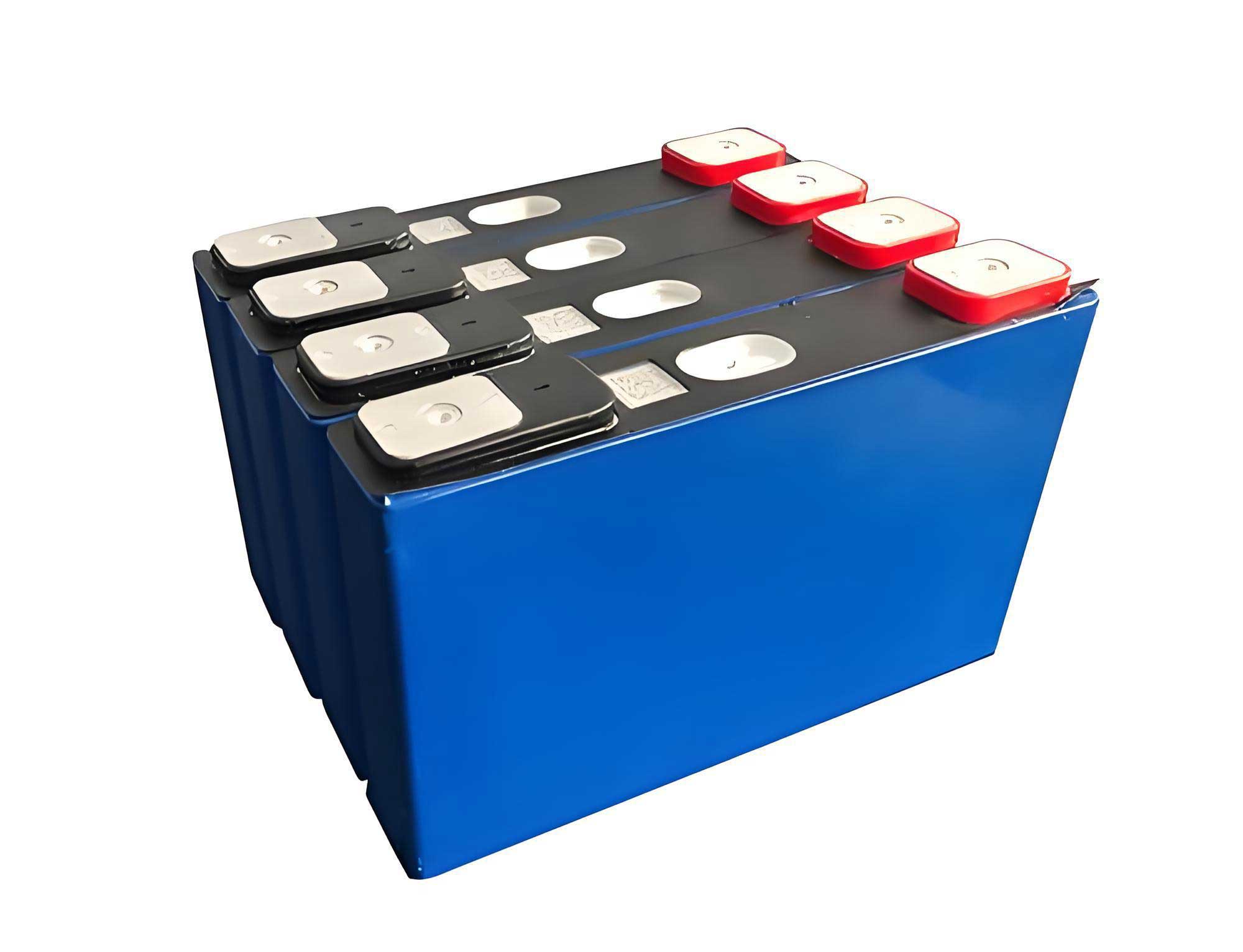
The test subject was a stack of three commercially available LiFePO4 battery modules, each with a nominal voltage of 25.6 V and a capacity of 326 Ah. Each module was constructed by connecting eight 326 Ah LiFePO4 prismatic cells in series. A dedicated BMU was attached to the middle module (#2) to monitor individual cell voltages and temperatures in real-time. The stack was placed inside a representative test enclosure simulating a BESS compartment.
1.2 Instrumentation and Monitoring
A comprehensive sensor network was deployed:
- Thermal Monitoring: The BMU recorded temperatures of each cell in module #2. External infrared cameras monitored the surface temperature of all modules.
- Gas Detection: Multiple industrial-grade detectors continuously measured the volume fraction of Hydrogen (H₂) and Carbon Monoxide (CO) in the enclosure (range: 0-1000 ppm).
- Electrical Monitoring: The BMU recorded the voltage of every cell in module #2 at a high sampling rate. A professional battery cycler was used for performance tests.
- Visual Monitoring: Video recording was used to observe physical changes and any signs of electrical arcing.
1.3 Test Protocol
The test protocol was designed to simulate a worst-case exposure scenario during a firefighting event on a neighboring unit.
- Baseline Performance Test: All three LiFePO4 battery modules were charged to 100% State of Charge (SoC) using a constant current-constant voltage (CC-CV) protocol and then underwent a standard capacity test (120A discharge to cutoff, followed by a 120A charge).
- Water Mist Exposure: The fully charged modules were subjected to a continuous spray from overhead water mist nozzles for a duration of 15 minutes. The water mist system operated at 6 MPa, using tap water with a conductivity of approximately 190 µS/cm.
- Post-Exposure Observation: After spray cessation, the modules were monitored within the enclosure for an additional 2 hours for any delayed reactions.
- Final Performance Test: After a 48-hour drying period, the LiFePO4 battery modules underwent an identical capacity test to compare performance before and after exposure.
| Parameter | Specification |
|---|---|
| Battery Chemistry | Lithium Iron Phosphate (LiFePO4) |
| Module Configuration | 8S1P (8 cells in series) |
| Module Voltage/Capacity | 25.6 V / 326 Ah |
| Water Mist Pressure | 6 MPa |
| Exposure Duration | 15 minutes |
| Water Conductivity | ~190 µS/cm |
| Observation Period | 120 minutes post-spray |
2. Results and Analysis
2.1 Safety Performance Under Water Mist Spray
The primary safety concern is whether water spray induces abusive conditions in a healthy LiFePO4 battery. The data conclusively showed no signs of triggered thermal runaway or hazardous events.
Gas Emission: No detectable release of characteristic thermal runaway gases was observed. The H₂ and CO levels remained at ambient background levels throughout the spray and observation period. Any minor fluctuations ( < 15 ppm for H₂ and < 10 ppm for CO) were within the noise band of the electrochemical sensors, confirming the stability of the LiFePO4 battery chemistry under this stress. The absence of gas can be described by the stability of the LiFePO4 cathode material, where oxygen release is far less prevalent than in layered oxide cathodes, even under external provocation:
$$ \text{LiFePO}_4 \xrightarrow[\text{Stable}]{\text{Water Exposure}} \text{No significant exothermic decomposition} $$
Thermal Response: The temperature of the LiFePO4 battery modules decreased during spraying due to the evaporative cooling effect of the water mist. Cell temperatures in the instrumented module dropped by up to 7°C from the pre-spray baseline and continued to decrease slightly during the post-spray observation as residual water evaporated. Crucially, there was no instance of temperature increase, which would be a primary indicator of an internal exothermic reaction. The cooling effect can be modeled by the heat absorbed during water evaporation:
$$ Q_{absorbed} = \dot{m}_w \cdot L_v $$
where \( \dot{m}_w \) is the mass flow rate of water that evaporates and \( L_v \) is the latent heat of vaporization. This absorbed heat dominates over any negligible joule heating from possible leakage currents.
Physical Integrity: Visual inspection during and after the test revealed no physical abnormalities. There was no case swelling, venting, electrolyte leakage, or deformation of any LiFePO4 battery module. No electrical arcing or sparking was observed at the terminals or busbars.
2.2 Electrical Performance and Stability
The integrity of the LiFePO4 battery’s electrical function is critical for system operation after a fire event.
Voltage Stability: The cell voltages in module #2, monitored by the BMU, demonstrated remarkable stability. During the 15-minute spray, the maximum observed voltage deviation for any single cell was 27 mV (a 0.8% change from a nominal 3.34 V), and this deviation recovered to the baseline within minutes after the spray stopped. A more pronounced, synchronized “see-saw” fluctuation (e.g., one cell dropping 60 mV while two adjacent cells rose by 30 mV each) was later traced to a temporary, water-induced contact resistance issue in the BMU voltage sense harness, not in the LiFePO4 battery cells themselves. A follow-up test with a secured harness showed perfectly stable voltages. This highlights that proper connector sealing is as important as cell protection.
Charge-Discharge Performance: The most definitive measure of electrical health is the capacity test. The results, summarized in Table 3, show negligible impact on the performance of the LiFePO4 battery modules.
| Module ID | Test Phase | Charge Capacity (Ah) | Discharge Capacity (Ah) | Round-Trip Efficiency (%) |
|---|---|---|---|---|
| #1 | Pre-Exposure | 340.000 | 334.992 | 98.53 |
| Post-Exposure | 340.003 | 340.000 | 99.99 | |
| #2 | Pre-Exposure | 338.004 | 337.006 | 99.70 |
| Post-Exposure | 337.024 | 332.006 | 98.51 | |
| #3 | Pre-Exposure | 340.028 | 340.000 | 99.99 |
| Post-Exposure | 336.002 | 334.987 | 99.70 |
The data indicates that the capacity and efficiency of the LiFePO4 battery modules were virtually unchanged. Minor variations ( < 1.2% in capacity) are within the normal measurement variability and aging drift expected between two test cycles for a large-format LiFePO4 battery. No consistent degradation pattern was observed.
2.3 Impact on Battery Management System (BMU) Functionality
The BMU is the “brain” of the battery pack, and its continuous operation is essential for safety. Apart from the transient harness contact issue noted earlier—which is an interface problem, not a failure of the BMU’s core electronics—the data acquisition system functioned normally throughout the test. It continuously and accurately reported cell voltages and temperatures without permanent failure or reset. This demonstrates that well-designed monitoring electronics can remain operational during a water mist discharge event.
2.4 Post-Test Inspection and Long-Term Considerations
One week after the test, a detailed inspection was conducted. The primary findings were related to external cosmetic corrosion, not cell failure. Small, localized rust spots were found on the top surfaces of the lower two modules, attributed to dripping water carrying corrosion products from the metal support frame above. Crucially, the aluminum cell casings, copper/aluminum busbars, and steel module terminals showed no signs of significant corrosion. This suggests that short-term exposure to high-purity water mist does not aggressively corrode critical current-carrying components of a LiFePO4 battery system, though long-term or repeated exposure may require corrosion-resistant coatings or materials.
3. Discussion: Mechanisms and Implications for System Design
The positive outcomes of this reliability test can be explained by the inherent properties of both the suppression agent and the LiFePO4 battery chemistry.
3.1 Why Water Mist is Compatible with LiFePO4 Batteries
Several factors contribute to the safe interaction:
- Electrochemical Stability of LiFePO4: The olivine structure of LiFePO4 is highly stable. Unlike NMC or NCA cathodes, it does not readily release oxygen at high temperatures, making it less prone to self-sustaining exothermic reactions when externally cooled. The reaction kinetics for detrimental side reactions are exceedingly slow at the temperatures encountered during water mist cooling (< 50°C).
- High Open-Circuit Voltage (OCV) Stability: A healthy LiFePO4 battery at moderate SoC has an OCV well below the electrolysis voltage of water (1.23 V). For a single LiFePO4 cell (~3.2-3.3V), the potential difference between any two points on the damp casing is insufficient to drive substantial electrolytic currents that could lead to short circuits or corrosion.
- Cooling Dominance: The high heat capacity and latent heat of water mist create a powerful heat sink. Any minuscule resistive heating from potential leakage currents across wet surfaces is overwhelmingly counteracted by evaporative cooling, preventing any thermal escalation. The net heat flux from the cell is given by:
$$ \Phi_{net} = \Phi_{joule} – \Phi_{cooling} \approx -\Phi_{cooling} $$
where \( \Phi_{joule} \) is negligible and \( \Phi_{cooling} \) is large and negative.
3.2 Design Recommendations for Water Mist Protected BESS
Based on the findings, the following design considerations can enhance system-level reliability:
| Design Aspect | Recommendation | Rationale |
|---|---|---|
| Electrical Isolation & Sealing | Use sealed or potted connectors for BMU sense lines and communications. Apply conformal coating to PCBs where possible. | Prevents transient data issues from water intrusion on low-voltage circuits, not from the LiFePO4 battery itself. |
| Material Selection | Use corrosion-resistant materials (e.g., stainless steel, coated aluminum) for support structures and enclosures. | Mitigates long-term cosmetic corrosion and prevents conductive rust debris from bridging terminals. |
| Drainage | Ensure the cabinet or container has effective drainage to prevent pooled water around the LiFePO4 battery modules. | Eliminates prolonged immersion of terminals and reduces long-term corrosion risk. |
| Water Quality | Consider using deionized (DI) water in closed-loop water mist systems to further reduce conductivity. | Minimizes any potential for leakage currents, although tap water was proven sufficient in this test. |
3.3 Comparative Analysis with Other Fire Suppressants
While this study focuses on water mist, it is instructive to compare its reliability profile with other common agents for LiFePO4 battery fires.
| Suppressant Type | Effect on Non-Faulty LiFePO4 Battery | Key Reliability Concern |
|---|---|---|
| High-Pressure Water Mist | No safety impact; slight cooling. No performance degradation. | Potential for connector ingress; long-term corrosion if water pools. |
| Gaseous Agents (e.g., Novec 1230, FK-5-1-12) | Generally inert; no electrical conductivity. | High cost; may not prevent cell-to-cell propagation or re-ignition without cooling. |
| Inert Gases (e.g., Argon, CO₂) | Inert; no direct electrical impact. | Asphyxiation risk in occupied spaces; minimal cooling, high re-ignition risk. |
| Aerosols | Conductive residue can coat surfaces. | High risk of persistent short circuits across battery terminals post-discharge. |
This comparison underscores that water mist offers a unique combination of effective cooling and a relatively benign impact on healthy LiFePO4 battery equipment, especially when designed with the mitigations above.
4. Conclusion and Future Perspectives
This comprehensive experimental investigation provides strong evidence for the reliability of water mist fire protection systems when used in environments containing LiFePO4 battery energy storage modules. The core finding is that a prolonged, direct spray from a high-pressure water mist system does not compromise the safety or core electrical performance of healthy, fully charged LiFePO4 battery modules. Key evidence supporting this conclusion includes:
- Absolute Safety: No thermal runaway signatures—such as gas generation (H₂, CO), temperature rise, venting, or fire—were detected during or after exposure.
- Performance Integrity: The charge and discharge capacity and round-trip efficiency of the LiFePO4 battery modules remained unchanged within normal measurement tolerances.
- Functional Continuity: The critical battery monitoring equipment (BMU) maintained accurate data acquisition, barring minor interface issues addressable by design.
The results effectively decouple two concerns: the use of water mist to aggressively cool and extinguish a failing LiFePO4 battery, and its effect on neighboring healthy units. This study confirms that the latter is not a significant risk, thereby removing a major barrier to the adoption of this highly effective fire suppression technology for LiFePO4 battery energy storage systems.
Future research should explore the boundaries of this reliability. This includes testing with different water conductivities (especially seawater), longer and repeated exposure cycles, the impact on heavily aged LiFePO4 batteries with compromised insulation, and the performance of system-level integration (e.g., effects on main DC contactors, inverters). Furthermore, developing standardized test protocols to evaluate the compatibility of fire suppression agents with various LiFePO4 battery system components will be crucial for guiding industry codes and standards. As the global deployment of LiFePO4 battery energy storage continues to scale, validating and implementing reliable, effective, and system-compatible fire protection solutions like water mist will be essential for ensuring the safe and sustainable growth of this critical technology.