
Abstract: Accurately estimating the irreversible expansion of lithium ion battery cells is crucial for comprehensive aging assessment and safety management. To address the difficulty in directly measuring mechanical expansion in real-world applications, this paper proposes a data-driven estimation method based on feature fusion and attention mechanisms. The method begins by extracting aging-related features from a defined charging voltage interval. Subsequently, a one-dimensional convolutional residual network integrated with a Convolutional Block Attention Module (CBAM) is constructed. This network adaptively extracts deep features from the reconstructed voltage-capacity (V-Q) sequence. The manually engineered features and the deep-learned sequence features are then fused to enhance representation. Finally, a fully connected layer maps the fused features to the estimated irreversible expansion magnitude (IEM). Experimental validation on the public UofM lithium ion battery dataset demonstrates the effectiveness of the proposed method. The model achieves a superior average estimation accuracy across batteries subjected to diverse temperatures and charging/discharging rates, significantly outperforming baseline models that rely solely on handcrafted features or sequence data.
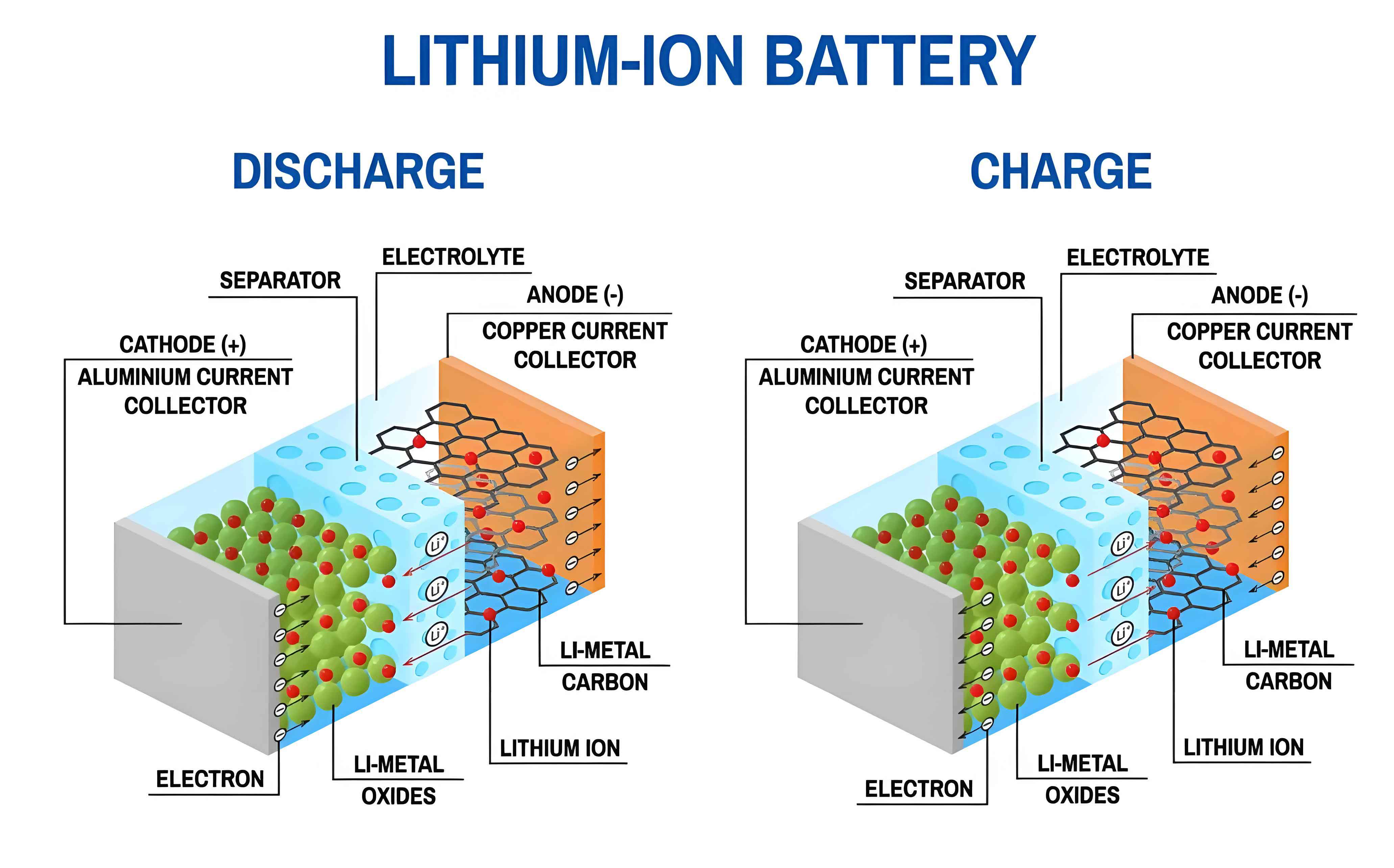
1. Introduction
The widespread deployment of lithium ion battery technology in electric vehicles, grid-scale energy storage, and portable electronics necessitates reliable methods for state-of-health (SOH) monitoring. Traditional SOH indicators, such as capacity fade and internal resistance increase, primarily reflect electrochemical degradation. However, mechanical deformation, manifested as thickness expansion, is another critical aging signature directly linked to parasitic side reactions like solid electrolyte interphase (SEI) growth and gas generation. This irreversible expansion accumulates over the lithium ion battery lifetime and correlates with capacity loss. Therefore, estimating the Irreversible Expansion Magnitude (IEM) provides complementary and vital information for a holistic health assessment, potentially enabling early failure detection.
Direct measurement of lithium ion battery expansion using sensors like strain gauges or optical methods is often impractical for fielded systems due to cost, integration complexity, and reliability concerns. Consequently, model-based or data-driven estimation using readily available operational data (voltage, current, temperature) becomes highly attractive. While mechanistic models linking SEI growth to volume change exist, their parameter identification is complex and sensitive to cell chemistry and operating conditions. In contrast, data-driven approaches, particularly machine learning models, offer strong potential for building adaptable mappings from operational data to mechanical states.
Inspired by data-driven SOH estimation methods, IEM estimation can be formulated as a regression problem. The core challenge lies in extracting informative health indicators (HIs) from partial charging data that are robust across varying temperatures and load profiles. Existing approaches can be categorized into two paradigms: 1) manual feature engineering based on domain knowledge (e.g., incremental capacity analysis), and 2) automatic feature learning using deep neural networks (e.g., convolutional neural networks). The former relies heavily on prior knowledge and may not capture subtle, complex patterns, while the latter often requires large datasets and can be prone to overfitting, especially with limited data from diverse aging paths.
To overcome these limitations, this paper proposes a hybrid framework that synergistically combines the strengths of both paradigms. We first extract a set of handcrafted features from a carefully selected charging voltage segment that encapsulates the dominant aging characteristics. Simultaneously, we reconstruct the V-Q sequence within this segment as input for a deep learning module. A key innovation is the integration of a Convolutional Block Attention Module (CBAM) into a 1D residual network (ResNet). The CBAM-1D ResNet module adaptively focuses on the most relevant channels and spatial locations within the V-Q sequence feature maps, enhancing feature discrimination under different operational stresses. The manually engineered features and the deep features from the attention network are then fused, creating a enriched feature representation that is finally regressed to the IEM value. This feature fusion strategy leverages both explicit domain knowledge and implicit data-driven patterns, aiming for improved accuracy and generalization. The proposed method is validated using a public dataset containing lithium ion battery aging tests under various temperature and C-rate conditions.
2. Methodology
2.1 Charging Segment Selection and Feature Engineering
The charging process, typically following a controlled protocol, provides more consistent data for feature extraction compared to discharging. To ensure practicality, the method uses a partial charging segment rather than a full cycle. Analysis of Incremental Capacity (IC) curves reveals that the main IC peak, associated with major phase transitions in the electrode materials, is highly sensitive to aging. Its height decreases and position shifts with degradation. Therefore, a voltage interval covering the main IC peak region across different test conditions is selected. For the cells in the UofM dataset, the interval from 3.62 V to 3.95 V is chosen. From this interval, two types of inputs are derived:
1) Reconstructed V-Q Sequence: The current is integrated over time within the segment to obtain the charged capacity Q. The V-Q curve is then linearly interpolated to a fixed length of M points (e.g., M=67 with a 5 mV voltage step) to ensure uniform input dimension for the neural network. This sequence, denoted as $Q_{vq} = [Q_{vq,1}, Q_{vq,2}, …, Q_{vq,M}]$, serves as the primary input for the deep learning module.
2) Handcrafted Features: Five statistical and IC-based features are extracted from the same segment:
- Mean ($Q_{mean}$), Standard Deviation ($Q_{std}$), and Skewness ($Q_{ske}$) of the V-Q sequence.
- Height ($P_{main}$) and Voltage Position ($V_{peak}$) of the main IC peak.
Additionally, the average current ($I_{mean}$) and average temperature ($T_{mean}$) within the segment are included to provide contextual information about the operating condition. Thus, the handcrafted feature vector is $X_{hand} = [Q_{mean}, Q_{std}, Q_{ske}, P_{main}, V_{peak}, I_{mean}, T_{mean}]$.
2.2 CBAM-Enhanced 1D Residual Network (CBAM-1D ResNet)
The core of the deep feature extraction module is a 1D Convolutional Neural Network (CNN) with residual connections and an attention mechanism. The 1D CNN is suitable for processing sequential data like the V-Q curve. Residual connections, formulated as $H(x) = F(x) + x$, where $F(x)$ is the residual mapping, help alleviate the degradation problem in deep networks, ensuring stable training.
The novel component is the integration of the Convolutional Block Attention Module (CBAM). CBAM sequentially infers attention maps along the channel and spatial dimensions, allowing the model to focus on “what” and “where” is informative in the feature maps. Given an intermediate feature map $F \in \mathbb{R}^{C \times H \times 1}$ (where C is the number of channels and H is the spatial length), the CBAM processing is:
$$F’ = M_c(F) \otimes F$$
$$F” = M_s(F’) \otimes F’$$
Here, $M_c \in \mathbb{R}^{C \times 1 \times 1}$ is the channel attention map, $M_s \in \mathbb{R}^{1 \times H \times 1}$ is the spatial attention map, and $\otimes$ denotes element-wise multiplication.
Channel Attention Module (CAM): It exploits inter-channel relationships. The spatial information is aggregated using both average-pooling and max-pooling, producing two different spatial context descriptors. These descriptors are then processed by a shared multi-layer perceptron (MLP) and merged to generate the channel attention map:
$$M_c(F) = \sigma(MLP(AvgPool(F)) + MLP(MaxPool(F)))$$
where $\sigma$ is the sigmoid function.
Spatial Attention Module (SAM): It focuses on “where” to emphasize. The channel information is aggregated using average-pooling and max-pooling along the channel axis, and the two resulting maps are concatenated. A standard convolution layer is then applied to generate the spatial attention map:
$$M_s(F’) = \sigma(f^{7 \times 1}([AvgPool(F’); MaxPool(F’)]))$$
where $f^{7 \times 1}$ denotes a convolution with a $7 \times 1$ filter and $\sigma$ is the sigmoid function.
In the proposed CBAM-1D ResNet, a CBAM module is inserted into each residual block after the convolutional layers. This enables the network to adaptively recalibrate features, emphasizing important aging-related patterns in the V-Q sequence while suppressing less useful information, which is particularly beneficial for handling data from varied operating conditions.
2.3 Feature Fusion and IEM Estimation Model
The overall architecture of the proposed IEM estimation model is illustrated in Figure 1. It consists of three main components:
- CBAM-1D ResNet Stream: Takes the interpolated V-Q sequence $Q_{vq}$ as input. After several CBAM-1D ResNet blocks, global average pooling and flattening operations produce a deep feature vector $O_{seq}$.
- DNN Stream for Handcrafted Features: A simple Deep Neural Network (DNN) with multiple fully connected layers processes the handcrafted feature vector $X_{hand}$, producing a transformed feature vector $O_{hand}$.
- Fusion & Regression Layer: The two feature vectors are concatenated: $X_{fused} = concat(O_{seq}, O_{hand})$. This fused representation is fed into a final fully connected regression layer to output the estimated IEM value $\hat{y}_{IEM}$.
The model is trained to minimize the Mean Squared Error (MSE) loss between the predicted and true IEM values:
$$L_{MSE} = \frac{1}{N} \sum_{i=1}^{N} (y_{IEM,i} – \hat{y}_{IEM,i})^2$$
where $N$ is the number of training samples.
3. Experimental Setup
3.1 Dataset
The proposed method is validated using the public lithium ion battery aging dataset from the University of Michigan (UofM). The dataset includes eight pouch cells (NMC111 cathode) tested under different combinations of temperature and charge/discharge C-rates, as detailed in Table 1. Each cycle records voltage, current, temperature, capacity, and crucially, the thickness change of the lithium ion battery, from which the IEM is derived.
| Cell ID | Temperature (°C) | Charge/Discharge C-rate | Depth of Discharge |
|---|---|---|---|
| 01 | 25 | 0.2C / 0.2C | 0% – 100% |
| 02 | -5 | 0.2C / 0.2C | |
| 04 | 25 | 1.5C / 1.5C | |
| 06 | 45 | 1.5C / 1.5C | |
| 07 | 25 | 2.0C / 2.0C | |
| 09 | 45 | 2.0C / 2.0C | |
| 10 | 25 | 0.2C / 1.5C | |
| 11 | -5 | 0.2C / 1.5C |
3.2 Evaluation Metrics and Benchmark Models
To evaluate the estimation performance, three metrics are used: Root Mean Square Error (RMSE), Mean Absolute Error (MAE), and Maximum Absolute Error (MaxAE). A leave-one-battery-out cross-validation strategy is employed: one cell’s data is used as the test set, while the remaining seven cells’ data form the training set. This rigorous test evaluates the model’s generalizability to unseen operating conditions.
Three benchmark models are designed for comparison:
- DNN Model: Uses only the seven handcrafted features ($X_{hand}$) as input to a deep neural network.
- VQ-1D ResNet Model: Uses only the V-Q sequence and the operating condition features ($I_{mean}$, $T_{mean}$) as input to a standard 1D ResNet (without CBAM).
- 1D ResNet Model: Uses the V-Q sequence and all seven handcrafted features as input to a standard 1D ResNet (without CBAM). This model tests the benefit of feature fusion without attention.
The proposed model is denoted as CBAM-1D ResNet Model.
4. Results and Discussion
4.1 Overall Performance Comparison
The average estimation errors across all eight test batteries for the four models are summarized in Table 2. The proposed CBAM-1D ResNet model achieves the lowest RMSE, MAE, and MaxAE, demonstrating its superior overall accuracy and robustness.
| Model | RMSE (μm) | MAE (μm) | MaxAE (μm) |
|---|---|---|---|
| DNN | 11.21 | 8.90 | 34.84 |
| VQ-1D ResNet | 11.17 | 8.99 | 27.12 |
| 1D ResNet | 7.27 | 5.74 | 24.17 |
| CBAM-1D ResNet (Proposed) | 6.37 | 4.88 | 22.78 |
Key observations from Table 2 are:
- Feature Fusion Benefit: Comparing the 1D ResNet model with the DNN and VQ-1D ResNet models shows a significant error reduction. This confirms that combining handcrafted features with deep sequence features provides a more powerful representation than using either type alone.
- Attention Mechanism Benefit: The proposed CBAM-1D ResNet model further improves upon the 1D ResNet model, reducing the average RMSE by 0.9 μm. This indicates that the CBAM module effectively helps the network focus on the most relevant features within the sequence, adapting to different aging paths and operating conditions inherent in the diverse lithium ion battery test data.
4.2 Detailed Performance per Battery
Table 3 presents the detailed performance metrics for each individual test battery. The proposed model consistently delivers low errors across most cells, including those subjected to challenging low-temperature (e.g., Cell 02 at -5°C) or high C-rate conditions (e.g., Cell 07 at 2C).
| Cell ID | RMSE (μm) | MAE (μm) | MaxAE (μm) | ||||||
|---|---|---|---|---|---|---|---|---|---|
| DNN | 1D ResNet | Proposed | DNN | 1D ResNet | Proposed | DNN | 1D ResNet | Proposed | |
| 01 | 13.98 | 8.01 | 6.50 | 11.14 | 5.70 | 5.07 | 35.44 | 32.19 | 23.10 |
| 02 | 19.44 | 3.34 | 2.87 | 16.52 | 2.61 | 2.05 | 54.08 | 13.10 | 15.34 |
| 04 | 7.35 | 6.86 | 6.55 | 5.68 | 5.53 | 4.82 | 25.51 | 18.41 | 22.89 |
| 06 | 8.23 | 6.23 | 6.00 | 6.90 | 5.06 | 4.63 | 25.31 | 14.76 | 23.25 |
| 07 | 6.53 | 6.12 | 4.89 | 5.09 | 4.68 | 3.69 | 39.77 | 37.47 | 29.66 |
| 09 | 6.63 | 6.37 | 6.19 | 5.28 | 5.20 | 5.05 | 20.34 | 14.27 | 17.21 |
| 10 | 14.32 | 10.07 | 7.27 | 11.84 | 8.52 | 5.74 | 32.55 | 28.79 | 17.94 |
| 11 | 13.20 | 11.19 | 10.72 | 8.77 | 8.66 | 7.99 | 45.68 | 34.37 | 32.82 |
The DNN model performs poorly on cells 01, 02, 10, and 11, indicating that handcrafted features alone lack generalizability across vastly different stress conditions. The 1D ResNet model shows much better performance, especially on Cell 02, highlighting the value of learning from the raw V-Q sequence. The proposed model achieves the best or near-best accuracy on every cell, demonstrating its robustness. A slight performance drop is observed in the initial cycles (formation stage) for all models, which is attributed to the highly variable electrochemical behavior during early lithium ion battery activation. After this stage, the estimation errors for the proposed model stabilize within an acceptable range.
5. Conclusion
This paper presents a novel data-driven method for estimating the irreversible expansion of lithium ion battery cells. The method addresses the challenges of generalization across diverse operating conditions by combining feature fusion and attention mechanisms. Key contributions include:
- Hybrid Feature Strategy: The fusion of domain-knowledge-based handcrafted features with deep-learned V-Q sequence features creates a more comprehensive and robust representation of lithium ion battery aging, leading to significantly better estimation accuracy than models using either feature type in isolation.
- Attention-Enhanced Feature Learning: The integration of the CBAM module into a 1D residual network enables adaptive, context-aware feature extraction from the charging sequence. This allows the model to dynamically prioritize informative patterns, effectively handling the variations introduced by different temperatures and C-rates during lithium ion battery cycling.
- Practical Validation: The proposed CBAM-1D ResNet model is rigorously validated using a public dataset with eight cells under varied stress conditions. It achieves an average RMSE of 6.37 μm, outperforming several benchmark models and demonstrating strong generalizability in a leave-one-battery-out test. This level of accuracy, achieved using only partial charging data, indicates the method’s potential for practical in-situ lithium ion battery health monitoring where direct expansion measurement is infeasible.
Future work will focus on further improving estimation stability during the initial formation cycles and extending the method to other lithium ion battery chemistries and form factors.