
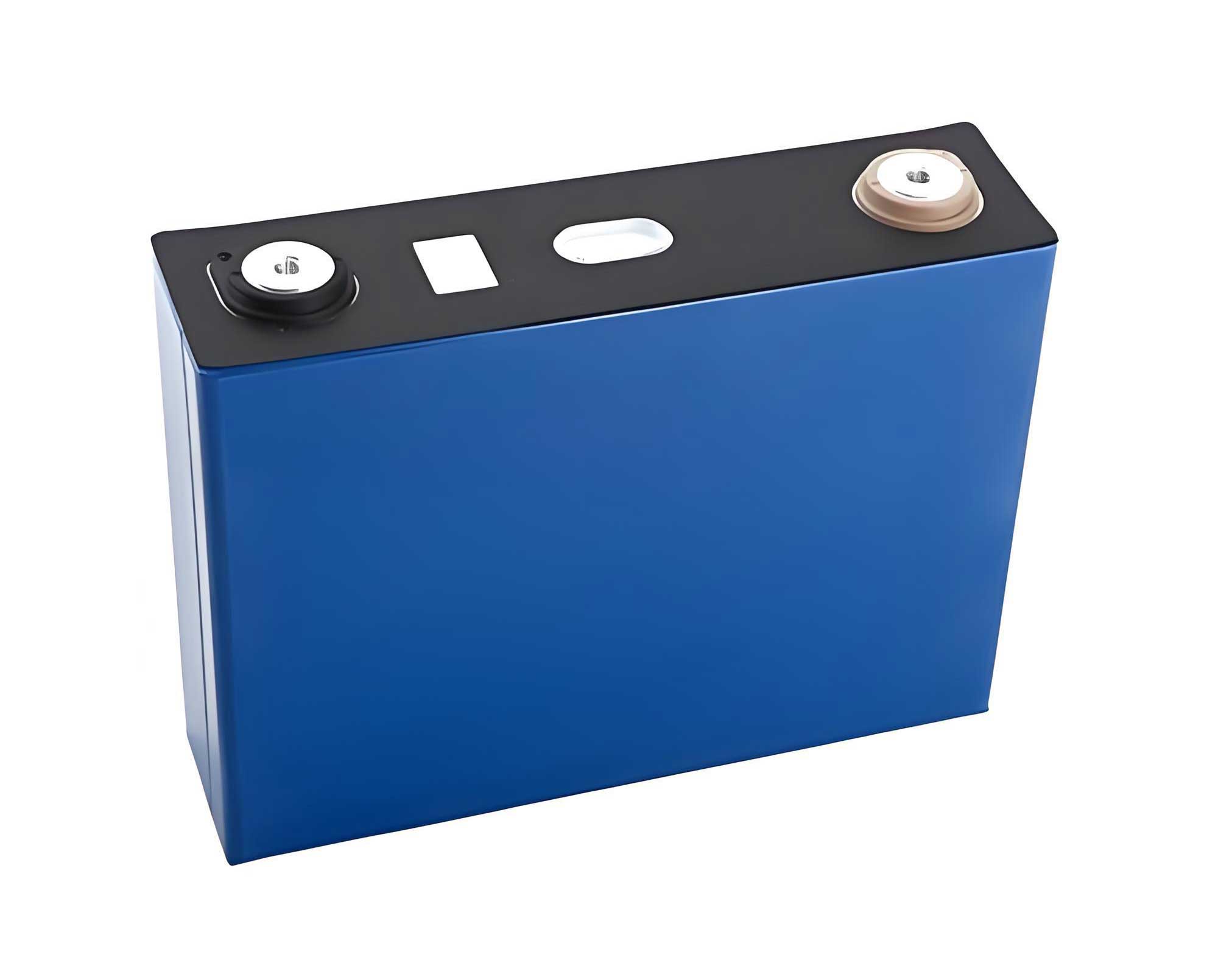
The global maritime industry’s accelerating shift towards decarbonization has placed electric and hybrid-electric propulsion systems at the forefront of sustainable shipping. Among the various energy storage solutions, lithium iron phosphate (LiFePO4) batteries have emerged as a leading contender, particularly for inland waterway vessels, ferries, and offshore service vessels. Their advantages are compelling: high energy density, long cycle life, enhanced safety profile compared to other lithium-ion chemistries, and zero operational emissions. However, the integration of these high-energy battery systems into the marine environment introduces unique engineering challenges, paramount among which is the environmental control of the battery compartment. As a marine systems engineer, I have navigated the complexities of designing such systems, where failure to maintain a controlled environment can lead to reduced battery efficiency, accelerated degradation, thermal runaway risks, and ultimately, compromise vessel safety and operational integrity. This article consolidates a practical design methodology, blending regulatory interpretation with engineering calculation and spatial integration, specifically for the environmental control systems of marine LiFePO4 battery compartments.
The core function of the environmental control system is to maintain the LiFePO4 battery bank within its specified safe operating window. This window is primarily defined by temperature. While LiFePO4 batteries can discharge across a broad range (e.g., -20°C to 55°C), their charge acceptance and long-term health are optimal within a much narrower band, typically between 0°C and 45°C. Prolonged operation outside this range, especially at elevated temperatures, can catalyze deleterious side reactions, increase internal impedance, and shorten lifespan. Furthermore, while LiFePO4 chemistry is inherently stable, any fault condition leading to overheating must be managed by a system designed to remove excess heat. Therefore, the battery compartment cannot be treated as a standard machinery space; it requires a dedicated, precisely engineered environmental system.
Decoding Regulatory Frameworks: A Foundational Step
Design begins with a rigorous analysis of applicable rules. Leading classification societies like DNV, ABS, Lloyd’s Register, and the China Classification Society (CCS) have published guidelines for battery installations. While specifics vary, the core principles align. For this discussion, we will synthesize common requirements, with particular attention to ventilation calculation, which is often the primary control method.
| Regulatory Aspect | Typical Requirement | Design Implication & Rationale |
|---|---|---|
| Compartment Isolation | Batteries must be in a dedicated, environmentally controlled space (room, box, or locker). | Isolates thermal and potential fire hazards. Allows for tailored environmental control independent of other spaces. |
| Temperature Control | Mechanical ventilation or other cooling must be provided to prevent excessive ambient temperature around the LiFePO4 battery bank. | Active heat removal is mandatory. Passive cooling is insufficient due to significant heat generation during charge/discharge cycles. |
| Internal Heat Sources | Unrelated heat-producing equipment should not be installed in the battery compartment. | Minimizes the total cooling load, simplifying system design and improving efficiency. |
| Electrical Equipment | Avoided if possible. If essential, it must be considered in the heat load calculation. | Prevents localized hotspots and ensures the ventilation system is sized for the total heat gain. |
| Ventilation Openings | Fitted with closures and wire mesh to prevent water ingress and flame penetration. | Ensures system integrity and safety in all weather and potential fire scenarios. |
| Fire Protection | A fixed fire-extinguishing system suitable for lithium-ion batteries (e.g., aerosol, clean agent) is required. Thermal runaway detection is increasingly mandated. | Provides a means to suppress a battery fire. Detection systems allow for early warning and preventive action. |
| Thermal Insulation | Boundaries adjacent to other compartments may require insulation on the battery compartment side. | Protects the LiFePO4 battery environment from external heat sources (e.g., engine room) and contains any internal fire. |
The most critical and frequently referenced formula governs the required ventilation rate for a mechanically ventilated LiFePO4 battery compartment. The formula, derived from the fundamental heat balance equation, is prescribed by several class societies when the battery manufacturer does not provide a specific calculation method.
The required ventilation airflow rate \( q’ \) is given by:
$$ q’ = \frac{k \, (nQ + Q_1)}{0.335 \, \Delta t} $$
Where:
- \( q’ \) = Required ventilation air flow rate (m³/h)
- \( n \) = Total number of battery modules
- \( Q \) = Heat dissipation per battery module during operation (W). This is the most crucial parameter and must be obtained from the LiFePO4 battery manufacturer’s data, typically based on inefficiency losses during charge/discharge. For a system with total energy capacity \( E \) (kWh), charge power \( P_{chg} \) (kW), discharge power \( P_{disch} \) (kW), charge efficiency \( \eta_{chg} \), and discharge efficiency \( \eta_{disch} \), the heat generation can be estimated. The governing heat load is the larger of the charge and discharge heat losses:
- Charge Heat Loss Power: \( Q_{chg} = P_{chg} \times (1 – \eta_{chg}) \)
- Discharge Heat Loss Power: \( Q_{disch} = P_{disch} \times (1 – \eta_{disch}) \)
The design value \( Q_{module} \) is then \( \frac{\max(Q_{chg}, Q_{disch})}{\text{number of modules}} \).
- \( Q_1 \) = Aggregate heat dissipation from other sources within the space (W), e.g., switchgear, busbars, battery management system (BMS).
- \( \Delta t \) = The permissible temperature rise of the air inside the compartment above the supply air temperature (°C). This parameter requires careful attention. Regulatory interpretations differ: some specify using the highest possible ambient temperature for the sailing area (not to exceed 45°C), while others may refer to a “design ambient.” The most conservative and physically correct approach is to use \( \Delta t = T_{battery,max} – T_{ambient,max} \), where \( T_{battery,max} \) is the maximum allowable compartment air temperature (e.g., 45°C) and \( T_{ambient,max} \) is the historical extreme high temperature for the vessel’s operational region. Using a summer ventilation design temperature is incorrect and unsafe.
- \( k \) = Safety factor (typically 1.5 to 2.0). This accounts for duct losses, fan performance degradation, and uneven air distribution.
- 0.335 = Volumetric heat capacity of air (Wh/(m³·°C)), approximately \( \rho c_p \) where \( \rho \approx 1.2 \, \text{kg/m}^3 \) and \( c_p \approx 0.28 \, \text{Wh/(kg·°C)} \).
This formula’s physical meaning is straightforward: it calculates the volume flow rate of cooler outside air needed to absorb the total heat generated within the LiFePO4 battery compartment, limiting the air temperature rise to a safe \( \Delta t \).
A Systematic Design Methodology
Moving from regulation to implementation involves a structured process. The choice between pure mechanical ventilation and air conditioning is the first major decision.
1. Cooling Strategy Selection:
- Mechanical Ventilation: The default and most energy-efficient solution. It uses ambient air as the cooling medium. Feasibility depends on the calculated airflow \( q’ \). On smaller vessels, moving several thousand cubic meters per hour may require large ducts and openings that are challenging to integrate.
- Air Conditioning (A/C) or Chilled Water Coils: Necessary when ambient air temperature is too high to provide adequate cooling (\( \Delta t \) becomes too small, leading to impossibly high \( q’ \)), or when space for ducting is severely limited. A/C provides precise temperature and humidity control. However, it adds complexity, cost, electrical load, weight, and requires condensate drainage. A hybrid approach uses A/C for base cooling and ventilation for fresh air exchange and emergency cooling.
2. Humidity and Condensation Management: While rules focus on temperature, humidity control is critical in practice. Introducing warm, humid air into a cool LiFePO4 battery space risks condensation on cold battery surfaces or within the BMS, leading to corrosion and electrical faults. If the dew point of the supply air is above the surface temperature of the LiFePO4 battery cells, condensation will occur. The condition is:
$$ T_{surface} \leq T_{dew, supply} $$
Therefore, in tropical climates, supply air often requires dehumidification, either via the A/C system’s latent cooling or a dedicated desiccant dehumidifier. All cooling coils and units must have drip pans with dedicated drain lines routed to a sanitary or bilge system.
3. Heating for Cold Environments: For operations in sub-zero climates, maintaining the LiFePO4 battery above 0°C is essential for charging and health. Electric air heaters, hot water coils, or heat pump functionality in the A/C system can be used. Controls must interlock heating and cooling to avoid opposing operation.
4. Air Distribution Design: The goal is uniform temperature distribution without stagnant pockets. Air should be supplied at the bottom and extracted from the top to leverage thermal buoyancy. Diffusers should be positioned to avoid direct, high-velocity airflow onto the LiFePO4 battery modules, which can cause uneven cell temperatures. A well-designed layout ensures every battery module operates within a tight temperature band, maximizing pack longevity and performance.
5. Safety and Redundancy:
- Redundant Fans: Critical vessels often specify N+1 fan redundancy.
- Gas & Fire Detection: Continuous monitoring for hydrogen (though minimal for LiFePO4), volatile organic compounds (VOCs), smoke, and rapid temperature rise is mandated. The BMS’s temperature sensors are primary, but independent compartment sensors provide backup.
- Emergency Procedures: The ventilation system may be part of the emergency shutdown (ESD) sequence. In case of thermal runaway detection, the system may seal the compartment and activate the fixed firefighting system.
Detailed Calculation and Application: A Case Study
Consider the design for a small electric patrol vessel operating on a northern reservoir. The climate has hot summers (historical max ~41°C) and cold, icy winters where the vessel is laid up. The primary strategy is mechanical ventilation for summer cooling; winter heating is not required.
Step 1: Define LiFePO4 Battery System Parameters.
- Total Capacity, \( E \): 963 kWh
- Charge Power, \( P_{chg} \): 200 kW
- Discharge Power, \( P_{disch} \): 300 kW
- Charge Efficiency, \( \eta_{chg} \): 98%
- Discharge Efficiency, \( \eta_{disch} \): 99%
Step 2: Calculate Battery Heat Generation.
$$ Q_{chg} = P_{chg} \times (1 – \eta_{chg}) = 200 \, \text{kW} \times (1 – 0.98) = 4 \, \text{kW} $$
$$ Q_{disch} = P_{disch} \times (1 – \eta_{disch}) = 300 \, \text{kW} \times (1 – 0.99) = 3 \, \text{kW} $$
The design heat load is the larger value: \( nQ = 4 \, \text{kW} \). (Assuming a single module or heat given as total pack loss).
Step 3: Define Other Parameters.
- Other heat sources, \( Q_1 \): Estimate 0.3 kW for ancillary electronics.
- Temperature difference, \( \Delta t \): \( T_{battery,max} = 45^\circ\text{C} \), \( T_{ambient,max} = 41^\circ\text{C} \). Therefore, \( \Delta t = 45 – 41 = 4^\circ\text{C} \).
- Safety factor, \( k \): Select 2.0 for conservatism on a small vessel.
Step 4: Apply Ventilation Formula.
$$ q’ = \frac{k \, (nQ + Q_1)}{0.335 \, \Delta t} = \frac{2.0 \times (4000 \, \text{W} + 300 \, \text{W})}{0.335 \, \text{Wh/(m}^3 \cdot ^\circ\text{C)} \times 4 \, ^\circ\text{C}} $$
$$ q’ = \frac{2.0 \times 4300}{1.34} \approx \frac{8600}{1.34} \approx 6418 \, \text{m}^3/\text{h} $$
Rounding up for design margin: \( q’_{design} = 6500 \, \text{m}^3/\text{h} \).
This is a substantial airflow for a small craft, immediately highlighting the integration challenge.
Integration and System Layout: Solving Spatial Challenges
The calculated airflow of 6500 m³/h necessitates large-diameter ducts. Conventional routing of individual ducts from a fan room to deckhead mushroom ventilators would clutter limited deck space and passageways. The solution involved innovative integration with the vessel’s superstructure, treating parts of it as inherent ductwork.
Key Design Decisions:
- Fan Selection: A standard, non-explosive proof centrifugal fan (JCL-39, 6600 m³/h) was selected. While LiFePO4 batteries under normal operation do not produce significant flammable gas, some designers opt for EX-proof fans to also function as emergency exhaust in a fault scenario.
- Supply Air Path: Instead of a dedicated duct, the void space beneath the wheelhouse console was utilized as a plenum. This cavity was connected to a purpose-built chase (a vertical enclosed channel) running down to the battery compartment. Air enters through a weatherproof louver set into the forward wheelhouse bulkhead. This “structural duct” minimizes visible components and saves weight.
- Exhaust Air Path: Air is extracted from the top of the LiFePO4 battery compartment via a built-in chase within a laboratory space, concealed behind interior panels. This chase routes the air vertically to the compass deck, where it is discharged through a weatherproof louver.
- Fire Integrity: All chase walls and ducts penetrating the A-class boundary of the battery compartment were insulated with A-60 rated material. Insulation was extended 450 mm on both sides of the bulkhead as required by fire regulations.
This approach demonstrates that effective environmental control for a LiFePO4 battery system is not just about fan sizing but hinges on creative marine architectural integration to manage airflows efficiently within tight spatial constraints.
| Design Component | Specification / Solution | Rationale |
|---|---|---|
| Cooling Strategy | Mechanical Ventilation Only | Dry climate, winter lay-up. Adequate Δt achievable with ambient air. |
| Calculated Airflow | 6500 m³/h | Derived from conservative application of class formula for the LiFePO4 battery pack. |
| Air Distribution | Low-level supply via structural plenum, high-level extract via concealed chase. | Promotes thermal stratification and uniform cooling. Maximizes use of existing structure. |
| Fire Protection | A-60 insulation on boundaries and penetrating ducts. | Complies with fire integrity rules for a machinery space equivalent containing LiFePO4 batteries. |
| Humidity Control | Not installed (drain pans provided on any future cooler). | Justified by operational climate analysis showing low dew points. |
Advanced Considerations and Future Trends
The basic methodology must adapt to more complex scenarios. For large vessels with multi-MWh LiFePO4 battery installations, the heat load can reach hundreds of kilowatts. Here, chilled water cooling loops with plate heat exchangers attached directly to battery racks (liquid cooling) are becoming standard. This method offers far greater heat removal density and precision than air cooling, albeit at higher cost and complexity. The environmental control system then cools the circulating glycol-water mixture, and a separate, smaller ventilation system handles compartment air exchange and emergency smoke extraction.
Furthermore, the integration of the environmental control system with the vessel’s Energy Management System (EMS) is crucial. The EMS, informed by the BMS data, can:
- Predict heat generation based on planned power profiles.
- Stage cooling fans or chillers to optimize energy use.
- Trigger pre-cooling of the LiFePO4 battery compartment before high-power charging.
- Execute emergency protocols upon receiving a fault signal from the BMS or gas detection system.
The fundamental heat balance for the compartment, considering all modes, is:
$$ \sum \dot{Q}_{in} = \dot{m}_a c_p (T_{out} – T_{in}) + \dot{Q}_{cooling} + \dot{Q}_{loss} $$
Where \( \sum \dot{Q}_{in} \) is the total heat generation from the LiFePO4 battery and other equipment, \( \dot{m}_a c_p (T_{out} – T_{in}) \) is the heat removed by ventilation air, \( \dot{Q}_{cooling} \) is the active cooling from A/C or coils, and \( \dot{Q}_{loss} \) is conductive/convective heat loss through boundaries.
In conclusion, the environmental control system for a marine LiFePO4 battery compartment is a critical safety and performance system. Its design is a multi-disciplinary exercise involving regulatory compliance, thermodynamic calculation, electrical engineering, and practical marine integration. The cornerstone is a correct and conservative interpretation of the ventilation formula, using accurate heat generation data and appropriate temperature differentials. For smaller vessels, innovative ducting using the vessel’s structure itself can provide elegant solutions. For larger installations, liquid cooling and advanced EMS integration represent the state of the art. As the fleet of electric and hybrid vessels powered by LiFePO4 batteries expands, robust, reliable, and well-integrated environmental control will remain a non-negotiable pillar of safe and efficient maritime electrification.