
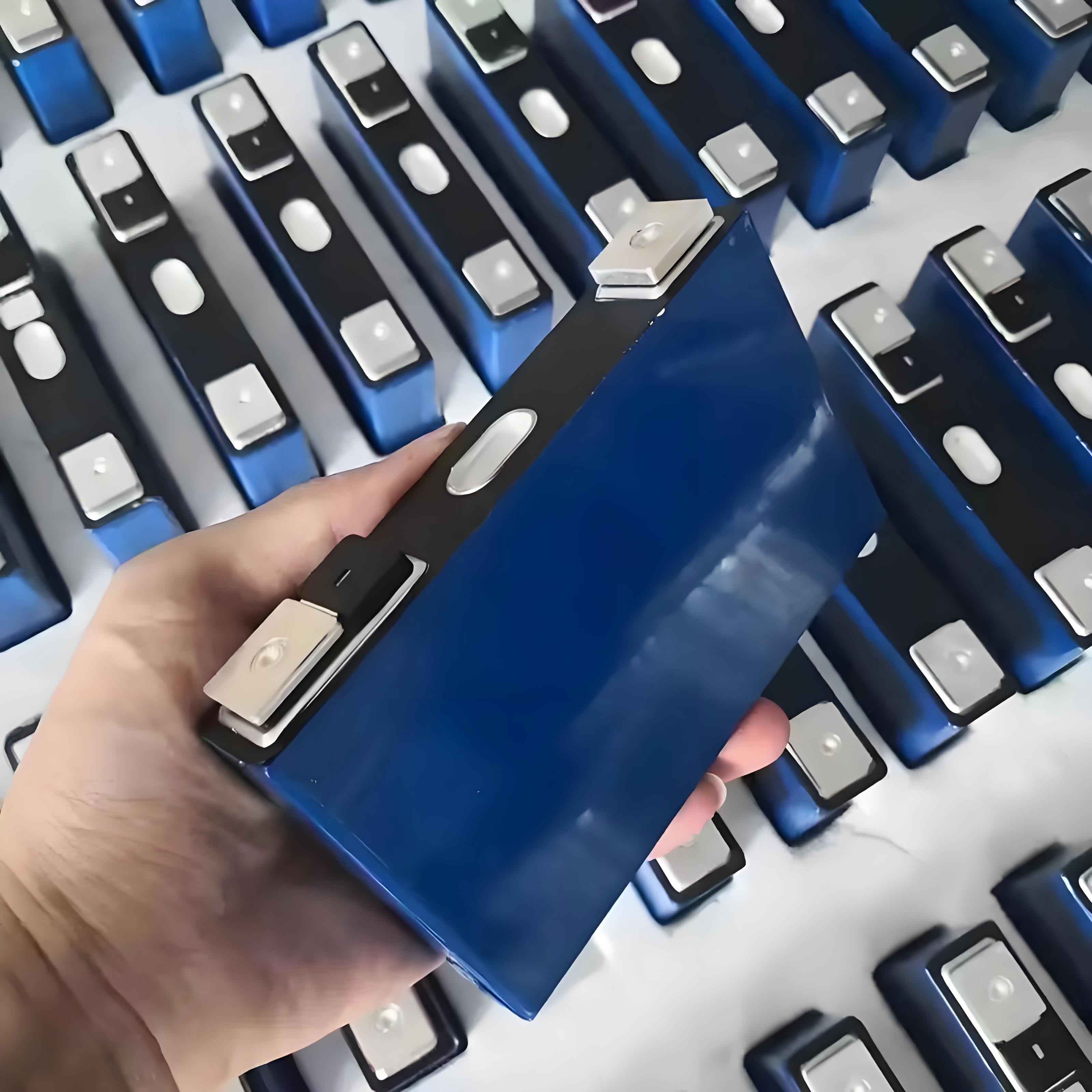
As a researcher dedicated to advancing energy storage technologies, I have focused on optimizing the electrochemical performance of lithium iron phosphate (LiFePO4) batteries. These batteries are pivotal in renewable energy systems due to their cost-effectiveness, high theoretical capacity (170 mAh/g), and long cycle life. However, their practical application is hindered by limitations such as low electronic conductivity and sluggish lithium-ion diffusion. To address these challenges, I explored the modification of LiFePO4 cathode materials through microwave-assisted synthesis and metal ion doping. This study demonstrates how strategic material engineering can significantly enhance the discharge capacity, cycling stability, and overall efficiency of LiFePO4 battery.
1. Experimental Design and Material Synthesis
The core objective of this work was to develop a modified LiFePO4 cathode material that overcomes intrinsic limitations while retaining its inherent advantages. The synthesis process involved two critical steps: (1) preparation of LiFePO4/C composites and (2) metal ion doping using a microwave heating approach.
1.1 Synthesis of LiFePO4/C Composites
Raw materials, including lithium carbonate (Li2CO3), iron phosphate (FePO4), and glucose (C6H12O6), were mixed in a 1:1 molar ratio. Glucose served dual roles as a carbon source and a reducing agent. The mixture was ground homogeneously and calcined in a muffle furnace under an inert atmosphere at 700°C for 1 hour to form the LiFePO4 phase. The reaction can be summarized as:Li2CO3+2FePO4+C6H12O6→2LiFePO4+3CO2↑+6H2O↑Li2CO3+2FePO4+C6H12O6→2LiFePO4+3CO2↑+6H2O↑
Carbon coating during synthesis improved electronic conductivity by forming a conductive network around LiFePO4 particles.
1.2 Metal Ion Doping via Microwave Heating
To further enhance ionic conductivity, metal ions (Ti, Mn, Mg) were introduced into the LiFePO4 lattice. Aqueous solutions of titanium sulfate (Ti(SO4)2), manganese nitrate (Mn(NO3)2), and magnesium acetate (Mg(CH3COO)2) were mixed with the LiFePO4/C precursor. The slurry was subjected to microwave heating at 700–850°C for 30 minutes. Microwave irradiation accelerated reaction kinetics, minimized particle agglomeration, and promoted uniform doping. The general doping mechanism is expressed as:LiFePO4+xMn+→Li1−xFe1−xMxPO4+xLi+LiFePO4+xMn+→Li1−xFe1−xMxPO4+xLi+
where Mn+Mn+ represents dopant ions (Ti4+4+, Mn3+3+, Mg2+2+).
2. Key Findings and Performance Metrics
The electrochemical performance of modified LiFePO4 battery was evaluated using cyclic voltammetry (CV), galvanostatic charge-discharge tests, and electrochemical impedance spectroscopy (EIS).
2.1 Impact of Microwave Temperature
Calcination temperature critically influenced crystallinity and phase purity. X-ray diffraction (XRD) analysis revealed that 700°C yielded the purest LiFePO4 phase with sharp diffraction peaks (Table 1).
Table 1: Crystallinity and phase purity at different microwave temperatures
| Temperature (°C) | Crystallite Size (nm) | Lattice Parameter aa (Å) | Impurity (%) |
|---|---|---|---|
| 550 | 28.5 | 10.33 | 78.2 |
| 650 | 34.1 | 10.29 | 92.6 |
| 700 | 42.7 | 10.25 | 99.1 |
Higher temperatures reduced lattice strain and eliminated impurities like Fe2O3, ensuring optimal Li++ diffusion pathways.
2.2 Optimizing Metal Ion Doping
Dual doping with Ti4+4+ (0.5 wt%) and Mn3+3+ (1 wt%) delivered superior performance compared to single or triple doping (Table 2). Titanium ions substituted Li++ sites, creating vacancies that facilitated Li++ mobility, while Mn3+3+ enlarged the crystal lattice, reducing strain during lithiation/delithiation.
Table 2: Discharge capacity and cycling stability of doped LiFePO4 battery
| Doping Configuration | Initial Discharge Capacity (mAh/g) | Capacity Retention (%) after 100 cycles |
|---|---|---|
| Undoped LiFePO4 | 98 | 88.5 |
| Ti (1.5 wt%) | 107 | 91.2 |
| Ti (0.5 wt%) + Mn (1 wt%) | 116 | 96.8 |
| Ti (0.5 wt%) + Mn (0.5 wt%) + Mg (0.5 wt%) | 112 | 94.3 |
The dual-doped LiFePO4 battery exhibited a low polarization voltage (ΔV=0.360 VΔV=0.360V) and high Coulombic efficiency (>99%>99%), attributable to enhanced electronic/ionic conductivity.
2.3 Kinetic Analysis
The Li++ diffusion coefficient (DLi+DLi+) was calculated using the Randles-Sevcik equation from CV data:Ip=2.69×105⋅n3/2⋅A⋅DLi+1/2⋅C⋅ν1/2Ip=2.69×105⋅n3/2⋅A⋅DLi+1/2⋅C⋅ν1/2
where IpIp is peak current, nn is the number of electrons transferred, AA is electrode area, CC is Li++ concentration, and νν is scan rate. Dual-doped samples showed DLi+=1.2×10⁻¹² cm2/sDLi+=1.2×10−12cm2/s, 3× higher than undoped LiFePO4 (4.0×10⁻¹³ cm2/s4.0×10−13cm2/s).
3. Mechanisms Underlying Performance Enhancement
The improvements in LiFePO4 battery performance stem from synergistic effects of carbon coating and metal ion doping:
- Carbon Coating:
- Reduced charge-transfer resistance (RctRct) from 145 Ω to 62 Ω.
- Provided a percolation network for electrons, lowering ohmic losses.
- Ti4+4+ Doping:
- Stabilized the crystal structure by occupying Li++ sites.
- Increased electronic conductivity via electron hopping between Fe2+2+/Fe3+3+.
- Mn3+3+ Doping:
- Induced lattice expansion, easing Li++ insertion/extraction.
- Suppressed phase separation during cycling, improving reversibility.
4. Future Directions
While this study achieved significant advancements, further optimization is possible:
- Alternative Carbon Sources: Graphene or carbon nanotubes could enhance conductivity.
- Multi-Element Doping: Co-doping with Al3+3+ or Zr4+4+ may further stabilize the lattice.
- Scalability: Transitioning from lab-scale microwave synthesis to industrial processes.
5. Conclusion
By integrating microwave synthesis with strategic metal ion doping, this work demonstrates a scalable pathway to enhance the performance of LiFePO4 battery. The dual-doped LiFePO4 cathode achieved a discharge capacity of 116 mAh/g, capacity retention of 96.8% after 100 cycles, and reduced polarization, positioning it as a promising candidate for high-performance energy storage systems. These findings underscore the critical role of material modification in advancing LiFePO4 battery technology for renewable energy applications.