
In recent decades, the rapid growth of the global economy has led to an unprecedented surge in energy demand and consumption. Extensive research indicates that fossil fuel reserves are finite, making the development and utilization of renewable energy sources increasingly critical. Among these, photovoltaic (PV) technology has seen widespread adoption. For instance, in 2012, global solar panel production reached 36 GW, with a significant portion manufactured in China. However, the electrical conversion efficiency of crystalline silicon-based solar panels typically remains below 20%. A key factor limiting this efficiency is the operating temperature of the photovoltaic cells. It is well-established that higher temperatures in solar panels directly correlate with reduced power generation efficiency. Typically, only 4% to 17% of incident solar radiation is converted into electricity by a solar panel; more than 50% is transformed into waste heat, raising the temperature of the PV module and consequently degrading its performance. The temperature coefficient, which quantifies this efficiency drop per degree Kelvin, varies among PV technologies: for monocrystalline and polycrystalline silicon, it ranges from -0.004 to -0.005 /K, while for amorphous silicon, it is between -0.001 and -0.0026 /K.
To mitigate this thermal degradation and improve the overall energy yield, various cooling techniques have been explored. Active cooling methods, utilizing air, water, or refrigerants circulated by fans or pumps, can effectively lower solar panel temperatures. These systems are often integrated into photovoltaic-thermal (PV-T) collectors or heat pumps to enhance overall system performance. However, active cooling introduces parasitic energy consumption for driving the fluid circulation, which can sometimes offset the gains in electrical output. In contrast, passive cooling methods, while potentially less effective in heat dissipation, require no additional energy input, making them attractive for simplifying system design and reducing operational costs. Previous studies have investigated passive approaches such as rainwater cooling or wick-based structures with nanofluids. This study focuses on a specific passive method: attaching cooling fins to the rear surface of solar panels to augment heat dissipation through natural convection and radiation. The primary objective is to experimentally quantify the impact of these fins on the electrical efficiency and power output of solar panels under real-world environmental conditions.
In this investigation, I designed and conducted a series of outdoor experiments to compare the performance of two identical polycrystalline silicon solar panels. One panel was equipped with aluminum alloy cooling fins attached to its back using thermal conductive adhesive, while the other served as a reference without any modifications. The core hypothesis was that the fins would enhance heat transfer from the solar panel to the ambient air, thereby lowering its operating temperature and boosting its electrical performance. The experiment was set up on a rooftop with unrestricted exposure to sunlight, allowing for testing under natural ventilation conditions. Key parameters monitored included solar panel temperature (front and back), ambient temperature, wind velocity, solar irradiance, and the electrical output (voltage and current) of each solar panel. The tilt angle of the solar panels was adjustable to study its influence.
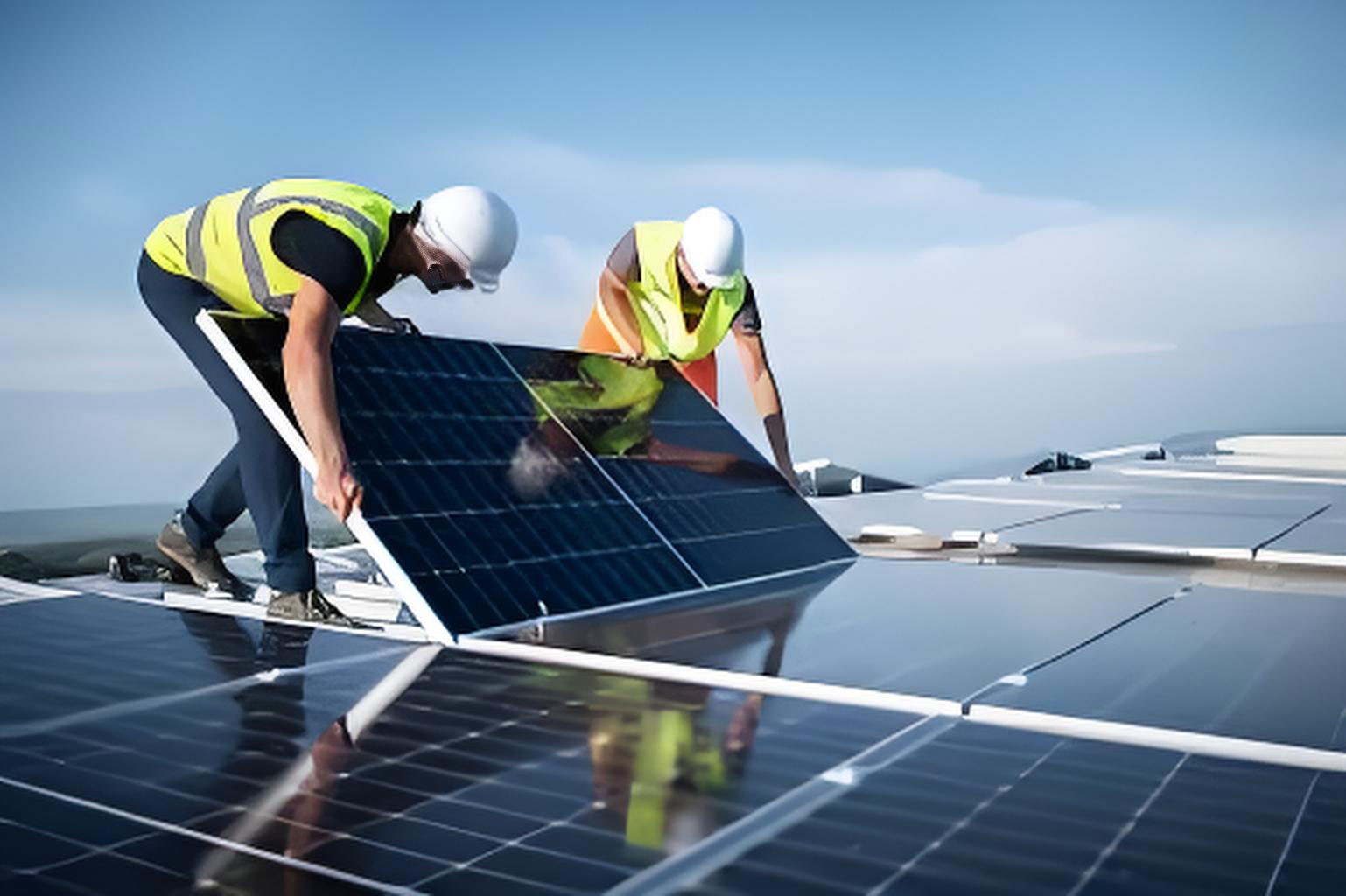
The experimental setup involved precise instrumentation to ensure reliable data collection. The following table summarizes the key testing devices used:
| Measurement Device | Quantity | Purpose/Location |
|---|---|---|
| Temperature Sensors (Thermocouples) | 14 | Attached to the front surface, back surface, and cooling fins of the solar panels. |
| Pyranometer (Solar Total Radiometer) | 1 | Mounted in the same plane as the solar panels to measure incident irradiance. |
| Anemometers (Wind Speed Sensors) | 2 | Placed near the cooling fins to record local wind velocity. |
| Data Acquisition System | 2 | Used to log data from all sensors and electrical measurements. |
The solar panels themselves were standard 100 W modules composed of 36 polycrystalline silicon cells with a total area of 0.81 m². At standard test conditions (1000 W/m² irradiance, 25°C cell temperature), the specifications included an open-circuit voltage of 21.55 V and a short-circuit current of 6.55 A. The cooling fins were made from 0.8 mm thick aluminum alloy sheets, chosen for their good thermal conductivity and lightweight properties. The fins were designed to increase the effective heat dissipation area without significantly adding weight or cost.
The experimental campaign was structured to isolate the effects of various environmental and operational factors on solar panel performance. Multiple test modes were executed, as outlined in the table below:
| Test Mode | Solar Irradiance (W/m²) | Wind Speed (m/s) | Ambient Temperature (°C) | Solar Panel Tilt Angle (°) |
|---|---|---|---|---|
| A | ~437 | ~3 | ~36 | 30, 45, 60 |
| B | ~500 | ~3 | 43 to 53 | 60 |
| C | ~483 | 1, 2, 3 | ~36 | 60 |
| D | 299 to 483 | ~3 | ~36 | 60 |
The electrical efficiency (η) and power output (P) of the solar panels were the primary performance metrics. They were calculated using the following fundamental formulas:
$$ \eta = \frac{P}{G \cdot A} \times 100\% $$
$$ P = V \times I $$
where \( G \) is the solar irradiance (W/m²), \( A \) is the area of the solar panel (m²), \( V \) is the output voltage (V), and \( I \) is the output current (A). The temperature-dependent nature of solar panel efficiency is often modeled linearly:
$$ \eta(T) = \eta_{ref} \left[1 – \beta (T – T_{ref})\right] $$
where \( \eta(T) \) is the efficiency at cell temperature \( T \), \( \eta_{ref} \) is the efficiency at a reference temperature \( T_{ref} \) (often 25°C), and \( \beta \) is the temperature coefficient (/K). For the polycrystalline silicon solar panels used, a \( \beta \) value of approximately -0.0045 /K was considered as a baseline.
The analysis of results began with the effect of the solar panel tilt angle. The tilt angle determines the amount of solar radiation intercepted by the panel surface. As shown in the data, the electrical efficiency exhibited a non-linear relationship with tilt angle. For the finned solar panel, efficiency decreased from 17.2% at 30° to a minimum of 16.1% at 45°, before recovering slightly to 16.9% at 60°. The unfinned panel followed a similar trend but with lower absolute values: 16.1% at 30°, 13.7% at 45°, and 16.8% at 60°. This pattern can be attributed to the combined effects of incident irradiance and operating temperature. At the optimal tilt angle for maximum irradiance capture (around 45° for the location and time of year), the solar panels received the most energy, leading to higher temperatures and thus lower efficiency. The presence of cooling fins mitigated this temperature rise, resulting in a smaller efficiency dip at 45°. The average efficiency improvement due to fins across the three angles was 1.3%.
The power output, however, tells a different story. It integrates both irradiance capture and conversion efficiency. For the finned solar panel, power output increased from 59 W at 30° to a peak of 62 W at 45°, then decreased to 58.1 W at 60°. The unfinned panel showed a similar trend: 55.2 W at 30°, 60.5 W at 45°, and 58 W at 60°. Although efficiency was lowest at 45°, the higher irradiance compensated, leading to maximum power generation at that angle. The cooling fins contributed to an average power output increase of 3.1% across the tested tilt angles. This underscores the dual benefit of passive fin cooling: it not only improves the instantaneous efficiency of the solar panels but also supports higher overall energy yield by allowing them to operate closer to their peak power point under high-irradiance conditions.
The influence of ambient temperature was investigated under relatively constant irradiance and wind speed. As anticipated, both electrical efficiency and power output displayed a linear decreasing trend with rising ambient temperature. The thermal model $$ \eta(T) = \eta_{ref} \left[1 – \beta (T – T_{ref})\right] $$ provides a good fit for this behavior. For the finned solar panel, efficiency declined from 15.9% at 42.8°C to 14.6% at 52.8°C. The unfinned panel showed a steeper decline in relative terms, from 15.7% to 14.3%. The average efficiency advantage for the finned solar panel in this mode was 0.3%. Similarly, power output decreased linearly from 61.7 W to 59.6 W for the finned panel and from 60.6 W to 58.7 W for the unfinned panel, yielding an average power boost of 1.8% for the finned configuration. This demonstrates that even under high ambient temperatures, which are challenging for solar panel operation, passive fin cooling provides a measurable, albeit modest, performance enhancement by improving heat rejection to the surrounding air.
Wind velocity emerged as a critical environmental factor significantly amplifying the effectiveness of the cooling fins. Natural convection heat transfer from a surface is strongly dependent on airflow. The experimental data confirmed a clear positive correlation between wind speed and the performance metrics of both solar panels, with the finned panel showing greater sensitivity. At a low wind speed of 1 m/s, the finned solar panel achieved an efficiency of 17.7%, compared to 15.1% for the unfinned panel. At 3 m/s, these values rose to 18.9% and 17.9%, respectively. The average efficiency improvement attributed to the fins across the wind speed range was 1.8%. The impact on power output was even more pronounced. Power output increased linearly with wind speed for both panels. At 1 m/s, the finned panel produced 45.4 W, while the unfinned panel produced 39.3 W. At 3 m/s, outputs were 53.9 W and 49.6 W, respectively. This translates to an average power output increase of 11.8% for the finned solar panel. The fins essentially act as extended surfaces, dramatically increasing the convective heat transfer area. Under windy conditions, this leads to much more effective cooling, lower solar panel operating temperatures, and consequently, substantially higher electrical output. This finding is crucial for site selection and system design, as locations with higher average wind speeds would benefit more from such passive cooling enhancements.
The variation of solar irradiance itself directly drives the thermal and electrical behavior of solar panels. As irradiance increases, the solar panels absorb more energy, leading to higher temperatures if heat dissipation is insufficient. The results confirmed that electrical efficiency decreases linearly with increasing irradiance for both panel types. For the finned solar panel, efficiency dropped from 17.4% at 300 W/m² to 16.5% at 480 W/m². The unfinned panel showed a larger drop, from 17.3% to 15.9%. The average efficiency gain from fins under varying irradiance was 0.5%. In contrast, the power output exhibited a strong linear increase with irradiance, as described by the relation \( P = G \cdot A \cdot \eta \). Even though efficiency (\(\eta\)) decreases, the increase in \(G\) dominates, leading to higher \(P\). The finned panel’s power output rose from 40.4 W at 300 W/m² to 61.7 W at 480 W/m², while the unfinned panel’s output increased from 40.2 W to 59.7 W. The average power output advantage for the finned solar panel was 2.4%. This indicates that the cooling fins are particularly effective in maintaining higher efficiency during periods of peak solar insolation, thereby maximizing power generation when it is most abundant.
A fundamental relationship explored in this study is the direct correlation between the solar panel’s operating temperature and its electrical efficiency. Plotting efficiency against the measured back-surface temperature of the solar panels reveals a strong linear inverse relationship, validating the basic temperature coefficient model. The data showed that for every degree Celsius rise in temperature, the efficiency of both solar panels decreased. However, the slope was less steep for the finned solar panel, indicating a milder temperature sensitivity. Over a temperature range from approximately 32°C to 40°C, the efficiency of the finned panel declined from 19.7% to 4.7%, while the unfinned panel declined from 13.9% to 4.6%. The average efficiency across this temperature range was 10.7% for the finned panel and 8.6% for the unfinned one, representing a 2.1% absolute improvement. This core finding quantitatively demonstrates the primary mechanism of performance enhancement: by lowering the operating temperature of the solar panel, the cooling fins directly reduce the efficiency loss governed by the temperature coefficient.
The thermal performance of the finned assembly can be analyzed through a simplified heat transfer model. The heat balance for a solar panel can be expressed as:
$$ Q_{absorbed} = Q_{electrical} + Q_{dissipated} + Q_{stored} $$
For steady-state analysis under constant conditions, the stored heat term \( Q_{stored} \) is zero. The electrical power output \( Q_{electrical} \) is a small fraction. Most of the absorbed solar energy \( Q_{absorbed} \) must be dissipated as heat \( Q_{dissipated} \). For a flat plate, dissipation occurs via convection and radiation:
$$ Q_{dissipated} = h_c A (T_{panel} – T_{ambient}) + \epsilon \sigma A (T_{panel}^4 – T_{sky}^4) $$
where \( h_c \) is the convective heat transfer coefficient, \( A \) is the surface area, \( \epsilon \) is the emissivity, \( \sigma \) is the Stefan-Boltzmann constant, and \( T_{sky} \) is the effective sky temperature. Attaching fins increases the effective area \( A \) for convection, thereby reducing \( T_{panel} \) for a given \( Q_{absorbed} \). The convective heat transfer coefficient \( h_c \) itself is a function of wind speed and surface geometry, explaining the strong wind speed dependence observed. The fin effectiveness \( \eta_{fin} \) can be estimated, but in this passive, natural convection scenario, the primary effect is the substantial increase in surface area exposed to airflow.
The economic and practical implications of this passive cooling technique are worth considering. The cooling fins used in this study were simple, low-cost aluminum sheets attached with thermal adhesive. This modification adds minimal weight and complexity to the solar panel installation. Unlike active cooling systems, it requires no maintenance, no external power, and has no moving parts. The performance improvements, while percentage-wise may seem modest, translate into significant additional energy harvest over the 25+ year lifespan of a typical solar panel installation. For instance, an average power increase of 5% (a conservative estimate based on the results) compounded over decades can substantially improve the return on investment and levelized cost of energy for photovoltaic systems. Furthermore, by operating at lower temperatures, the solar panels may experience reduced long-term thermal degradation, potentially extending their operational lifetime.
In summary, this experimental investigation provides clear evidence that passive cooling using attached fins is a viable and effective method for enhancing the performance of solar panels. The fins work by increasing the heat dissipation area, which lowers the operating temperature of the photovoltaic cells. This temperature reduction directly improves the electrical conversion efficiency, as dictated by the negative temperature coefficient of silicon solar cells. The magnitude of the improvement is not constant but depends significantly on environmental conditions. The most substantial gains were observed under higher wind speeds, where convective cooling is most effective. The fins also help to flatten the efficiency curve against varying solar irradiance and tilt angle, leading to more stable and predictable power output. The key numerical findings from this study are consolidated in the table below:
| Influencing Factor | Average Efficiency Improvement with Fins | Average Power Output Improvement with Fins | Remarks |
|---|---|---|---|
| Tilt Angle Variation (30°, 45°, 60°) | 1.3% | 3.1% | Fins mitigate efficiency drop at optimal irradiance angle. |
| Ambient Temperature Rise (~43°C to ~53°C) | 0.3% | 1.8% | Modest but consistent improvement under heat stress. |
| Wind Speed Increase (1 m/s to 3 m/s) | 1.8% | 11.8% | Most significant improvement, highlighting convective enhancement. |
| Solar Irradiance Increase (~300 to ~480 W/m²) | 0.5% | 2.4% | Fins help maintain higher efficiency at peak irradiance. |
| Solar Panel Temperature Rise (~32°C to ~40°C) | 2.1% (avg. efficiency difference) | N/A | Direct evidence of reduced temperature sensitivity. |
The overarching conclusion is that integrating passive cooling fins onto solar panels is a straightforward and promising strategy to boost their energy yield. The improvements in electrical efficiency ranged from 0.3% to 1.8% under different test conditions, while the enhancements in instantaneous power output were more substantial, ranging from 1.8% to 11.8%. These gains are achieved without any operational energy cost, making this approach particularly suitable for stand-alone photovoltaic systems, building-integrated photovoltaics, and large-scale solar farms where reliability and simplicity are paramount. Future work could explore optimizing fin geometry (thickness, spacing, height), material, and attachment methods for different solar panel types and climates. Additionally, long-term durability studies and full lifecycle cost-benefit analyses would be valuable to fully assess the practical viability of this passive cooling technology for widespread application in the solar energy industry.