
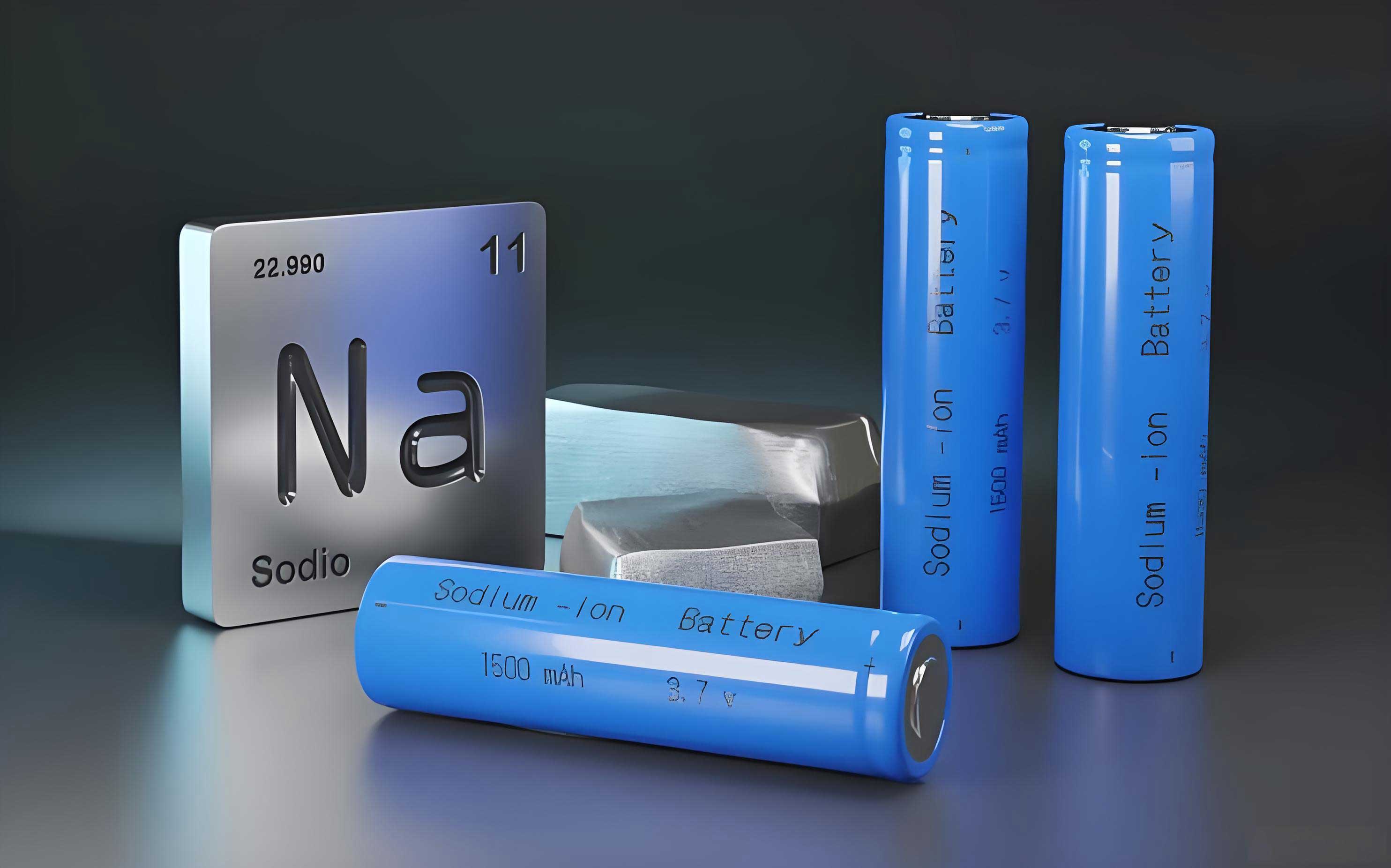
The global transition towards renewable energy sources like wind and solar is imperative for a sustainable future. However, the inherent intermittency and geographical limitations of these resources necessitate the development of large-scale, cost-effective energy storage systems (ESS). Electrochemical energy storage, particularly battery technology, is a leading contender due to its maturity, high efficiency, and flexibility. While lithium-ion batteries have dominated the scene, concerns over lithium resource availability and cost have accelerated the development of complementary technologies. The sodium-ion battery has emerged as a highly promising candidate for large-scale stationary storage, leveraging the abundance of sodium, lower cost, and enhanced safety. Despite these advantages, the practical deployment of sodium-ion battery systems, especially in regions with cold climates, is significantly hampered by performance degradation at low temperatures. This article delves into the critical challenges faced by sodium-ion battery anodes in low-temperature (LT) environments and comprehensively reviews the recent research progress on material modification strategies aimed at overcoming these hurdles.
The Low-Temperature Conundrum for Sodium-Ion Battery Anodes
The operation of a sodium-ion battery follows a “rocking-chair” mechanism where sodium ions (Na+) shuttle between the cathode and anode during charge and discharge. At low temperatures, this process is severely kinetically hindered. The performance degradation is rooted in the fundamental slowing down of electrochemical processes, which can be described by the Arrhenius equation governing reaction rates:
$$k = Ae^{\frac{-E_a}{RT}}$$
where \(k\) is the rate constant, \(A\) is the pre-exponential factor, \(E_a\) is the activation energy, \(R\) is the gas constant, and \(T\) is the temperature. As \(T\) decreases, the rate constant \(k\) drops exponentially for processes with a significant activation barrier \(E_a\). For sodium-ion battery anodes, this manifests in three primary challenges:
- Sluggish Ionic/Electronic Transport Kinetics: The diffusion of Na+ within the solid electrode material (bulk diffusion) and the charge transfer across the electrode-electrolyte interface become dramatically slower. The ionic conductivity of the electrolyte also decreases due to increased viscosity.
- Increased Interfacial Resistance and Instability: The formation, composition, and stability of the solid-electrolyte interphase (SEI) are highly temperature-sensitive. At low temperatures, the SEI tends to become thicker and more resistive, leading to a substantial increase in interfacial impedance (\(R_{ct}\)). Furthermore, undesirable side reactions may be promoted, consuming active sodium and electrolyte.
- Mechanical Stress and Structural Degradation: The insertion/extraction of Na+ induces volume changes in the anode material. At low temperatures, the increased stiffness of materials and slower stress relaxation can exacerbate particle cracking, pulverization, and loss of electrical contact, leading to rapid capacity fade.
Anode materials for sodium-ion batteries are primarily categorized by their sodium storage mechanism: intercalation (e.g., hard carbon, titanium-based oxides), conversion (e.g., metal sulfides/oxides), and alloying (e.g., Sn, Sb, P). While conversion and alloying types offer high theoretical capacity, they suffer from large volume expansion and slow kinetics, problems that are magnified at low temperatures. Therefore, intercalation-type materials, particularly hard carbon, are currently the leading candidates for commercial sodium-ion battery systems due to their more favorable balance of capacity, cost, and structural stability. The following discussion on modification strategies is largely centered on enhancing these promising materials for LT operation.
Modification Strategy I: Structural Design and Morphological Engineering
This strategy focuses on tailoring the intrinsic architecture of the anode material at the nano- and micro-scale to facilitate Na+ transport, alleviate mechanical stress, and increase active sites.
Pore Structure Engineering: Creating tailored porosity is highly effective. For hard carbon, synthesizing materials dominated by ultra-micropores (<0.5 nm) can act as an ion-sieve. These pores preferentially allow access to desolvated Na+ while blocking larger solvated ions, enhancing the kinetics of the charge-transfer step without excessive electrolyte decomposition within pores. Similarly, for titanium-based oxides, constructing ordered mesoporous structures with high surface area and large pore diameters (e.g., ~28 nm) provides abundant active sites, improves electrolyte wetting, and offers open channels for rapid ion diffusion, enabling remarkable performance even at -40°C.
Advanced Morphologies: Designing specific shapes like hollow spheres, core-shell structures, or nanowires can significantly improve LT performance. Hollow structures provide internal void space to accommodate volume expansion during sodiation, reducing mechanical stress on the particle. Nanowire or nanosheet morphologies shorten the diffusion path length for both ions and electrons, directly addressing the kinetic limitations described by the diffusion equation:
$$\tau \approx \frac{L^2}{D}$$
where \(\tau\) is the diffusion time, \(L\) is the diffusion path length, and \(D\) is the diffusion coefficient. Minimizing \(L\) through nanostructuring reduces \(\tau\), leading to faster charge/discharge capability at low \(T\).
Crystallographic Modulation: Adjusting crystal parameters, such as expanding the interlayer spacing in hard carbon via precursor engineering or ZnO-assisted etching, directly lowers the energy barrier for Na+ intercalation. Introducing heterophase interfaces (e.g., mixed 1T/2H phases in MoSSe or dual-phase TiO2) can also enhance conductivity and create favorable pathways for ion migration, boosting capacitive-like storage that is less temperature-sensitive.
Modification Strategy II: Surface and Interface Engineering
This approach aims to modify the exterior surface and the immediate interface of anode particles to improve charge transfer kinetics and stabilize the SEI.
Conductive Coating: Applying a thin, uniform layer of conductive carbon (or other conductive materials) onto anode particles is a widely used method. This coating serves multiple purposes: (i) it enhances the electronic conductivity across the particle surface, facilitating electron supply to reaction sites; (ii) it can act as a physical barrier, mitigating direct contact between the active material and electrolyte, thus suppressing side reactions and guiding the formation of a more stable SEI; (iii) in core-shell designs, it mechanically constrains volume expansion. For instance, carbon-coated Na2Ti6O13 nanowires show significantly lower activation energy for both surface charge transfer and bulk Na+ diffusion compared to the uncoated material.
Heteroatom Doping: Incorporating foreign atoms (e.g., N, S, Zn, Nb) into the host material’s lattice can profoundly alter its electronic structure and chemical environment. Doping can create defects, expand lattice parameters, and induce local charge redistribution. For example, Zn single-atom doping in hard carbon increases the interlayer spacing and generates a local electric field that lowers the Na+ adsorption energy and diffusion barrier. Similarly, Nb doping into Na2Ti6O13 widens the Na+ migration tunnels and increases oxygen vacancies, collectively enhancing bulk ionic and electronic conductivity at low temperatures.
Artificial SEI/ Surface Functionalization: Pre-forming a protective layer or attaching functional groups to the anode surface can preemptively build a stable, ion-conductive interface. The introduction of compounds like NaF on the surface of Sb-based anodes has been shown to guide the formation of a robust and low-impedance SEI during the initial cycles, which remains effective during LT cycling.
Modification Strategy III: Conductive Composite Network Architecture
This strategy involves integrating the active anode material into a robust, three-dimensional conductive matrix to ensure efficient electron transport and structural integrity throughout the electrode.
Integration with Carbon Scaffolds: Compositing anode materials with carbon nanomaterials like graphene, reduced graphene oxide (rGO), or carbon nanotubes (CNTs) creates a percolating network for electrons. The highly conductive and flexible carbon matrix serves as a “highway” for electron transport, compensating for the poor intrinsic conductivity of many anode materials. Moreover, it buffers the volume changes of embedded active particles, preventing aggregation and loss of electrical contact. For example, encapsulating Sb nanosheets within graphene layers or confining Bi nanoparticles within a 3D porous carbon framework has yielded composites with excellent rate capability and cycling stability at sub-zero temperatures.
Synergy with Nanostructuring: Combining conductive network design with active material nanostructuring yields superior results. Techniques like electrochemical milling can produce ultra-small (~10 nm) Bi nanoparticles embedded in a 3D carbon framework. This architecture offers extremely short ion/electron transport paths, high electrolyte accessibility, and exceptional mechanical resilience, enabling high-capacity storage at high rates and low temperatures.
Performance Summary and Comparative Analysis
The effectiveness of the aforementioned strategies is evident in the enhanced low-temperature electrochemical performance of various sodium-ion battery anode materials. The table below summarizes key metrics for selected modified anodes, illustrating the progress in achieving viable capacity, rate performance, and cycle life under cold conditions.
| Material (Type) | Key Modification Strategy | Low-Temperature Performance Highlights |
|---|---|---|
| Hard Carbon with Ultra-micropores (Intercalation) | Pore structure engineering (molten diffusion-carbonization) | Enhanced capacity from tailored pores acting as selective ion sieves. |
| Zn-doped Hard Carbon (Intercalation) | Heteroatom doping (Zn single atoms) | -40°C: ~258 mAh/g at 0.1 A/g over 400 cycles (85% retention). Lowered diffusion barrier and stabilized SEI. |
| Carbon-coated Na2Ti6O13 (Intercalation) | Conductive coating | Significantly reduced activation energy for charge transfer and bulk diffusion. Stable cycling at 0°C. |
| Nb-doped Na2Ti6O13 (Intercalation) | Heteroatom doping (Nb) | -15°C: 103 mAh/g at 0.1 A/g after 200 cycles. Wider ion tunnels and higher conductivity. |
| Hollow VS4 Microspheres (Conversion) | Morphology control (hollow structure) | -40°C: 163 mAh/g at a high rate of 2 A/g. Hollow core buffers volume stress. |
| MoSSe@rGO (Conversion) | Mixed phase (1T/2H) + Conductive network | 0°C: 533.9 mAh/g at 1 A/g (~88% of room temp capacity). Fast kinetics from metallic 1T phase. |
| Sb embedded in Graphene (Alloying) | Conductive network (Graphene matrix) | -20°C: Stable cycling demonstrated. Graphene buffers large volume expansion of Sb. |
| Bi@C Core-Shell (Alloying) | Core-shell structure + Conductive coating | -40°C: 246 mAh/g at 0.1 A/g. Carbon shell confines volume change and improves kinetics. |
| Bi in 3D Carbon Framework (Alloying) | Conductive network + Nanostructuring | -20°C: 190 mAh/g at a very high rate of 5 A/g. 3D network ensures electrical connectivity. |
Future Perspectives and Concluding Remarks
The pursuit of high-performance sodium-ion battery technology capable of operating reliably in low-temperature environments is a critical step toward their adoption in global energy storage markets, particularly in cold regions. Research on anode modification has made substantial strides, as reviewed herein. Strategies involving structural design, surface/interface engineering, and composite architecture have successfully addressed various aspects of the LT challenge, primarily by enhancing Na+ diffusion kinetics, stabilizing interfaces, and maintaining structural integrity.
Looking forward, several key directions promise to further advance low-temperature sodium-ion battery anodes:
- Multi-scale Synergistic Design: Future efforts should integrate multiple modification strategies (e.g., doped, coated, nanostructured materials within a 3D conductive network) in a rational, synergistic manner to simultaneously tackle ionic, electronic, and mechanical challenges.
- Holistic Full-cell Optimization: Research must increasingly shift from half-cell studies to full sodium-ion battery configurations. The compatibility of advanced LT anodes with corresponding cathodes, electrolytes, and separators under wide-temperature conditions is essential for practical application.
- Deepened Fundamental Understanding: In-situ and operando characterization techniques at low temperatures are needed to precisely decipher the dynamic evolution of structures, interfaces, and SEI composition. This knowledge will guide more precise material design.
- Cost-Effective and Scalable Synthesis: For commercial viability, the development of simple, low-cost, and scalable manufacturing processes for these sophisticated anode materials is paramount. Bridging the gap between laboratory synthesis and industrial production is a major challenge.
In conclusion, the optimization of anode materials is a pivotal pathway to unlock the full potential of sodium-ion battery technology for all-climate energy storage. Through continued innovation in material science and engineering, the vision of cost-effective, safe, and high-performing sodium-ion batteries operating seamlessly from room temperature to extreme cold edges closer to reality.