
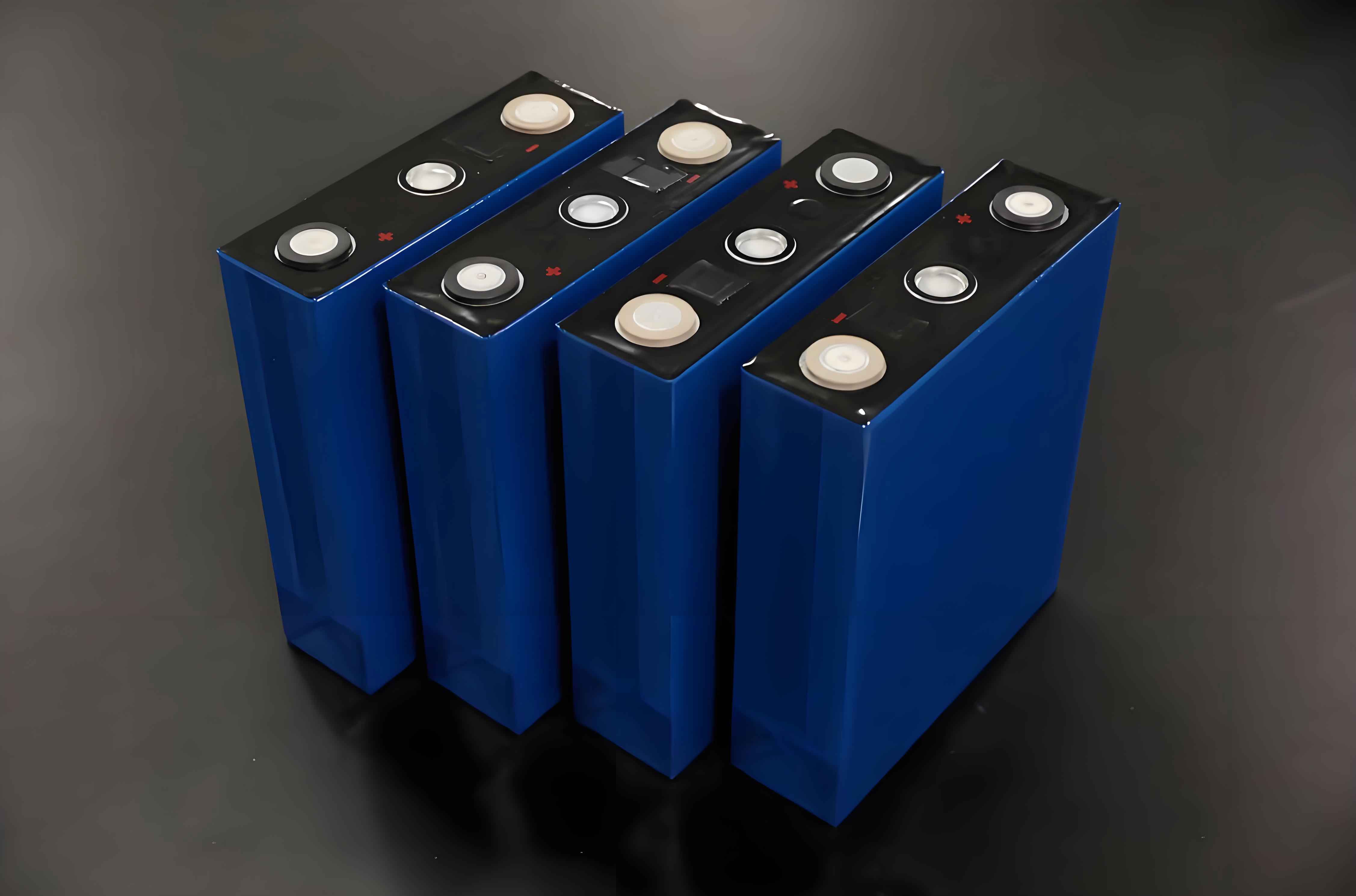
Lithium iron phosphate (LiFePO4) batteries have emerged as pivotal energy storage solutions due to their high energy density, long cycle life, and environmental compatibility. This article explores advanced doping strategies to optimize the electrochemical performance of lithium iron phosphate battery materials, focusing on crystal structure modification and ion diffusion dynamics.
1. Structural Fundamentals of LiFePO4
The olivine-type LiFePO4 crystal belongs to the orthorhombic system (space group Pnma), featuring FeO6 octahedra and PO4 tetrahedra interconnected through corner-sharing oxygen atoms. The lithium-ion migration occurs along one-dimensional channels with limited cross-sectional area, as described by the following structural parameters:
$$ a = 10.33 \, \text{Å}, \, b = 6.01 \, \text{Å}, \, c = 4.69 \, \text{Å} $$
| Atomic Position | Coordination | Bond Length (Å) |
|---|---|---|
| Li | Octahedral | 2.15 ± 0.03 |
| Fe | Octahedral | 2.17 ± 0.02 |
| P | Tetrahedral | 1.54 ± 0.01 |
2. Electrochemical Reaction Mechanism
The charge/discharge process in lithium iron phosphate batteries follows:
$$ \text{LiFePO}_4 \leftrightarrow \text{FePO}_4 + \text{Li}^+ + e^- $$
Key limitations of pristine LiFePO4 include:
- Low electronic conductivity (10-9-10-10 S/cm)
- Restricted Li+ diffusion (DLi ≈ 10-14 cm2/s)
- Volumetric energy density constraints
3. Doping Modification Strategies
Doping optimization in lithium iron phosphate battery materials follows three primary approaches:
3.1 Lithium-Site Doping
Mg2+ doping at Li sites increases interlayer spacing:
$$ \text{Li}_{1-x}\text{Mg}_x\text{FePO}_4 \quad (0 \leq x \leq 0.05) $$
| Doping Level (x) | Capacity Retention (%) | Conductivity (S/cm) |
|---|---|---|
| 0 | 92.3 | 1.2×10⁻⁹ |
| 0.03 | 96.8 | 4.7×10⁻⁸ |
| 0.05 | 94.1 | 3.1×10⁻⁸ |
3.2 Iron-Site Doping
Mn2+ substitution enhances structural stability:
$$ \text{LiFe}_{1-y}\text{Mn}_y\text{PO}_4 \quad (0 \leq y \leq 0.1) $$
The ionic radius relationship:
$$ r_{\text{Fe}^{2+}} = 0.78 \, \text{Å}, \, r_{\text{Mn}^{2+}} = 0.83 \, \text{Å} $$
3.3 Oxygen-Site Doping
Halogen doping improves electronic conductivity:
$$ \text{LiFe(PO}_4\text{)}_{1-z}\text{Cl}_{3z} \quad (z \leq 0.02) $$
4. Manganese Doping Experimental Design
A novel synthesis route for Mn-doped lithium iron phosphate battery materials:
- Precursor preparation:
$$ \text{LiOH} + \text{H}_3\text{PO}_4 \rightarrow \text{Li}_3\text{PO}_4 + \text{H}_2\text{O} $$ - Hydrothermal synthesis:
$$ \text{Li}_3\text{PO}_4 + \text{FeMn}_x\text{O}_y \xrightarrow{300^\circ \text{C}} \text{LiFe}_{1-x}\text{Mn}_x\text{PO}_4 $$ - Carbon coating:
$$ \text{C}_6\text{H}_{12}\text{O}_6 \xrightarrow{\Delta} \text{C} + \text{H}_2\text{O} $$
| Parameter | Value |
|---|---|
| Sintering Temperature | 700°C |
| Doping Concentration | 0.5-2.0 mol% |
| Carbon Content | 3-5 wt% |
5. Performance Enhancement Mechanisms
The improved lithium iron phosphate battery performance originates from:
$$ \Delta G_{\text{doping}} = E_{\text{defect}} – E_{\text{pristine}} + \mu_{\text{dopant}} $$
- Lattice expansion (2-4% volume increase)
- Bandgap reduction (from 3.7 eV to 2.9 eV)
- Enhanced Li+ diffusion coefficient (up to 10-12 cm2/s)
6. Future Perspectives
Advanced doping strategies for lithium iron phosphate batteries should focus on:
$$ \text{Li}_{1-a-b}\text{Mg}_a\text{Al}_b\text{Fe}_{1-c-d}\text{Mn}_c\text{Ti}_d\text{(PO}_4\text{)}_{1-e}\text{F}_e $$
| Challenge | Solution |
|---|---|
| Low Temperature Performance | Multi-ion co-doping |
| High-Rate Capacity | Hierarchical nanostructuring |
| Mass Production | Continuous hydrothermal synthesis |
Through systematic doping optimization and structural engineering, lithium iron phosphate batteries are poised to achieve breakthrough performance metrics while maintaining inherent safety advantages.