
The relentless pursuit of advanced energy storage solutions has positioned the lithium-ion battery as the cornerstone technology for powering modern portable electronics, electric vehicles, and grid-scale storage systems. The quest for higher energy density, superior power capability, and longer cycle life continuously drives material innovation.
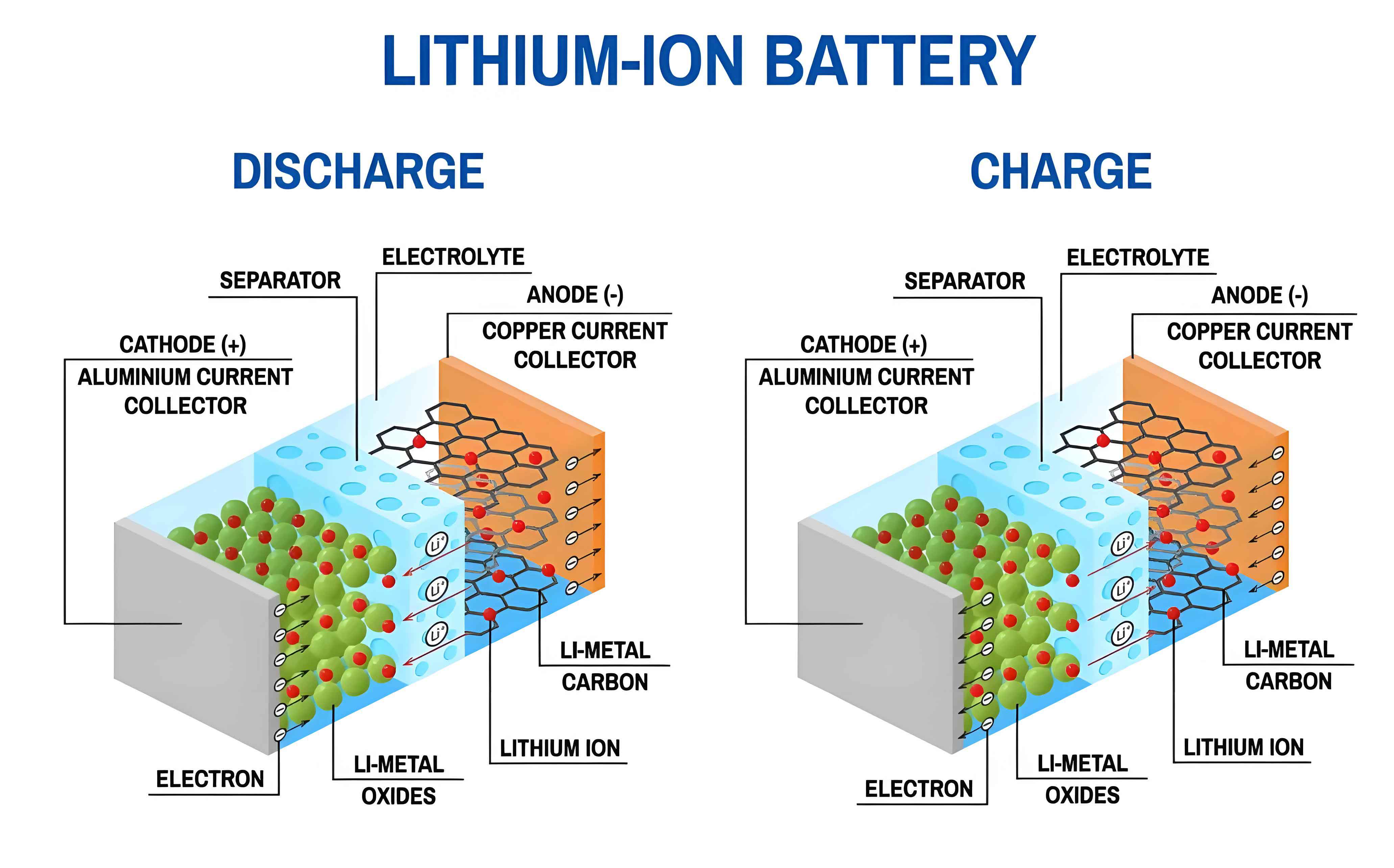
Among cathode materials for the lithium-ion battery, lithium iron phosphate (LiFePO₄, LFP) stands out due to its exceptional thermal stability, flat operating voltage (~3.4 V vs. Li/Li⁺), high theoretical capacity (170 mAh g⁻¹), and environmental friendliness. However, its widespread adoption, especially in applications demanding high power, is hampered by two intrinsic limitations: low electronic conductivity (~10⁻⁹ S cm⁻¹) and a slow solid-state lithium-ion diffusion coefficient (10⁻¹⁶ to 10⁻¹⁴ cm² s⁻¹), stemming from its one-dimensional diffusion channels within the olivine crystal structure.
To overcome these hurdles, conventional approaches involve carbon coating LFP particles or blending the active material with conductive additives like carbon black (Super P, SP) or carbon nanotubes. While effective to a degree, these strategies often create point-to-point contacts or limited two-dimensional conductive pathways. A more profound solution lies in constructing a three-dimensional (3D), continuous, and highly porous conductive network that permeates the entire electrode. Such a structure can simultaneously enhance electronic wiring, facilitate rapid ionic transport by improving electrolyte wettability and providing shortened diffusion paths, and accommodate volumetric changes during cycling.
In this study, I propose and investigate the integration of carbon aerogel (CA) as a multifunctional conductive additive into a standard LiFePO₄ cathode. Carbon aerogel, a synthetic material derived from the pyrolysis of organic gels, possesses an extraordinary combination of properties: an ultra-high specific surface area, a tunable 3D nanoporous architecture, high electrical conductivity, and chemical stability. My hypothesis is that blending commercial LiFePO₄ with CA will form a composite electrode where the CA scaffold acts as a “highway system” for both electrons and ions. The interconnected macropores and mesopores of CA should drastically improve electrolyte infiltration, ensuring intimate contact with all active material particles. Furthermore, its conductive carbon skeleton will wire the LFP particles effectively, reducing overall electrode polarization. This work systematically characterizes the structural properties of the CA and evaluates the electrochemical performance, particularly the rate capability and long-term cycling stability, of the LFP/CA composite electrode in a lithium-ion battery configuration.
Experimental Methodology
1. Materials and Composite Electrode Fabrication
The active material was commercial LiFePO₄ powder. The conductive additives were carbon black (SP) and carbon aerogel (CA). The CA was synthesized via the polycondensation of resorcinol and formaldehyde in an aqueous solution, followed by solvent exchange, ambient pressure drying, and high-temperature carbonization, resulting in a monolithic porous carbon structure which was then gently milled into a powder.
The composite electrodes were prepared by mixing the components in a mass ratio of LiFePO₄ : SP : CA = 8 : 1 : 1. For comparison, a baseline electrode with only SP as the conductive additive was also prepared with a mass ratio of LiFePO₄ : SP = 8 : 2. A polyvinylidene fluoride (PVDF) binder was dissolved in N-methyl-2-pyrrolidone (NMP) to form the slurry. The mixed slurry was uniformly coated onto an aluminum foil current collector and dried under vacuum at 120°C for 12 hours. The electrodes were then punched into 14-mm diameter discs for cell assembly.
2. Material Characterization
The crystallographic structure was analyzed using X-ray diffraction (XRD). The morphological features and porous structure were examined by scanning electron microscopy (SEM). The degree of graphitization/disorder in the CA was assessed using Raman spectroscopy. The specific surface area and pore size distribution were determined through N₂ adsorption-desorption isotherms using the Brunauer-Emmett-Teller (BET) and Barrett-Joyner-Halenda (BJH) methods, respectively.
3. Electrochemical Testing
CR2032 coin-type half-cells were assembled in an argon-filled glovebox. The prepared composite electrode was used as the cathode, lithium metal foil as the anode and reference electrode, a microporous polypropylene film as the separator, and a 1 M LiPF₆ solution in a mixture of ethylene carbonate (EC), ethyl methyl carbonate (EMC), and dimethyl carbonate (DMC) as the electrolyte.
Galvanostatic charge-discharge tests were performed within a voltage window of 2.0–3.7 V (vs. Li/Li⁺) using a battery testing system. Rate capability was evaluated at various C-rates (0.1C, 0.5C, 1C, 2C, 3C), where 1C corresponds to a current density of 170 mA g⁻¹. Cycle stability was tested at a constant current of 0.5C for 1000 cycles.
Results and Discussion
1. Structural and Morphological Characterization
The XRD pattern of the pristine CA powder shows two broad and weak diffraction peaks at approximately 23° and 43°, corresponding to the (002) and (100) planes of turbostratic carbon, confirming its amorphous, hard-carbon nature. In contrast, the LiFePO₄ powder exhibits sharp and well-defined diffraction peaks perfectly indexed to the orthorhombic olivine structure (space group Pnma), indicating high crystallinity.
Raman spectroscopy of the CA reveals the characteristic D band (~1339 cm⁻¹, associated with disordered carbon or defects) and G band (~1594 cm⁻¹, associated with graphitic carbon). The intensity ratio ID/IG is calculated to be 1.14, which signifies a highly disordered carbon structure, consistent with the XRD findings and typical for resorcinol-formaldehyde derived carbon aerogels.
The N₂ adsorption-desorption analysis provides critical insights into the porosity. The CA exhibits a Type I isotherm, indicative of a microporous material with some contribution from larger pores. The BET specific surface area is remarkably high at 1503.7 m² g⁻¹. In stark contrast, the commercial LiFePO₄ powder shows a much lower specific surface area of only 16.9 m² g⁻¹ with a Type IV isotherm featuring a hysteresis loop, suggesting the presence of mesopores likely from inter-particle voids.
The dramatic difference in surface area is visually corroborated by SEM images. The CA particles are micron-sized agglomerates composed of interconnected spherical primary particles, forming a highly open, sponge-like 3D network riddled with pores ranging from tens to hundreds of nanometers. This architecture is pivotal for its function in the lithium-ion battery electrode.
| Material | BET Surface Area (m² g⁻¹) | Dominant Pore Type | ID/IG Ratio | Crystallographic Phase |
|---|---|---|---|---|
| Carbon Aerogel (CA) | 1503.7 | Micro/Mesoporous | 1.14 | Amorphous Carbon |
| LiFePO₄ (LFP) | 16.9 | Mesoporous (inter-particle) | N/A | Crystalline Olivine |
2. Electrochemical Performance
2.1 Initial and Rate Performance
The initial galvanostatic charge-discharge profiles at 0.1C for electrodes with varying CA content (LFP/CAx%) are shown conceptually in Table 2. All electrodes, including the baseline (0% CA), deliver a specific discharge capacity close to the practical maximum for LFP (~158-160 mAh g⁻¹), with initial Coulombic efficiencies near 100%. This indicates that the CA additive does not introduce significant side reactions and the composite fabrication process preserves the active material’s integrity.
The profound impact of CA is unveiled at high rates. At a demanding 3C rate, the discharge capacity of the baseline LFP electrode drops to 110 mAh g⁻¹. The addition of CA significantly mitigates this capacity fade. An optimal CA content of 3 wt.% (LFP/CA3%) yields the highest capacity of 138 mAh g⁻¹ at 3C. This represents a 25.5% increase over the baseline. The enhancement can be attributed to the multifunctional role of the 3D CA network:
- Enhanced Ionic Transport: The ultra-high surface area and open pores act as a reservoir, promoting instantaneous and complete electrolyte wetting of the entire electrode bulk. This ensures a high concentration of lithium ions is available at the reaction interfaces, crucial for high-rate operation.
- Improved Electronic Conductivity: The conductive CA forms a percolating 3D web that interconnects LFP particles, providing continuous pathways for electron flow and reducing the internal resistance of the electrode.
- Shortened Diffusion Lengths: The porous structure may help reduce the effective solid-state diffusion length for Li⁺ within the electrode composite.
The capacity at 3C begins to decline for CA contents above 3%, likely due to increased electrode thickness or agglomeration of excess CA, which dilutes the volume fraction of the active material and increases tortuosity.
| Electrode (LFP/CAx%) | 0.1C Discharge Capacity (mAh g⁻¹) | 3C Discharge Capacity (mAh g⁻¹) | Capacity Retention at 3C (vs. 0.1C) | Capacity after 1000 cycles at 0.5C (mAh g⁻¹) | Capacity Retention after 1000 cycles |
|---|---|---|---|---|---|
| Baseline (x=0) | 158 | 110 | 69.6% | 49 | 28.6% |
| x=1% | 159 | 118 | 74.2% | N/A | N/A |
| x=3% | 160 | 138 | 86.3% | 104 | 64.3% |
| x=4% | 159 | 124 | 78.0% | N/A | N/A |
| x=6% | 160 | 119 | 74.4% | N/A | N/A |
2.2 Long-Term Cycling Stability
The long-term cycling performance at 0.5C underscores another critical advantage of the CA-modified electrode. The baseline LFP electrode suffers from severe capacity degradation, retaining only 49 mAh g⁻¹ (28.6% retention) after 1000 cycles. In contrast, the LFP/CA3% composite electrode demonstrates outstanding stability, delivering 104 mAh g⁻¹ after the same number of cycles, corresponding to a much higher capacity retention of 64.3%.
This remarkable improvement in cycle life can be explained by several factors related to the robust 3D CA framework:
- Mechanical Stability: The resilient and continuous carbon network can buffer the repetitive volumetric expansion and contraction of LiFePO₄ particles during lithium insertion/extraction, maintaining electrical contact and preventing electrode pulverization.
- Stable Solid-Electrolyte Interphase (SEI): The improved and stable electrolyte wetting provided by the porous CA may contribute to the formation of a more uniform and stable SEI on the electrode surface, reducing continuous electrolyte decomposition.
- Mitigation of Polarization Growth: The sustained high electronic and ionic conductivity helps minimize the increase in electrode polarization over prolonged cycling, a common cause of capacity fade.
The capacity fade in a lithium-ion battery cathode often follows a power-law relationship with cycle number (n). The capacity retention can be modeled as:
$$ Q_n = Q_0 \cdot n^{-\alpha} $$
where \(Q_n\) is the capacity at cycle \(n\), \(Q_0\) is the initial capacity, and \(\alpha\) is the fade rate coefficient. A smaller \(\alpha\) indicates better cycling stability. The data clearly shows that the LFP/CA3% electrode has a significantly smaller \(\alpha\) value compared to the baseline, quantitatively confirming the stabilizing effect of the CA network.
3. Discussion on Charge Transfer and Diffusion Kinetics
The superior rate performance implies enhanced reaction kinetics. In a composite electrode, the overall current response is governed by both charge transfer kinetics at the interface and solid-state diffusion of Li⁺ within the active material. The CA network primarily addresses the former and the effective diffusion in the composite.
The current (I) for a mixed-control process can be related to overpotential (η) by a simplified form of the Butler-Volmer equation and Fick’s law:
$$ I = nFAk^0 C^{1-\alpha} (C^*)^\alpha \left[ e^{\frac{(1-\alpha)nF\eta}{RT}} – e^{-\frac{\alpha nF\eta}{RT}} \right] \approx \frac{nFAD_{eff} \Delta C}{\delta} $$
where \(D_{eff}\) is the effective diffusion coefficient in the porous composite, \(\Delta C\) is the concentration gradient, and \(\delta\) is the diffusion layer thickness. By creating a 3D porous environment, CA increases the electrochemically active surface area (A) and potentially enhances \(D_{eff}\) by ensuring better electrolyte access, thereby allowing for a higher current (I) at a lower overpotential (η), which is manifest as better capacity retention at high C-rates.
Furthermore, the porous electrode theory can be applied. The governing equation for lithium concentration in the electrolyte within a porous electrode is:
$$ \epsilon \frac{\partial c_e}{\partial t} = \nabla \cdot (D_{e}^{eff} \nabla c_e) + \frac{1-t_+^0}{F} j $$
where \(\epsilon\) is the porosity, \(c_e\) is the electrolyte concentration, \(D_{e}^{eff}\) is the effective electrolyte diffusivity, \(t_+^0\) is the transference number, and \(j\) is the pore wall flux. The high porosity and tortuosity of the CA-integrated electrode directly increase \(D_{e}^{eff}\), reducing concentration polarization and enabling sustained high-power operation.
Conclusion
This study successfully demonstrates that incorporating a three-dimensional porous carbon aerogel as a conductive additive significantly enhances the electrochemical performance of a conventional lithium iron phosphate cathode for lithium-ion battery applications. The carbon aerogel, with its ultra-high specific surface area (1503.7 m² g⁻¹) and interconnected porous architecture, serves as a multifunctional scaffold within the composite electrode.
It establishes a continuous 3D conductive network that dramatically improves electronic wiring and, more importantly, revolutionizes ionic transport by acting as an embedded electrolyte reservoir and distributor. This dual enhancement mitigates the intrinsic kinetic limitations of LiFePO₄. The optimized LFP/CA3% composite electrode delivers a high discharge capacity of 138 mAh g⁻¹ at a 3C rate, a 25.5% improvement over the baseline, and exhibits exceptional long-term cycling stability with 64.3% capacity retention after 1000 cycles at 0.5C, compared to only 28.6% for the unmodified electrode.
The performance gains are quantitatively significant and can be attributed to the reduced internal resistance, enhanced lithium-ion diffusion kinetics, and improved mechanical stability provided by the carbon aerogel framework. This strategy of using a 3D porous conductive additive is not only effective for LiFePO₄ but also holds great promise for other electrode materials in lithium-ion battery systems that suffer from low conductivity or slow ionic diffusion, particularly for applications requiring fast charging and long service life, such as electric vehicles and large-scale energy storage.