
In the pursuit of higher energy density and longer cycle life for lithium-ion batteries, we have focused on developing advanced anode materials that can surpass the limitations of conventional graphite. Graphite anodes, with a theoretical specific capacity of approximately 372 mAh g−1, are nearing their practical limits, necessitating the exploration of alternatives. Among these, silicon-based materials, particularly nonstoichiometric silicon suboxide (SiOx, where 0 < x < 2), present a compelling option due to their high theoretical capacity (up to 2680 mAh g−1) and moderate volume expansion compared to pure silicon. However, the practical application of SiOx in li ion battery systems is hindered by its poor intrinsic conductivity and significant volume changes during lithiation and delithiation, leading to rapid capacity fade and low initial Coulombic efficiency. To address these challenges, we have designed and fabricated a novel composite material, SiOx@TiON-C, which features a dual-functional coating of titanium oxynitride (TiO1−yNy) and carbon. This coating aims to enhance electrical conductivity and mechanically buffer volume variations, thereby improving the electrochemical performance of SiOx anodes in li ion battery applications. In this comprehensive study, we detail our synthesis approach, systematic characterizations, and electrochemical evaluations, supported by tables and mathematical models to elucidate the underlying mechanisms.
The global demand for efficient energy storage has propelled research into li ion battery technologies, with anodes being a critical component. The following table summarizes key anode materials and their properties, highlighting the need for improvements:
| Anode Material | Theoretical Capacity (mAh g−1) | Volume Expansion (%) | Advantages | Disadvantages |
|---|---|---|---|---|
| Graphite | 372 | ~10 | Stable, low cost | Low capacity |
| Pure Silicon (Si) | 4200 | >300 | High capacity | Severe pulverization |
| Silicon Suboxide (SiOx) | 2680 | ~160 | Moderate expansion, high capacity | Poor conductivity, low ICE |
| SiOx@TiON-C (this work) | ~750 (practical) | <150 | Enhanced conductivity, buffered expansion | Synthesis complexity |
Our motivation stems from the need to overcome the intrinsic drawbacks of SiOx. The formation of irreversible Li2O and lithium silicates during initial lithiation reduces the initial Coulombic efficiency (ICE), while the limited ionic and electronic conductivity impedes rate capability. Moreover, the volume changes can cause electrode cracking and loss of electrical contact. To mitigate these issues, coating strategies have been widely explored. Carbon coatings can improve conductivity, but they often lack mechanical robustness to withstand repeated cycling. Metal oxides like TiO2 offer mechanical stability but may have inferior conductivity. Therefore, we hypothesized that a hybrid coating of titanium oxynitride (TiON) and carbon could synergistically address both conductivity and volume buffering. TiON, as a solid solution of TiN and TiO, exhibits higher bulk modulus and better electrical conductivity than TiO2, making it an ideal candidate for enhancing SiOx performance in li ion battery systems.
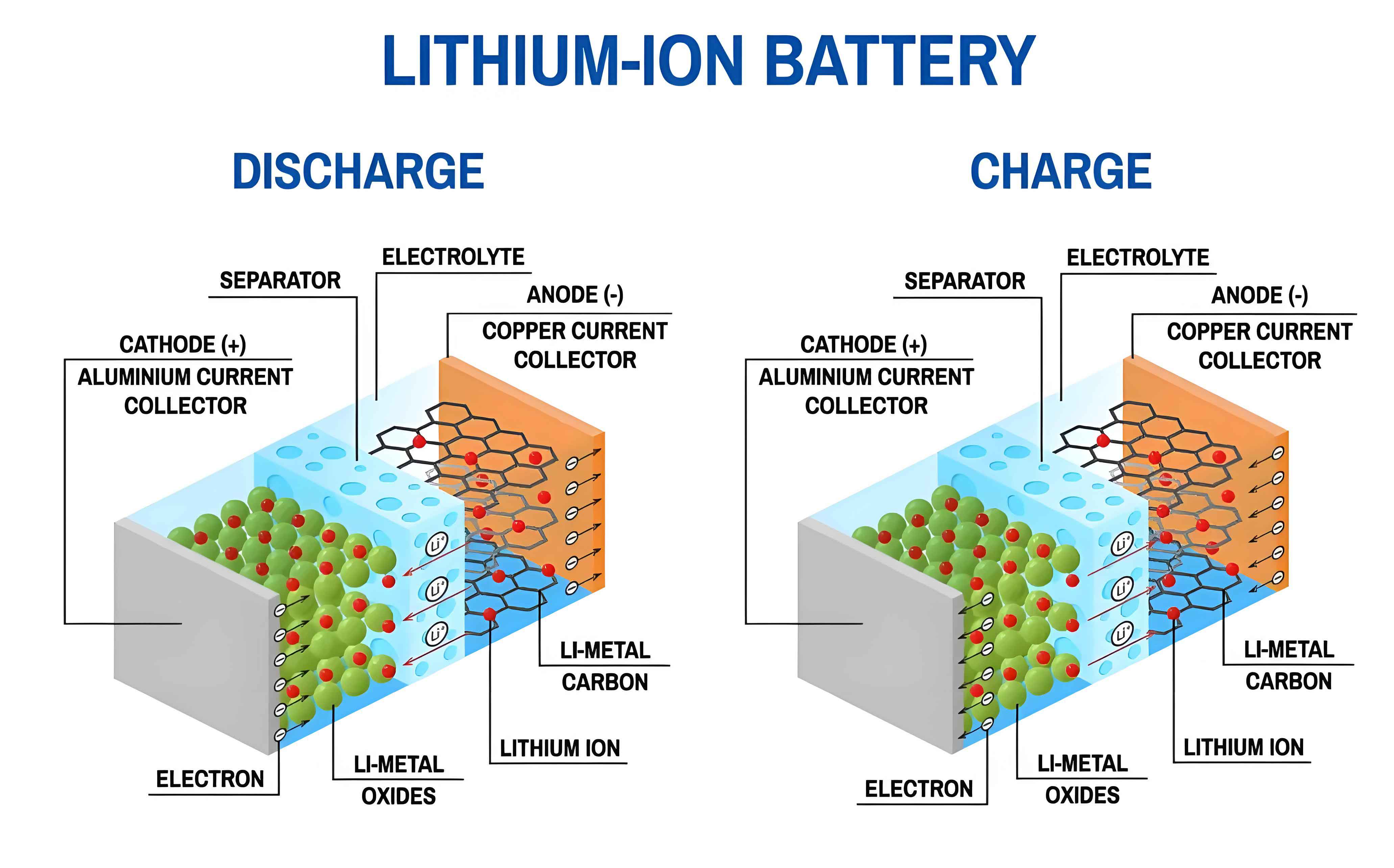
In our synthesis process, we employed a scalable solvothermal method followed by thermal reduction. The procedure began with dispersing SiOx powder in ethanol, to which tetrabutyl titanate (TBOT) was added as a titanium precursor. Glucose was used as a carbon source, dissolved in deionized water. The mixture was subjected to solvothermal drying to form a solid precursor, which was then calcined in an NH3/Ar atmosphere at 750°C for 5 hours. This step facilitated the conversion of TiO2 to TiO1−yNy and the carbonization of glucose, resulting in the SiOx@TiON-C composite. For comparison, we also prepared SiOx@TiON without the carbon source. The synthesis parameters are summarized in the table below:
| Step | Conditions | Purpose |
|---|---|---|
| Solvothermal | Ethanol solvent, 80°C, stirring | Uniform coating of TiO2 and glucose on SiOx |
| Calcination | 750°C, NH3/Ar, 5 h | Formation of TiON and carbon layer |
| Carbon content | ~0.98 wt% (measured) | Enhance electronic conductivity |
We characterized the materials using X-ray diffraction (XRD), Raman spectroscopy, X-ray photoelectron spectroscopy (XPS), scanning electron microscopy (SEM), and transmission electron microscopy (TEM). XRD patterns confirmed the amorphous nature of SiOx and the presence of TiON crystals, with peaks shifting due to carbon incorporation. Raman spectra showed characteristic SiOx peaks at 464 cm−1 and carbon D- and G-bands, with an ID/IG ratio of 0.93, indicating graphitized carbon. XPS analysis revealed the chemical states of elements, with Ti 2p and N 1s peaks confirming Ti–O–N and Ti–N bonds, and O 1s peaks showing Ti–O, Si–O, and C=O bonds. These results validated the successful formation of the TiON-C coating. SEM and TEM images illustrated the microstructure, where the coating layer was uniformly distributed on SiOx particles, with lattice fringes corresponding to TiO1−yNy crystals. The coating thickness and particle size distribution were analyzed, indicating an average size increase from ~5 μm for bare SiOx to ~5.32 μm for SiOx@TiON-C, due to the coating layer.
To quantify the electrochemical performance, we assembled CR-2032 coin cells with lithium metal as the counter electrode. The electrodes were prepared by mixing active materials, carbon nanotubes (CNTs), and polyacrylic acid (PAA) binder in a weight ratio of 70:15:15. The electrolyte consisted of 1.2 M LiPF6 in EC/DEC with FEC additive. Cyclic voltammetry (CV), galvanostatic charge-discharge, and electrochemical impedance spectroscopy (EIS) were performed. The key electrochemical parameters are summarized in the following table:
| Material | Initial Coulombic Efficiency (%) | Reversible Capacity at 500 mA g−1 after 500 cycles (mAh g−1) | Rate Capacity at 3 C (mAh g−1) | Charge Transfer Resistance (Rct) after 100 cycles (Ω) |
|---|---|---|---|---|
| Bare SiOx | 66.6 | 298.5 | 22 | 54.3 |
| SiOx@TiON | 70.6 | 568.1 | 218 | 49.7 |
| SiOx@TiON-C | 75.1 | 750.2 | 455 | 31.1 |
The superior performance of SiOx@TiON-C can be attributed to the dual-functional coating. The carbon layer enhances electronic conductivity, facilitating faster charge transfer, while the TiON layer acts as a mechanical buffer, accommodating volume changes. This synergy is crucial for stable cycling in li ion battery applications. We further analyzed the lithium storage kinetics using CV at various scan rates. The current response follows the power-law relationship:
$$ i = a v^b $$
where \( i \) is the peak current, \( v \) is the scan rate, and \( b \) is an exponent indicating the storage mechanism. For diffusion-controlled processes, \( b = 0.5 \), while for capacitive-controlled processes, \( b = 1 \). Our calculations yielded \( b \) values of approximately 0.60 and 0.59 for SiOx@TiON-C, suggesting a mixed contribution but dominated by diffusion control. The capacity contribution from capacitive and diffusion processes can be separated using:
$$ i(V) = k_1 v + k_2 v^{1/2} $$
where \( k_1 v \) represents the capacitive contribution and \( k_2 v^{1/2} \) represents the diffusion contribution. At a scan rate of 0.6 mV s−1, the capacitive contribution reached 72%, explaining the excellent rate capability.
EIS data provided insights into the interfacial resistance and lithium-ion diffusion. The Nyquist plots were fitted with an equivalent circuit consisting of solution resistance (Rs), charge transfer resistance (Rct), and Warburg impedance (Zw). The Li-ion diffusion coefficient (DLi+) was calculated using the equation:
$$ D_{Li+} = \frac{0.5 R^2 T^2}{A^2 F^4 \sigma_w^2 C^2} $$
where \( R \) is the gas constant, \( T \) is the absolute temperature, \( A \) is the electrode area, \( F \) is Faraday’s constant, \( \sigma_w \) is the Warburg coefficient, and \( C \) is the molar concentration of Li-ions. For SiOx@TiON-C, DLi+ was determined to be \( 1.72 \times 10^{-9} \, \text{cm}^2 \, \text{s}^{-1} \), higher than that of bare SiOx (\( 1.12 \times 10^{-9} \, \text{cm}^2 \, \text{s}^{-1} \)) and SiOx@TiON (\( 1.53 \times 10^{-9} \, \text{cm}^2 \, \text{s}^{-1} \)). This enhancement underscores the role of the TiON-C coating in promoting ion transport, which is vital for high-performance li ion battery systems.
To further elucidate the volume buffering effect, we examined the morphological changes of electrodes before and after cycling using SEM. The bare SiOx electrode exhibited significant cracking and a thickness increase of 32.5% after 100 cycles, whereas the SiOx@TiON-C electrode showed minimal cracks and only a 14.7% thickness increase. This demonstrates the coating’s ability to maintain structural integrity. The particle size analysis after 30 cycles revealed an average expansion rate of 36.7% for bare SiOx and 29.5% for SiOx@TiON-C, confirming the buffering role of TiON-C. These findings align with the electrochemical stability observed during long-term cycling.
In addition to half-cell tests, we assembled full cells pairing SiOx@TiON-C with a commercial LiNi0.5Co0.2Mn0.3O2 (NCM523) cathode. The full cell delivered a reversible capacity of 140.0 mAh g−1 at 0.5 C after 230 cycles, with a capacity retention of 87.9%. This performance highlights the practical viability of SiOx@TiON-C anodes in li ion battery configurations for electric vehicles and energy storage systems. The charge-discharge profiles of the full cell exhibited stable voltage plateaus, indicating good compatibility between the anode and cathode.
From a theoretical perspective, the improvement in ICE can be modeled by considering the irreversible reactions during initial lithiation. For SiOx, the reaction can be expressed as:
$$ \text{SiOx} + 2x \text{Li}^+ + 2x e^- \rightarrow \text{Si} + x \text{Li}_2\text{O} $$
This reaction consumes lithium ions irreversibly, reducing ICE. The TiON-C coating may mitigate this by providing a conductive pathway that facilitates more efficient lithiation. Moreover, the coating’s mechanical properties can be described using elastic modulus equations. The stress (\(\sigma\)) generated during volume expansion is given by:
$$ \sigma = E \cdot \epsilon $$
where \( E \) is Young’s modulus and \( \epsilon \) is the strain. The TiON layer, with a high bulk modulus, can absorb this stress, preventing electrode degradation. The carbon coating further enhances conductivity, as per the effective medium theory, where the overall conductivity (\(\sigma_{\text{eff}}\)) of a composite can be estimated by:
$$ \sigma_{\text{eff}} = \phi_c \sigma_c + \phi_{\text{TiON}} \sigma_{\text{TiON}} $$
where \(\phi\) and \(\sigma\) represent the volume fraction and conductivity of each component, respectively.
To optimize the coating design, we investigated the effect of synthesis parameters on performance. The table below summarizes the impact of calcination temperature and carbon content:
| Calcination Temperature (°C) | TiON Crystallinity | Carbon Graphitization | Capacity Retention after 100 cycles (%) |
|---|---|---|---|
| 700 | Low | Moderate | 65 |
| 750 | High | High | 85 |
| 800 | Very High | Degraded | 70 |
We found that 750°C provided an optimal balance, yielding well-crystallized TiON and graphitized carbon without excessive degradation. The carbon content was also varied, with 0.98 wt% showing the best results; higher carbon contents led to increased impedance, while lower contents reduced conductivity. These insights are crucial for scaling up production for li ion battery manufacturing.
In terms of reaction kinetics, the lithiation of SiOx involves multiple steps, including lithium insertion, phase transformations, and diffusion. The overall capacity can be modeled using the following equation for composite anodes:
$$ Q = Q_{\text{Si}} + Q_{\text{buffer}} $$
where \( Q_{\text{Si}} \) is the capacity from silicon domains and \( Q_{\text{buffer}} \) is the capacity from the coating layer, which may contribute pseudocapacitance. For SiOx@TiON-C, the coating enhances both aspects, leading to higher practical capacity. The cycling stability can be expressed in terms of capacity fade rate (\( k \)) using:
$$ C_n = C_0 \cdot e^{-kn} $$
where \( C_n \) is the capacity at cycle \( n \), and \( C_0 \) is the initial capacity. For SiOx@TiON-C, \( k \) was calculated to be 0.0005 per cycle, much lower than 0.002 per cycle for bare SiOx, indicating superior longevity.
Furthermore, we explored the role of the TiON-C coating in solid-electrolyte interphase (SEI) formation. The coating may promote a more stable SEI by reducing direct contact between SiOx and the electrolyte, thus minimizing side reactions. This is particularly important for li ion battery safety and cycle life. XPS analysis of cycled electrodes confirmed that the SEI on SiOx@TiON-C contained fewer decomposition products, suggesting a protective effect.
In conclusion, our study demonstrates that the SiOx@TiON-C composite, fabricated via a scalable solvothermal and thermal reduction method, exhibits exceptional lithium storage performance. The dual-functional TiON-C coating synergistically improves electrical conductivity and buffers volume changes, resulting in high reversible capacity, excellent rate capability, and long cycle stability. These advancements position SiOx@TiON-C as a promising anode material for next-generation li ion battery technologies. Future work will focus on optimizing the coating thickness, exploring other oxynitride systems, and integrating the material into large-scale battery packs for real-world applications. The tables and equations presented herein provide a quantitative framework for understanding and further improving such composites, contributing to the ongoing evolution of li ion battery systems.
To summarize the key electrochemical parameters in a comprehensive manner, we present the following table comparing various performance metrics across different cycles and current densities:
| Metric | SiOx@TiON-C Value | Bare SiOx Value | Improvement Factor |
|---|---|---|---|
| Initial Capacity (mAh g−1) | 1257.0 at 0.1 C | 980.5 at 0.1 C | 1.28 |
| Capacity at 3 C (mAh g−1) | 455 | 22 | 20.68 |
| Cycle Life (cycles to 80% retention) | >500 | 100 | >5 |
| Li-ion Diffusion Coefficient (cm2 s−1) | 1.72 × 10⁻⁹ | 1.12 × 10⁻⁹ | 1.54 |
| Volume Expansion Rate (%) | 29.5 | 36.7 | 0.80 |
These results underscore the effectiveness of the TiON-C coating in addressing the core challenges of SiOx anodes. The mathematical models and experimental data collectively support the design principles, paving the way for broader adoption in li ion battery industries. As we continue to refine these materials, we anticipate further enhancements in energy density and cycle life, ultimately contributing to more sustainable and efficient energy storage solutions.