
In the context of electric vehicles, the high-frequency demand power components during operation significantly degrade the lifespan of energy storage lithium battery systems. To address this issue, I propose a novel energy management strategy that integrates Ensemble Empirical Mode Decomposition (EEMD) and Permutation Entropy (PE). This approach effectively decomposes power signals into intrinsic mode functions (IMFs), reconstructs them to allocate power between lithium batteries and supercapacitors, and mitigates adverse effects on battery performance. By leveraging the rapid charge-discharge capabilities of supercapacitors for high-frequency power components, the method stabilizes output and reduces fluctuations in energy storage lithium battery systems. This article details the theoretical foundation, experimental validation, and comparative analysis of the proposed strategy, demonstrating its superiority over traditional methods in enhancing battery longevity and system efficiency.
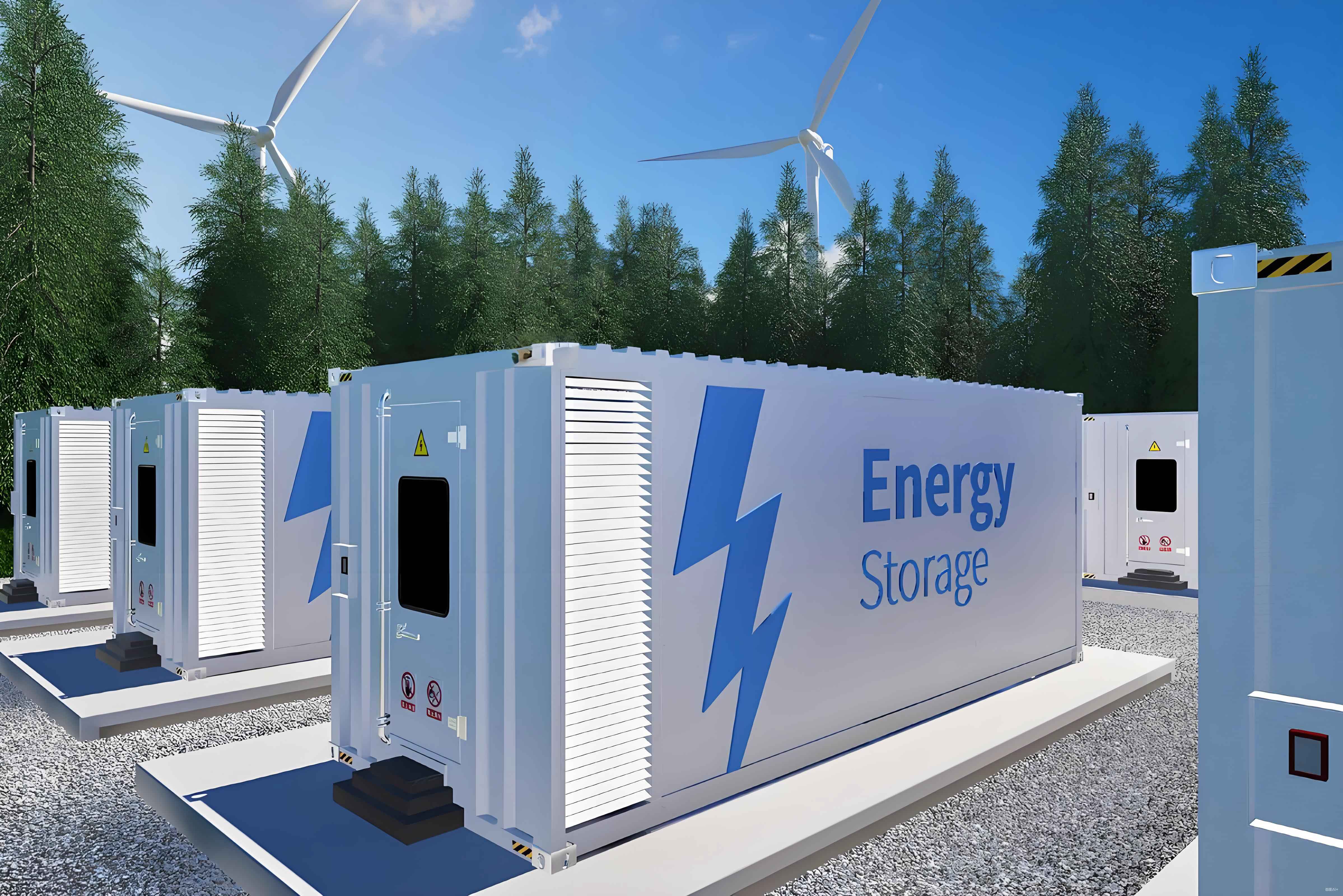
The hybrid energy storage system for electric vehicles comprises an energy storage lithium battery and a supercapacitor connected through DC/DC converters to the load. The system ensures efficient power distribution by managing the battery current, which can be expressed as:
$$i_b = \frac{1}{L_1} \int [v_b(t) – v_d(t)(1 – d_1)] dt$$
where \(i_b\) represents the battery current, \(v_b(t)\) is the battery voltage, \(v_d(t)\) denotes the load DC bus voltage, and \(d_1\) is the duty cycle of the converter switch M1. This configuration allows the supercapacitor to handle transient high-frequency power demands, thereby reducing stress on the energy storage lithium battery and improving overall system reliability.
Ensemble Empirical Mode Decomposition is a signal processing technique that decomposes non-linear and non-stationary time series data into IMFs without predefined basis functions. Unlike Fourier or wavelet transforms, EEMD avoids mode mixing by adding white noise to the original signal. The process begins with the Empirical Mode Decomposition (EMD), where the initial signal \(x(t)\) is expressed as:
$$x(t) = \sum_{i=1}^{n} m_i(t) + r(t)$$
Here, \(m_i(t)\) represents the i-th IMF component, and \(r(t)\) is the residual. For EEMD, positive and negative white noise sequences are added to the signal, and the decomposition is performed multiple times. The ensemble average of the IMFs is computed to obtain the final components:
$$f_j(t) = \frac{1}{2n} \sum_{j=1}^{n} (f_{ij}^+(t) + f_{ij}^-(t))$$
where \(f_j(t)\) is the j-th IMF component after EEMD processing. This method enhances decomposition accuracy and computational efficiency, making it suitable for real-time applications in energy storage lithium battery management.
Permutation Entropy is employed to assess the complexity of the IMF sub-sequences derived from EEMD. For a time series \(x(i)\), reconstruction into an m-dimensional phase space is performed as follows:
$$
\begin{bmatrix}
x(1) & x(1 + \tau) & \cdots & x(1 + (m-1)\tau) \\
x(2) & x(2 + \tau) & \cdots & x(2 + (m-1)\tau) \\
\vdots & \vdots & \ddots & \vdots \\
x(K) & x(K + \tau) & \cdots & x(K + (m-1)\tau)
\end{bmatrix}
$$
where \(\tau\) is the delay time, \(m\) is the embedding dimension, and \(K\) is the number of reconstruction vectors. Each row is rearranged in ascending order to form a symbolic sequence \(s(l) = (j_1, j_2, \ldots, j_m)\), and the probability \(P_j\) of each sequence is calculated. The permutation entropy is defined as:
$$H_{PE}(m) = -\sum_{j=1}^{k} P_j \ln P_j$$
Normalizing this value yields the PE measure \(P\):
$$P = \frac{H_{PE}}{\ln(m!)}, \quad 0 \leq P \leq 1$$
A higher PE value indicates greater complexity in the sub-sequence, guiding the allocation of high-frequency components to the supercapacitor in the energy storage lithium battery system.
The integration of EEMD and PE into the energy management strategy involves decomposing the demand power signal from driving cycles, such as the CLTC (China Light-Duty Vehicle Test Cycle), into IMFs. The PE values of these IMFs determine their complexity, with high-PE components assigned to the supercapacitor and low-PE components to the energy storage lithium battery. The power allocation is adjusted for converter efficiency \(\eta\), resulting in the actual power distribution:
$$
\begin{cases}
P_{bat}(t) = \eta P^*_{bat}(t) \\
P_{uc}(t) = P_d(t) – \eta P^*_{bat}(t)
\end{cases}
$$
where \(P_{bat}(t)\) is the lithium battery power, \(P_{uc}(t)\) is the supercapacitor power, and \(P_d(t)\) is the demand power. This approach ensures stable operation of the energy storage lithium battery by minimizing current fluctuations and peak values.
To validate the EEMD-PE strategy, experiments were conducted using a hybrid energy storage test bench. The energy storage lithium battery was an NCR 18650B module with a nominal voltage of 12.6 V and capacity of 57.6 Ah, while the supercapacitor was a Maxwell unit rated at 48 V and 1900 A. An electronic load simulated the CLTC driving cycle, with parameters including a total duration of 1800 s, maximum speed of 114 km/h, and average speed of 28.96 km/h. The DC bus voltage was maintained at 40 V, and current and voltage data were recorded using an oscilloscope. The experimental setup replicated real-world conditions to assess the performance of the energy storage lithium battery under various control strategies.
The results demonstrated that the EEMD-PE strategy significantly reduced the root mean square (RMS) current and peak current of the energy storage lithium battery compared to traditional methods. For instance, under low-speed conditions, the RMS current decreased by 12.41%, and the peak current dropped by 55.84%. Similar improvements were observed at medium and high speeds, as summarized in the following table:
| Strategy | Speed Condition | RMS Current (A) | Peak Current (A) |
|---|---|---|---|
| Traditional Battery | Low | 1.62 | 6.81 |
| Traditional Battery | Medium | 3.28 | 10.41 |
| Traditional Battery | High | 6.32 | 19.88 |
| Haar Wavelet | Low | 1.38 | 2.94 |
| Haar Wavelet | Medium | 2.83 | 5.82 |
| Haar Wavelet | High | 5.32 | 12.22 |
| EEMD-PE | Low | 1.42 | 3.01 |
| EEMD-PE | Medium | 2.67 | 4.96 |
| EEMD-PE | High | 5.10 | 11.51 |
Further analysis compared the EEMD-PE strategy with other advanced methods, such as fuzzy logic and model predictive control. The EEMD-PE approach achieved a 19.40% reduction in RMS current and a 55.91% decrease in peak current for the energy storage lithium battery relative to pure battery systems. The following table highlights these comparisons:
| Method | RMS Current Reduction (%) | Peak Current Reduction (%) |
|---|---|---|
| Fuzzy Logic | 18.68 | 50.96 |
| Model Predictive | 3.71 | 40.81 |
| EEMD-PE | 19.41 | 55.86 |
The power distribution between the energy storage lithium battery and supercapacitor under the CLTC cycle is illustrated by the reconstructed power profiles. The lithium battery primarily handles low-frequency components, ensuring stable output, while the supercapacitor manages high-frequency transients. This synergy reduces current stress on the energy storage lithium battery, as evidenced by the experimental data. The output power closely matched the reference values, with bus voltage variations remaining below 1.85%, confirming the strategy’s effectiveness in real-time applications.
In conclusion, the EEMD-PE-based energy management strategy offers a robust solution for enhancing the performance and longevity of energy storage lithium battery systems in electric vehicles. By decomposing power signals and leveraging entropy measures, the method optimizes power allocation between batteries and supercapacitors. Experimental results validate significant reductions in current RMS and peak values across various driving conditions, outperforming traditional and wavelet-based approaches. This research underscores the potential of adaptive signal processing techniques in advancing energy storage lithium battery technologies, paving the way for more efficient and durable electric vehicle power systems.
The proposed framework not only addresses the challenges posed by high-frequency power demands but also provides a scalable foundation for future innovations in hybrid energy storage. Future work could explore real-time implementation challenges and integration with machine learning algorithms for further optimization of energy storage lithium battery management.