
In the current era, the excessive exploitation of fossil fuels worldwide has led to a significant energy crisis, prompting energy systems to demand greater utilization of new energy technologies. As one of the representative technologies of clean energy, solar power systems offer substantial value, but these systems impose specific requirements on energy storage devices. Therefore, this article takes solar power systems as the research subject, providing a detailed analysis of the application of energy storage cells. I will explore various types of energy storage cells, highlighting their characteristics and advantages, and delve into emerging technologies. The focus will be on how these energy storage cells enhance the reliability and efficiency of solar power systems, with an emphasis on the keyword ‘energy storage cell’ throughout the discussion.
Under non-grid-connected conditions, the normal operation of a solar power system relies heavily on the energy provided by energy storage cells. As a clean energy system dependent on natural renewable resources, this power generation method is susceptible to interference from natural factors, resulting in intermittency and uncontrollability. Currently, most solar power systems in use depend on lead-acid battery packs for support, indicating that related technologies still have considerable room for development. The demand for energy storage systems is increasing daily, necessitating sufficient capacity to support large-scale energy storage for system operation. Since these systems are often installed in remote geographical environments away from populated areas, the energy storage system must ensure safety and usability. Based on solar power systems, this article proposes the energy storage principle of gel-type sealed lead-acid batteries, demonstrating their applicability and performance.
In the current energy application structure, thermal power, as a significant source of carbon emissions, accounts for approximately half of the total emissions, exacerbating the greenhouse effect. During the 14th Five-Year Plan period, national energy-saving and emission-reduction plans were formulated. According to relevant research data, in 2018, China accounted for nearly 30% of global carbon dioxide emissions, totaling about 9.7 billion tons. Therefore, in future industrial development, promoting sustainable development through power emission reduction is crucial. Solar power systems, with their reliance on energy storage cells, play a pivotal role in this transition. The integration of advanced energy storage cells can mitigate the intermittency of solar energy, ensuring stable power supply and reducing dependence on fossil fuels.
Energy storage cells are essential components in solar power systems, storing excess energy generated during peak sunlight hours for use during periods of low or no sunlight. The performance of these energy storage cells directly impacts the overall efficiency and reliability of the system. In this context, I will analyze several common types of energy storage cells used in solar applications, comparing their key characteristics through tables and formulas. This analysis will provide insights into their suitability for different scenarios and highlight ongoing advancements in the field.
| Battery Type | Mass Specific Energy (Wh/kg) | Specific Power (W/kg) | Internal Resistance (mΩ) | Cycle Life* (to 80% Initial Capacity) | Fast Charging Time (h) | Overcharge Tolerance | Self-Discharge Rate at Room Temperature (%/month) | Nominal Voltage (V) | Peak Load Current | Optimal Load Current | Operating Temperature (°C) | Maintenance Interval (months) | Time to Market | Price ($/kWh) |
|---|---|---|---|---|---|---|---|---|---|---|---|---|---|---|
| Nickel-Cadmium | 45 – 80 | 150 – 500 | 100 – 200 | 500 – 1000 | 1 – 3 | Medium | 20 | 1.25 | 20C | 1C | -20 to 60 | 1 – 2 | 1950 | 200 – 300 |
| Nickel-Metal Hydride | 80 – 90 | 500 – 1000 | 200 – 300 | 300 – 500 | 2 – 4 | Low | 30 | 1.25 | 5C | 0.2 – 0.5C | -20 to 60 | 2 – 3 | 1990 | 300 – 500 |
| AGM Lead-Acid | 30 – 50 | 150 – 350 | < 100 | 400 – 500 | 2 – 5 | High | 5 | 2 | 5C | 0.2C | -20 to 60 | 3 – 6 | 1970 | 60 – 100 |
| Lithium-Ion | 110 – 160 | 1000 – 1200 | 150 – 250 | 500 – 1000 | 2 – 4 | Very Low | 10 | 3.6 | >2C | ≤1C | -20 to 60 | Not Required | 1991 | 3000 – 4000 |
*Note: Cycle life can vary significantly based on charging/discharging methods, depth of discharge, and environmental temperature.
The table above summarizes the key characteristics of four common energy storage cells used in solar power systems. Each type of energy storage cell has distinct advantages and limitations, which I will discuss in detail. The performance metrics, such as specific energy and power, are critical for evaluating the suitability of an energy storage cell for solar applications. For instance, the specific energy, denoted as $E_{specific}$, can be expressed as:
$$E_{specific} = \frac{E_{total}}{m}$$
where $E_{total}$ is the total energy stored in watt-hours (Wh) and $m$ is the mass in kilograms (kg). Similarly, specific power $P_{specific}$ is given by:
$$P_{specific} = \frac{P_{max}}{m}$$
where $P_{max}$ is the maximum power output in watts (W). These formulas help in comparing different energy storage cells based on their energy and power densities.
Lead-acid batteries are widely used in various fields, including military and civilian applications, due to their technological maturity and continuous optimization. The most common types in solar power systems are valve-regulated sealed lead-acid (VRLA) batteries, which include absorbed glass mat (AGM) and gel-type sealed lead-acid batteries. These energy storage cells feature complex internal structures and large capacities, with performance significantly outperforming traditional lead-acid batteries when capacity approaches 10,000 Ah. The charging and discharging processes in lead-acid batteries involve electrochemical reactions. For example, during discharge, the overall reaction can be represented as:
$$Pb + PbO_2 + 2H_2SO_4 \rightarrow 2PbSO_4 + 2H_2O$$
This reaction highlights the conversion of chemical energy to electrical energy, a fundamental principle for energy storage cells. The efficiency of this process, often denoted as $\eta$, is crucial for solar applications and can be calculated as:
$$\eta = \frac{E_{discharged}}{E_{charged}} \times 100\%$$
where $E_{discharged}$ is the energy delivered during discharge and $E_{charged}$ is the energy input during charging. For lead-acid batteries, typical efficiencies range from 70% to 85%, depending on operating conditions.
Nickel-cadmium (NiCd) batteries offer advantages such as fast charging capability, with charging times as short as 1 hour, and high durability, capable of over 1000 charge-discharge cycles if properly maintained. However, they require periodic full discharges to prevent memory effect, where crystal formation on electrodes reduces capacity. The energy storage cell in NiCd batteries operates based on the reaction:
$$2NiOOH + Cd + 2H_2O \rightleftharpoons 2Ni(OH)_2 + Cd(OH)_2$$
This reversible reaction allows for efficient energy storage and release. NiCd batteries can function in low temperatures, with discharge capacity at -40°C reaching 20% of that at room temperature. Despite these benefits, the use of toxic cadmium has led to restrictions in many countries, limiting their application in solar power systems.
Nickel-metal hydride (NiMH) batteries are an environmentally friendly alternative to NiCd, with about 40% higher energy density and reduced memory effect. The energy storage cell in NiMH batteries involves hydrogen absorption in metal alloys. The reaction can be simplified as:
$$MH + OH^- \rightleftharpoons M + H_2O + e^-$$
where MH represents the metal hydride. These energy storage cells exhibit high specific energy at low discharge currents but may suffer from reduced performance at high currents. Charging methods, such as step charging, are preferred to manage heat generation, which can affect longevity. For solar applications, NiMH energy storage cells offer moderate cycle life and ease of transportation, making them suitable for certain off-grid systems.
Lithium-ion batteries represent a significant advancement in energy storage cell technology, with high energy density, excellent charging characteristics, and no memory effect. The nominal voltage of 3.6 V is three times that of NiCd batteries, enhancing system efficiency. The working principle of lithium-ion energy storage cells, particularly lithium iron phosphate (LiFePO4) batteries, involves lithium ion movement between electrodes. During charging, lithium ions de-intercalate from the positive electrode, travel through the electrolyte, and intercalate into the negative electrode. The reaction can be expressed as:
$$LiFePO_4 \rightleftharpoons FePO_4 + Li^+ + e^-$$
This process is highly reversible, contributing to long cycle life. However, safety measures are critical, including protection circuits to limit charging voltage to 4.2 V and discharge voltage to 2.5 V. The maximum charging current should not exceed 1C, and discharging current should stay below 2C. Despite these precautions, capacity degradation over 2-3 years is a concern, emphasizing the need for proper storage conditions. The integration of lithium-ion energy storage cells in solar power systems has shown promising results in grid applications. For instance, in frequency regulation, lithium iron phosphate battery energy storage systems can quickly compensate for deviations between generator output and automatic generation control (AGC) commands. The response time is within 1 second, and the frequency regulation effect is approximately 3.3 times that of coal-fired units. This demonstrates the potential of advanced energy storage cells in enhancing grid stability and supporting renewable energy integration.
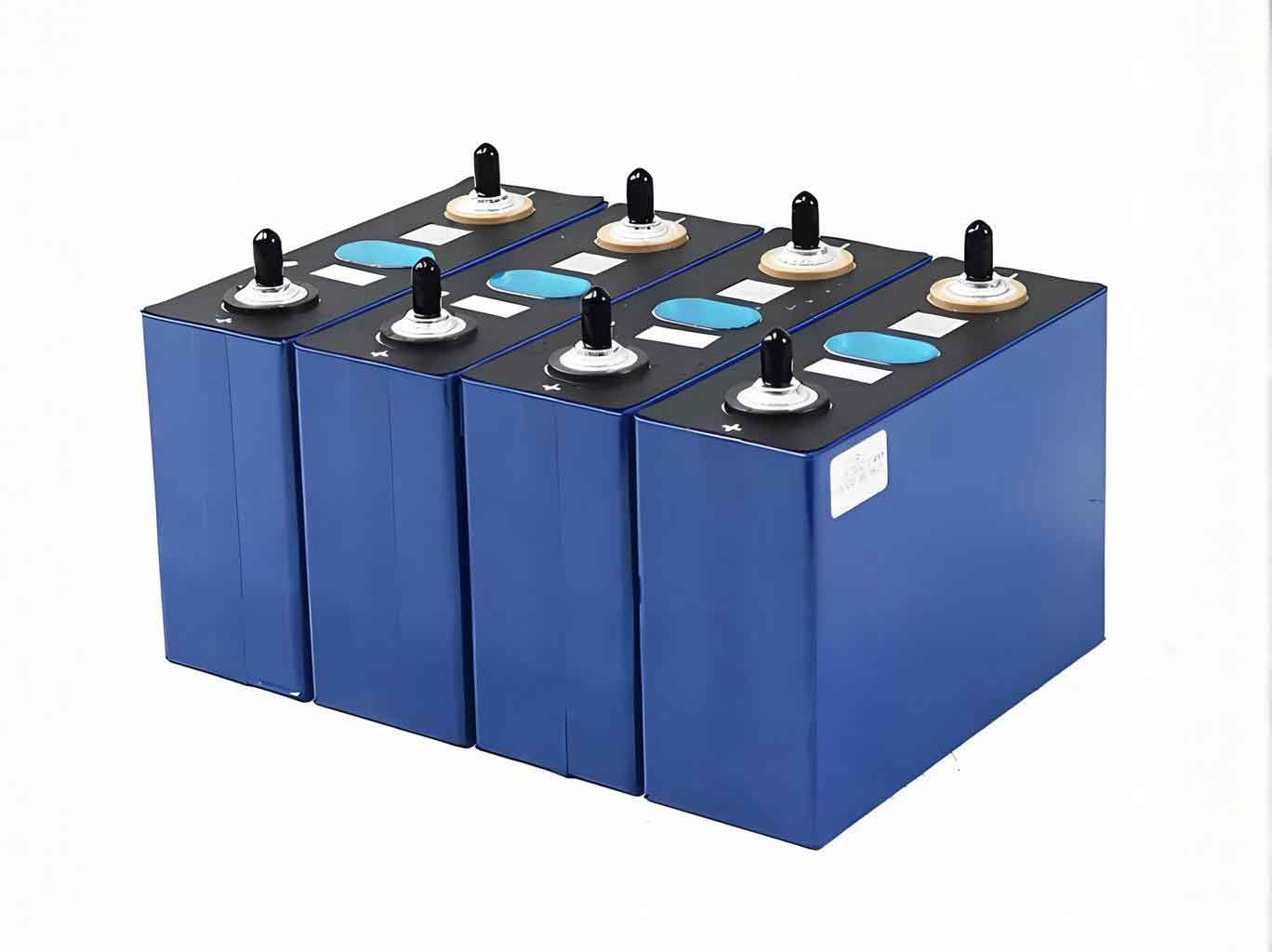
The image above illustrates a lithium iron phosphate battery, a type of lithium-ion energy storage cell commonly used in solar power systems for its safety and performance. Such visual aids help in understanding the physical structure and application contexts of these energy storage cells.
In addition to established technologies, several energy storage cell systems are under development, offering potential for future solar applications. Sodium-sulfur (NaS) batteries operate at high temperatures around 300°C, using liquid sodium and sulfur as active materials. The energy storage cell reaction is:
$$2Na + xS \rightleftharpoons Na_2S_x$$
where $x$ varies depending on the state of charge. NaS batteries exhibit energy densities three times higher than lead-acid batteries and charging efficiencies of 70-80%. They are suitable for large-scale energy storage but face challenges in safety and reliability due to high operating temperatures. Redox flow batteries, such as vanadium redox batteries, use different vanadium valence states in liquid electrolytes separated by an ion exchange membrane. The reactions involve:
$$VO_2^+ + 2H^+ + e^- \rightleftharpoons VO^{2+} + H_2O \quad \text{(positive electrode)}$$
$$V^{3+} + e^- \rightleftharpoons V^{2+} \quad \text{(negative electrode)}$$
These energy storage cells allow for scalable energy capacity by adjusting electrolyte volume, making them ideal for applications with large power fluctuations, such as wind-solar hybrid systems. Supercapacitors, also known as ultracapacitors, combine double-layer electrochemical capacitance and pseudocapacitance. They offer extremely high power density up to 1000 W/kg and cycle life exceeding 50,000 cycles. The energy storage mechanism involves charge separation at electrode-electrolyte interfaces, with capacitance $C$ given by:
$$C = \frac{\varepsilon A}{d}$$
where $\varepsilon$ is the permittivity of the electrolyte, $A$ is the electrode surface area, and $d$ is the separation distance. Supercapacitors are suitable for high-power pulse applications and can complement batteries in solar systems for load leveling.
Focusing on gel-type sealed lead-acid batteries, these energy storage cells are a subset of VRLA batteries and are particularly relevant for solar power systems due to their cost-effectiveness and adaptability. The key distinction between AGM and gel batteries lies in the electrolyte immobilization method. In gel batteries, the electrolyte is solidified using silica gel, forming a three-dimensional porous network that facilitates oxygen recombination. The oxygen recombination efficiency $\eta_{O_2}$ can be modeled as:
$$\eta_{O_2} = \frac{k_{diff} \cdot A_{eff}}{V_{cell}}$$
where $k_{diff}$ is the diffusion coefficient, $A_{eff}$ is the effective area for oxygen transport, and $V_{cell}$ is the cell volume. This recombination process reduces water loss and maintenance requirements. Advanced gel batteries for energy storage feature tubular positive plates or thick flat electrodes (thickness $\delta \geq 5$ mm), suspended plate groups, composite separators, and antimony-free grid alloys. The electrolyte density is lower, typically $d = 1.240 – 1.260$ g/mL, to enhance cycle life. The cycle life $N_{cycle}$ as a function of depth of discharge (DOD) can be approximated by:
$$N_{cycle} = N_0 \cdot e^{-k \cdot \text{DOD}}$$
where $N_0$ is the cycle life at low DOD and $k$ is a degradation constant. For gel batteries, at DOD = 80%, cycle life exceeds 1600 cycles, and at partial DOD (40-80%), it can surpass 5500 cycles. The charging efficiency approaches 99%, making them highly efficient energy storage cells. The self-discharge rate is slow, around 1% per month, which is beneficial for long-term energy storage in solar applications. Compared to AGM batteries, gel batteries have slightly higher internal resistance but comparable high-current discharge capability. Their discharge capacity is similar to that of flooded lead-acid batteries, and they excel in deep-cycle applications. The design considerations for gel energy storage cells include using low-antimony alloys for grids and optimizing electrolyte composition to balance performance and longevity. In solar power systems, gel batteries can be configured to meet varying capacity demands, from small off-grid installations to large-scale storage farms. The modular nature of these energy storage cells allows for scalability, and their sealed construction minimizes environmental risks. The overall system efficiency $\eta_{system}$ when integrating gel batteries can be expressed as:
$$\eta_{system} = \eta_{PV} \cdot \eta_{charge} \cdot \eta_{discharge} \cdot \eta_{battery}$$
where $\eta_{PV}$ is the photovoltaic conversion efficiency, $\eta_{charge}$ and $\eta_{discharge}$ are the charge and discharge controller efficiencies, and $\eta_{battery}$ is the battery efficiency. For gel batteries, $\eta_{battery}$ typically ranges from 85% to 90%, contributing to overall system reliability.
Looking ahead, the development of energy storage cells for solar power systems is driven by the need for higher energy density, longer cycle life, and lower costs. Emerging technologies like solid-state batteries, which replace liquid electrolytes with solid materials, promise enhanced safety and performance. The energy density $E_d$ of future energy storage cells can be projected using Moore-like scaling laws:
$$E_d(t) = E_{d0} \cdot 2^{t/\tau}$$
where $E_{d0}$ is the initial energy density, $t$ is time in years, and $\tau$ is the doubling period. Similarly, cost reduction follows learning curves, with price $P$ as a function of cumulative production $Q$:
$$P(Q) = P_0 \cdot Q^{-b}$$
where $P_0$ is the initial price and $b$ is the learning rate. For lithium-ion energy storage cells, $b$ has been estimated around 0.2, leading to significant cost declines over the past decade. Integration with smart grid technologies further enhances the value of energy storage cells by enabling demand response and grid ancillary services. The optimal sizing of an energy storage cell system for solar applications involves balancing capacity, power, and cost. This can be formulated as an optimization problem:
$$\min_{C, P} \left( \alpha \cdot C + \beta \cdot P + \gamma \cdot \sum_{t} (L_t – S_t)^2 \right)$$
subject to:
$$0 \leq S_t \leq P \quad \text{and} \quad 0 \leq E_t \leq C$$
where $C$ is the energy capacity in kWh, $P$ is the power rating in kW, $L_t$ is the load at time $t$, $S_t$ is the power supplied by the storage system, $E_t$ is the stored energy, and $\alpha, \beta, \gamma$ are weighting factors. Such models help in designing efficient solar-plus-storage systems.
In conclusion, energy storage cells are indispensable for the effective operation of solar power systems, addressing intermittency and enabling reliable energy supply. From traditional lead-acid batteries to advanced lithium-ion and emerging technologies, each type of energy storage cell offers unique benefits and challenges. Gel-type sealed lead-acid batteries, with their proven performance and cost-effectiveness, remain a viable option for many applications. However, continuous innovation in energy storage cell technology is essential to meet growing demands for clean energy. As solar power systems expand globally, the role of energy storage cells will become increasingly critical in achieving energy sustainability and reducing carbon emissions. Future research should focus on improving the efficiency, lifespan, and environmental impact of these energy storage cells, ensuring they complement the rapid deployment of solar energy infrastructure. By leveraging advances in materials science and system integration, energy storage cells will pave the way for a more resilient and sustainable energy future.