
In this comprehensive review, I will explore the critical role of energy storage cells in near-space vehicles, focusing on their environmental adaptability, electrical performance requirements, current applications, and recent research advancements. Near-space, defined as the region between 20 km and 100 km above Earth’s surface, presents unique challenges due to its low atmospheric pressure, extreme temperatures, and strategic importance for military and civilian applications. Energy storage cells serve as the core of the power systems in these vehicles, enabling extended missions such as surveillance, communication relay, and environmental monitoring. I will analyze how these cells must withstand harsh conditions while delivering high energy density and long cycle life, and I will summarize key developments in materials and electrolytes that are driving progress in this field. Throughout this discussion, I will emphasize the importance of energy storage cells in achieving reliable and efficient near-space operations, using tables and equations to illustrate critical points.
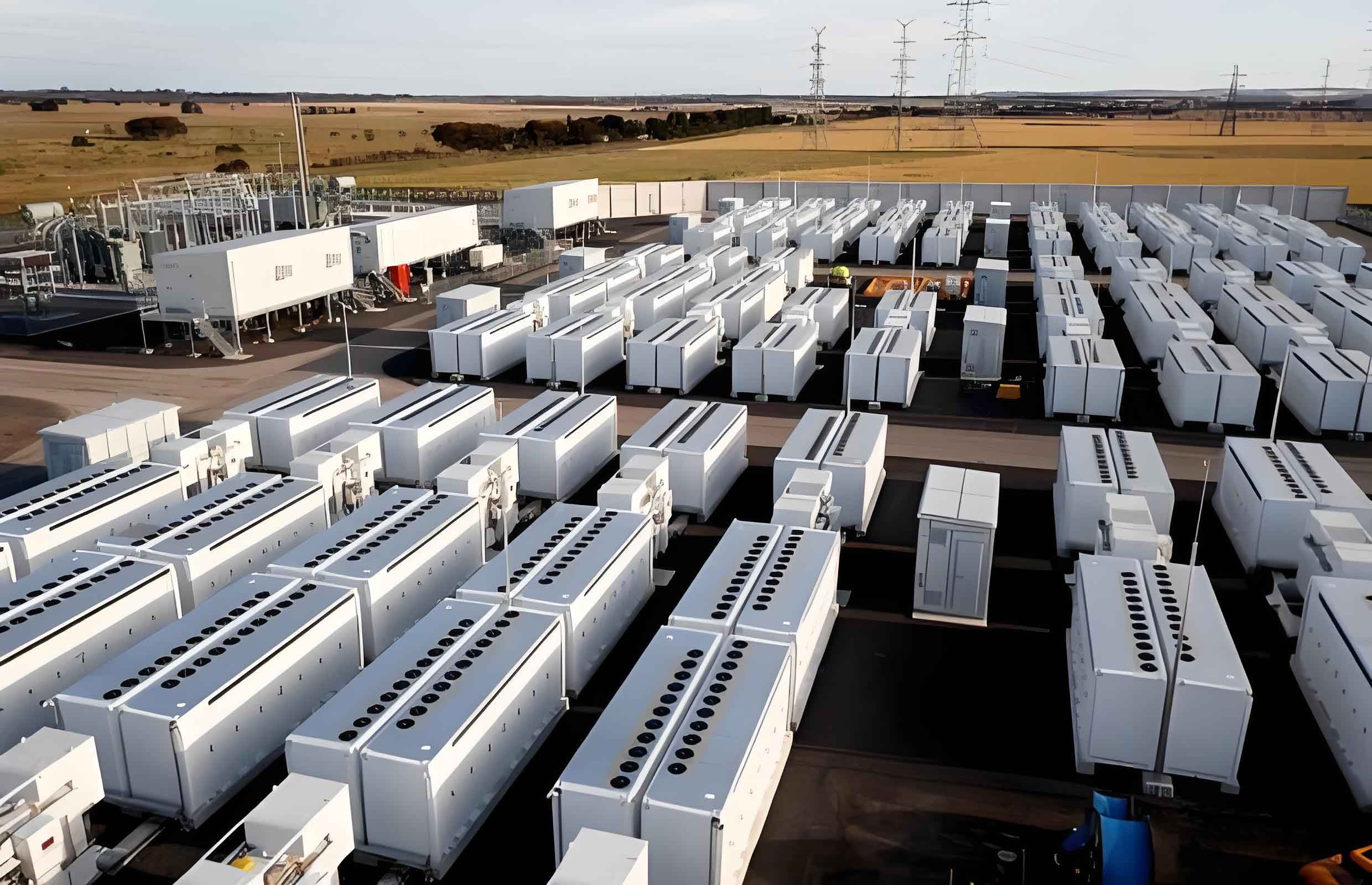
Near-space vehicles, including high-altitude airships and drones, rely heavily on energy storage cells for power during nighttime or low-sunlight conditions. The performance of these energy storage cells directly impacts the vehicle’s endurance, payload capacity, and overall mission success. In this review, I will first examine the environmental and electrical demands placed on energy storage cells in near-space applications. Then, I will discuss the current state of lithium-ion and lithium-metal energy storage cells, along with emerging alternatives like fuel cells. Finally, I will delve into recent research on electrode materials and electrolytes, highlighting how innovations are enhancing the performance and reliability of energy storage cells for near-space use. By integrating quantitative analyses through tables and formulas, I aim to provide a detailed understanding of the advancements and challenges in this rapidly evolving area.
Environmental Adaptability Requirements for Energy Storage Cells
The near-space environment imposes severe conditions that energy storage cells must endure to ensure vehicle functionality. Two primary factors are low atmospheric pressure and extreme cold, which can degrade cell performance and safety if not properly addressed. In this section, I will analyze these environmental challenges and their implications for energy storage cell design, using equations to model key phenomena and tables to summarize adaptive strategies.
Low atmospheric pressure in near-space, typically around 1.8 kPa at 20 km altitude compared to sea-level pressure of 101.3 kPa, can cause internal gas expansion in energy storage cells, leading to swelling, increased internal resistance, and potential failure. The pressure difference between the cell interior and exterior can be described by the ideal gas law: $$ PV = nRT $$ where P is pressure, V is volume, n is the number of moles of gas, R is the gas constant, and T is temperature. Under low external pressure, any gaseous byproducts from side reactions can expand, exacerbating issues. To mitigate this, energy storage cells often employ soft packaging and low-pressure encapsulation techniques. For instance, the use of gel polymer electrolytes or solid-state systems can reduce gas generation, as they minimize liquid components prone to vaporization. Table 1 summarizes the pressure variations and corresponding adaptive measures for energy storage cells in near-space.
| Altitude (km) | Pressure (kPa) | Impact on Energy Storage Cells | Adaptive Measures |
|---|---|---|---|
| 20 | 1.8 | Gas expansion, swelling, increased resistance | Soft packaging, low-pressure encapsulation, gel electrolytes |
| 30 | 0.5 | Enhanced risk of casing rupture | Solid-state designs, vacuum-sealed modules |
| 40 | 0.1 | Severe performance degradation | Advanced composite materials, pressure compensation systems |
Extreme low temperatures, often below -60°C at 20 km altitude, significantly reduce ion conductivity in energy storage cells, leading to higher polarization and capacity loss. The Arrhenius equation models the temperature dependence of ionic conductivity: $$ \sigma = \sigma_0 \exp\left(-\frac{E_a}{kT}\right) $$ where σ is conductivity, σ₀ is a pre-exponential factor, E_a is activation energy, k is Boltzmann’s constant, and T is temperature. At low T, σ decreases exponentially, impairing cell function. To address this, energy storage cells can incorporate wide-temperature electrolytes with low freezing points and high ionic mobility. Additionally, self-heating mechanisms using internal resistors or phase-change materials can maintain optimal operating temperatures. For example, a self-heating energy storage cell might use a fraction of its stored energy to power heating elements, ensuring stability in cold environments. The energy balance can be expressed as: $$ Q_{\text{heat}} = I^2 R t $$ where I is current, R is resistance, and t is time, illustrating how minimal energy diversion can prevent temperature-related failures.
Moreover, the combined effects of low pressure and temperature necessitate holistic design approaches for energy storage cells. For instance, materials with low thermal expansion coefficients and high mechanical strength are essential to prevent cracking under thermal cycling. Electrolyte formulations must resist freezing and gas formation, often involving fluorinated solvents or ionic liquids. In summary, environmental adaptability is crucial for energy storage cells in near-space, and ongoing research focuses on optimizing materials and systems to withstand these extremes. By integrating such adaptations, energy storage cells can achieve reliable performance, enabling longer missions and broader utilization of near-space vehicles.
Electrical Performance Requirements for Energy Storage Cells
In near-space vehicles, energy storage cells must meet specific electrical performance criteria to support extended operations. Key requirements include high specific energy to minimize mass and long cycle life to endure repeated charging and discharging cycles. In this section, I will detail these demands, using equations to quantify energy metrics and tables to compare performance targets, emphasizing how energy storage cells are tailored for near-space applications.
High specific energy is critical because near-space vehicles have strict mass constraints due to limited buoyancy or lift in thin atmospheres. The specific energy (E_s) of an energy storage cell is defined as: $$ E_s = \frac{E}{m} $$ where E is the total energy stored and m is the mass. For near-space missions, energy storage cells often need E_s values exceeding 250 Wh/kg to ensure sufficient power for nighttime flight and payload operations. In some advanced designs, targets reach 400 Wh/kg or higher to enable multi-day endurance. The energy density can also be expressed volumetrically as: $$ E_v = \frac{E}{V} $$ where V is volume, but mass-based metrics are prioritized due to weight limitations. Table 2 outlines typical specific energy requirements for energy storage cells in various near-space vehicle types, highlighting how these values influence mission capabilities.
| Vehicle Type | Mission Duration | Required Specific Energy (Wh/kg) | Impact on Vehicle Performance |
|---|---|---|---|
| High-Altitude Airship | Days to weeks | 250-350 | Enables continuous surveillance and communication |
| Near-Space Drone | Hours to days | 300-400 | Supports agile maneuvers and high payload capacity |
| Hybrid Platform | Months | >400 | Facilitates long-term environmental monitoring |
Cycle life is another vital parameter, as near-space vehicles often undergo daily charge-discharge cycles during prolonged missions. The cycle life (N) can be modeled based on capacity fade using empirical equations like: $$ C_f = C_0 \left(1 – k N\right) $$ where C_f is the capacity after N cycles, C_0 is initial capacity, and k is a degradation constant. Energy storage cells must achieve hundreds of cycles with minimal capacity loss—for instance, retaining over 80% capacity after 500 cycles—to support missions lasting months. Factors affecting cycle life include electrode stability, electrolyte decomposition, and mechanical stress. For example, in lithium-based energy storage cells, the formation of solid-electrolyte interphase (SEI) layers can either protect or degrade performance over time. The cumulative energy throughput over cycle life is given by: $$ E_{\text{total}} = N \times E_{\text{cycle}} $$ where E_{\text{cycle}} is energy per cycle, underscoring the need for robust designs to maximize total energy delivery.
Additionally, power density is important for handling peak loads during maneuvers or emergency operations. The power density (P_d) relates to specific energy and internal resistance (R_i) as: $$ P_d = \frac{V^2}{R_i m} $$ where V is operating voltage. High-power energy storage cells enable rapid response to changing conditions, such as altitude adjustments or payload activation. In practice, trade-offs exist between specific energy and power density; for instance, cells with thick electrodes may have high energy but lower power due to longer ion diffusion paths. Optimization involves balancing these parameters through material selection and cell engineering. Overall, meeting electrical performance requirements is essential for energy storage cells in near-space, and ongoing advancements aim to push the boundaries of specific energy and cycle life while maintaining safety and reliability.
Current Application Status of Energy Storage Cells
Energy storage cells are currently deployed in various near-space vehicles, with lithium-ion and lithium-metal systems dominating due to their high energy densities and evolving maturity. In this section, I will describe the application scenarios and performance characteristics of these energy storage cells, supported by tables comparing their attributes. I will also touch on alternative systems like fuel cells, highlighting their potential for future use.
Lithium-ion energy storage cells are the most widely used in near-space vehicles, such as high-altitude airships and drones, owing to their balanced performance in specific energy, voltage, and cycle life. These cells typically use intercalation compounds like LiCoO₂, LiFePO₄, or LiNiₓCoₓMnₓO₂ as cathodes, with graphite anodes, enabling specific energies of 200-300 Wh/kg. The average operating voltage is around 3.7 V, which simplifies integration into vehicle power systems. For example, in a typical near-space mission, lithium-ion energy storage cells provide power during darkness, supporting systems like propulsion, sensors, and communications. The redox reactions in these cells can be generalized as: $$ \text{Li}_x\text{C} + \text{Li}_{1-x}\text{MO}_2 \leftrightarrow \text{C} + \text{LiMO}_2 $$ where C is carbon and MO₂ is a metal oxide, illustrating the reversible lithium insertion and extraction. Table 3 compares different lithium-ion chemistries used in energy storage cells for near-space applications, detailing their key properties and limitations.
| Cathode Material | Specific Capacity (mAh/g) | Average Voltage (V) | Cycle Life | Advantages | Disadvantages |
|---|---|---|---|---|---|
| LiCoO₂ | 140-170 | 3.7 | Moderate | High voltage, good rate capability | Limited thermal stability, cobalt cost |
| LiFePO₄ | 140-160 | 3.2 | Excellent | Safety, long life, low cost | Lower energy density |
| LiNiₓCoₓMnₓO₂ | 180-220 | 3.8 | Good | High capacity, good balance | Surface degradation at high voltages |
| Li-rich Mn-based | 250-300 | 3.5-4.5 | Moderate | Very high capacity | Voltage fade, poor kinetics |
Lithium-metal energy storage cells are emerging as a high-energy alternative, with specific energies exceeding 400 Wh/kg, making them suitable for advanced near-space vehicles requiring extended endurance. These cells replace graphite anodes with metallic lithium, which has a theoretical capacity of 3860 mAh/g, leading to significant weight reduction. However, challenges like dendrite formation and electrolyte decomposition have limited their widespread adoption. Recent prototypes, such as those developed by research institutions, have demonstrated over 500 Wh/kg and 200 cycles in near-space tests, enabling flights lasting up to a week. The reaction at the anode involves: $$ \text{Li} \leftrightarrow \text{Li}^+ + e^- $$ while cathodes like sulfur or high-nickel materials complement the system. Innovations in electrolyte formulations and interface engineering are addressing safety concerns, positioning lithium-metal energy storage cells as a promising solution for future missions.
Other energy storage cells, such as regenerative fuel cells, offer unique benefits for near-space applications, including specific energies of 400-1000 Wh/kg and unlimited cycle life in theory. These systems use hydrogen and oxygen, produced via solar-powered electrolysis during the day, to generate electricity at night. The overall reaction in a hydrogen fuel cell is: $$ 2\text{H}_2 + \text{O}_2 \rightarrow 2\text{H}_2\text{O} $$ providing a clean and efficient power source. Although less common than lithium-based cells, fuel cells are being integrated into hybrid energy systems for long-duration near-space vehicles, leveraging their high energy density and environmental friendliness. In summary, the current application landscape for energy storage cells is diverse, with lithium-ion systems providing reliability and lithium-metal and fuel cells pushing the envelope for performance. As technology advances, these energy storage cells will continue to evolve, enabling more ambitious near-space explorations.
Research Progress in Energy Storage Cell Technologies
Recent research on energy storage cells for near-space vehicles has focused on enhancing key components, including high-nickel cathodes, lithium-metal anodes, and advanced electrolytes. In this section, I will summarize breakthroughs in these areas, using equations to explain material behaviors and tables to highlight comparative improvements. The goal is to illustrate how these advancements are addressing the unique demands of near-space environments, with energy storage cells at the core of innovation.
High-nickel ternary cathode materials, such as LiNiₓCoᵧMn₂O₂ (NCM) with x > 0.8, are being optimized for higher capacity and stability in energy storage cells. These materials offer specific capacities up to 220 mAh/g but suffer from issues like cation mixing and surface degradation. Doping with elements like magnesium or titanium can stabilize the crystal structure, as modeled by the equation for lattice energy: $$ U = \frac{k Q_1 Q_2}{r} $$ where U is lattice energy, k is a constant, Q are ion charges, and r is ionic radius. For instance, Mg doping reduces Ni²⁺ migration, improving cycle life. Coating with fast-ion conductors like Li₀.₁₂₅La₀.₆₂₅TiO₃ (LLTO) enhances Li⁺ diffusion, described by the Nernst-Planck equation: $$ J = -D \frac{\partial C}{\partial x} + \frac{z F D C}{RT} \frac{\partial \phi}{\partial x} $$ where J is flux, D is diffusion coefficient, C is concentration, z is charge, F is Faraday’s constant, and φ is electric potential. Table 4 compares modified high-nickel cathodes for energy storage cells, showing how these strategies boost performance.
| Modification Type | Specific Capacity (mAh/g) | Cycle Life (Capacity Retention) | Key Improvement |
|---|---|---|---|
| Unmodified NCM811 | 200-210 | 80% after 300 cycles | Baseline |
| Mg-doped NCM | 210-220 | 88% after 500 cycles | Reduced lattice distortion |
| LLTO-coated NCM | 205-215 | 85% after 400 cycles | Enhanced Li⁺ conductivity |
| Gradient concentration | 220-230 | 90% after 450 cycles | Suppressed surface reactions |
Lithium-metal anodes are a focal point for increasing the specific energy of energy storage cells, but they face challenges like dendrite growth and low Coulombic efficiency. Research has explored electrolyte additives, artificial SEI layers, and 3D hosts to mitigate these issues. For example, using high-concentration electrolytes with LiFSI salt can form a protective LiF-rich SEI, as the reduction potential follows: $$ \text{LiFSI} + e^- \rightarrow \text{LiF} + \text{other products} $$ This improves deposition uniformity, with Coulombic efficiency exceeding 98% in some cases. 3D hosts, such as nickel foam or functionalized carbon, reduce local current density, modeled by: $$ i = n F A D \frac{\partial C}{\partial x} $$ where i is current, n is electron number, A is area, and D is diffusion coefficient. By distributing Li⁺ ions evenly, these hosts prevent dendrites and extend cycle life. Recent studies show that composite anodes, like Li-B-Mg alloys, achieve stable cycling with minimal capacity fade, making them promising for high-energy energy storage cells.
Electrolyte formulations are critical for wide-temperature operation and safety in energy storage cells. Innovations include localized high-concentration electrolytes (LHCE) and fluorinated solvents that resist freezing and gas formation. The ionic conductivity (σ) can be optimized using the Vogel-Fulcher-Tammann equation: $$ \sigma = A \exp\left(-\frac{B}{T – T_0}\right) $$ where A, B, and T₀ are constants, allowing for better performance at low temperatures. Additives like vinylene carbonate (VC) or LiNO₃ promote stable SEI formation, enhancing cycle life. For instance, in lithium-metal energy storage cells, electrolytes with 4 M LiFSI in DME-TTE mixtures enable operation at voltages up to 4.5 V, with capacity retention over 80% after 250 cycles. Table 5 summarizes advanced electrolyte systems for energy storage cells, emphasizing their benefits in near-space conditions.
| Electrolyte Type | Composition | Operating Temperature Range (°C) | Key Advantages | Applications |
|---|---|---|---|---|
| Standard Carbonate | 1 M LiPF₆ in EC/DEC | -20 to 60 | Cost-effective, good conductivity | Commercial lithium-ion cells |
| High-Concentration Ether | 4 M LiFSI in DME | -40 to 70 | Dendrite suppression, high voltage stability | Lithium-metal cells |
| Fluorinated Solvent | LiTFSI in FEC/TTE | -60 to 80 | Low vapor pressure, wide liquid range | Extreme environment cells |
| Solid-State | Li₆PS₅Cl | -30 to 100 | Safety, no leakage | Next-generation high-energy cells |
Overall, research progress in energy storage cells is driving significant improvements in energy density, cycle life, and environmental adaptability. By leveraging material science and electrochemical engineering, these advancements are paving the way for more reliable and efficient near-space vehicles. The integration of novel cathodes, anodes, and electrolytes will continue to enhance the performance of energy storage cells, ensuring they meet the growing demands of this challenging domain.
Conclusion
In conclusion, energy storage cells are indispensable for the success of near-space vehicles, providing the power needed for extended missions in harsh environments. Through this review, I have examined the environmental and electrical requirements that shape the design of energy storage cells, discussed current applications of lithium-ion and lithium-metal systems, and highlighted recent research breakthroughs in materials and electrolytes. The development of high-nickel cathodes, stable lithium-metal anodes, and advanced electrolytes has significantly improved the specific energy, cycle life, and adaptability of energy storage cells, enabling longer and more reliable operations in near-space.
Looking ahead, the future of energy storage cells for near-space vehicles will likely involve further integration of multifunctional materials, smart thermal management systems, and hybrid energy solutions. For instance, combining solar regeneration with high-density energy storage cells could achieve near-perpetual flight capabilities. Continued collaboration between vehicle designers and battery researchers will be essential to optimize these systems for specific mission profiles. As technology advances, energy storage cells will play an even more critical role in unlocking the full potential of near-space for both military and civilian purposes, from global surveillance to disaster response. Ultimately, the progress in energy storage cells underscores their pivotal position in the ongoing exploration and utilization of near-space, driving innovation in aerial platforms and beyond.