
As the global energy landscape shifts towards renewable sources, energy storage power stations have become a critical component in ensuring grid stability and efficient energy utilization. These stations, particularly those based on electrochemical systems, enable the storage of excess energy from intermittent sources like solar and wind, thereby facilitating a smoother transition to a low-carbon economy. However, the widespread deployment of energy storage cells introduces significant safety challenges that must be addressed to prevent catastrophic failures. In this article, I explore the safety risks associated with energy storage cells, delve into advanced protective measures, and propose comprehensive strategies to mitigate these hazards. The focus is on lithium-ion-based energy storage cells, which dominate the market due to their high energy density and efficiency, yet pose inherent risks such as thermal runaway and fire propagation. Through a detailed analysis, I aim to highlight the importance of integrating multi-faceted approaches—including technological innovations, regulatory frameworks, and operational protocols—to enhance the safety and reliability of energy storage systems.
The rapid growth of electrochemical energy storage is driven by its ability to provide rapid response times and high energy conversion efficiencies. Among various technologies, lithium-ion energy storage cells are preferred for their superior performance, but they are susceptible to failures that can lead to severe incidents. For instance, thermal runaway—a self-sustaining exothermic reaction—can initiate in a single energy storage cell and propagate to entire systems, resulting in fires or explosions. This phenomenon is often triggered by factors like overcharging, internal short circuits, or mechanical abuse, emphasizing the need for robust safety mechanisms. In the following sections, I examine the primary safety risks, discuss recent advancements in early warning and fire suppression technologies, and outline actionable strategies to safeguard energy storage power stations. By leveraging data from real-world incidents and research findings, I provide insights into how stakeholders can collaboratively work towards a safer energy storage ecosystem.
Energy storage cells, especially lithium-ion variants, operate on principles of electrochemical reactions during charge and discharge cycles. While this allows for efficient energy storage, it also introduces vulnerabilities. For example, the organic electrolytes in these energy storage cells have low boiling points, making them prone to decomposition under abnormal conditions. Moreover, the integration of multiple energy storage cells into large-scale systems amplifies risks, as a failure in one unit can cascade through the network. To illustrate the scope of these issues, I present a summary of common safety risks in Table 1, which categorizes hazards based on their origin and potential impact. Additionally, mathematical models can describe the behavior of energy storage cells under stress; for instance, the heat generation rate during thermal runaway can be approximated using the Arrhenius equation: $$Q = A \cdot e^{-E_a / (R T)}$$ where \(Q\) is the heat release rate, \(A\) is the pre-exponential factor, \(E_a\) is the activation energy, \(R\) is the gas constant, and \(T\) is the temperature. Such equations help in predicting and mitigating risks in energy storage cells.
| Risk Category | Description | Potential Consequences |
|---|---|---|
| Fire | Initiated by thermal runaway, short circuits, or external abuse in energy storage cells, leading to combustion of flammable materials. | Property damage, injury, or fatalities; can disrupt grid operations. |
| Gas Emission | Release of toxic (e.g., CO) and flammable gases (e.g., H₂) from decomposing electrolytes in energy storage cells. | Health hazards, explosion risks, and environmental pollution. |
| Electric Shock | High-voltage systems in energy storage cells can cause electrocution during maintenance or faults. | Severe injury or death; requires strict isolation protocols. |
| Waste Management | Improper disposal of retired energy storage cells leads to leakage of heavy metals and other contaminants. | Soil and water contamination; resource wastage. |
Fire incidents represent one of the most critical risks for energy storage cells, as evidenced by numerous reported accidents worldwide. These events often stem from thermal runaway, where an increase in temperature within an energy storage cell triggers exothermic reactions that accelerate heat generation. For example, during overcharging, lithium plating can occur on the anode, leading to internal shorts and subsequent ignition. The propagation of fire in energy storage cells is influenced by factors such as state of charge, ambient temperature, and system design. To quantify the likelihood of such events, probabilistic risk assessment models can be applied, incorporating variables like failure rates and environmental conditions. A simplified formula for fire risk probability in energy storage cells is: $$P_{\text{fire}} = \int_{0}^{\infty} f(\lambda) \cdot g(T) \, d\lambda$$ where \(P_{\text{fire}}\) is the probability of fire, \(f(\lambda)\) is the failure rate distribution, and \(g(T)\) is the temperature-dependent function. This highlights the need for continuous monitoring and intervention in energy storage cell arrays.
Gas emissions from energy storage cells pose another significant hazard, particularly during malfunction. When an energy storage cell undergoes thermal degradation, it can release a mixture of gases, including hydrogen (H₂), carbon monoxide (CO), and various hydrocarbons. These emissions not only increase the risk of explosions but also endanger human health through inhalation. For instance, CO is a poisonous gas that can cause asphyxiation, while H₂ is highly flammable and may ignite upon contact with sparks. The composition of gases emitted from different types of energy storage cells varies; Table 2 summarizes typical gas profiles based on experimental studies. Moreover, the rate of gas production can be modeled using kinetic equations, such as: $$\frac{dC}{dt} = k \cdot e^{-E_a / (R T)}$$ where \(C\) is the gas concentration, \(k\) is the rate constant, and other terms are as defined previously. This emphasizes the importance of gas detection systems in energy storage cell environments.
| Gas Type | Common Sources in Energy Storage Cells | Relative Percentage in Emissions | Hazards |
|---|---|---|---|
| Hydrogen (H₂) | Electrolyte decomposition and side reactions. | 20-40% | Flammable, explosive when mixed with air. |
| Carbon Monoxide (CO) | Oxidation of carbonaceous materials. | 10-30% | Toxic, can cause poisoning. |
| Carbon Dioxide (CO₂) | Decomposition of carbonate solvents. | 30-50% | Less hazardous but can displace oxygen. |
| Methane (CH₄) and Hydrocarbons | Breakdown of organic components. | 5-15% | Flammable and contribute to fire risk. |
Electric shock risks in energy storage cells arise from the high voltages employed in large-scale systems. A typical energy storage power station may operate at levels exceeding 10 kV, posing a grave danger to personnel during installation, maintenance, or emergency response. Inadequate insulation or accidental contact with live components can result in severe injuries or fatalities. To mitigate this, safety standards recommend the use of isolation transformers and rigorous training for workers handling energy storage cells. Furthermore, mathematical formulations like Ohm’s law can be extended to assess shock hazards: $$I = \frac{V}{R}$$ where \(I\) is the current, \(V\) is the voltage, and \(R\) is the resistance of the human body. By ensuring that \(I\) remains below hazardous thresholds through proper design, the risks associated with energy storage cells can be minimized.
Waste management of retired energy storage cells is an often-overlooked aspect of safety. As energy storage cells reach the end of their lifespan—typically 3–5 years for many applications—improper disposal can lead to environmental contamination and resource loss. For example, heavy metals like cobalt and nickel, commonly used in energy storage cells, can leach into soil and water, posing long-term health risks. Additionally, the recycling process itself must be carefully managed to prevent accidents, such as fires during disassembly. The economic and environmental impact of waste energy storage cells can be evaluated using life cycle assessment (LCA) models, which account for factors like energy consumption and emission rates. A general LCA equation for energy storage cells is: $$\text{Impact} = \sum_{i} (E_i \cdot CF_i)$$ where \(E_i\) is the emission of pollutant \(i\), and \(CF_i\) is its characterization factor. This underscores the need for sustainable practices in the lifecycle management of energy storage cells.
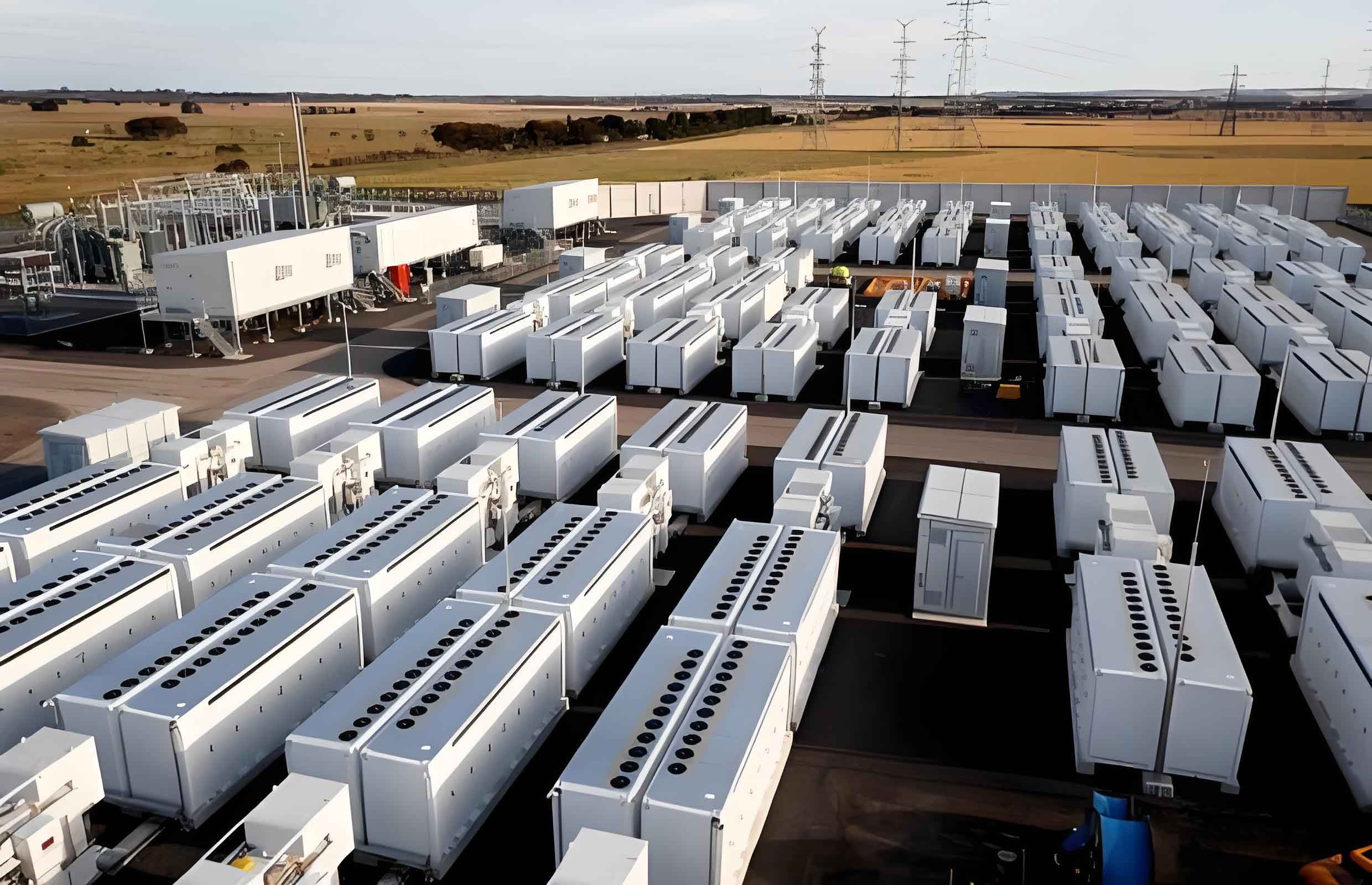
Early warning technologies for energy storage cells have evolved significantly, focusing on detecting anomalies before they escalate into full-blown crises. One prominent approach involves monitoring electrical parameters such as voltage, current, and internal resistance. In energy storage cells, deviations from normal ranges can indicate impending failures; for instance, a sudden voltage drop might signal an internal short circuit. Advanced battery management systems (BMS) now incorporate cloud computing and real-time analytics to process data from multiple energy storage cells, enabling predictive maintenance. The effectiveness of such systems can be quantified using reliability indices, such as the mean time between failures (MTBF) for energy storage cells: $$\text{MTBF} = \frac{\text{Total Operating Time}}{\text{Number of Failures}}$$ This helps in optimizing the performance and safety of energy storage cell arrays.
Gas sensing-based early warning systems for energy storage cells leverage the detection of specific gases released during initial stages of failure. Hydrogen (H₂) and carbon monoxide (CO) are commonly targeted due to their early appearance in thermal runaway events. Sensors equipped with metal-oxide semiconductors (MOS) can identify these gases at low concentrations, providing a critical time window for intervention. For energy storage cells, the relationship between gas concentration and risk level can be expressed as: $$R_{\text{gas}} = k \cdot C_{\text{H}_2} + m \cdot C_{\text{CO}}$$ where \(R_{\text{gas}}\) is the risk score, \(C_{\text{H}_2}\) and \(C_{\text{CO}}\) are concentrations of hydrogen and carbon monoxide, and \(k\) and \(m\) are weighting factors based on empirical data. This approach has proven effective in laboratory settings and is being integrated into commercial energy storage cell systems.
Smoke and sound-based detection methods for energy storage cells offer additional layers of security. When an energy storage cell fails, it may emit smoke or audible noises due to pressure release from safety valves. Sensors capable of detecting these signals can trigger alarms, though they are often less timely than gas-based systems. To improve accuracy, machine learning algorithms like YOLOv3 have been applied to analyze visual and auditory data from energy storage cells, reducing false positives. The performance of such intelligent systems can be measured using metrics like precision and recall: $$\text{Precision} = \frac{\text{True Positives}}{\text{True Positives} + \text{False Positives}}$$ $$\text{Recall} = \frac{\text{True Positives}}{\text{True Positives} + \text{False Negatives}}$$ These metrics ensure that early warnings for energy storage cells are both reliable and actionable.
Intelligent early warning systems for energy storage cells represent the frontier of safety technology, combining multiple data sources with artificial intelligence. For example, integrated platforms may use sensors to monitor temperature, gas emissions, and electrical parameters simultaneously, feeding data into neural networks for anomaly detection. In energy storage cells, this allows for the prediction of thermal runaway hours before it occurs, based on patterns learned from historical incidents. A generalized AI model for energy storage cell safety can be described as: $$y = f(X) + \epsilon$$ where \(y\) is the predicted risk level, \(X\) is a vector of input features (e.g., temperature, voltage), \(f\) is the model function, and \(\epsilon\) is the error term. As these systems become more widespread, they promise to revolutionize the safety management of energy storage cells.
Fire suppression methods for energy storage cells focus on containing and extinguishing blazes once they ignite. Material optimization is a proactive strategy; for instance, incorporating flame-retardant additives into the electrolytes of energy storage cells can reduce flammability. Compounds like tris(1,3-dichloroisopropyl) phosphate (TDCPP) have shown efficacy in suppressing combustion in energy storage cells by forming protective layers. The effectiveness of such additives can be modeled using combustion theory: $$\frac{dm}{dt} = -A \cdot m^n \cdot e^{-E_a / (R T)}$$ where \(dm/dt\) is the mass loss rate, \(m\) is the mass of the fuel, \(A\) and \(n\) are constants, and other terms are as defined earlier. This equation helps in designing safer energy storage cells with inherent fire resistance.
Thermal management systems are crucial for preventing overheating in energy storage cells. Advanced cooling techniques, such as immersion liquid cooling, involve submerging energy storage cells in dielectric fluids to maintain optimal temperatures. This method enhances heat dissipation and minimizes temperature gradients among energy storage cells, reducing the risk of thermal runaway. The heat transfer in such systems can be described by Newton’s law of cooling: $$q = h \cdot A \cdot (T_{\text{cell}} – T_{\text{coolant}})$$ where \(q\) is the heat flux, \(h\) is the heat transfer coefficient, \(A\) is the surface area, and \(T_{\text{cell}}\) and \(T_{\text{coolant}}\) are the temperatures of the energy storage cell and coolant, respectively. By optimizing these parameters, the safety and longevity of energy storage cells can be significantly improved.
Fire suppression technologies for energy storage cells include gas-based systems and water-based solutions. Gas agents like heptafluoropropane and perfluorohexanone are commonly used because they extinguish flames quickly without leaving residues, making them suitable for enclosed spaces housing energy storage cells. The extinguishing efficiency can be evaluated using critical flux models: $$\dot{m}” = \frac{\dot{Q}”}{\Delta H_c}$$ where \(\dot{m}”\) is the mass flux of extinguisher required, \(\dot{Q}”\) is the heat release rate per unit area, and \(\Delta H_c\) is the heat of combustion. For large-scale incidents involving energy storage cells, deluge systems that flood the area with water may be employed to prevent fire spread. However, the choice of method depends on the specific configuration and risks of the energy storage cell installation.
To address the multifaceted safety challenges of energy storage cells, a holistic approach combining technical, managerial, and regulatory measures is essential. First, the design phase of energy storage power stations must prioritize safety through rigorous site selection, capacity planning, and integration of fire-resistant materials. For energy storage cells, this includes using robust enclosures and spacing to limit propagation. Second, standardizing safety protocols and regulations can ensure consistent practices across the industry. Organizations should develop guidelines specific to energy storage cells, covering aspects from manufacturing to decommissioning. Third, implementing intelligent early warning systems that leverage AI and IoT technologies can provide real-time monitoring and predictive analytics for energy storage cells. Finally, establishing comprehensive emergency response plans—involving coordination between utilities, firefighters, and environmental agencies—can mitigate the impact of incidents involving energy storage cells. By adopting these strategies, the energy sector can enhance the reliability and public acceptance of energy storage cells as a key enabler of the renewable energy transition.
In conclusion, energy storage cells are indispensable for modern energy systems, but their safety risks necessitate continuous innovation and vigilance. Through advancements in early detection, material science, and suppression techniques, the hazards associated with energy storage cells can be effectively managed. Moreover, collaborative efforts among researchers, industry players, and policymakers are crucial to developing a resilient framework for energy storage cell safety. As technology evolves, future directions may include solid-state energy storage cells with inherently lower risks, as well as digital twins for simulating failure scenarios. By embracing these opportunities, we can ensure that energy storage cells contribute safely and sustainably to global energy goals.