
1. Introduction
As a researcher deeply engaged in the field of energy storage systems, I have witnessed the critical role that energy storage cell technology plays in ensuring the reliable operation of seismic monitoring stations. The national earthquake intensity rapid reporting and early warning project in China, scheduled for completion by the end of 2023, involves the construction of 15,391 stations across key regions including North China, the North-South seismic belt, the Southeast coastal area, and the middle section of the Tianshan Mountains in Xinjiang. Among these, 1,928 reference stations and 3,114 basic stations are equipped with batteries, totaling approximately 30,252 battery units. This massive deployment underscores the importance of energy storage cell state monitoring for continuous and reliable seismic data acquisition.
Seismic stations require uninterrupted power supply because earthquakes are random events that demand continuous instrument operation. While most stations in China utilize AC power with UPS systems, battery backups are essential for forming uninterrupted power supply systems. Even remote stations powered by solar or wind energy cannot operate without energy storage cell banks. The performance of these battery packs directly affects the entire seismic early warning system’s reliability. Therefore, online monitoring of energy storage cell status has become a critical research focus.
2. Lithium-Ion Energy Storage Cell Development and SOC Estimation
2.1 Overview of Lithium-Ion Energy Storage Cells
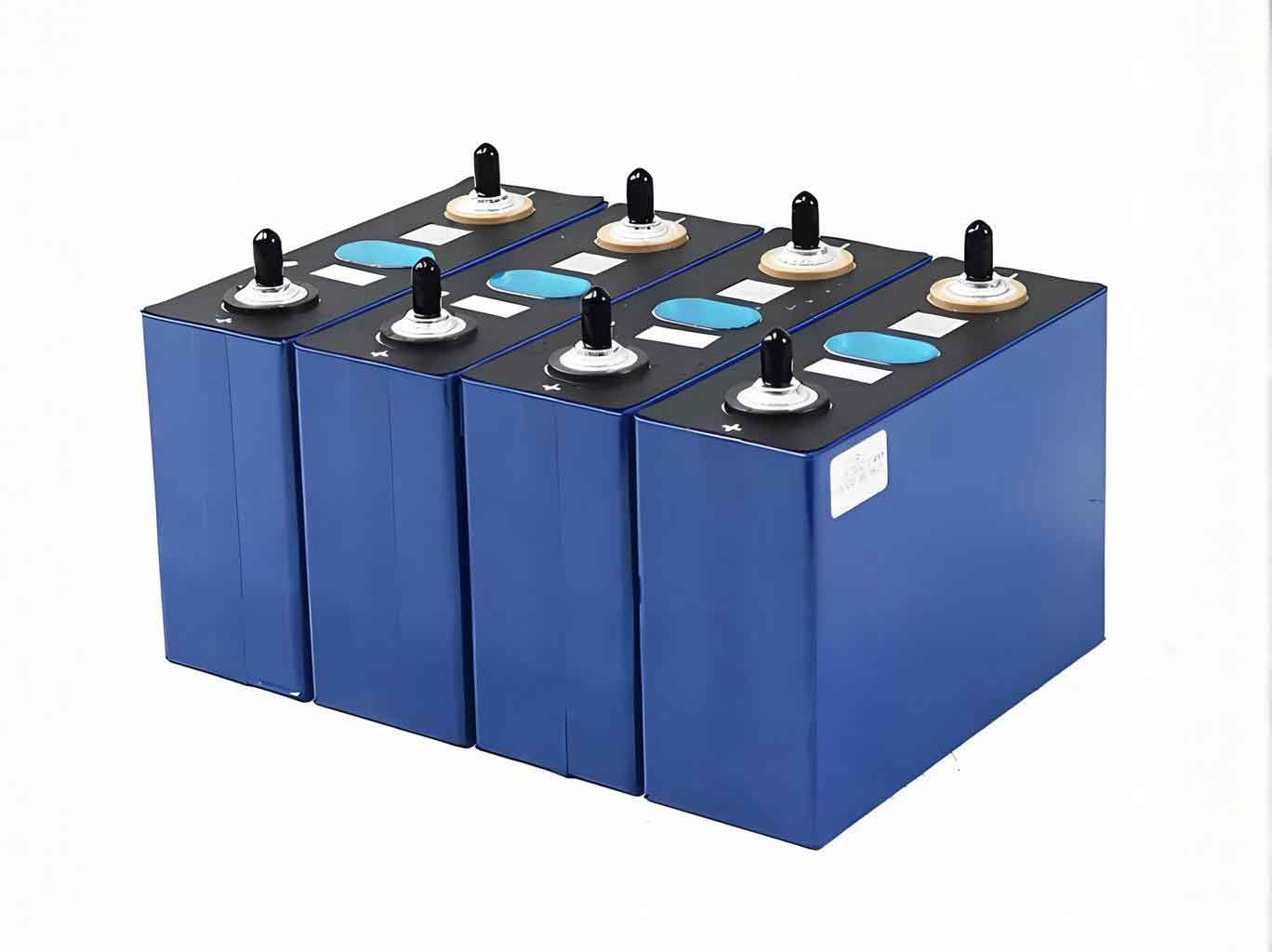
Lithium-ion batteries have become the predominant choice for energy storage cell applications due to their superior characteristics. In my analysis of various energy storage cell technologies, I have identified several key advantages of lithium-ion batteries:
| Parameter | Lithium-Ion Battery | Lead-Acid Battery (Comparison) |
|---|---|---|
| Energy Density | 100-270 mAh/g | 30-50 mAh/g |
| Nominal Voltage | 3.0-4.2 V | 2.0 V |
| Self-Discharge Rate | <1% per month | 3-5% per month |
| Cycle Life | >6000 cycles (LiFePO₄) | 300-500 cycles |
| Operating Temperature | -20°C to 60°C | -10°C to 40°C |
| Memory Effect | None | None |
| Environmental Impact | Green, non-toxic | Contains lead, toxic |
However, lithium-ion energy storage cell technology also presents certain challenges. The production cost remains relatively high compared to traditional battery technologies. There are safety concerns, including the risk of explosion under extreme conditions. Additionally, overcharging or over-discharging can cause irreversible damage to the energy storage cell. These challenges necessitate sophisticated monitoring and management systems.
2.2 Historical Development
In my research of the energy storage cell evolution, I have traced the development of lithium-ion technology back to the 1970s. M.S. Whittingham created the first lithium battery using titanium sulfide as the cathode and metallic lithium as the anode. In the early 1980s, researchers at the Illinois Institute of Technology discovered that embedding lithium ions into graphite significantly improved safety. Bell Laboratories then successfully developed a lithium battery with embedded graphite lithium as the cathode. In the mid-1990s, Padhi used LiFePO₄ as the cathode material, providing superior safety, voltage, and specific energy characteristics. Sony Corporation commercialized the first lithium-ion battery in 1992, revolutionizing portable electronics.
Modern energy storage cell systems typically employ series, parallel, or combined configurations to meet specific voltage and current requirements. For high-voltage applications, I recommend series connection of individual cells; for high-current applications with voltage constraints, parallel connection is preferred.
The series-parallel configuration of energy storage cell packs follows these fundamental relationships:
$$V_{total} = N_s \times V_{cell}$$
$$C_{total} = N_p \times C_{cell}$$
$$E_{total} = N_s \times N_p \times V_{cell} \times C_{cell}$$
where N_s is the number of cells in series, N_p is the number of cells in parallel, V_cell is the individual cell voltage, and C_cell is the individual cell capacity.
3. SOC Estimation Research for Energy Storage Cells
3.1 Importance of SOC Estimation
State of Charge (SOC) estimation is one of the most critical functions in energy storage cell management systems. Accurate SOC estimation enables optimal charge/discharge control, prevents overcharging and deep discharging, and extends the lifetime of energy storage cell packs. Through my systematic review of SOC estimation methods, I have categorized them into several approaches:
| Method Category | Specific Techniques | Accuracy | Computational Complexity |
|---|---|---|---|
| Direct Measurement | Open-circuit voltage, Impedance spectroscopy | Medium | Low |
| Coulomb Counting | Current integration | Low (drifts over time) | Very Low |
| Model-Based | EKF, UKF, Particle filter | High | Medium-High |
| Data-Driven | Neural networks, RF, SVM | Very High | High |
| Hybrid | EKF+NN, UKF+BP | Very High | Very High |
3.2 Model-Based SOC Estimation Methods
In my investigation of energy storage cell SOC estimation, I found that model-based methods, particularly those employing equivalent circuit models combined with Kalman filtering, have gained widespread acceptance. The PNGV equivalent circuit model, which I have extensively analyzed, provides a good balance between accuracy and computational efficiency. The model can be expressed as:
$$V_t = V_{oc}(SOC) – IR_0 – V_{p} – V_{d}$$
where V_t is the terminal voltage, V_oc is the open-circuit voltage as a function of SOC, I is the current, R_0 is the ohmic resistance, V_p is the polarization voltage, and V_d represents diffusion voltage components.
The Extended Kalman Filter (EKF) algorithm for energy storage cell SOC estimation operates through the following steps:
Prediction Step:
$$\hat{x}_{k|k-1} = f(\hat{x}_{k-1|k-1}, u_{k-1})$$
$$P_{k|k-1} = F_{k-1}P_{k-1|k-1}F_{k-1}^T + Q_{k-1}$$
Update Step:
$$K_k = P_{k|k-1}H_k^T(H_kP_{k|k-1}H_k^T + R_k)^{-1}$$
$$\hat{x}_{k|k} = \hat{x}_{k|k-1} + K_k(z_k – h(\hat{x}_{k|k-1}))$$
$$P_{k|k} = (I – K_kH_k)P_{k|k-1}$$
where x represents the state vector containing SOC, F is the state transition matrix, P is the error covariance matrix, Q is the process noise covariance, H is the observation matrix, R is the measurement noise covariance, K is the Kalman gain, and z is the measurement vector.
I have observed significant improvements using the Iterative Extended Kalman Filter (IEKF) approach. The iteration process refines the state estimate:
$$\hat{x}_{k|k}^{i+1} = \hat{x}_{k|k-1} + K_k^i(z_k – h(\hat{x}_{k|k}^i) – H_k^i(\hat{x}_{k|k-1} – \hat{x}_{k|k}^i))$$
where i denotes the iteration number. This iterative refinement typically converges within 2-3 iterations, providing improved accuracy for energy storage cell SOC estimation.
3.3 Machine Learning Approaches
My research has also explored data-driven methods for energy storage cell SOC estimation. The Random Forest (RF) algorithm effectively evaluates feature importance in the input dataset, identifying key parameters such as voltage, current, temperature, and their derivatives. The Extreme Learning Machine (ELM) offers fast training speeds but suffers from randomly generated weights and thresholds, which can compromise prediction accuracy.
To address this limitation, I have investigated optimization algorithms. The Sparrow Search Algorithm (SSA) optimizes the ELM’s initial parameters by minimizing the prediction error:
$$\min_{\theta} \sum_{i=1}^{N} (SOC_{pred}(i) – SOC_{true}(i))^2$$
where θ represents the set of network parameters (weights and biases), and N is the number of training samples. The SSA-optimized ELM demonstrates superior performance in tracking energy storage cell SOC under dynamic conditions.
The Adaptive Unscented Kalman Filter (AUKF) combined with BP neural networks represents another hybrid approach I have examined. The BP neural network provides robust SOC estimates that serve as observation metrics for the UKF:
$$SOC_{BP} = f_{NN}(V, I, T, \Delta t)$$
$$SOC_{final} = UKF(SOC_{BP}, V_{measured}, I_{measured})$$
4. Equalization Control for Energy Storage Cell Packs
4.1 The Need for Equalization
In my analysis of energy storage cell systems, I have identified cell imbalance as a critical issue that degrades pack performance and lifetime. Manufacturing variations, temperature gradients, and aging effects cause individual cells within a series-connected energy storage cell pack to exhibit different capacities, internal resistances, and SOC values. Without proper equalization, some cells may become overcharged while others remain undercharged, leading to premature failure.
4.2 Equalization Circuit Topologies
I have systematically compared various equalization circuit topologies for energy storage cell systems:
| Topology | Energy Transfer Method | Efficiency | Control Complexity | Scalability |
|---|---|---|---|---|
| Passive Balancing | Resistive discharge | Low (waste as heat) | Very Low | Excellent |
| Switched Capacitor | Capacitive transfer | Medium | Low | Good |
| Inductor-Based | Inductive transfer | High | Medium | Moderate |
| Transformer-Based | Magnetic coupling | High | High | Moderate |
| Multi-Winding Transformer | Shared magnetic core | Very High | High | Limited (for fixed N) |
| Reconfigurable | Switch matrix | High | Very High | Excellent |
4.3 Advanced Equalization Strategies
I have studied several advanced equalization strategies. The two-layer distributed equalization system proposed by Cui et al. uses voltage differences between cells within modules to calculate equalization steps. This approach offers significant improvements in balancing efficiency for energy storage cell packs. The equalization current can be expressed as:
$$I_{bal,i} = G \times (V_i – V_{avg})$$
where G is the conductance of the balancing path, V_i is the voltage of cell i, and V_avg is the average voltage of the module.
The zero-current switching switched-capacitor (ZCS-SC) balancing circuit overcomes the performance degradation issue that plagues conventional switched-capacitor systems when the number of series-connected energy storage cell units increases. The resonant tank design achieves soft-switching, reducing switching losses:
$$f_{sw} = \frac{1}{2\pi\sqrt{L_r C_r}}$$
where L_r is the resonant inductance and C_r is the resonant capacitance. The ZCS operation ensures that current naturally commutates to zero, minimizing electromagnetic interference.
Distributed control strategies for reconfigurable energy storage cell systems enable autonomous modules to share SOC information through sparse communication networks. The consensus algorithm for SOC balancing can be expressed as:
$$\dot{SOC}_i = \sum_{j \in N_i} a_{ij}(SOC_j – SOC_i)$$
where N_i represents the neighbors of module i, and a_ij are the adjacency matrix elements. This cooperative approach achieves balanced SOC across all modules.
The hybrid active equalization method combining transformer-based and inductor-based circuits provides superior balancing speed and efficiency. I have found that this approach reduces balancing time by approximately 40% compared to pure inductor-based methods, while maintaining high energy efficiency above 90%.
5. Energy Storage Cell Monitoring Systems
5.1 International Development Status
Through my comprehensive literature review, I have traced the evolution of energy storage cell monitoring systems since the 1980s. The first commercial monitoring system was developed in 1989 by the Electric Power Research Institute (EPRI) in collaboration with National Power Research Corporation, focusing on lead-acid batteries for unmanned substations. This system employed multiple sensors to measure overall pack voltage, individual cell voltage, current, internal temperature, and ambient temperature, transmitting data via optical fiber.
In the late 1990s, Karnjanapiboon et al. proposed a low-voltage stress AC-linked charge equalization system for series-connected VRLA battery strings. The VMS management system advanced from simple monitoring to comprehensive battery function management, evolving from constant-voltage charging to providing different charging currents for various battery types.
The 21st century brought significant advancements in energy storage cell monitoring. The Smart Guard system by Aerovironment (USA) introduced highly integrated BMS with distributed battery units, allowing some units to discharge during vehicle operation while others charge through photovoltaic or other means. The BATTMAN system by Hauck (Germany) achieved compatibility with various battery types through combined hardware and software management. The BMS by Preh (Germany) incorporated independent protection chips for safety even under extreme conditions.
5.2 Modern Cloud-Based Monitoring Systems
Recent developments in energy storage cell monitoring have focused on cloud-connected systems. In 2018, Baumann et al. from the Technical University of Munich proposed a cloud-connected BMS that collects vehicle battery data and continuously updates battery status on the server side. This system uses empirical aging models to calculate residual values and predict battery degradation under different operating conditions:
$$SOH(t) = SOH_0 – \int_0^t f_{aging}(SOC, T, C-rate, DOD) dt$$
where SOH_0 is the initial state of health, and f_aging represents the aging rate as a function of SOC, temperature, charge/discharge rate, and depth of discharge.
In 2020, Kim et al. from Texas A&M University developed a large-scale cloud-based lithium-ion BMS monitoring platform. This platform utilizes IoT devices and cloud components to implement data acquisition and wireless communication within energy storage cell modules. Using Raspberry Pi development boards combined with the Google Cloud Platform, they developed a miniaturized cloud BMS simulator. Results demonstrated that sufficient cloud storage and computing resources could obtain more accurate battery status information.
Li et al. from RWTH Aachen University proposed a cloud BMS in 2020 that aims to improve computing power and data storage capacity through cloud computing. This system employs digital twin technology for energy storage cell systems:
$$SOC_{cloud} = f_{digital\_twin}(V, I, T, historical\_data)$$
$$SOH_{cloud} = g_{digital\_twin}(capacity\_fade, impedance\_increase)$$
5.3 Monitoring System Component Comparison
I have compared various monitoring system components used in energy storage cell systems:
| Component | Function | Key Performance Metrics | Typical IC Solutions |
|---|---|---|---|
| Voltage Sensor | Measure cell/module voltage | Accuracy ±1 mV, Resolution 0.1 mV | MAX14752, LTC6804 |
| Current Sensor | Measure charge/discharge current | Accuracy ±0.5%, Bandwidth 100 kHz | ACS712, INA219 |
| Temperature Sensor | Monitor cell/module temperature | Accuracy ±0.5°C, Range -40°C to 125°C | DS18B20, TMP117 |
| Analog Front-End | Signal conditioning and multiplexing | CMRR > 80 dB, Input impedance > 10 MΩ | INA148UA, ADuCM355 |
| Microcontroller | Data processing and control logic | Clock speed 72 MHz, Flash 512 KB | STM32F107, TMS320F28335 |
| Communication Module | Data transmission to host/cloud | Protocol: CAN, RS485, Ethernet, WiFi | W5500, ESP8266, MCP2515 |
6. Applications in Seismic Stations
6.1 Domestic Research Progress
In my investigation of energy storage cell monitoring applications for seismic stations, I have found significant domestic research contributions. The intelligent power controller based on the STM32F107 microprocessor, proposed by Li Xingquan et al., integrates temperature, humidity, battery voltage, and capacity display functions. This system optimizes station power supply functionality, preventing equipment damage caused by inadequate power supply logic. The system effectively extends equipment life and ensures data recording completeness.
The intelligent DC uninterruptible power supply and management system developed by Liu Yanli et al. achieves hardware-level monitoring of DC power and current at the supply end, while management software enables remote control of hardware functions. This system significantly improves automation levels for unmanned stations, enhancing maintenance efficiency and reducing operational costs.
The remote power monitoring system designed by Li Huiling et al. addresses the increasing number of unmanned seismic stations. Using a remote power control module and TCP/IP protocol software, this system enables remote power cycling of equipment experiencing lockup or failure.
The remote power monitoring and control system by Mu Huimin et al. comprises power supply systems, data acquisition cards, serial port servers, remote power management software, and seismic observation equipment. This system fundamentally changes the operation and maintenance model for unmanned stations, improving equipment maintenance efficiency, reducing repair time and costs, and facilitating data anomaly verification.
The power supply transformation for communication equipment at unmanned seismic stations, implemented by Liu Qishou et al. in the Longyan area of Fujian Province, converted AC-supplied communication equipment to DC power supply. This transformation eliminated interference from DC inverters, reduced power consumption, and effectively improved communication equipment stability and data connectivity rates at unmanned stations.
6.2 Performance Requirements for Seismic Station Energy Storage Cells
Based on my analysis, I have summarized the specific performance requirements for energy storage cell systems in seismic station applications:
| Parameter | Requirement | Criticality |
|---|---|---|
| Reliability | MTBF > 100,000 hours | Critical |
| Backup Duration | ≥ 72 hours at full load | Critical |
| Operating Temperature | -20°C to +70°C | High |
| Self-Discharge | < 3% per month | High |
| Cycle Life | > 2000 cycles at 80% DOD | Medium |
| Monitoring Accuracy | SOC error < 3%, voltage error < 5 mV | High |
| Remote Communication | Support TCP/IP, 4G/5G, satellite | High |
| Maintenance | Minimal, designed for unmanned operation | High |
7. Challenges and Future Directions
7.1 Current Technical Challenges
Based on my extensive research, I have identified several key challenges in energy storage cell online monitoring technology:
- SOC Estimation Accuracy: Current SOC estimation methods still face accuracy limitations, particularly under dynamic operating conditions and as the energy storage cell ages. The estimation error typically increases to 5-10% after 500 cycles.
- Cell Imbalance: The inconsistency between individual cells in a energy storage cell pack becomes more pronounced with increasing cycle life, affecting overall pack performance and lifetime. Equalization circuits add cost and complexity.
- Thermal Management: The thermo-electrochemical behavior of energy storage cell systems is not fully understood, making it difficult to establish accurate electro-thermal models for monitoring and control.
- Computational Constraints: Advanced algorithms for SOC estimation and fault diagnosis require significant computational resources, which may not be available in cost-effective embedded systems.
- Communication Reliability: Remote monitoring of seismic station energy storage cell systems requires reliable communication links, which may be compromised in remote locations or during extreme weather events.
7.2 Future Research Directions
In my forward-looking analysis, I have identified the following promising research directions for energy storage cell online monitoring technology:
| Direction | Description | Expected Impact | Technology Readiness |
|---|---|---|---|
| High-Precision Intelligent Monitoring | Advanced sensors and AI algorithms for real-time monitoring of internal cell states | SOC accuracy < 1%, early fault prediction | TRL 4-5 |
| Integration and Miniaturization | Highly integrated monitoring modules with reduced size and weight | Easy installation, minimal space requirement | TRL 5-6 |
| Wireless and Networked Systems | Wireless communication for data transmission and networked monitoring platforms | Reduced wiring, centralized management | TRL 6-7 |
| Digital Twin Technology | Virtual replica of physical energy storage cell system for real-time simulation | Accurate state prediction, optimal control | TRL 3-4 |
| Deep Integration with EMS | Seamless data sharing between monitoring system and energy management system | Real-time energy optimization, enhanced grid stability | TRL 4-5 |
8. Conclusion
Throughout my comprehensive review of energy storage cell online monitoring technology, I have established that this field is crucial for ensuring the safe, reliable, and efficient operation of seismic monitoring stations. The energy storage cell serves as the core energy supply component for these stations, and its performance directly impacts the continuity and quality of seismic data collection.
My analysis has revealed that lithium-ion batteries have become the dominant energy storage cell technology due to their superior energy density, long cycle life, and low self-discharge rate. However, challenges remain in SOC estimation accuracy, cell equalization, and thermal management. Model-based methods using equivalent circuit models and Kalman filtering have achieved SOC estimation errors below 3-5%, while data-driven approaches incorporating machine learning can achieve even higher accuracy.
The development of cloud-based battery management systems represents a significant advancement, enabling real-time monitoring, predictive maintenance, and optimized control of energy storage cell systems. The integration of digital twin technology further enhances the capability for accurate state prediction and fault diagnosis.
For seismic station applications specifically, I have identified that intelligent power controllers, remote monitoring systems, and DC power supply transformations have significantly improved the reliability and automation of energy storage cell systems. These advancements have reduced maintenance costs, extended equipment life, and ensured data continuity.
Looking forward, I believe that the energy storage cell online monitoring technology will continue to evolve toward higher precision, greater integration, and deeper intelligence. The combination of advanced sensors, AI algorithms, cloud computing, and digital twin technology will create a new generation of energy storage cell management systems capable of predicting failures before they occur, optimizing performance in real-time, and seamlessly integrating with broader energy management systems.
The ongoing construction and expansion of national earthquake monitoring networks in China and worldwide will further drive the demand for advanced energy storage cell monitoring technologies. By addressing the current challenges of SOC estimation accuracy, cell imbalance, and computational constraints, researchers and engineers can develop more robust and reliable energy storage cell systems that ensure the continuous operation of seismic monitoring stations, ultimately contributing to earthquake early warning and disaster reduction efforts.
In conclusion, the energy storage cell online monitoring technology is not merely a supporting technology but a critical enabler for the reliable operation of modern seismic monitoring infrastructure. The continued research and development in this field will have far-reaching implications for earthquake science, public safety, and the broader adoption of renewable energy systems.